Category: Food

  • A&W’s Comeback To Singapore Plagued By ‘Halal Not Halal’ Issue.. Seriously?

    A&W’s Comeback To Singapore Plagued By ‘Halal Not Halal’ Issue.. Seriously?

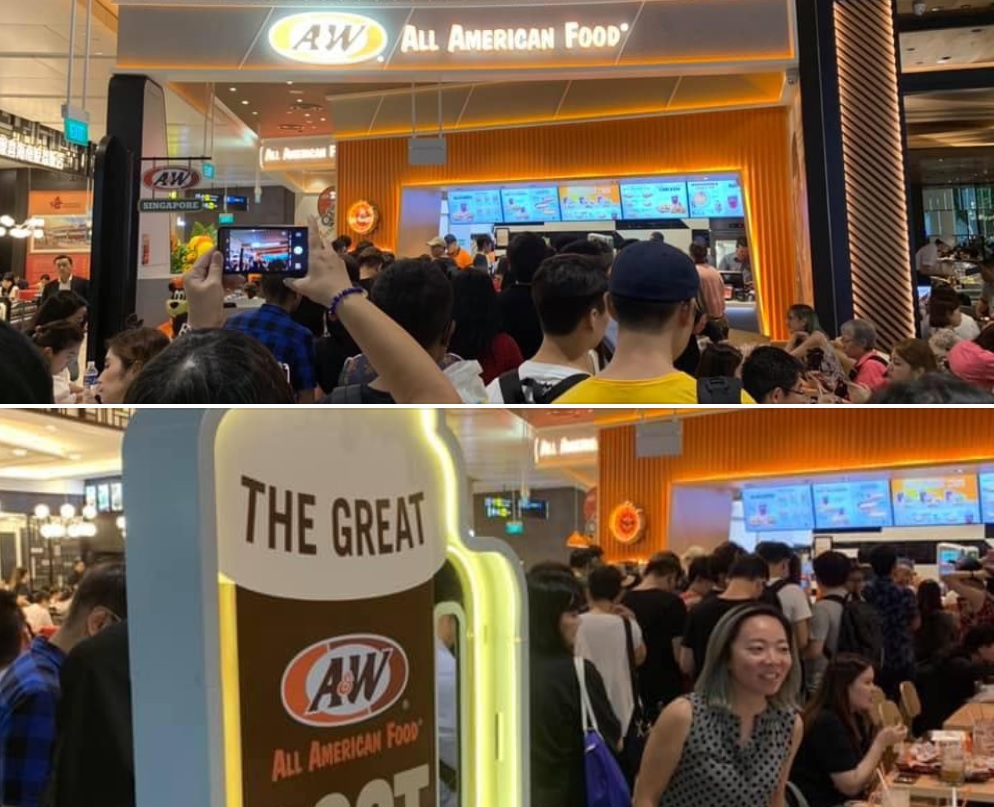
    Yes, again the ‘Halal Not Halal’ issue is baccccccccck and the TRENDING restaurant that everyone is talking about now is A&W Singapore.

    “We gave up. The queue was 1 hour.”

    Said one of the kiasu patrons of A&W on its first day reopening in Singapore after they have been gone for a long time. Other than A&W, many flocked over to Jewel Changi Airport over the weekend to see the news attractions especially the waterfall.

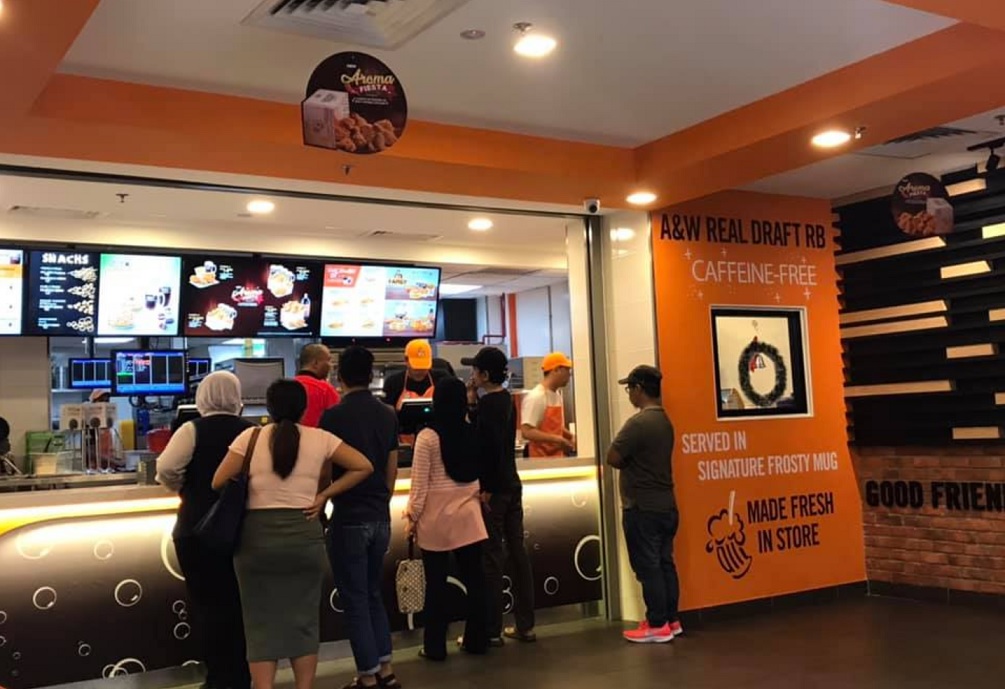
    But what is the hype eh about this A&W, because in JB the outlets are lengang (slow business). (:

    Photo of an outlet in JB

    So, apart from the tak boleh rilek crowd that die-die confirm plus chop cannot eat on other days (other than the opening day) or wait it out a few days/weeks, the issue of HALAL CERTIFICATION surfaced. Not surprising la.. Singaporeans.

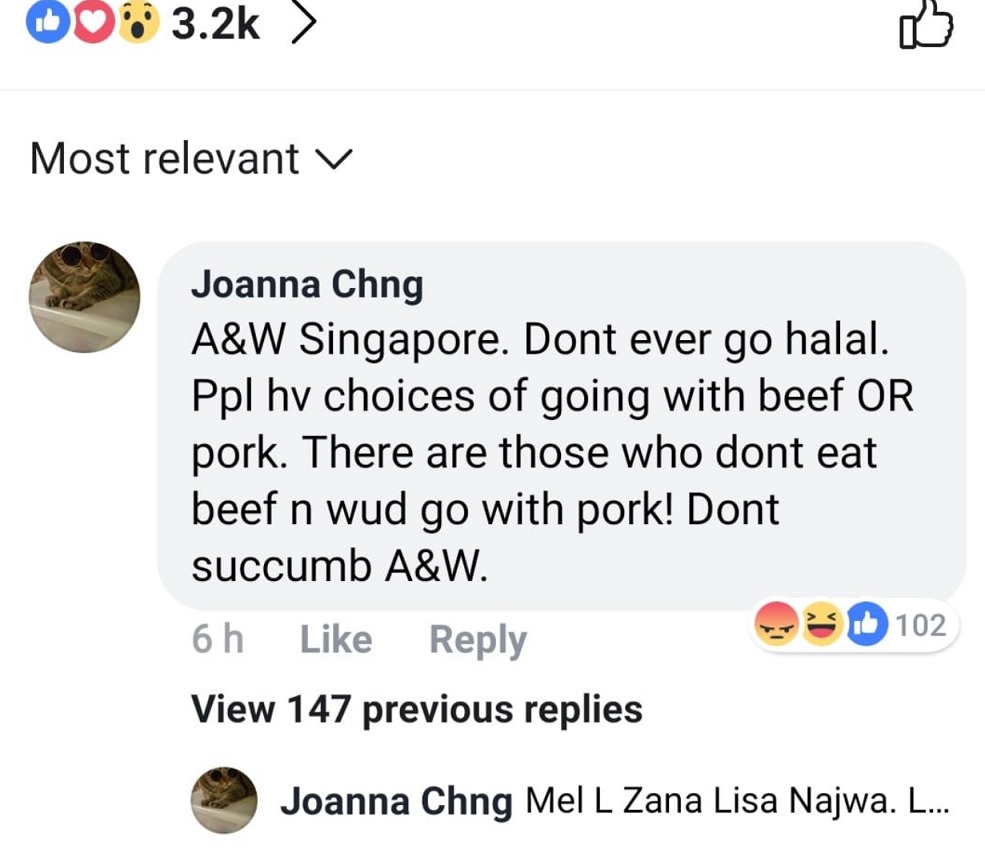
    Screenshot taken from Facebook

    This ah gerl say don’t make A&W Singapore become halal certified. Her argument is that people ONLY have a choice to eat beef or pork, so if someone don’t eat beef they need to eat the pork instead. #bodohpehstatement #racistmuch

    “Dekni tk makan Babi,dia makan Taik Babi.”

    Oops. Not we say one siol. Someone who replied to her said that. Padan muka you.

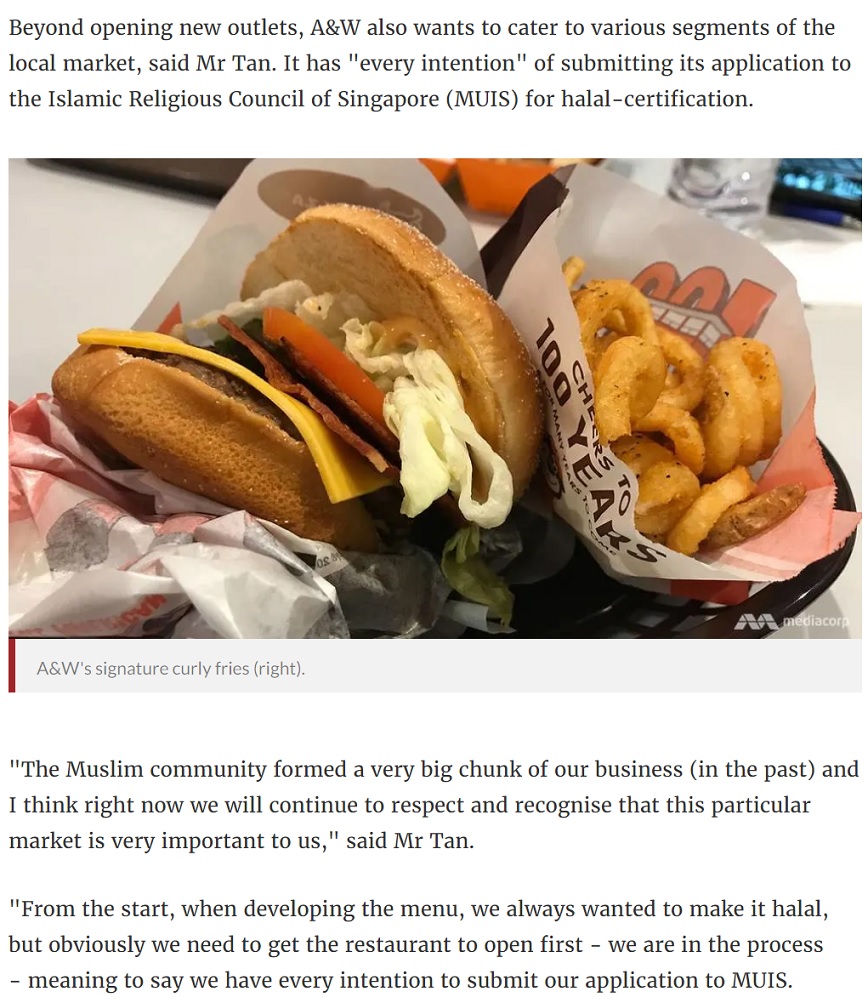
    Anyway, A&W Singapore saved the day when they instantaneously responded the following to Singaporeans’ squabble about ‘Halal Not Halal’ issue.

    Beyond opening new outlets, A&W also wants to cater to various segments of the local market, said Mr Tan. It has “every intention” of submitting its application to the Islamic Religious Council of Singapore (MUIS) for halal-certification.

    “The Muslim community formed a very big chunk of our business (in the past) and I think right now we will continue to respect and recognise that this particular market is very important to us,” said Mr Tan.

    “From the start, when developing the menu, we always wanted to make it halal, but obviously we need to get the restaurant to open first – we are in the process – meaning to say we have every intention to submit our application to MUIS.

    “We’re hoping that the crowd will ease out a bit and then we will get them to come in (and do an audit),” said Mr Tan.

    “Right now, we would like consumers to know that it’s a Muslim friendly menu, no pork no lard, and as soon as we can find the time to submit our application to MUIS, we will do so immediately.”

    Photo from CNA

    Wohoo! Definitely great news for us Muslims! Thanks to A&W.

    A&W has been halal in the past and will always continue to be halal to cater for the Muslim community in Singapore.

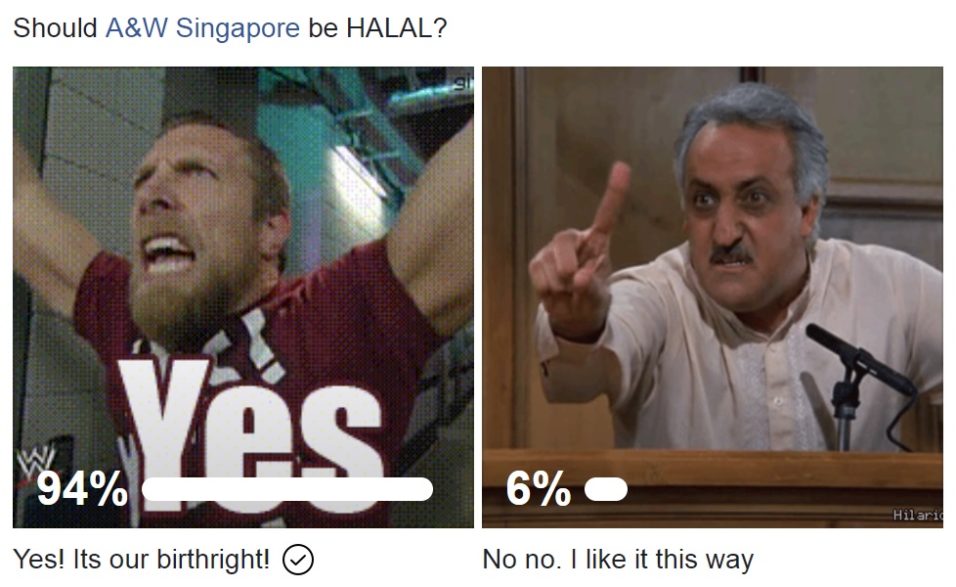
    Btw, 94% responded YES to a poll asking if A&W should be halal.

    Duh of course yes. It’s our birthright!


    Rilek1Corner


  • Impermissible to drink “Zero Alcoholic” Beer, Says Office Of the Mufti SG

    Impermissible to drink “Zero Alcoholic” Beer, Says Office Of the Mufti SG

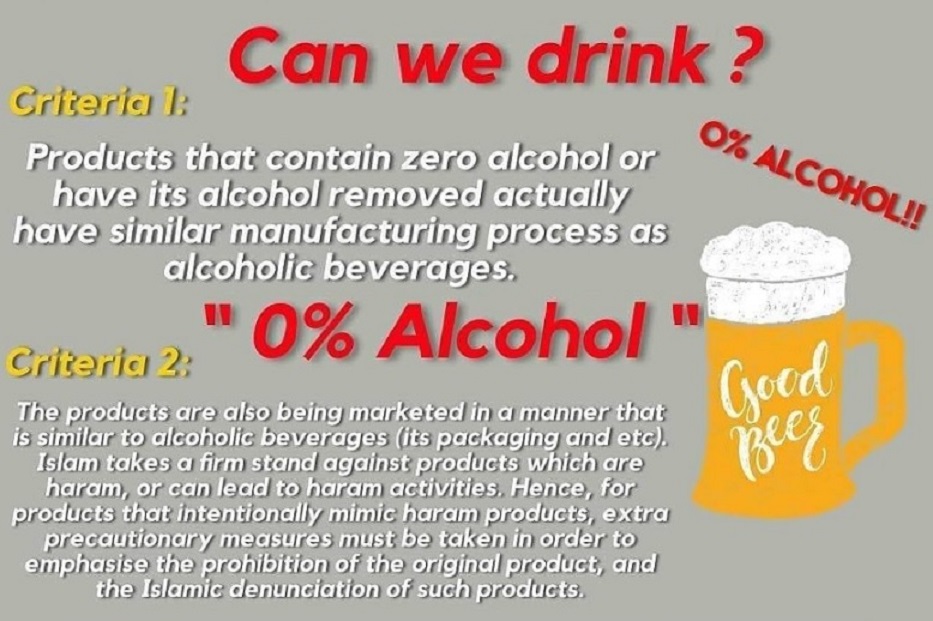
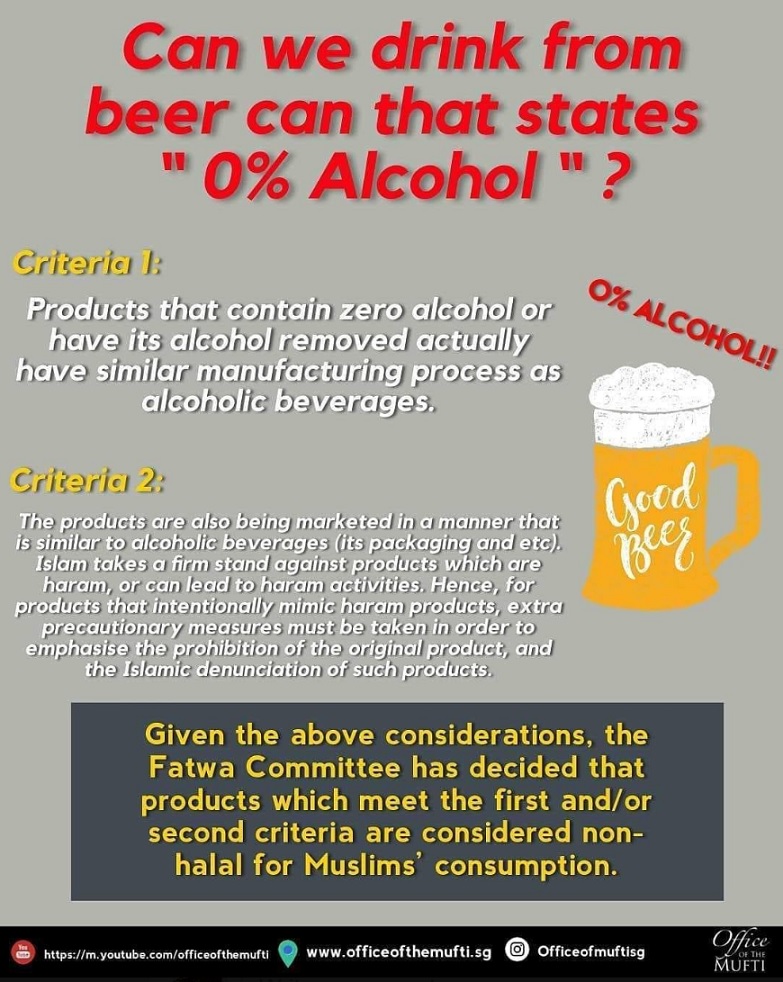
    Can Muslims drink “0% alcohol” beer? The answer is NO. It is not permissible if it meets either or both the criteria below.

    1. The process of making the drink is similar to the process done to make alcoholic drinks.

    (Explanation: Products that contain zero alcohol or have its alcohol removed actually have similar manufacturing process as alcoholic beverages.)

    2. The product is marketed in a similar way to how alcoholic drinks are marketed.

    (Explanation: The products are also being marketed in a manner that is similar to alcoholic beverages – its packaging and etc. Islam takes a firm stand against products which are haram, or can lead to haram activities. Hence, for products that intentionally mimic haram products, extra precautionary measures must be taken in order to emphasize the prohibition of the original product, and the Islamic denunciation of such products.)


    Ruling by Office of the Mufti, Islamic Religious Council of Singapore (MUIS)

    #beer #butterbeer #0percentalcoholbeer


    Rilek1Corner

  • Halal Scanner; Singapore-made app to know if a product is halal or not just by scanning

    Halal Scanner; Singapore-made app to know if a product is halal or not just by scanning

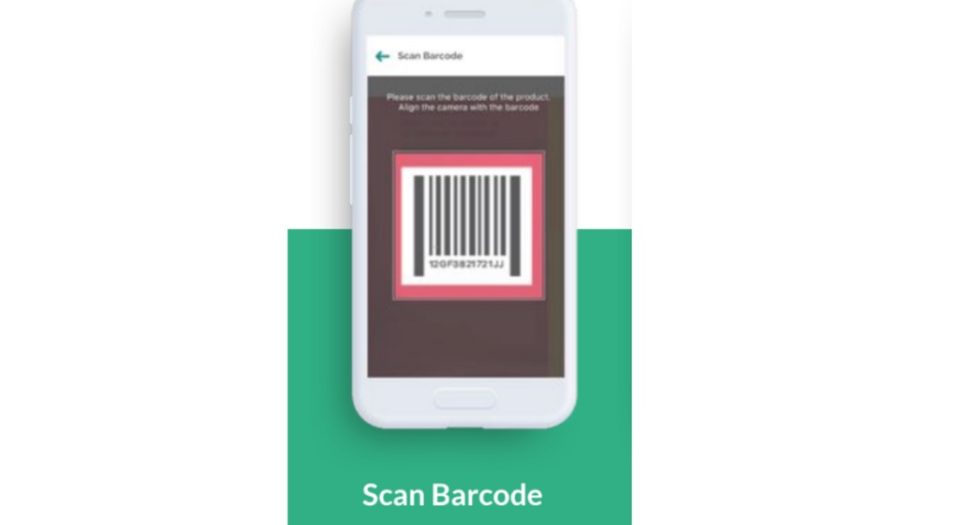
    Azman Ivan Tan, CEO, and Salehin Amat Kamsin, chief operating officer of WhatsHalal say their app can tell if a food product is halal or not, just by scanning its barcode, ingredients list, or product image.

    The new tool, which is set to launch at the end of April, can supposedly tell users if a food product is likely to be halal or not – just by scanning its barcode or ingredients list.

    The Halal Scanner will be integrated into the existing WhatsHalal app, which was designed as a halal food guide for consumers, businesses and enterprises.

    The WhatsHalal app was launched in February last year, around four months after entreprenuers Azman Ivan Tan and Salehin Amat Kamsin first co-founded the tech company.

    Although the app offers four other key services to consumers – a halal restaurant listing, food delivery, takeaway food orders and restaurant reservations – only the listing service is available now due to a revamp of the app.

    A beta version of the upcoming Halal Scanner is expected to be launched in all of WhatsHalal’s available countries – Singapore, Malaysia, Indonesia and Australia.

    In an interview with Business Insider, Azman, who is now CEO, and Salehin, who serves as chief operating officer, said that they are expecting at least 50,000 products to be scanned in the first few months after the launch.

    During this phase, the WhatsHalal team will identify scanned ingredients which require halal verification. According to Salehin, about 150,000 potential ingredients are expected to surface for validation.

    How it works

    The scanner has three identification methods – product image, barcode and ingredients list – and all of them work based on community-driven data collected over time.

    Users first take a photo of a product in the app. If WhatsHalal’s back-end team is able to verify that the product’s packaging contains the Islamic Religious Council of Singapore (Muis) logo, it will automatically accept that the product is halal.

    The data is then stored in WhatsHalal’s system and the next time a user scans a barcode of the same product, the app will immediately indicate that it is halal.

    In cases where a product does not bear a Muis logo, its ingredients list come into play. After a user scans the ingredients list on the app, WhatsHalal automatically conducts an optical character recognition (OCR) on it.

    “If it doesn’t have a Muis logo, what we do is we let the system learn over time. By default, the system knows – if there’s salt and sugar, the system will flash ‘halal’ and ‘halal’. Only when they see pork, it will immediately say ‘not halal’. Very clear cut,” Azman, who has 20 years of experience in technology and business management, said.

    But for ingredients that are in the grey area, more information will be shown so the consumer can make a more informed choice. One such ingredient is gelatin, which can be from different sources such as fish or beef.

    “You can click on that, and we’ll show you a little bit of information, such as gelatin from (a certain country) is likely halal, and (if it’s) from China then it’s likely non-halal,” the 42-year-old said.

    If a significant number of users were to raise their concerns on a particular product, WhatsHalal will engage certified, external halal consultants to conduct thorough checks on whether its ingredients are likely halal or not.

    “So if this (a product) comes from XYZ company, and, say, this company has been certified by a proper certifying body, we’ll take it as yes – our halal consultants don’t need to check all the way. But if it’s not certified they’ll check with manufacturers,” Azman said.

    Salehin, 32, said that while the aim of the Halal Scanner is to verify as many products as possible, there is also a need to be practical by recognising operation constraints.

    “We must put things into perspective – there’s a small number of Muslims in Singapore, but millions in Indonesia and Malaysia,” he said. It is hence not practical to expect the WhatsHalal team to be able to check every single product scan that comes in.

    And that’s where the WhatsHalal database will shine.

    “The more people scan, the more we build up product database,” he said.

    The company is even looking at incorporating a translation feature within the scanner, so that users can scan products bought from other countries and still collect the information they need to make a decision.

    Helping Muslim customers make better decisions faster

    With the Halal Scanner, Azman and Salehin hope to help customers make decisions more quickly by speeding up the halal food identification process.

    “When we go to a supermarket, the first thing we do is look at the ingredients list. As a Muslim, we’re sure that some ingredients are halal, but not so sure of others. So we’ll check online, and that’s a lengthy process sometimes, given that each product has, say, 10 ingredients,” Azman said.

    “So what happens with our system is we actually just speed up the process and make it easy. All the information is at your fingertips,” he added.

    But Azman emphasised that the Halal Scanner is not created to dictate a user’s decision. Rather, it serves as a guide for informed decision-making.

    “We will not be able to tell you that something is 100 per cent halal… we leave it to the end user to make the decision. We are only helping you to map,” he said.


    Source: BusinessTimes
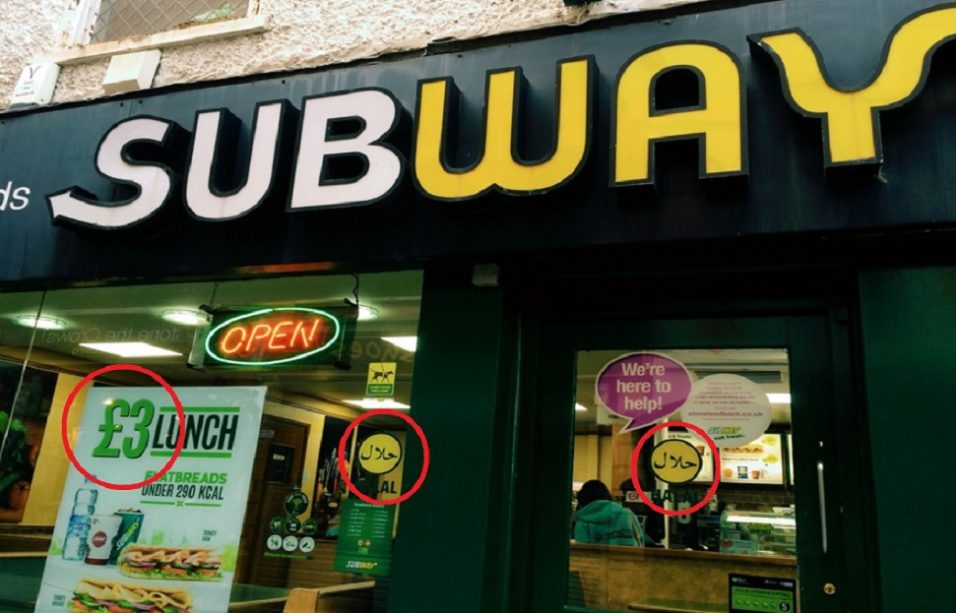
  • Fair To Blame The MUSLIM Community For Subway Singapore’s Going ‘Halal = Not Tasty’?

    Fair To Blame The MUSLIM Community For Subway Singapore’s Going ‘Halal = Not Tasty’?

    Why would Subway Singapore want to turn halal?

    A few possible reasons. In recent years, there has been an increasing awareness of halal cuisine (New York’s famous Halal Guys food trucks for example), while Muslim tourism has seen a paradigm shift, with young Muslims worldwide driving a $300 billion boom. You can see that trend here as well, with the advent of popular halal food and travel blogs.

    So it makes sense to jump on the bandwagon — provide Muslim-friendly services to get in on the big, formerly disregarded chunk of pie that is the Muslim market.

    Or it could also be that Subway is losing customers with its mediocre sandwiches (we’ll get to that later) and wants to freshen things up a little.

    So, why are folks angry?

    ‘Halal = Not tasty’

    The general (and admittedly completely subjective) perception here, is that once a non-halal food establishment turns into an official halal-certified one, the nosh just won’t taste as good as before. South Korean fried chicken joint Nene Chicken and Pastamania suffered that fate, with complaints about how their offerings seemed to have reduced in quality. There may actually be some truth to that, given that halal restaurants have to abide by a strict list of ingredients and suppliers put out by MUIS, and sometimes, the results just aren’t as satisfying as before.

    Of course, there are rare cases like Maki-san and 4Fingers Crispy Chicken — both of which went halal and are still loved by all patrons from all backgrounds. It remains to be seen for Subway, though.

    ‘No more Subway classics’

    The most obvious change once Subway goes halal is that the chain will no longer have longtime favorites such as their BLT and Italian BMT. Perhaps they’ll still include those sandwiches, but with halal ingredients instead. But as all pork-loving eaters would proclaim — fuck turkey bacon.

    ‘Muslims are forcing non-practitioners to conform to their standards’

    To be fair, religion is not to blame here — Muslims are not forcing Subway to get a halal certificate to accommodate them. Though the chain did entertain feedback from interested Muslim customers in 2010, it couldn’t find a way to do so back then.

    There are actually already a couple of local halal options for lovers of subs, including Toasties, Watsub Sandwich Bar, and Yellow Submarine Cheesesteaks. They even have the option of hopping the border to Johor if they really want some Subway, where it’s already halal.

    Subway Singapore clearly has reasons of their own to change up their business operations, but regulars are making the argument that the chain should have some outlets be halal-certified, while others stick to the status quo. But there’s the rub. Under the MUIS’ strict policy — if a franchise wants to officially go halal, all of their branches have to be halal, no exceptions.

    Of course, others have argued that Subway should have gone the way of Fatboys and Astons, both of which launched separate halal iterations of their brand in the form of Fatpapas and Andes, respectively.

    ‘Subway is ignoring loyal customers’

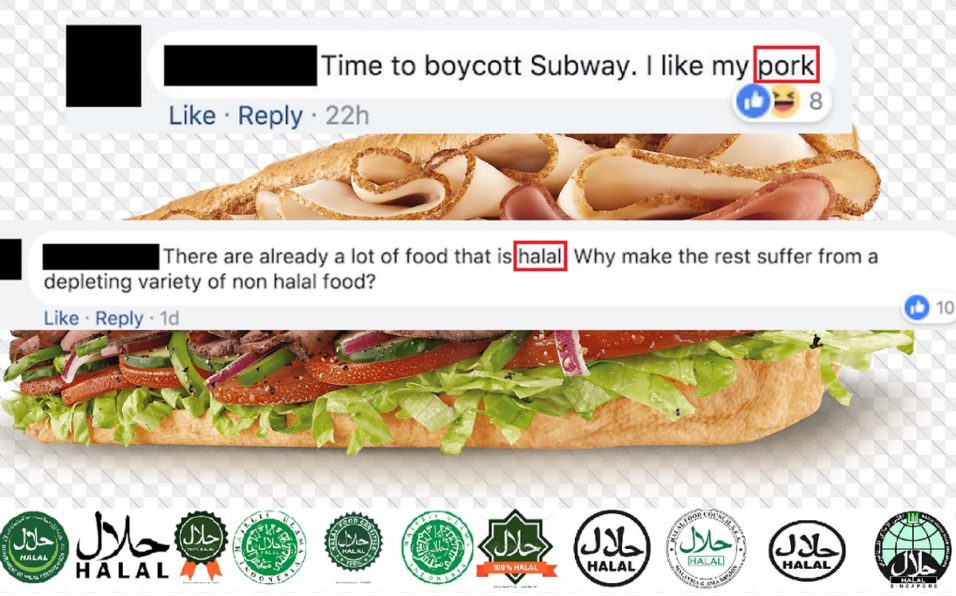
    No doubt about it, Subway will lose a significant portion of customers if it does go halal. There’s a reason why some are calling for a boycott — they feel like they didn’t ask for this at all. Mostly because they didn’t.

    On the flip side, what Subway loses in old regulars, they gain in new ones who didn’t have access to their subs here for the past 22 years. Furthermore, the chain still welcomes non-Muslim folks to patronage their outlets, the difference being that now they can dine in with the company of their Muslim friends, albeit without salami.

    But is Subway actually good?

    Ah, the obvious question. Why are people mad that Subway’s no longer selling non-halal food? Their sandwiches are mediocre at best, and no amount of MUIS-approved ingredients will fix shitty fast food. On the list of top sub sandwich restaurant chains in the Unites States, Subway doesn’t even crack the top 10. Hell, there are probably other sub sandwich makers here that do a far better job with halal subs.

    But the Muslim population here isn’t going to care really — they’ll happily flock to whichever spot hangs up a halal certificate, no matter the food quality, and that’s just sad. Because of the strict adherence to that green MUIS sign, they’ve never tasted cuisine from the other side of the fence and will be happy with whatever’s served. They’re the type who’ll say that Le Steak and its overdone beef cuts are the best steaks ever, without knowing how good actual steaks are in actual steakhouses.

    Then again, if Subway Singapore wants to be inclusive for the Muslim population, who’s to deny them that right? It might even be better than their old iteration. MIGHT.

    Source: coconuts


    Rilek1Corner

  • Halal Subway Outlets In The UK Are ‘Way Ahead’ Of Singapore By 10,000 Years

    Halal Subway Outlets In The UK Are ‘Way Ahead’ Of Singapore By 10,000 Years

    Not trying to “potong stim” here but the UK has Halal Subway since long, long, long, long, long, long, long, long, long, long, long, time ago already.

    “The HalalNews SG understands that the Subway delegation has held a formal meeting with MUIS officials at the end of 2017 to explain and clarify the aspirations and efforts they have made to meet all Halal MUIS certification requirements for all Subway branches in Singapore.”

    This piece of news has been well received by the Muslim community in Singapore as previous attempts by the Singapore’s Muslim community to seek Subway’s consideration in making its stores Halal have failed

    There was a petition titled “Make Subway Singapore Halal” by Shaik Syasya made about 2 years ago which garnered 130 signatures. “I love eating sandwiches esp subway. Its a hassle to commute to Johor just when u crave for Subway. So please make Subway Singapore halal,” someone said.

    However it is not known why Subway Singapore took so long to start halal-certifying its stores. In United Kingdom (UK) where only 5.4% of its population is made up of Muslims (compared to Singapore’s 14.3% Muslim population), there’s about 10% of Subway outlets in the UK that are halal (202 out of 2000 Subway stores across UK). All Halal meats catered to Subway in the UK was certified by The Islamic Foundation of Ireland and surprisingly, the Central Islamic Committee of Thailand.

    In 2010, Subway Singapore replied to its customers on Facebook:

    “Dear fans,

    We would love to be able to go Halal and we have looked into it very seriously. As we grow, more and more of our suppliers are giving us Halal options but unfortunately not all of them. To go Halal would increase our operational costs significantly as we will not be able to participate in SUBWAY restaurants’ huge global supply chain. And we do not want to hurt any of our customers by increasing prices. We know many of our competitors are Halal, but our menu is a lot more diversified with a lot more ingredients making the shift a more difficult task. So – we hear you. We’ll keep working on it and will review the situation periodically, and hopefully be able to satisfy all our customers eventually.

    Subway Team”

    Then again, there are currently around 2,000 Subway stores in the UK and Ireland, 202 of which are Halal stores selling only certified Halal meats. To be fair, the meats served at halal Subway stores have been produced to meet Subway stores high standards in taste, look and quality. The objective was to ensure the taste of the Halal products matched the taste of the Subway stores “Gold Standard” meats.

    So why have Singaporeans been deprived of Halal Subway stores and who should the good people put the blame on? Consider the following:

    1) Subway Singapore giving lame excuses. 2) Inaction of local Muslim body MUIS. 3) Bad luck Singapore.


    Rilek1Corner