Category: Singapuraku

  • Muslim Wedding At A “No Pork, No Lard” Eatery – Should You Attend Or Not?

    Muslim Wedding At A “No Pork, No Lard” Eatery – Should You Attend Or Not?

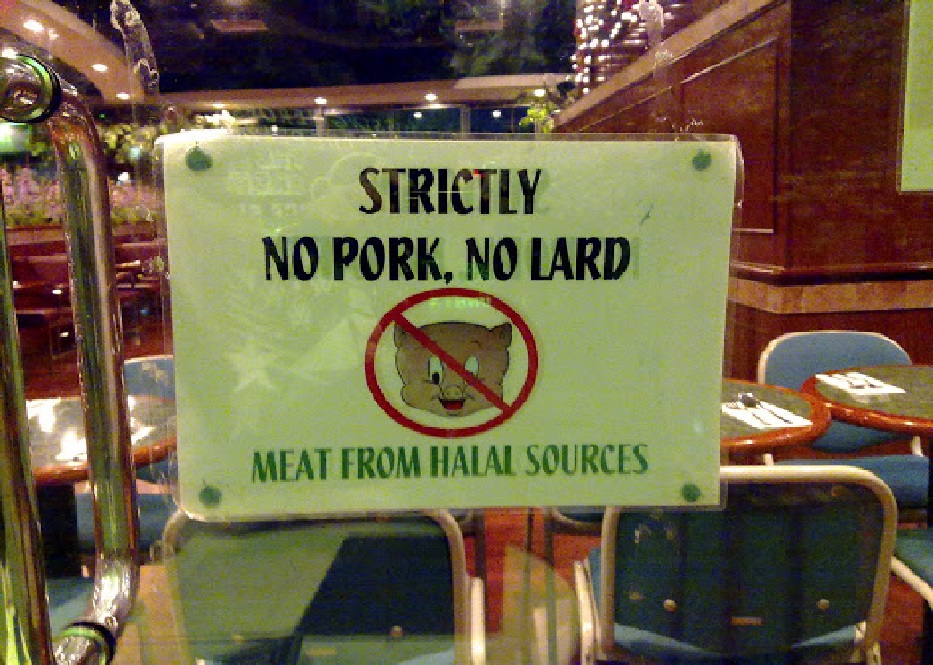
    Member of public is concerned over attending a wedding of a Muslim couple done at an eatery without MUIS halal certification nor was it 100% Muslim-owned.

    She attended the wedding in good faith at an eatery in a hotel. However, her sixth sense made her ask the staff there on the halal status of the place.

    She asked the staff there and to her horror, the eatery was not certified halal by MUIS and instead the status was simply “No Pork, No Lard”.

    The staff concerned also said that all the food ingredients used had individual halal certification. However, when asked to produce the supporting documents for the claim, the staff concerned was not able to do so.

    This posting is not meant to highlight an eatery that is not MUIS halal certified. Such eateries are not our concern actually.

    The concern is NOT on the eatery.

    The concern, as expressed by the member, is on the Muslim family that organised a wedding with invitees who were mainly Muslims at an eatery without MUIS halal certification nor was the eatery owned by Muslims.

    The concern can be summed up as follows:

    (a) Muslim invitees to Muslim weddings should not be subjected to eating foods served at such eateries that had no MUIS halal certification or not owned by Muslims.

    (b) Muslim families organising weddings at restaurants or hotels should be more discerning about the halal status of those makan places.

    (c) Muslim Invitees to Muslim weddings should be made to feel safe attending such weddings, without having the need to check on the halal status of the eateries themselves. Muslim families organising their weddings should ensure that the eateries concerned are at either certified halal by MUIS or Muslim-owned.

  • Commentary: Mdm President, We Wait For Solutions To Stop Discriminatory Policies Directed At Malays

    Commentary: Mdm President, We Wait For Solutions To Stop Discriminatory Policies Directed At Malays

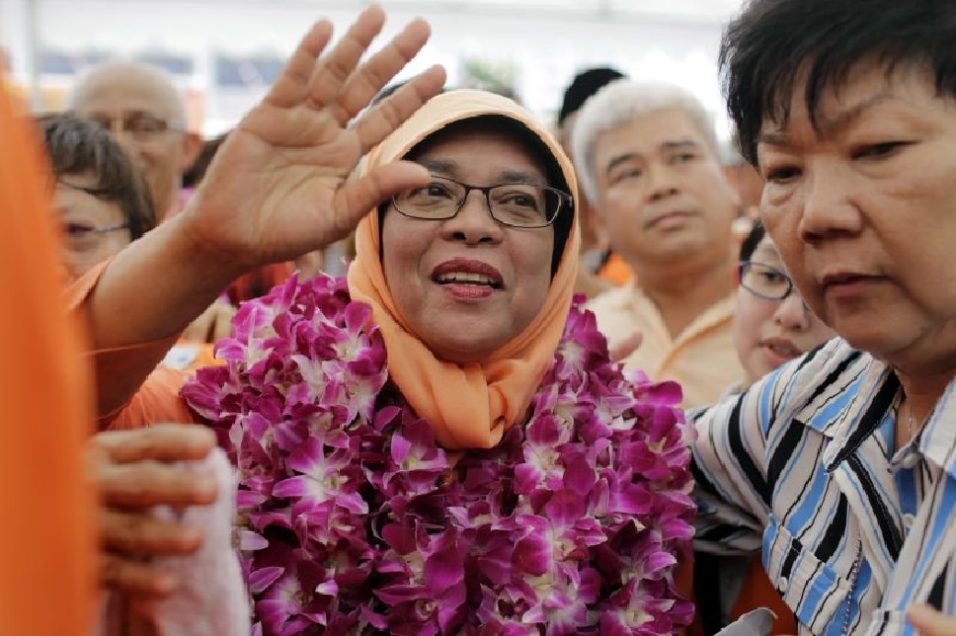
    While the president goes about shaking hands, kissing babies and mingle with social service providers and volunteers, which are commendable no doubt, she must not lose sight of the more pertinent raison d’etre of her appointment, ie to guard our national reserves and scrutinise key government appointments.

    Additionally, she must ensure that the government of the day conducts its business in a manner free of any form of discrimination, especially against the Malay community, whom she claims to be a member of despite her Indian parentage.

    Chief among the grievanves of the Malays are their continued discrimination in national service (in the armed forces – air-force and navy in particular) and the dearth of Malays in senior positions in government and government owned business institutions.

    Another sore point is the continued denial to allow their women folks in some front-line positions and uniformed groups to dorn the tudung, though she herself puts on one.

    This is a clear breach of the constitution which guarantees freedom of religion and its practices.

    We of course do not expect her to publicly take on the government on these issues.

    She may quietly raise the matter in private, behind closed doors, but what matters is the end result.

    Lets hope these issues and other discriminatory policies directed at the malays, like the pro non-Malay immigration, SAP schools etc, can finally be put to rest during her six year term.

    We can then touch our hearts and confidently say “yes” we are now one people, one nation one Singapore.

    Boleh puan? Kita tunggu!


    Source: Mohamed Jufrie Bin Mahmood

  • Commentary: Retired Military Generals Are Only Familiar With Simulated Situations, But Not For Real Life Issues

    Commentary: Retired Military Generals Are Only Familiar With Simulated Situations, But Not For Real Life Issues

    The long time practice of putting retired military generals to take charge of public institutions that are vital to the social and economic lives of citizens – even if they had volunteered for the job – may not be the wisest thing to do after all. They may be scholars no doubt, but if they had spent all their working lives running military outfits, day in and day out facing simulated situations, they may not find it easy to adapt to real life issues.
    For example what technical experience does an ex general have to run a train system that is increasingly sophisticated and vital to the economic and social lives of the nation? What we need for the job is a first class engineer with good management experience who, if necessary, is prepared to even defy his political bosses with sound and practical solutions.
    The same thing goes for the management of our national shipping line which went to the dogs when a military general was put in charge. In spite of his scholar reputation I am quite sure he would have zero knowledge about shipping which is a world of difference from what he had been accustomed to.
    It is very easy to sit in your comfortable offices and earn big bucks but if you know nuts about the bolts (and nuts) of what makes the company tick, you are not the man for the job. Simple as that.
    If we see no change in the way appointments are made, be prepared for more cock-ups.
    Our selected president who is supposed to have the power to veto appointments should look into this.


    Source: Mohamed Jufrie Bin Mahmood

  • Fundraising For The Late Finn Dawkins’ Wife And Son

    Fundraising For The Late Finn Dawkins’ Wife And Son

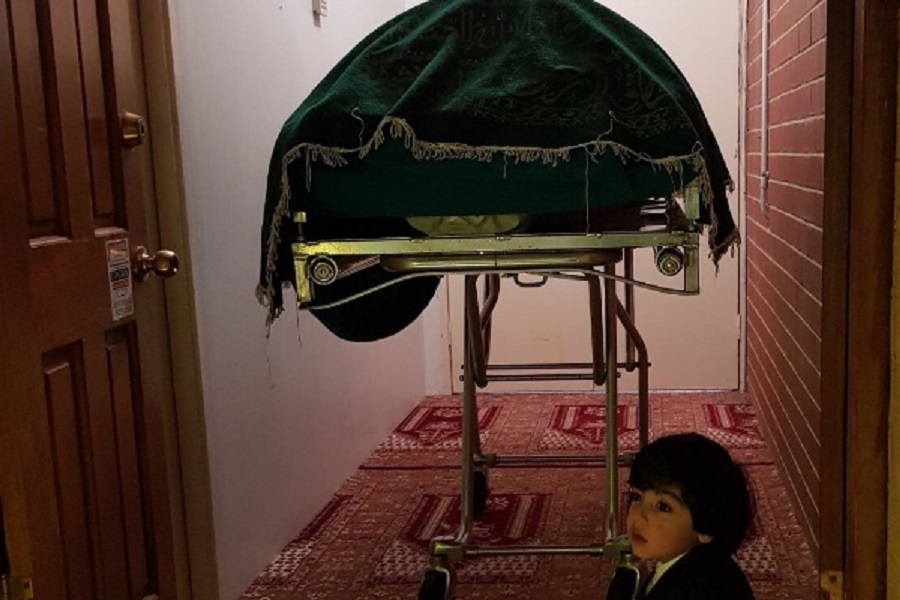
    On the 12th of September, a family’s world was irrevocably changed due to the sudden and unexplained death of Finn Dawkins. He has left behind his loving wife and wonderful little boy who at the tender age of 4 struggles to understand the finality of their circumstance. Finn Dawkins served his community with a measure of loyalty and compassion that was both selfless and constant.

    Everything he did was only carried out with the best of intentions for anyone he came across or helped. This was a humble man of his word that would go above and beyond for the ones he held close, even putting aside his own wants or needs to help others in their circumstance. There are many in the Perth community who will confirm that his presence left an indelible mark on many families, especially those who required his legal support and compassionate advice.

    But his passing has also left a mark of grief and severe hardship for his devastated wife and son, Maryiam and Laith Dawkins. Maryiam herself endures ongoing physical pain of living with multiple severely debilitating health conditions which impact her on an almost daily basis, and with long-term implications this also prevents her from securing suitable employment that she would be able to withstand.

    Despite her own hardships, she has always given everything she can back to the community and has even coordinated emergency relief and aid to hundreds of families in need. Never would she have thought that she would find herself in such a difficult circumstance for herself and her young son, facing not only unforeseen future of health-related impacts, but also now untold expenses due to outstanding debts and funeral related expenses, which make looking for a new place to call home incredibly difficult.

    The generous nature of this beautiful family and their work did not always allow for a comfortable profit margin nor a future-proof safety net. We are asking for all those who have been touched by Finn’s legacy or Maryiam’s courage to donate however much they can spare to ensure her time in need does not go unnoticed.

    This community can never repay the Dawkins for the advocacy, activism and charity that it has facilitated and truthfully neither Finn nor Maryiam would ever expect a single thought in return. However, it is time to show a family that is close to the hearts of so many, that they’re not alone and they don’t have to struggle. The goal is to get them on their way to thriving, rather than just merely surviving while the funeral related grief and expenses continue to roll in. No amount is too small or too great.

    Those who want to donate, please go to: https://www.gofundme.com/support-maryiam-and-laith

  • Analysis: Islamic State Distortion Of Hijrah: Emigrating For A Lost Cause

    Analysis: Islamic State Distortion Of Hijrah: Emigrating For A Lost Cause

    Since 2015 there have been at least a dozen Singaporeans investigated by the Singapore authorities for harbouring intention to travel or emigrate to the self-proclaimed Islamic State (IS). This year four individuals were detained for the same reason. In September, IS issued a propaganda video featuring a Singaporean who is known to have gone to Syria to join IS. In the brief three-and-a-half minute video, Megat Shahdan Bin Abdul Samad calls on Muslims to relocate to IS-controlled territories or locations where the group’s influence is present.

    He quotes a hadith or Prophetic saying that implicitly affirms that the duty of hijrah will not cease until the Final Hour (Doomsday). While most people would ignore or reject such a call, especially coming from a terrorist group, there will be a few who will fall prey to extremists’ exploitation of hijrah and other Islamic concepts. They include the literalists and those who understand the hadith without using appropriate tools of enquiry and interpretation used in the science of hadith. Like Shahdan, they would believe that relocation to IS fulfils a religious obligation.

    The Origin of Hijrah

    IS’ promotion of hijrah calls for a deeper examination of the concept. To begin with, what was the cause of hijrah as reported in Islamic history? Why did Prophet Muhammad encourage Muslims to emigrate? How should Muslims react to calls for hijrah? And why should terrorist propaganda and interpretation draped in scripture be roundly dismissed?

    Hijrah is Arabic for emigration. In the early days of Islam, Prophet Muhammad and his followers were ill-treated and harassed by polytheist Meccan Arabs over differences in religious beliefs. They were subjected to economic and social boycott and barred from marriage and trade. When these tactics failed to stop people from converting to Islam, the pagan Quraish clan resorted to physical abuse. This triggered the first hijrah to Ethiopia which was then ruled by a Christian king named Negus.

    The Quraish intensified their violence when they learned that several Muslims secretly sought refuge in Medina. The clan also plotted the assassination of the Prophet. This marked a serious escalation of efforts to stop the practice of Islam, from mistreatment to violence, including an assassination plot against the Prophet.

    These developments led to Prophet Muhammad’s emigration to Medina. This marked the second and final hijrah in Islamic history. Viewed in its historical context, hijrah was in effect a means to preserve the basic right to practise one’s faith and to protect one’s life.

    Distortion of Hijrah by IS

    IS however exploited hijrah to build up their human capital and resources in their newly-established ‘caliphate’ which they declared in June 2014. The group’s online magazine Dabiq (later known as Rumiyah) and weekly online Arabic newsletter An-Naba’, for instance, frame hijrah as a religious obligation, an act of worship that would bring a Muslim close to God, and a manifestation of true faith.

    IS claims that Islam requires Muslims to live in an Islamic state that practises Shari’ah law over a territory governed by non-Muslims or by Muslims administering man-made laws.

    IS asserts that Muslims should leave his country (especially in the Middle East) which was created based on the colonial era Sykes-Picot “false border demarcation” and relocate to IS to support the caliphate and redraw the borders. Both Hadith and Sunnah (Prophetic tradition and practice) were distorted to back these arguments. Shahdan’s video is a clear example of such distortion.

    The Correct Understanding of Hijrah

    IS’ narrative on hijrah needs to be debunked for its so-called religious justifications.

    Contrary to IS claims, hijrah to IS is not among the best forms of worship and does not make a Muslim closer to God. Many acts of worship bring a Muslim closer to God, from regular prayers and repentance to generous donations and charitable acts. A hadith was reported to have implied that whoever comes to the mosque of Quba (in Medina) and prays in it will have a reward similar to performing an umrah (small pilgrimage).

    This suggests that location is not fundamental to get closer to God but the performance and quality of a ritual. Hijrah to IS to achieve this goal is unnecessary.

    IS falsely claims that Prophet Muhammad instructed Muslims to sever ties with family and tribe by performing hijrah. The hadith was, in fact, a directive for a newly-converted Muslim to detach himself from the religious practices of his people, not blood ties. This is to distinguish himself from the other faith groups through his observance of religious obligations.

    Maintaining good relationship with non-Muslim family members is part of Islamic teachings. This is evident in the Prophet’s behaviour towards his two pagan paternal uncles. Hence, there is nothing Islamic when a Muslim leaves his family and heads to IS – like what Shahdan did – with the hope of receiving blessings from God and die as a martyr.

    Way Forward: Migration from Literalism

    Lastly, Prophet Muhammad was reported as saying that hijrah will not cease until repentance is ceased. Repentance will not cease until the sun rises from the west (a major sign of the end of time). Although the hadith is authentic, its reading must be complemented with the understanding of its implicit objective. Hijrah in this hadith does not suggest a physical relocation but rather a change in mindset and behaviour.

    Islam promotes progressive thinking and positive change in life. A believer must think of ways to become a better person each day to benefit not only himself but those around him including animals and nature. A Muslim who learns Islam by heart and perseveres to ponder upon its teaching marks a ‘hijrah’ in his cognitive attitude towards his faith, from a literalist to a pragmatist. Hijrah is also a manifestation of a paradigm shift.

    A Muslim who constantly seeks to upgrade his knowledge so that he could be of service to others is expressing a form of hijrah towards becoming a useful and productive Muslim. Similarly, a Muslim who strives to distance himself from evil is making hijrah towards becoming a better Muslim who understands his religion holistically. These counter-narratives can be understood from other prophetic sayings such as “An emigrant is one who ditches mistakes and sins”. In another hadith the Prophet was reported as saying: “An emigrant is the one that ditches from anything that Allah has forbidden.”

    The fall of IS’ de facto capital Raqqa is not likely to lead to a decline in the propagation of literalist, narrow and extremist interpretations of Islamic scriptures. IS will decentralise and exploit social media platforms to the fullest to maintain its hold over its followers and to radicalise even more vulnerable segments of society.

    Given this scenario, it is imperative that action be taken not only to debunk extremist teachings through various means but also to disseminate widely moderate and progressive values which will act as a ‘firewall’ against false, deviant and divisive ideas.

    *Muhammad Saiful Alam Shah is an Associate Research Fellow with the International Centre for Political Violence & Terrorism Research (ICPVTR), a constituent unit of the S. Rajaratnam School of International Studies (RSIS), Nanyang Technological University, Singapore. He is also a religious counsellor with the Religious Rehabilitation Group (RRG).


    Source: Eurasiareview