Category: Singapuraku

  • 30 Orang Pertama Dalam ISLAM

    30 Orang Pertama Dalam ISLAM

    30 orang pertama dalam ISLAM
    .
    Dalam sejarah islam, kita cuma mengenal mereka yang kali pertama masuk islam (Assabiqunal Awwalun) tapi kerap kita tidak tahu, siapa saja mereka yang melakukan sesuatu berkaitan dengan islam. Siapakah mereka? Berikut nama-nama sahabat Rasulullah itu.
    .
    Orang yang pertama menulis Bismillah :
    Nabi Sulaiman AS.
    .
    Orang yang pertama minum air zamzam :
    Nabi Ismail AS.
    .
    Orang yang pertama berkhitan :
    Nabi Ibrahim AS
    .
    Orang yang pertama diberikan pakaian pada:hari qiamat :
    Nabi Ibrahim AS.
    .
    Orang yang pertama dipanggil oleh Allah pada hari qiamat
    Nabi Adam AS.
    .
    Orang yang pertama mengerjakan sa’i antara Safa & Marwah :
    Sayyidatina Hajar
    .
    Orang yang pertama dibangkitkan pada hari qiamat :
    Nabi Muhammad SAW.
    .
    Orang yang pertama menjadi Khalifah Islam :
    Abu Bakar As Siddiq RA.
    .
    Orang yang pertama menggunakan Kalender Hijriyyah :
    Umar bin Al-Khattab
    .
    Orang yang pertama meletakkan Jabatan khalifah dalam Islam :Hasan bin Ali RA.
    .
    Orang yang pertama menyusukan Nabi Muhammad SAW :Thuwaibah RA.
    .
    Orang yang pertama syahid dalam Islam dari kalangan lelaki :
    Haris bin Abi Halah
    .
    Orang yang pertama syahid dalam Islam dari kalangan wanita :
    Sumayyah binti Khabbat
    .
    Orang yang pertama menulis hadis di dalam kitab /lembaran :
    Abdullah bin Amru bin Al-Ash
    .
    Orang yang pertama memanah dalam perjuangan fisabilillah :Saad bin Abi Waqqas
    .
    Orang yang pertama menjadi muazzin dan menyerukan adzan: Bilal bin Rabah
    .
    Orang yang pertama sembahyang dengan RasulullahSAW :Ali bin Abi Tholib
    .
    Orang yang pertama membuat mimbar masjid Nabi SAW :
    Tamim Ad-dary
    .
    Orang yang pertama menghunus pedang dalam perjuangan fisabilillah : Zubair bin Al- Awwam
    .
    Orang yang pertama menulis sejarah Nabi Muhammad SAW :Ibban bin Othman bin Affan
    .
    Orang yang pertama beriman dengan Nabi SAW :
    Khadijah bt Khuwailid.
    .
    Orang yang pertama menggagas ushul fiqh :
    Imam Syafi’i RH.
    .
    Orang yang pertama membina penjara dalam Islam:
    Ali bin Abi Tholib
    .
    Orang yang pertama menjadi raja dalam Islam :
    Muawiyah bin Abi Sufyan
    .
    Orang yang pertama membuat perpustakaan umum:
    Harun Ar-Rasyid
    .
    Orang yang pertama mengadakan baitulmal : Umar bin Khattab
    .
    Orang yang pertama menghafal Al-Qur’an setelah Rasulullah SAW :
    Ali bin Abi Tholib
    .
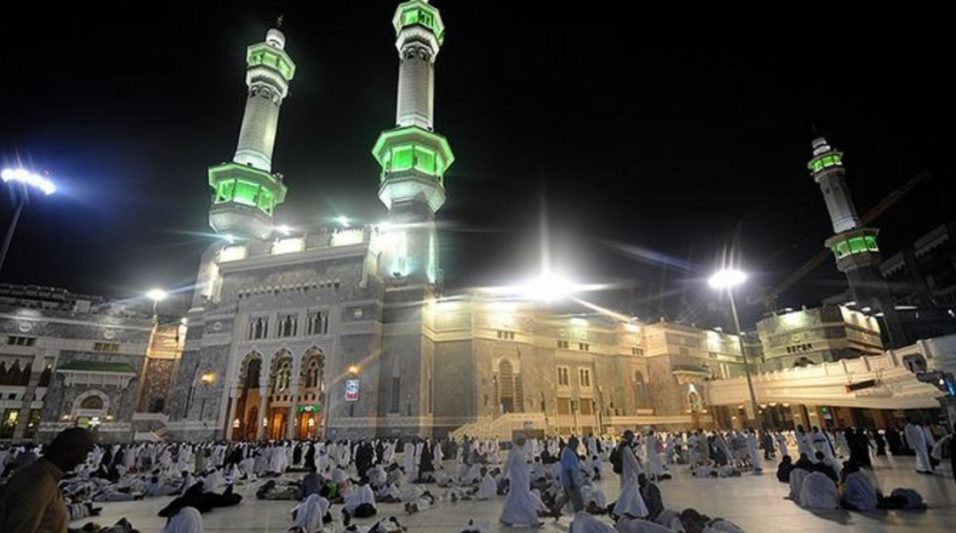
    Orang yang pertama membangun menara di Masjidil Haram Mekah:
    Khalifah Abu Ja’far Al-Mansur
    .
    Orang yang pertama digelar Al-Muqry :
    Mus’ab bin Umair
    .
    Orang yang pertama masuk ke dalam syurga :
    Nabi Muhammad SAW.


    Source: Ikut Resmi Padi

    Rilek1Corner

  • Halal Scanner; Singapore-made app to know if a product is halal or not just by scanning

    Halal Scanner; Singapore-made app to know if a product is halal or not just by scanning

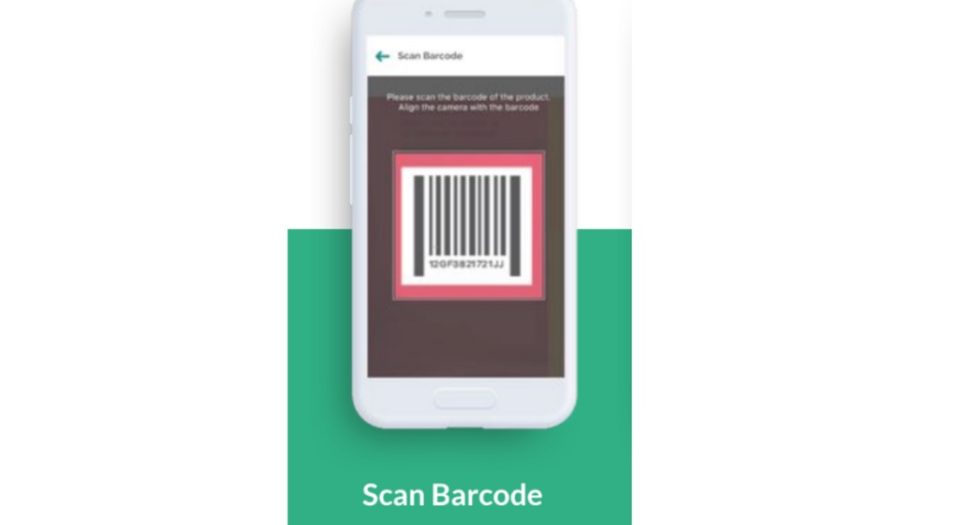
    Azman Ivan Tan, CEO, and Salehin Amat Kamsin, chief operating officer of WhatsHalal say their app can tell if a food product is halal or not, just by scanning its barcode, ingredients list, or product image.

    The new tool, which is set to launch at the end of April, can supposedly tell users if a food product is likely to be halal or not – just by scanning its barcode or ingredients list.

    The Halal Scanner will be integrated into the existing WhatsHalal app, which was designed as a halal food guide for consumers, businesses and enterprises.

    The WhatsHalal app was launched in February last year, around four months after entreprenuers Azman Ivan Tan and Salehin Amat Kamsin first co-founded the tech company.

    Although the app offers four other key services to consumers – a halal restaurant listing, food delivery, takeaway food orders and restaurant reservations – only the listing service is available now due to a revamp of the app.

    A beta version of the upcoming Halal Scanner is expected to be launched in all of WhatsHalal’s available countries – Singapore, Malaysia, Indonesia and Australia.

    In an interview with Business Insider, Azman, who is now CEO, and Salehin, who serves as chief operating officer, said that they are expecting at least 50,000 products to be scanned in the first few months after the launch.

    During this phase, the WhatsHalal team will identify scanned ingredients which require halal verification. According to Salehin, about 150,000 potential ingredients are expected to surface for validation.

    How it works

    The scanner has three identification methods – product image, barcode and ingredients list – and all of them work based on community-driven data collected over time.

    Users first take a photo of a product in the app. If WhatsHalal’s back-end team is able to verify that the product’s packaging contains the Islamic Religious Council of Singapore (Muis) logo, it will automatically accept that the product is halal.

    The data is then stored in WhatsHalal’s system and the next time a user scans a barcode of the same product, the app will immediately indicate that it is halal.

    In cases where a product does not bear a Muis logo, its ingredients list come into play. After a user scans the ingredients list on the app, WhatsHalal automatically conducts an optical character recognition (OCR) on it.

    “If it doesn’t have a Muis logo, what we do is we let the system learn over time. By default, the system knows – if there’s salt and sugar, the system will flash ‘halal’ and ‘halal’. Only when they see pork, it will immediately say ‘not halal’. Very clear cut,” Azman, who has 20 years of experience in technology and business management, said.

    But for ingredients that are in the grey area, more information will be shown so the consumer can make a more informed choice. One such ingredient is gelatin, which can be from different sources such as fish or beef.

    “You can click on that, and we’ll show you a little bit of information, such as gelatin from (a certain country) is likely halal, and (if it’s) from China then it’s likely non-halal,” the 42-year-old said.

    If a significant number of users were to raise their concerns on a particular product, WhatsHalal will engage certified, external halal consultants to conduct thorough checks on whether its ingredients are likely halal or not.

    “So if this (a product) comes from XYZ company, and, say, this company has been certified by a proper certifying body, we’ll take it as yes – our halal consultants don’t need to check all the way. But if it’s not certified they’ll check with manufacturers,” Azman said.

    Salehin, 32, said that while the aim of the Halal Scanner is to verify as many products as possible, there is also a need to be practical by recognising operation constraints.

    “We must put things into perspective – there’s a small number of Muslims in Singapore, but millions in Indonesia and Malaysia,” he said. It is hence not practical to expect the WhatsHalal team to be able to check every single product scan that comes in.

    And that’s where the WhatsHalal database will shine.

    “The more people scan, the more we build up product database,” he said.

    The company is even looking at incorporating a translation feature within the scanner, so that users can scan products bought from other countries and still collect the information they need to make a decision.

    Helping Muslim customers make better decisions faster

    With the Halal Scanner, Azman and Salehin hope to help customers make decisions more quickly by speeding up the halal food identification process.

    “When we go to a supermarket, the first thing we do is look at the ingredients list. As a Muslim, we’re sure that some ingredients are halal, but not so sure of others. So we’ll check online, and that’s a lengthy process sometimes, given that each product has, say, 10 ingredients,” Azman said.

    “So what happens with our system is we actually just speed up the process and make it easy. All the information is at your fingertips,” he added.

    But Azman emphasised that the Halal Scanner is not created to dictate a user’s decision. Rather, it serves as a guide for informed decision-making.

    “We will not be able to tell you that something is 100 per cent halal… we leave it to the end user to make the decision. We are only helping you to map,” he said.


    Source: BusinessTimes
  • Watain Concert Banned, Minister Dragged in Racial Issues Involving Malays, Muslims and the Christian Community in a Follow-up Explanation

    Watain Concert Banned, Minister Dragged in Racial Issues Involving Malays, Muslims and the Christian Community in a Follow-up Explanation

    In the wake of the government’s order to block a black metal band from playing here (just hours before the concert was due to start), Minister of Home Affairs K Shanmugam oddly dragged in racial issues.

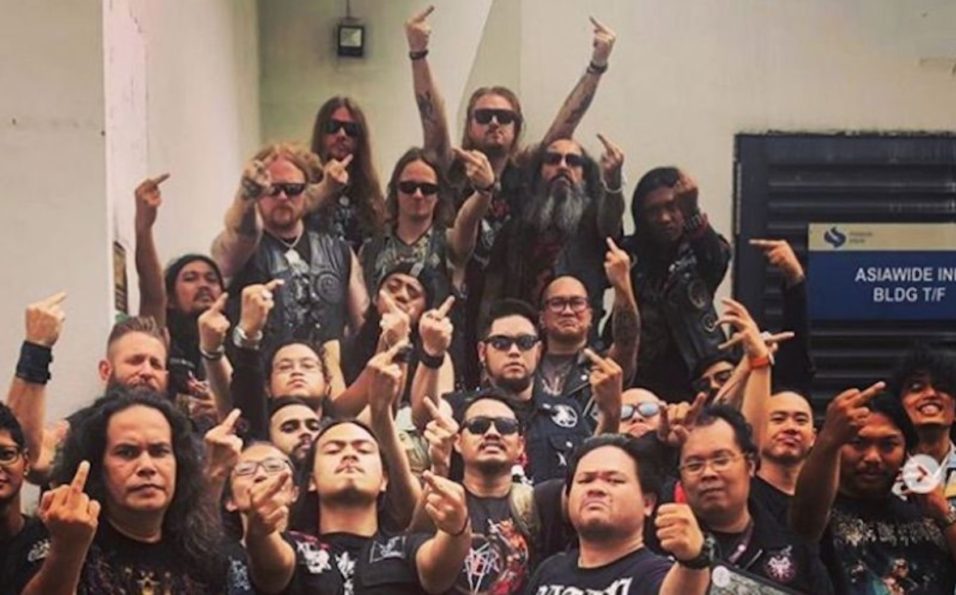
    In a speech at an appreciation lunch for Malay-Muslim anti-drug campaigners on Saturday, the minister honed in on a photograph taken at a meet-and-greet session between Swedish band Watain and their fans. The picture depicted Watain and their fans showing ‘the middle finger’ — a defiant (and very metal) response to the government’s decision to cancel the concert on grounds of preserving “public order”.

    According to Channel NewsAsia, Shanmugam detailed how the ministry would be unable to let the concert go ahead, given how Watain’s lyrical content held anti-Christian themes. Then he went into length about the photograph, harping on how it showed “primarily Malay young men”.

    “You have a group of Malay young men, showing the one-finger sign, supporting the group,” CNA quoted the minister.

    “If a group of Chinese went and showed the finger sign and said that we should allow it – how would you all have felt? It is the same.”

    Mentioning that the photo has gone viral “across the Christian community”, Minister Shanmugam stated that it was crucial to show that the picture does not represent what the Muslim community thinks.

    “They won’t realize that this a small group of Malays, but they may think, is this what Muslims think of us? So now we have to send the message that this is not what the Muslim community thinks. These are black metal group supporters, they are not the mainstream community.”

    In conversations with Christian leaders, Shanmugam pointed out how the leaders would oftentimes draw comparisons to how tough the government would quash anti-Islam sentiment, such as banning the Salman Rushdie book The Satanic Verses in Singapore.

    “(The leaders) said what these people (Watain) are saying is far worse, it is a hundred times worse about Christianity – how come you would allow that?” said Shanmugam to The Straits Times.

    “They said you treat the Muslim community differently than the Christian community.”

    Shanmugam acknowledged there was “some truth” to what the leaders said but said it was not fully true “but it is an approach”.

    He also pointed out to Channel NewsAsia that not all bands would be banned because they spoke about Christianity.

    ———————————————————————————————————————————————————–

    The aftermath?

    It led to confusion among the Muslim community. How did this become an issue that involves the Muslim community? Is the minister trying to be a “hero” that saved the Muslims from depicting a bad, intolerant stand against Christians? What has the brown-skinned fans in the photo got to do with Malays in general, or worse representing what the Muslim community in Singapore thinks about the Christians. Is it because there is a stereotype about Malays in Singapore where they are called Mat Rockers? And who are these brown-skinned fans in the viral photo? Are they even Malay/Muslims from Singapore?

    What was the Minister thinking by saying all this?

    Source: Coconut, Yahoo, The Straits Times and Channel NewsAsia

  • Commentary: Government Funded Madrasah possible only if Asatizahs function beyond the Muslim community

    Commentary: Government Funded Madrasah possible only if Asatizahs function beyond the Muslim community

    I am all for the idea that there be a Madrasah that is funded by our government but I think we fall short of one thing. The GOALS and ASPIRATIONS got to change from the ones we have now which is to produce “Khalifah-Fil-Ard”. No commercial value as compared to saying being the True Leader with Dignity, Honor and Respect. Same thing but it holds different bearing when you put it across differently.

    Those missionary schools produce so called “intellectual” individuals who serve the society as lawyers, doctors, engineers, architects, accountants, army generals, pilots, nurses, etc. So until we can market Madrasah graduates to be like that or else once again it has a different bearing in the eyes of the government. To them – You produce Asatizah for your own Muslim needs. So it makes no sense for them to pay for people who only functions for the Muslim community.

    For example, I have heard of Christian Judges in courtrooms who called upon other Christians within the Ministry (building) to gather and they held prayers during lunch.

    So the thing is, religion is for them but the government will want individuals who are by their level of intellect be able to work and do things for the society at large. If Asatizah? Serve the Chinese or Indian or Eurasians community in what way?

    Until the Madrasah is ready to produce such dynamic all-rounder individuals, I don’t see a Government funded Madrasah being a reality. Why? For a start … Can we compromise on the idea that the Institution of Madrasah is there to produce Asatizah as The Next Corp Gen of Khalifahs? We are too static in our thoughts. Madrasah means must be “Pelapis Ulamak”. Let’s just see near us. Even many parents out there still think and perceive the Madrasah path means … Asatizah path only. That’s it. So those who are not into being over religiously inclined will shun away.

    And then let us look at how these “POPULARLY GOOD” schools get parents involvement by volunteering before enrolment dates. That alone will set the tongue wagging and spread words on how Madrasah had evolved. Do we have that incorporated now? Still with the “ENTRANCE TESTS” which is good but not good enough marketing strategy.

    That branding really got to change. But before a change can be proposed, I want to take a step back and look at what happened to 2015 P6 batches Ustaz … The newspaper article appeared about some students switching to National Schools and we have criticism flying everywhere …. “If the best students are away elsewhere then who is best enough to lead?” Hahahaha.

    All those mindsets got to go and got to change. Really a tall order and a long wayyyyyyyy to go. But do count me in on this mission. I will volunteer in any capacity I can to make this dream a reality. But I mulut laser Ustaz … I will say what needs to be said because I believe to change is not easy and not for the weaklings.

    So with that … May Allah SWT grant Singaporean Muslims the strength to change this in the future. Insha Allah. Ameen.


    Credit: Mohammed Nafis

  • Full-Time Government Madrasah for Muslims in the future; Is it even possible?

    Full-Time Government Madrasah for Muslims in the future; Is it even possible?

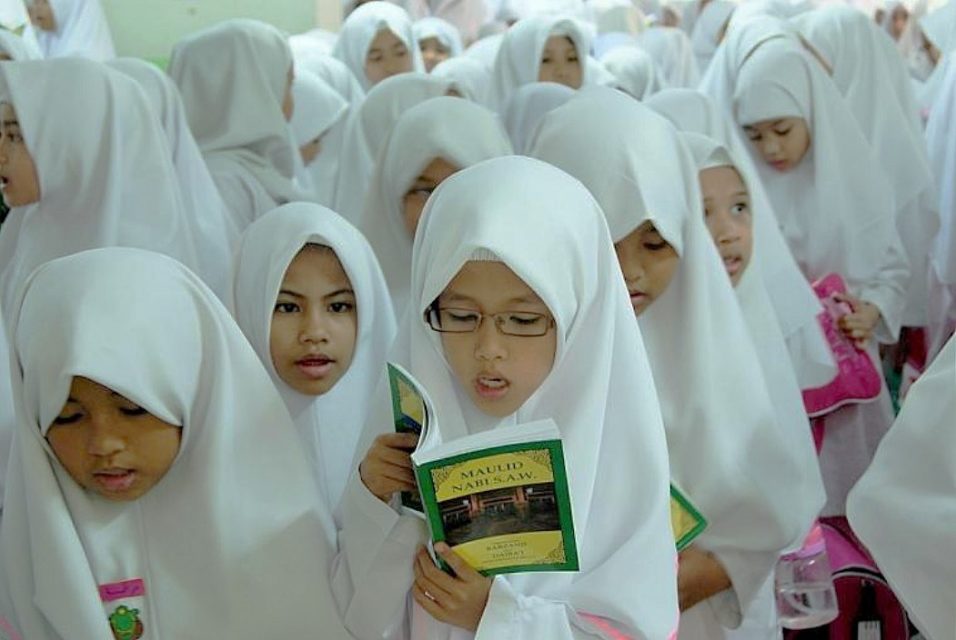
    Could we have a full time government madrasah instead of government school for our Muslim community in the future?

    For it to be supported by the government, will it require non-Muslims’ involvement in the madrasah set up, be it management, teachers and students? If so, are the chances of it happening now gone?

    Since there is a possibility of non-Muslims’ involvement, will there also be non-Muslim students in the government madrasah as well? Will the experience be similar to how Muslim students studied at Christian schools? And what about the uniforms for the non-Muslims?

    Some might ask, why should there be a government full time madrasah? Just how many asatizahs are willing to teach in government school? Isn’t that not part of the intention in the first place? And if the asatizahs aren’t willing to go over, why would the other side decide to come to madrasah too?

    Most importantly, will religious education still be the core business of the government funded full time madrasah?

    Hmmmm..

    What are your thoughts? Do you think there will ever be a full time government madrasah?


    Rilek1Corner