Blog

  • Animal Father Videos Own 21 Year Old Daughter Bathing, Jailed 4 Months

    Animal Father Videos Own 21 Year Old Daughter Bathing, Jailed 4 Months

    A man who recorded a video of his 21-year-old daughter bathing was jailed for four months on Monday (July 31).

    The 48-year-old Malaysian pleaded guilty to insulting the modesty of his biological daughter in the toilet of a flat in Toh Yi Drive in July 2016.

    At the time, the accused and his daughter were living in the same rented room.

    Sometime in July last year, the complainant, now 22, was bathing when she saw a black mobile phone tied to the pipe below the basin inside the toilet.

    She removed the phone and saw that it was in video recording mode. She stopped the recording and played back the video, which captured her nude body as she was bathing.

    She then checked the phone and saw a few other videos capturing the accused’s face, and him adjusting the camera’s angle.

    When confronted, the accused admitted that he had been doing this for the past two weeks.

    She angrily deleted all the videos from the phone and returned it to him.

    She subsequently left to stay with her colleague.

    The accused admitted that he recorded the video for personal viewing. He had about 20 other similar clips of his daughter bathing in his phone but said that he had misplaced the device.

    On April 5 this year at about 3.10am, officers responded to a message at Block 840 Jurong West Street 81 and arrested the accused for attempted suicide.

    A second charge of using threatening words and behaviour towards his daughter by saying that he wanted to jump down while having his arms and left leg on the parapet was taken into consideration during sentencing.


    Source: www.straitstimes.com

  • Musollah At Singapore Flyer; Everything You Require For Solat Provided

    Musollah At Singapore Flyer; Everything You Require For Solat Provided

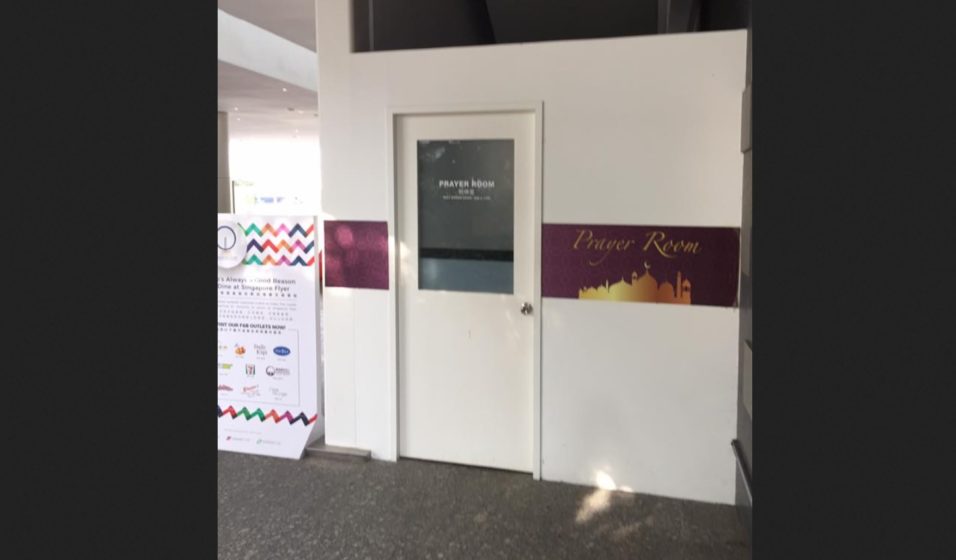
    Musollah at Singapore Flyer.

    It’s been awhile since I came here. To my astonishment, sua ada musollah beb. Gua sua macam nak bikin breakdance dengan moonwalk bila nampak ni. 😁😁😁😁🤣🤣🤣🤣

    Everything’s provided. Telekong, selipar, sejadah, quran, kerusi and para malaikat yang kita tak boleh lihat dengan mata kasar. 😊

    Thank you Singapore Flyer. Now what you need is one or two halal joints here. And I will bring my compadres here for some siesta.

    No automatic alt text available.

    No automatic alt text available.

    No automatic alt text available.

    Image may contain: shoes and indoor


    Source: Chef Bob For Hire  (Thank you brader!)

  • Hero Mother Went Into Burning Flat To Save Daughter, Would Rather Sacrifice Own Life Than Watch Children Die

    Hero Mother Went Into Burning Flat To Save Daughter, Would Rather Sacrifice Own Life Than Watch Children Die

    The flat was ablaze, with thick smoke everywhere, and her neighbours persuaded her not to enter.

    Madam Cynthia Liew, 35, still rushed in to save her four-year-old daughter during Saturday evening’s fire.

    She had to use her sense of touch to manoeuvre for five minutes in the three-room flat before she found the little girl in the bedroom.

    The girl was calm and expressionless, and Madam Liew carried her out to safety. Both suffered smoke inhalation. The New Paper had reported yesterday about the fire in the 11th storey flat in Block 4, Haig Road.

    Madam Liew is now warded at Tan Tock Seng Hospital, while her daughter and son are warded at KK Women’s and Children’s Hospital.

    She told The New Paper: “My children are so young, I would rather perish than let them die.

    “But they were braver and calmer than me, they did not make noise and kept quiet throughout.”

    The housewife, whose partner is currently in remand, said the fire started from the kitchen, and she suspects it was the washing machine socket that caused it. Madam Liew is extremely thankful for her neighbours’ help.

    “I was coughing and even fainted when I got out of the house, but thankfully, my neighbours and the police were there to assist me and my children.”

    Her neighbours found her five-year-old son crying at the door and they prised the gate open so that he could crawl through.

    About 50 residents from the block were evacuated furing the fire.

    When TNP visited the flat again yesterday afternoon, Madam Liew’s children’s grandfather, Mr Ang Cee Hock, 77, said he will continue living in the flat.

    “There isn’t any electricity now and all my electrical appliances such as my fridge and washing machine are not working. But I have to stay here to take care of it because it is my home.”C

    But Madam Liew is worried as he is old and there is no one at home to look after him. “I hope he can move out until the flat is safe to live in.”


    Source: www.tnp.sg

  • Academic: Calls To Make Malay Official ASEAN Language Futile

    Academic: Calls To Make Malay Official ASEAN Language Futile

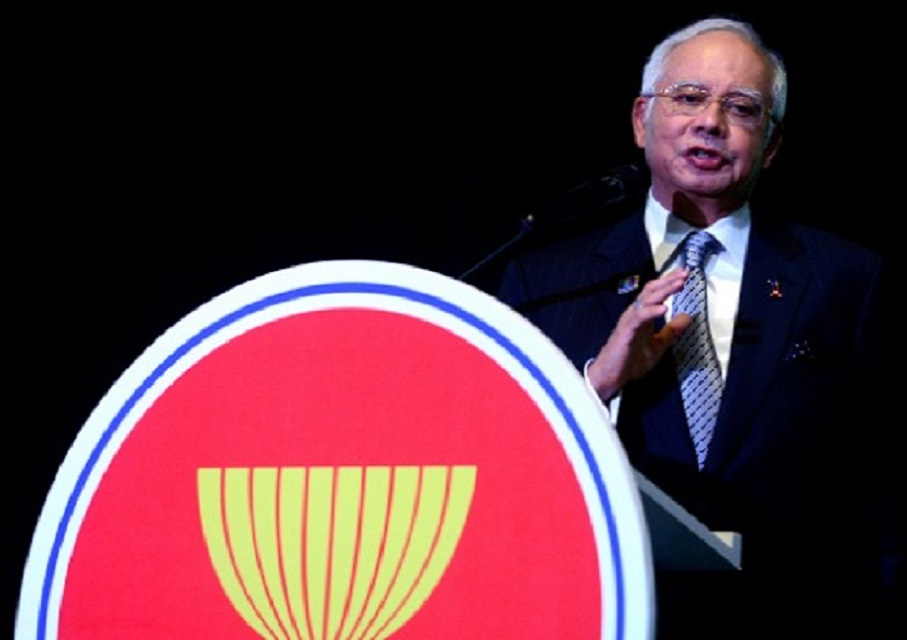
    The proposal to adopt the Malay language (Bahasa Melayu) as ASEAN’s “main and official language” is a non-starter, and even futile. This call, made by Malaysian Prime Minister Najib Tun Razak in Kuala Lumpur on 26 July 2017, comes after a similar suggestion by his Communications and Multimedia Minister Salleh Said Keruak in 2015 when Malaysia held the rotating ASEAN chairmanship. He made the case that Malaysia “need to show that the Malay language is a relevant and dynamic language that can act as the ASEAN language.”

    These calls will fall on deaf ears outside of selected audiences in Malaysia. In the first instance, ASEAN has adopted English as the working language since its establishment in 1967. This practice was later institutionalised in the ASEAN Charter in 2007, Article 34 of which unequivocally states that “the working language of ASEAN shall be English.” Revising this provision requires the unanimous support from Malaysia’s fellow ASEAN member states, most of whom may find it onerous to support a seemingly nationalistic cause to promote the cultural and linguistic heritage of only one particular member state.

    It is interesting to note that the ASEAN Leaders, in approving the Charter, opted for the term “working language” instead of “official language,” which can be interpreted as a sign of respect for the plethora of member states’ national languages. The adoption of any part of a specific Southeast Asian language as the official language would stir political backlash from other ASEAN communities, which may interpret the move as a form of political and cultural dominance. Arguably, the English language might be a non-native language of a former colonial power in the region, but this “neutral” attribute serves to unite ASEAN’s diverse socio-cultural make-up, providing a level political playing field for all member states.

    The fact that English is lingua franca has facilitated ASEAN’s interactions with its Dialogue Partners and the wider global community.  ASEAN can play a more effective role in bring the “regional story” beyond Southeast Asia and reaching out to other regions using a global language. In multilateral organisations throughout the world like the United Nations and World Trade Organisation, English is the working language. Thus, attempts to replace English as the working language with any other languages would rollback ASEAN’s gains in positioning the regional organisation as a global entity, and hamper future efforts to connect with the wider global community.

    At face value, Prime Minister Najib’s proposal is an attempt to bolster his political credentials by championing the Malay language ahead of the general elections due by May 2018. However, his actions cannot be summarily dismissed as a domestic matter because as an ASEAN Leader, he has the recourse to push this cause at ASEAN Summits. If he follows through with this unrealistic proposal at the regional level, he might force his fellow ASEAN leaders into the conundrum of having to defend the primacy of their respective languages and promote their language as ASEAN’s main and official language as well.

    Instead of focusing on the trivial, ASEAN should attend to more urgent and pressing matters of community-building. Playing up the divisive nature of language politics might fray ASEAN unity.

    The writer, Dr Tang Siew Mun, is Head of the ASEAN Studies Centre, ISEAS–Yusof Ishak Institute.


    Source: https://iseas.edu.sg


  • China Wants This Malaysian Port To Rival Singapore

    China Wants This Malaysian Port To Rival Singapore

    The Straits of Malacca have been a gateway for China for centuries in its quest for power.

    A story blended from Malaysian history and folklore says an emperor sent a princess called Hang Li Poto marry the Sultan of Malacca in the Ming Dynasty, offering a ship filled with gold needles. He also sent a blunt message. “For every gold needle, there is a subject. If you can count the number of needles, you will learn the true extent of my power”, the emperor reportedly said in a letter.

    Hundreds of years later, China is again seeking influence in Malaysia as it spreads its economic and military clout through South-east Asia. It is investing billions in a US$7.2 billion (S$9.8 billion) redevelopment that will see Malacca, long the haunt of Chinese traders, become a new deep sea port.

    It is also providing funds for infrastructure projects down the eastern seaboard of Malaysia, key heartland areas for Prime Minister Najib Razak ahead of an election that could be held this year. New roads and bridges may help him woo ethnic Malays, but the money could come at a long-term cost.

    “The closeness with China is an Achilles heel for Najib,” said Dr Mustafa Izzuddin, a fellow at the ISEAS-Yusof Ishak Institute in Singapore. “While investment coming in will balloon government coffers and boost the economy, the opposition is using the China card to criticise the government for becoming too close to China and accusing it of selling Malaysia’s sovereignty.”

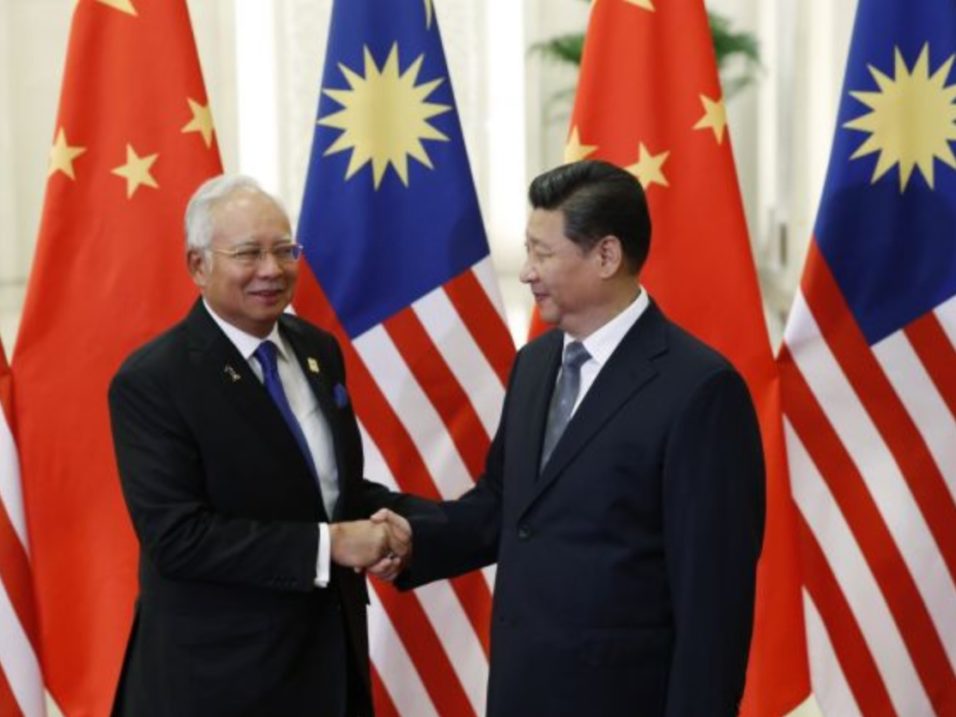
    China’s investment in Malaysia has risen since Mr Xi Jinping took power in 2012, with the president describing ties with Mr Najib as the “best ever”. Beijing is readying a state visit by Mr Xi to Malaysia in the coming months, according to three people with knowledge of the plans who asked not to be identified given the sensitivity of the discussions.

    China has committed to import goods worth US$2 trillion from Malaysia over the next five years (a nearly eight-fold jump from 2016 imports over that period), invest up to US$150 billion in the country and offer 10,000 places for training in China.

    Mr Najib brought home US$33.6 billion in deals when he visited China in November — the biggest haul yet between the countries — plus an agreement to buy four patrol boats from China.

    China has been Malaysia’s largest trading partner since 2009, displacing Singapore, with two-way trade last year valued at US$83.4 billion. China is Malaysia’s biggest export market.

    Malaysia, like Singapore, has strong historical links to China. About a quarter of its population is ethnically Chinese, and traders for centuries stopped at ports in Malacca and Penang to sell silk, tea and porcelain while buying cinnamon and nutmeg. There is even a fusion cuisine based on Chinese and Malay ingredients, called Peranakan or Nyonya.

    Chinese companies accounted for 8 billion yuan (S$1.6 billion) in construction projects in Malaysia in 2015, DBS analyst Chong Tjen-San said in an April report — nearly half the total value of projects clinched by foreign contractors.

    “We are going to be drawn into the economic gravity of China,” said Mr Steven CM Wong, deputy chief executive of the Institute of Strategic and International Studies Malaysia, at a conference on Mr Xi’s Belt-and-Road trade project in Kuala Lumpur last month. “Just as if you are in North America, you are drawn into the economic gravity of the United States,” he said. “This is not what we want or we don’t want. It’s just the way things are.”

    Still, the money risks being caught up in domestic politics. Mr Najib’s critics, including former premier-turned-opposition leader Mahathir Mohamad, say the country will need to cede influence to China in exchange for its money, and that local businesses will lose out.

    “Much of the most valuable land will now be owned and occupied by foreigners,” Dr Mahathir wrote on his blog in January. “In effect they will become foreign land.”

    Mr Najib, in an article published in May in the South China Morning Post before a visit to China, said that he made “no apologies for wanting to build world-class infrastructure for Malaysia that will, with local ownership being preserved, open up huge swathes of our country”. His office did not respond to requests for comment.

    Some analysts said Najib risks being painted as too close to China. While the countries both claim parts of the disputed South China Sea, for example, Malaysia has been mostly quiet on China’s military build up in the region.

    “There are perceptions that Najib is being bought by the Chinese,” said Professor Bridget Welsh, a political scientist at John Cabot University in Rome and author of The End of UMNO? Essays on Malaysia’s Dominant Party.

    “Within Malaysia, China’s interventions have the potential to bring about greater ethnic tensions and political instability, as well as affect Malaysia’s relationships with its neighbours,” she said.

    The Malacca Strait already has sufficient port facilities, according to opposition Selangor state legislator Teng Chang Khim. “Why can’t you make use of the present ports?” Mr Teng said at the Belt-and-Road conference.

    Deputy Secretary General for Trade Isham Ishak said the government would seek to balance its relationship with China.

    “We want to make sure that there’s fair value in terms of investments from China into Malaysia,” he said at the same conference. “It’s not only about Chinese products coming in, Chinese money coming in, and Chinese foreign workers coming in.”

    Investment in infrastructure is good for Malaysia whether it comes from China or the US, according to Mr Xu Bu, China’s ambassador to the Association of South-east Asian Nations.

    “Whoever comes to power that really doesn’t matter,” he said in a July interview. “Whoever comes to power in Malaysia, the leaders or the people in Malaysia they need investment.”

    Mr Harrison Cheng, a senior analyst with Control Risks in Singapore, said there were signs of unease in some quarters of Mr Najib’s United Malays National Organisation about Chinese investments.

    Still, UMNO’s core voters are more interested in bread-and-butter issues, he said. “There has yet to be any strong signs of a serious backlash within UMNO and the public.”


    Source: http://www.todayonline.com