Blog

  • Hijabs Turning Heads As Advertisers Realise Potential In Muslim Market

    Hijabs Turning Heads As Advertisers Realise Potential In Muslim Market

    The hijab – one of the most visible signs of Islamic culture – is going mainstream, with advertisers, media giants and fashion firms promoting images of the traditional headscarf in ever more ways.

    Last week, Apple previewed 12 new emoji characters to be launched later this year, one of a woman wearing a hijab.

    Major fashion brands from American Eagle to Nike are creating hijabs, while hijab-wearing models have started gracing Western catwalks and the covers of top fashion magazines.

    Many Muslim women cover their heads with the hijab in public as a sign of modesty, although some critics see it as a sign of female oppression.

    But there is one thing most can agree on: When it comes to the hijab, there is money to be made.

    “In terms of the bottom line, absolutely they’re good for business… it’s a huge market and they are incredibly brand-savvy, so they want to spend their money,” said Ms Shelina Janmohamed, vice-president of Ogilvy Noor, a consultancy offering advice on how to build brands that appeal to Muslim audiences.

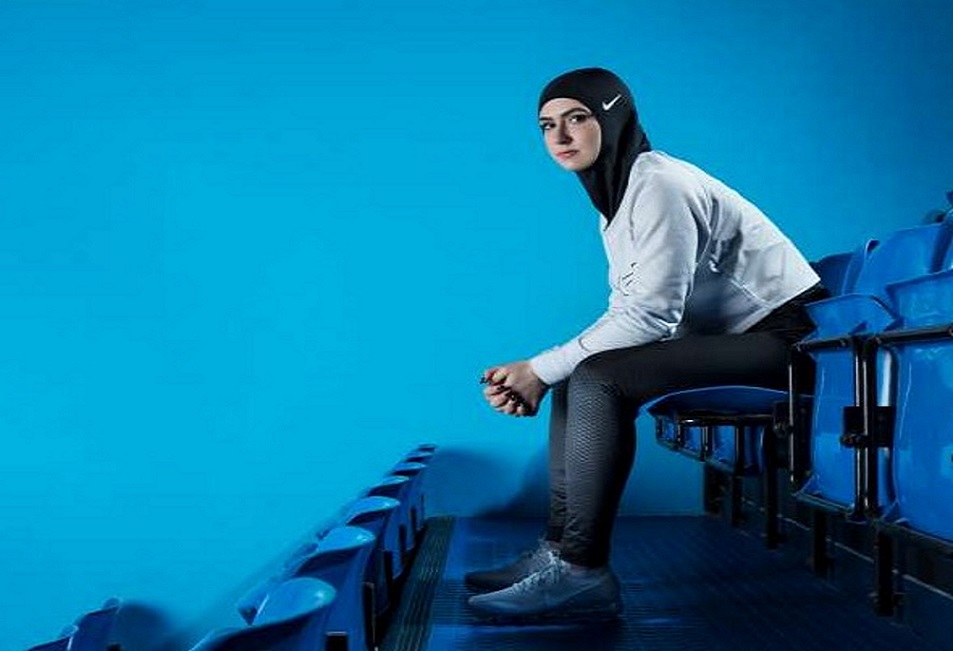
    Nike announced that it is using its prowess in the sports and leisure market to launch a breathable mesh hijab in spring next year, becoming the first major sports apparel maker to offer a traditional Islamic headscarf designed for competition.

    Last month, Vogue Arabia featured on its cover the first hijabi model to walk the international runway, Somali-American Halima Aden, who gained international attention last year when she wore a hijab and burkini during the Miss Minnesota USA pageant.

    “Every little girl deserves to see a role model that’s dressed like her, resembles her, or even has the same characteristics as her,” she said in a video on her Instagram account.

    Hijabs have also become more visible in Western advertising campaigns for popular retailers such as H&M and Gap.

    Ms Amani al-Khatahtbeh, founder of online publication Muslim- Girl.com, said from New York: “Brands, especially, are in a very strategic and potent position to propel that social good, to change the attitudes of society and really push us forward and take us to that next step.”

    In Nigeria, a medical student has become an Instagram sensation for posting images of a hijab-wearing Barbie, describing hers as a “modest doll” – unlike the traditional version. And mothers in Pittsburgh have started making and selling hijabs for Barbies in a bid to make play more inclusive.

    However, Ms al-Khatahtbeh warned of the potential for the young Muslim market to be exploited just for profit without any effort to promote acceptance and integration. “It can easily become exploitative by profiting off of communities that are being targeted right now, or it could be a moment that we turn into a very, very empowering one,” she said.

    Frustrated when she could not find an image to represent her and her friends on her iPhone keypad, Saudi teenager Rayouf Alhumedhi started an online campaign, the Hijab Emoji Project.

    She proposed the idea of the emoji last year to coding consortium Unicode that manages the development of new emojis, she said on her campaign’s website, helping to prompt Apple to create its hijab-wearing emoji.

    Ms Janmohamed of Ogilvy Noor said: “It’s only really in the last 18 to 24 months – perhaps three years – that bigger, mainstream brands have started to realise that young Muslim consumers are really an exciting opportunity.”

    A global Islamic economy report conducted by Thomson Reuters showed that in 2015, revenues from “modest fashion” bought by Muslim women were estimated at US$44 billion, with designers Dolce & Gabbana, Uniqlo and Burberry entering the industry.

    Ms Janmohamed, author of the memoir Love In A Headscarf, sees young hijabi representation in the digital communications and fashion space a step forward for tolerance.

    “It feels particularly empowering for young people to see themselves represented. So today, I think it is the least that consumers expect and anyone who doesn’t do it is actually falling behind.”


    Source: www.straitstimes.com
  • Good NS Performance Will No Longer Be Taken As Mitigating Factor For Sentencing Defaulters

    Good NS Performance Will No Longer Be Taken As Mitigating Factor For Sentencing Defaulters

    How well a national service (NS) defaulter performs in his duty when he eventually serves should have no bearing when deciding his punishment.

    This was made clear yesterday by the High Court as it laid down fresh sentencing benchmarks for NS dodgers.

    The benchmarks also “amplified” punishments for those who default for longer periods since it affects their fitness for service and the time they can serve as reservists.

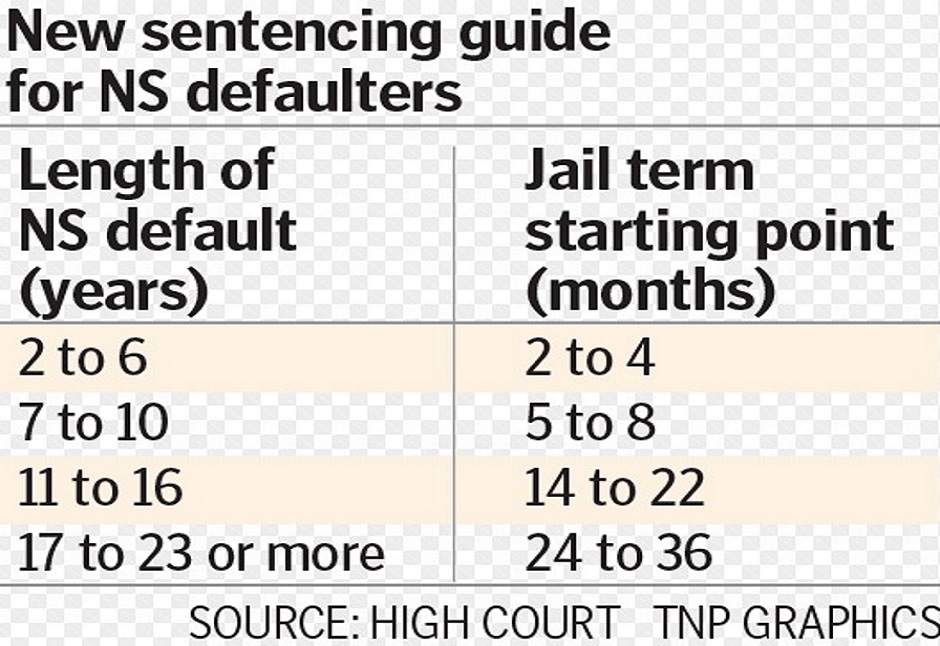
    The three-judge panel, led by Chief Justice Sundaresh Menon, set out four sentencing bands based on the length of default.

    For those who evade NS for two to six years, the starting point is two to four months’ jail; for seven to 10 years, it is five to eight months’ jail; and for 11 to 16 years, it is 14 to 22 months’ jail. For cases involving those who evade for 17 to 23 years or more, the default jail term kicks off from two to the maximum of three years.

    The grounds of decision were related to the cases of three defaulters, who were given heavier sentences in April after the prosecution appealed.

    Explaining its decisions yesterday, the panel rejected key parts of the sentencing benchmarks laid out by Justice Chan Seng Onn in February last year, when he sentenced a 25-year-old to three months in jail for defaulting for more than six years, and then gave a 1½ month discount for his good performance in NS.

    The panel agreed with Justice Chan that the main factor in determining an NS dodger’s culpability is the length of time he defaulted, and that anything over two years should mean a jail term. This, the court said, is because he would start serving only after his peers had completed their duty.

    But, among other things, the court disagreed that the sentence should be calibrated based on whether the defaulter has a substantial connection to Singapore, that a discount should be given on the accused pleading guilty instead of claiming trial, and that exceptional NS performance should be a mitigating factor.


    Source: www.tnp.sg

  • SDP Urges President Tony Tan To Revoke Lucien Wong’s Appointment As AG

    SDP Urges President Tony Tan To Revoke Lucien Wong’s Appointment As AG

    The Attorney-General’s Chambers (AGC) has refused to look into Dr Lee Wei Ling’s and Lee Hsien Yang’s allegations that PM Lee Hsien Loong had abused his powers and made false statements in Parliament.

    In its reply to the SDP on 21 July 2017, the AGC said that it “does not undertake investigations into the matters alleged in the letter. The persons who are the subjects of any criminal offence alleged to have been committed may lodge a police report.”

    This is a curious, if not altogether hypocritical, stance. The AGC recently indicated that it would “look into” Mr Li Shengwu’s private Facebook posting which criticised the judicial system even though there was no mention that anyone had made a police report against Mr Li.

    Surely, if the AGC could “look into” private Facebook messages, it can look into the serious accusations of the abuse of power by the Prime Minister.

    Also, in 1997, then AG Chan Sek Keong had investigated the matter of Mr Goh Chok Tong and other ministers entering polling stations on voting day even though they were clearly not authorised to do so.

    As in the 1997 incident, the “persons who are the subjects” of the alleged offence are the people of Singapore. If AG Chan – despite his inane answer that Mr Goh and company had not committed an offence as they were inside the polling station and not waiting outside it – could investigate the incident, surely AG Lucien Wong can investigate the present matter.

    The added problem, of course, is that AG Wong was the PM’s personal lawyer prior to his appointment. This crucial fact was not disclosed to the public at the time the appointment was made.

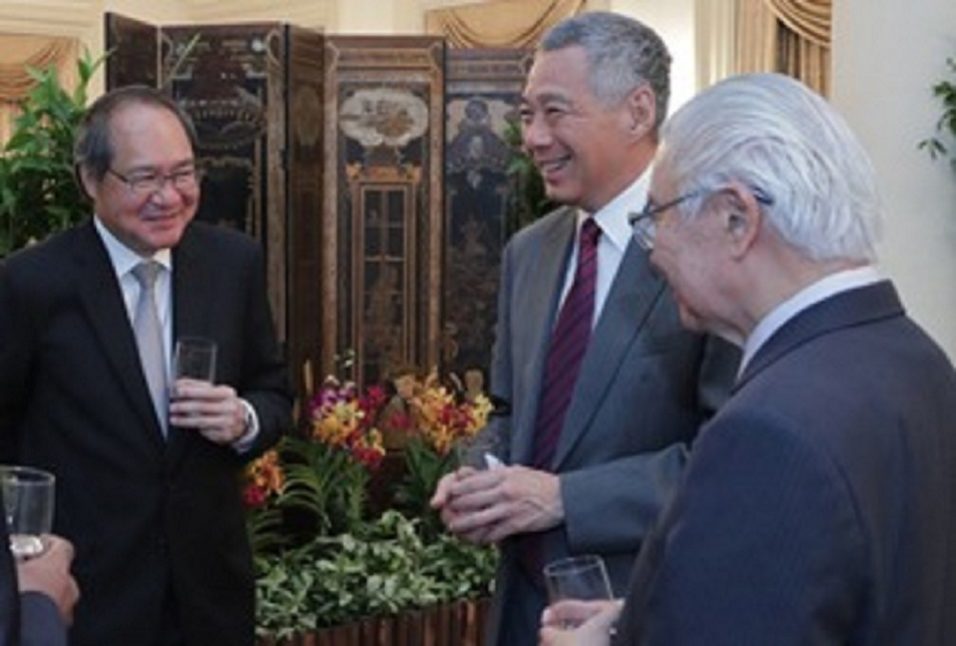
    Given the situation, the SDP has written to President Tony Tan to revoke Mr Lucien Wong’s appointment. Under Section 22(1) of the Constitution, the President is empowered to do so.

    Mr Lucien Wong was sworn in as AG on 16 January 2017. However, the fact that Mr Wong was the PM’s personal lawyer was revealed to the public only in June 2017. The President may not have been aware of this fact or its full implications.

    The association of Mr Wong with PM Lee prior to his becoming the AG has created an acute conflict of interest which cannot be ignored. It is important that President Tan does the right thing in the interest of the people of Singapore and revoke Mr Lucien Wong’s appointment as AG.

    Any further delay or refusal to act will cause even greater erosion of confidence in our public institutions.


    Source: http://yoursdp.org

  • Aljunied-Hougang Town Council Takes Legal Action Against WP Town Councillors Over Past Payment

    Aljunied-Hougang Town Council Takes Legal Action Against WP Town Councillors Over Past Payment

    Aljunied-Hougang Town Council (AHTC), which had appointed an independent panel to help recover improper payments, is taking several of its town councillors to court.

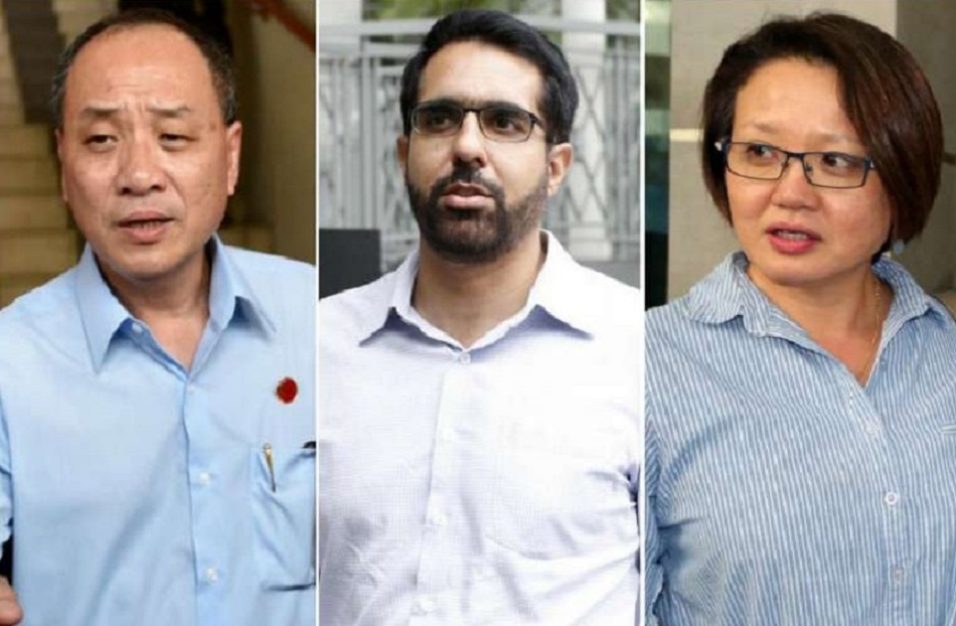
    They include Workers’ Party (WP) chief Low Thia Khiang; the town council’s chairman, Mr Pritam Singh; and its vice-chairman, Ms Sylvia Lim.

    The Straits Times understands that the legal action was initiated as part of the work of a panel tasked with looking into improper payments made by AHTC.

    Ms Lim confirmed that the three WP MPs were served with a statement of claim against them by AHTC on Tuesday (July 25) evening.

    “We will respond further shortly, after we have studied the claim,” she told ST.

    The independent panel has the power to commence legal action on behalf of the town council for overpayments and payments without proper certification of work being done, among others. This can include mediation, arbitration and other court proceedings.

    The panel’s other powers include making demands and coming to settlements on behalf of AHTC.

    The Housing Board had asked AHTC to appoint a third party to recover the improper payments made from town council funds.

    The independent panel appointed in February is chaired by senior counsel Philip Jeyaretnam, and comprises senior counsel N. Sreenivasan and KPMG managing partner Ong Pang Thye.


    A pre-trial conference date of Aug 31 has been listed.

    Besides this case, AHTC also filed another writ of summons in the High Court against FMSS last Friday.

    This was in relation to an arbitration case over a financial dispute emerging from the lapses at the town council.


    Source: www.straitstimes.com

  • Nasi Lemak Burger Sold Out, McDonald’s Launches Eggcellent McSpicy, Dinosaur McFlurry

    Nasi Lemak Burger Sold Out, McDonald’s Launches Eggcellent McSpicy, Dinosaur McFlurry

    McDonald’s announced that from Wednesday, July 26, it would be launching a new limited edition Eggcellent McSpicy.

    The new twist on the original McSpicy will feature spicy chicken thigh with a fresh golden fried egg.

    Also on sale for a limited time will be the new Dinosaur McFlurry.

    This news was announced by the fast food chain as its Nasi Lemak Burger has sold out after it was released just two weeks ago.

    Other limited edition items such as the Chendol McFlurry and Bandung McFizz have also sold out.

    McDonald’s also said that as part of NS50 celebrations, all past and present National Servicemen can get a free apple pie or hot fudge sundae with every Extra Value Meal purchased (after breakfast hours) from Aug. 4 to Aug. 10.

    Eligible customers have to present their SAFRA Card, 11B or Pink IC to redeem their treat.


    Source: http://mothership.sg