Blog

  • Where Malay Royalty Once Lived And Worshipped

    Where Malay Royalty Once Lived And Worshipped

    You can say this was a “glam” kampung, given that it used to be where Malay royalty lived, but Kampong Glam, also called Kampong Gelam, is probably named after a tree.

    Still, Kampong Glam stands as a glamorous attraction today, with its Middle Eastern eateries and trendy fashion shops.

    Beyond these modern additions, sitting grandly in the heart of the enclave are two historic monuments – the Istana Kampong Gelam and the Masjid Sultan.

    The Istana Kampong Gelam was the palace of Sultan Hussein Shah, the 19th-century ruler of the Johor Sultanate which Singapore was part of, while the Masjid Sultan next door had been constructed shortly after upon his request.

    The two grand buildings serve as a reminder of the Malay royalty who once ruled the area.

    The Sultan’s original residence was a timber structure built on stilts in the traditional Malay style.

    According to the National Heritage Board’s (NHB) Preservation of Sites and Monuments division, the present two-storey brick-and-mortar structure was completed in 1843 and commissioned by his son and heir Tengku Mohammed Ali.

    The building’s design reflects both classical European and traditional Malay architecture.

    The round arches at the entrance porch showcase the European design influence, while its layout corresponds to Malay Limas house typology, where the main entrance leading to the main house is connected to an annexe where the kitchen would traditionally be located.

    Meanwhile, the Masjid Sultan, or the Sultan’s Mosque, was originally a single-storey brick structure built in the 1820s.

    Almost a century later, it was in need of repairs and a new mosque was planned. Irish architect Denis Santry from local architectural firm Swan and Maclaren was commissioned for the rebuilding project spanning 1924 to 1928.

    He designed it in an Indo-Saracenic style, which offers a mix of traditional Indian and Islamic elements.

    The mosque features two gold onion domes, and the base of each dome is adorned with glass bottle ends collected from poor Muslims as donations.

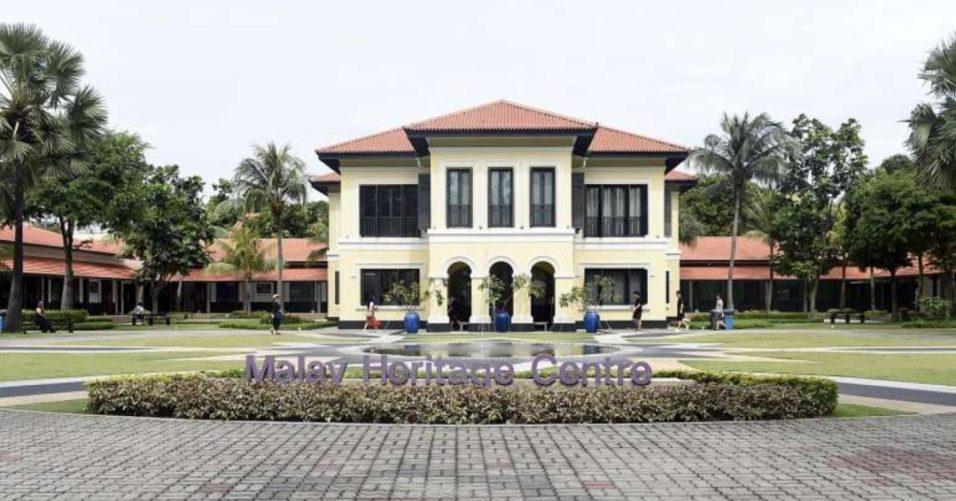
    These monuments are key in telling the larger story of early Singapore, said Ms Suhaili Osman, assistant curator of the Malay Heritage Centre, which now occupies Sultan Hussein’s former palace.

    For instance, porcelain plates dug up from the compound of the Istana Kampong Gelam bear the insignia of ceramic producers from Asia and Europe such as J. & G. Meakin of England. This reflects how the area near the Kallang Basin had thrived as an emporium, with goods from across the globe, in the 19th and 20th centuries.

    Chinese, Jawi and Dutch East India Company coins, also unearthed during two archaeological surveys in the early 2000s, further underscore the cosmopolitan nature of Kampong Glam as well as its economic importance.

    Ms Suhaili said the artefacts “prove that there are more layers to Singapore’s story beyond the traditional narrative of its early beginnings as a sleepy fishing village”.

    According to heritage conservation expert Johannes Widodo, an associate professor at the National University of Singapore, the Kampong Glam compound was laid out based on Hindu and Buddhist mandala symbol principles.

    The mosque and royal graveyard in Jalan Kubor functioned as its crown and the palace was its body, while a market town and old settlement stood as its feet.

    The Istana Kampong Gelam palace compound itself was allotted to Sultan Hussein, after he and Temenggong Abdul Rahman signed a treaty with Sir Stamford Raffles for the British East India Company to set up a trading post here on Feb 6, 1819.

    But to diminish the power of the royals, the British sliced up the area, with Victoria Street and North and South Bridge roads cutting through the place.

    In 1999, the Government announced that the Istana Kampong Gelam would be conserved.

    Some 79 beneficiaries and tenants, including Mr Tengku Shawal, the seventh-generation descendant of Sultan Hussein, were awarded a total of $350,000 a year for 30 years.

    The former palace was restored after its residents moved out and it was turned into the Malay Heritage Centre in 2005.

    The centre, which is managed by NHB in partnership with the Malay Heritage Foundation, houses six permanent galleries.

    Mr Harneis Hadir, general manager at the Malay Heritage Centre, said it aims to provide all communities that go through its doors “a holistic and well-rounded cultural experience”.

    He said visitors can look forward to the annual Malay CultureFest and a special exhibition on the Bugis community this year.

    The Masjid Sultan, meanwhile, took home the Urban Redevelopment Authority’s Architectural Heritage Award last year for its $4.6 million restoration, which included a fresh coat of paint for its golden domes and the addition of elderly- friendly facilities such as a glass lift.

    The mosque won in the restoration category which honours work done to sensitively repair and restore heritage buildings.

    The chairman of its board of trustees, Mr Mohamed Patail, 65, said the restored monument has attracted both worshippers and tourists far and wide.

    On the congregants, he said: “They feel a sense of belonging to the mosque, which is one of the oldest in Singapore. They also come here for a nice family outing – pray at a historically significant mosque, walk around the enclave and then eat at one of the nasi padang stalls.”


    Source: ST
  • Is Government A Person? Court Rules On Anti-Harassment Law Provision

    Is Government A Person? Court Rules On Anti-Harassment Law Provision

    In a rare split decision, the Court of Appeal ruled, 2-1, that the Government cannot invoke an anti-harassment law that allows persons to stop the publication of false statements against them.

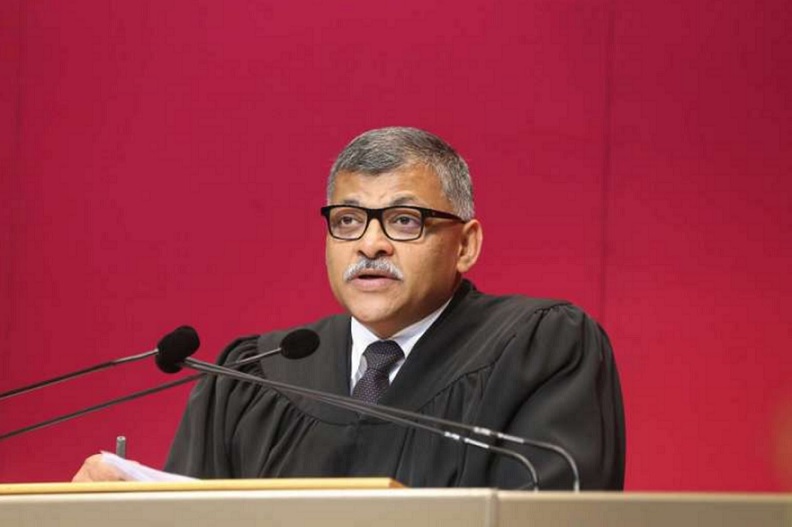
    Chief Justice Sundaresh Menon was the sole dissenting judge, in a case that hinged on the narrow legal question of whether the Government could be considered a “person” under Section 15 of the Protection from Harassment Act.

    Under the provision, a person who is a victim of a false statement can seek relief by asking the court to order that the statement not be published unless it drew attention to the truth.

    In a written judgment released yesterday, Judges of Appeal Chao Hick Tin and Andrew Phang ruled that the law applied only to human beings.

    However, Chief Justice Menon disagreed. He concluded that the Government does fall within the scope of “person” under the law and is able to apply under the provision for relief.

    The decision arose in a case in which the Attorney-General had invoked the law against five individuals who ran socio-political site The Online Citizen (TOC) as well as Dr Ting Choon Meng, co-founder of medical device firm MobileStats Technologies.

    MobileStats had sued the Ministry of Defence (Mindef) in 2011 for infringing its patent for a mobile emergency medical station. The suit was eventually dropped.

    In January 2015, TOC published an interview with Dr Ting, in which he made various allegations against Mindef.

    The ministry responded on its Facebook page, refuting his allegations that it had knowingly infringed his patent and that it had dragged out court proceedings to wear him down financially.

    TOC published Mindef’s statement in full and provided a link to it from the offending article.

    The next month, the A-G sought a court order that the allegations cannot be published without a notification that they were false and that Mindef’s statement gave the truth.

    In May 2015, a district judge found Dr Ting’s statements to be false and granted the A-G’s ap- plication.

    TOC, represented by Mr Eugene Thuraisingam, and Dr Ting, represented by Mr Choo Zheng Xi, appealed to the High Court, arguing that Mindef cannot apply for such an order as the Government is not a “person” under the provision.

    Judicial Commissioner See Kee Oon agreed, ruling that only human beings are entitled to apply for such court orders.

    The A-G then appealed to the Court of Appeal, Singapore’s highest court, arguing that there was no clear parliamentary intent to exclude the Government from the protection of the Act.

    The A-G argued that the objective of the provision was to deal with false statements and not merely harassment, so the Government and corporate entities have the right to invoke the law.

    Delivering the court’s majority decision, Justice Phang referred to parliamentary debates in which Law Minister K. Shanmugam talked about giving people a “lower tier” remedy against falsehoods.

    Justice Phang said it was clear that the minister’s focus was solely on human beings, pointing to the many references to “victims” and “harassment” in his speech.

    No references were made with regard to the rights of other entities, he noted.

    Justice Phang added that even if the majority accepted that the law applies to Mindef, they did not think it was “just and equitable” to grant an order against TOC and Dr Ting.

    He noted that TOC had provided a balanced view.

    “Additionally, Mindef was anything but a helpless victim. It is a government agency possessed of significant resources and access to media channels.”

    Through his lawyer Mr Choo, Dr Ting said he was glad that this episode was concluded.

    Mr Thuraisingam said his clients are “happy that the position they have taken has been vindicated by the High Court and the majority of the Court of Appeal”.


    Source: ST

  • Malaysian Police Nab 6 Suspected Bomb-Makers

    Malaysian Police Nab 6 Suspected Bomb-Makers

    Malaysian police detained six men for their alleged involvement in bomb-making during separate raids in Pasir Mas, Kelantan, on Sunday (Jan 15).

    The suspects, in their 30s and 40s, were picked up at their homes in a series of raids which began at about 4am.

    Kelantan police chief Ab Rahman Ismail said the police found several items, including wires and batteries believed to be components in making bombs.

    “We do not rule out the possibility the suspects were linked to the Daesh (Islamic State) militant group,” he told reporters at the state police contingent headquarters here.

    Meanwhile, Ab Rahman said the police were in the midst of tracking down a man in connection with the assault on Ketereh MP Annuar Musa’s driver on Jan 13.

    In the midnight incident, the victim had gone alone to the man’s house at Cabang Tiga Haji Musa in Bukit Marak here to claim a payment before an argument broke out between them.

    The man then attacked the driver with a machete, and the victim suffered slash wounds on his right hand and leg.


    Source: CNA

  • Father Tried His Best To Put On The Tudung For His Child Everyday For School

    Father Tried His Best To Put On The Tudung For His Child Everyday For School

    40 year old Zubayry Abady did not know how to put on the tudung for his daughter which always ended up titled.

    He uploaded a photo of her on Facebook and it went viral after receiving much attention and sympathy.

    It probably resonated with the public and people started contacting him to pass him tudung for the child, and even offered to come over to give some pointers. Many gave him encouragement to carry on.

    Truth is, the man’s wife passed away a year ago and he have been taking care of his children by himself.

    And Zubayry meant it as a sharing session but did not expect the overwhelming response. His word of advice is: do not complain when your wife or children take a longer time to get ready as it really takes time and effort to put on the tudung properly.


    Source: Zubayry Abady

  • Malaysian IS leader And Two Other Militants Killed By Air Strike In Syria

    Malaysian IS leader And Two Other Militants Killed By Air Strike In Syria

    Three Malaysian militants — including one in an Islamic State video threatening to “lead a charge” against the Malaysian government — were killed in an air strike by the Syrian army.

    This was confirmed by Bukit Aman Special Branch Counter-Terrorism Division chief Ayob Khan Mydin Pitchay who told FMT that intelligence he received said the three died in Raqqah, Syria, on Friday.

    50-year-old Zainuri Kamaruddin, better known as Abu Talhah, rose to fame after his propaganda video threatening the Malaysian government went viral in May last year.

    The militant from Perak claimed he and his men were part of a “righteous army”. He claimed that the Malay archipelago would someday be swarming with an army of IS fighters who would bring the fight home, particularly to Malaysia and Indonesia.

    Zainuri left the country in April 2014 to join IS in Syria and escaped an ambush by the Syrian army in August that year with injuries to the neck and thigh.

    He led a Malay-speaking IS arm, Katibah Nusantara. He was also involved in recruitment through Facebook.

    Mingguan Malaysia today quoted Zainuri’s family member saying that they were informed of his death at about 1am yesterday by a friend of his in Syria.

    The family member who spoke to the Malay daily on the condition of anonymity said the last time he contacted them was about a week ago.

    “He told us that the time has come for him to go.”

    According to Ayob, also killed were Ahmad Asyraf Arbee Ahmad Jamal Arbee, 31, and Sazrizal Mohd Sofian Thayalan, 27.

    “The trio were among 30 Malaysian IS militants that have been killed in Syria.

    “They were also among 95 identified Malaysian IS members there,” he said.

    Ahmad Asyraf was from Kuala Lumpur. He left for Syria to join IS in 2014.

    Sazrizal on the other hand moved to Syria with his wife without their family’s knowledge, reports said.

    The married couple was working in an orchard in Australia before leaving for Syria.


    Source: FreeMalaysiaToday

deneme bonusu