Tag: China

  • Michael D Barr: Singapore’s Government Embroiled In Domestic Crisis Management

    Michael D Barr: Singapore’s Government Embroiled In Domestic Crisis Management

    Author: Michael D Barr, Flinders University

    2017 was a horrible year for Singapore’s government — and for Prime Minister Lee Hsien Loong in particular.

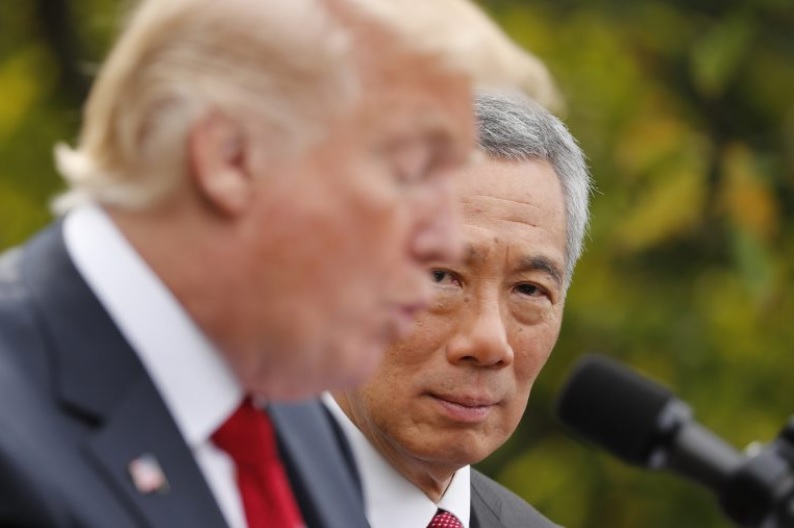
    It began with an open and vocal stoush with China. Late in 2016 the Chinese government confiscated millions of dollars’ worth of Singapore’s military hardware passing through the port of Hong Kong. The action was in part retaliation for Lee’s vocal endorsement of the US position on China’s militarisation of the South China Sea.

    China released Singapore’s military hardware in late January, but then sent a new message of displeasure — Singapore was not welcome at Xi Jinping’s Belt and Road Forum in May 2017. While Lee did not attend the Forum, he later led high-level delegations to both Beijing and Washington, successfully recovering much lost ground.

    Singapore’s ongoing balancing act between China and the US will continue in 2018 with a new factor in play — it is Singapore’s turn as Chair of ASEAN. This position puts Lee on the front line of regional attention. Awkwardly for this balancing act, Lee’s first statement as incoming Chair was a declaration of hope that the United States would continue its engagement with ASEAN and the region.

    Recovering lost ground in foreign policy might be a modest achievement. But domestically, the government is in a state of perpetual crisis management interspersed with misguided political judgements.

    The first domestic crisis of 2017 erupted in June when Lee’s brother and sister, Lee Hsien Yang and Lee Wei Ling, turned to foreign media and social media to reveal ongoing legal disputes over their father’s will. The dispute was not over money but rather over control of the family home. Prime Minister Lee wants to turn it into a national monument to his father, but his siblings want to follow their father’s wishes by bulldozing it.

    This family argument over inheritance became a national issue when the siblings accused Lee Hsien Loong of abusing his power as prime minister to build a family cult around his father’s name — all to bolster his own standing and to smooth the eventual rise to the prime ministership of his son, Li Hongyi. This unresolved dispute has damaged both the Lee brand and Li Hongyi’s prospects of entering politics.

    A second major crisis erupted in October when the regular pattern of train breakdowns on the Mass Rapid Transport system escalated into a major episode — a pumping station in a tunnel failed during an ordinary storm causing an entire train line to be closed by flooding for 20 hours. The cause of the problem proved to be mundane — maintenance work had been neglected and work sheets falsified.

    The Minister for Transport Khaw Boon Wan magnified the damage by unilaterally exonerating both the government and the senior management of Singapore Mass Rapid Transit Corporation. He was particularly singled out for exonerating its CEO Desmond Kuek, whom he thanked as a ‘volunteer’ — a role for which he is paid S$1.87 million (US$1.39 million) per year. Khaw went on to praise him for having his ‘heart in the right place’.

    This episode of ordinary mismanagement was politically significant because it highlights an established pattern of widespread administrative failures and deteriorating government services under Lee’s watch. It also confirmed the perception that highly paid ‘establishment’ figures are protected from the consequences of their actions. Back in 2008 Lee offered similar protection to former deputy prime minister and minister for home affairs Wong Kan Seng when he let an alleged terrorist escape police custody. Wong retained his positions in Cabinet for another three years because Lee stated he had only made ‘an honest mistake’.

    The government has also made several political missteps in 2017. Such missteps included Lee’s odd selection of topics for his National Day Rally Speech in August — a speech equivalent to the US State of the Union address. With Singapore facing challenges on many fronts — managing Xi Jinping and Donald Trump, the South China Sea, rising protectionism, trains, the economy and challenges to Singapore’s role as an air hub — he lectured the population on the dangers of diabetes, which seems to have left most people nonplussed.

    Singaporeans had also been anxiously awaiting new developments on Lee’s successor since he announced in 2016 that he intended to step down as prime minister in 2020. In a country where both the populace and the markets expect long lead times for prime ministerial succession planning — generally a warning of five years or more is given — concern is starting to grow that no clear successor has either been named or emerged.

    Perhaps Lee’s greatest misstep was his handling of the presidential election. The government’s preferred candidate for president was almost defeated in the 2011 elections by popular Chinese rival Tan Cheng Bock. Tan was planning to run again and so the government excluded him by restricting eligibility for election to ethnic Malays under the rather thin cover of enhancing multiracialism.

    This was effective in removing any challenge from Tan, but left just one candidate in the race after two of the three Malay candidates were excluded on other grounds. The episode left a widespread impression that the constitution and the electoral rules are just the plaything of the government, and has done significant damage to both the standing of the presidential office and the government.

    While Singapore’s government has made some positive steps in terms of foreign policy in 2017, its handling of domestic issues has been sub-par. It was a particularly messy year for a government that claims to be preparing for a generational handover in 2020, and it does not bode well for the longevity of the Lee Kuan Yew model of governance.

    Michael D Barr is an Associate Professor of International Relations in the College of Business, Government and Law, Flinders University.

    This article is part of an EAF special feature series on 2017 in review and the year ahead.


    Source: eastasiaforum.org

  • Police Officers In Shanghai Knocked Down Woman And Child Over Parking Ticket [Video Viral]

    Police Officers In Shanghai Knocked Down Woman And Child Over Parking Ticket [Video Viral]

    Footage has emerged from China of a police officer slamming to the ground a woman holding a child.

    In the video, which was filmed in Shanghai on September 1, the woman holds a toddler with one arm as she argues with a police officer.

    When the woman begins to push the officer, he later slams her and her child to the ground hard.

    Two passersby rush to help the distressed child as the police restrain her mother with force.

    Some infuriated by the incident allegedly attacked the officers involved and was recorded in a separate video.

    The police officer has been suspended, according to local news.

    It is believed that the confrontation was over a parking infringement.


    Rilek1Corner

  • Suspicious Man And His China Gang Loitering Outside House, Even Took Photo Of Unit Number

    Suspicious Man And His China Gang Loitering Outside House, Even Took Photo Of Unit Number

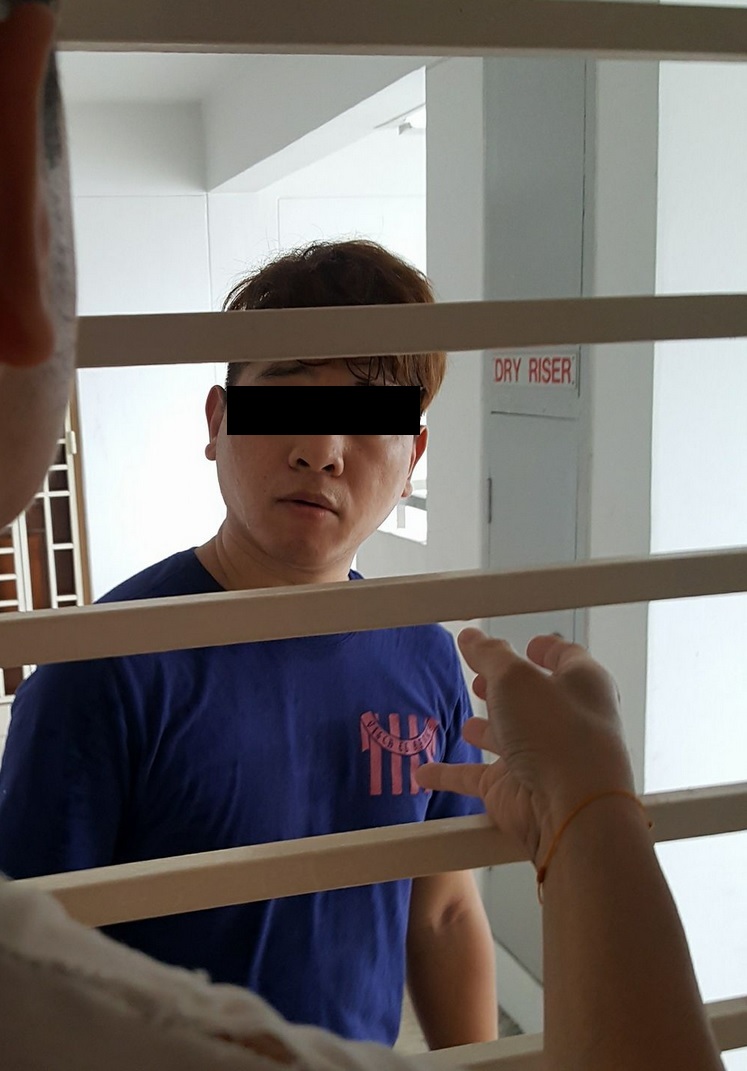
    Beware of this man, he and his china gang has been loitering around my area for a few days or maybe longer.

    Few days ago, i opened my door and was shocked to see a medium built china man suddenly infront of my gate. I panicked and couldn’t locked my gate. He don’t seems to want to walk away, so i have to confront him to buy myself some time to lock up the gate. Abit taken aback when questioned, told me his friend stay here but perhaps wrong unit.

    Same day at 1.30am, someone rang my doorbell and as he was looking down all the time, I couldnt see his face thru the door hole. Asked hub to check him out. He stood there for quite awhile and he contl with the door bell. The hub managed to see his face and asked what he wants and he ran away.

    To my surprised, he returned the next morning around the same time at 1.30am. My dear sister who stay opposite my block found out and inform us. This aroused my suspicion and, thus, make me filed a police report.

    Yesterday (Sun morning at 10am), the hub heard footsteps at the door and he went to peep. What shocked him was he saw this man taking a picture of my unit no. He opened the door and confronted him. He kept avoiding the question and kept saying his friend stay here and probably it was a wrong unit. Same excuses given by the other man I saw days ago. The hub questioned him and asked him to show what he has taken. He accidentally show his we chat group on his phone with my unit pic in it and their conversations.
    At this time, I took the risk to take a photo of him and he scurried away.

    When his photo was exposed, my daughter and elder son recalled that they chanced upon him few times within the premises. Son said 2 days ago, he was in the same lift with him and he was holding a carton box.

    Again I make a police report, this time with his photo as evidence and I hope the policeman wouldn’t disapoint us again.

    I plead with all my friends here to be vigilant of things happening around us and look out for this criminal gang.

    *My dear pal, please feel free to share.
    You know who you are and many many thanks for your concern 😘


    Source: June Kwan

  • Academics Express Concerns On Huang Jing, Laments Inadequacy Of Background Checks

    Academics Express Concerns On Huang Jing, Laments Inadequacy Of Background Checks

    Members of Parliament (MP) and foreign relations experts reacted with concern and shock that a senior academic had been identified by the Government as an “agent of influence” working for an unnamed foreign country, given his involvement in several think-tanks and “privileged position” here.

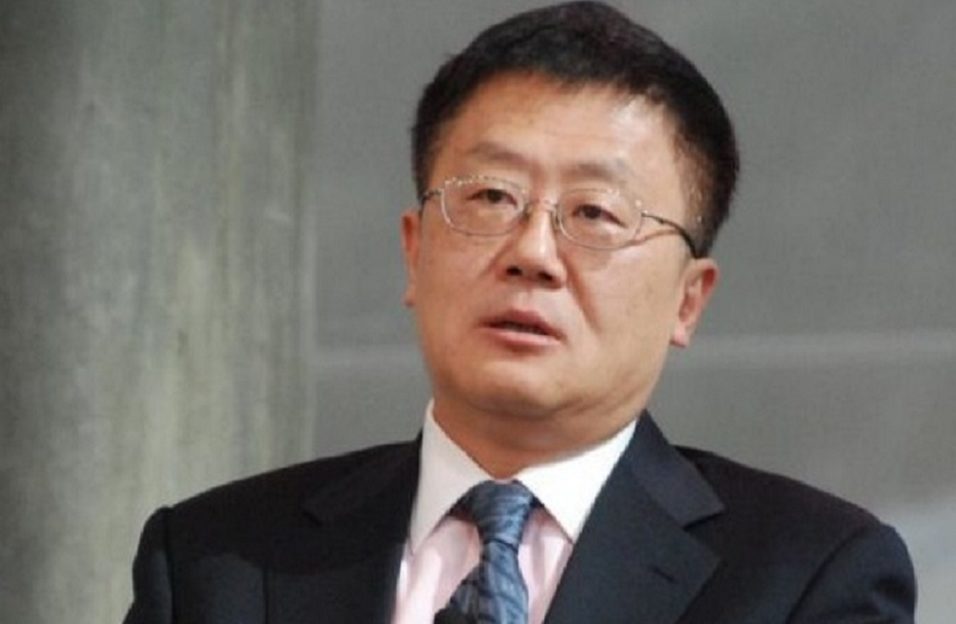
    Professor Huang Jing, 60, and his wife Shirley Yang, had their permanent residence statuses revoked by the Ministry of Home Affairs and will be barred from re-entering Singapore.

    National University of Singapore political scientist Bilveer Singh, pointing to the seriousness of the matter, said: “He is in (a) privileged position in Singapore, sitting on so many boards with people who are opinion-makers.”

    He was concerned that Prof Huang had held a senior position at “one of Singapore’s top think-tanks” and had lived here for several years.

    “A person like him is in a very strategic position to shape the mind, the thinking, and ideology of our key people who, in turn, can affect national policies, for example,” said Associate Professor Singh, who is also an Adjunct Senior Fellow at the Centre of Excellence for National Security at the S Rajaratnam School of International Studies.

    Sembawang MP Vikram Nair, who chairs the Government Parliamentary Committee for Defence and Foreign Affairs, described Prof Huang’s attempts to influence the Government as “very serious” and “worrying”.

    “It may not be so much the effect he had, but the intentions … Whether or not he succeeded, that is a worrying fact … I mean, if he was successful, it could be similar to what Marxists used to do to try and influence governments. (They start) by influencing the population, then the leaders,” said Mr Nair.

    Over the years, the Government has uncovered cases of individuals carrying out subversive activities for foreign countries.

    For example, in 1997, a female civil servant was detained for passing on classified government information to a man who was working under deep cover for a foreign intelligence service. In another case in 1998, four Singaporean men were detained for collecting classified government information for a foreign intelligence service. One of the four had also acted as a recruiter.

    The threat could be bigger now, with Bukit Panjang MP Teo Ho Pin pointing to the difficulties in mitigating “the influence of external agencies” in today’s “Internet world”.

    “Singaporeans must keep themselves informed of what’s happening in our country through reliable sources of information, such as government’s announcements,” he said.

    Referring to other countries’ experiences, Dr Teo reiterated that the potential impact of individuals working as agents of foreign countries “could be serious and will affect Singaporeans’ quality of life”.

    For someone to have not just his employment terminated but also be permanently barred from entering Singapore suggests that the extent and degree of foreign influence was “deeply troubling and problematic”, said Dr Mustafa Izzuddin, a fellow at the ISEAS-Yusof Ishak Institute.

    “Especially for a small state like Singapore, foreign interference in internal affairs is regarded as a serious threat which could also have long-term adverse implications for the governing of the country,” he added.

    Dr Mustafa and Assoc Prof Singh also questioned if the Republic may have let its guard down in this episode.

    “The domestic populace (would ask questions) on why a thorough background check was not done to sieve out such subversive activities before the said foreign person was hired in the first place,” said Dr Mustafa.

    Agreeing, Assoc Prof Singh said: “This is a good lesson for us that, in order to protect our interest, we should be a little bit more discerning, whoever is recruiting at the think-tanks.”

    News of Prof Huang’s expulsion also created some ripples overseas, with academics and political observers taking to social media to express their views.

    Dr Euan Graham, director of the International Security Programme at Lowy Institute, an independent think-tank based in Sydney, said on Twitter that he was “not entirely surprised” with the news, but “wow(ed) all the same”.

    Mr Nile Bowie, Singapore-based political commentator and columnist for The Malaysian Reserve newspaper, tweeted: “Elephant in the room is whether the country in question is #US or #China? … Curious to hear statement from #HuangJing and also how this incident will affect the already strained Sino-Singapore relationship.”


    Source: www.todayonline.com

  • China Wants This Malaysian Port To Rival Singapore

    China Wants This Malaysian Port To Rival Singapore

    The Straits of Malacca have been a gateway for China for centuries in its quest for power.

    A story blended from Malaysian history and folklore says an emperor sent a princess called Hang Li Poto marry the Sultan of Malacca in the Ming Dynasty, offering a ship filled with gold needles. He also sent a blunt message. “For every gold needle, there is a subject. If you can count the number of needles, you will learn the true extent of my power”, the emperor reportedly said in a letter.

    Hundreds of years later, China is again seeking influence in Malaysia as it spreads its economic and military clout through South-east Asia. It is investing billions in a US$7.2 billion (S$9.8 billion) redevelopment that will see Malacca, long the haunt of Chinese traders, become a new deep sea port.

    It is also providing funds for infrastructure projects down the eastern seaboard of Malaysia, key heartland areas for Prime Minister Najib Razak ahead of an election that could be held this year. New roads and bridges may help him woo ethnic Malays, but the money could come at a long-term cost.

    “The closeness with China is an Achilles heel for Najib,” said Dr Mustafa Izzuddin, a fellow at the ISEAS-Yusof Ishak Institute in Singapore. “While investment coming in will balloon government coffers and boost the economy, the opposition is using the China card to criticise the government for becoming too close to China and accusing it of selling Malaysia’s sovereignty.”

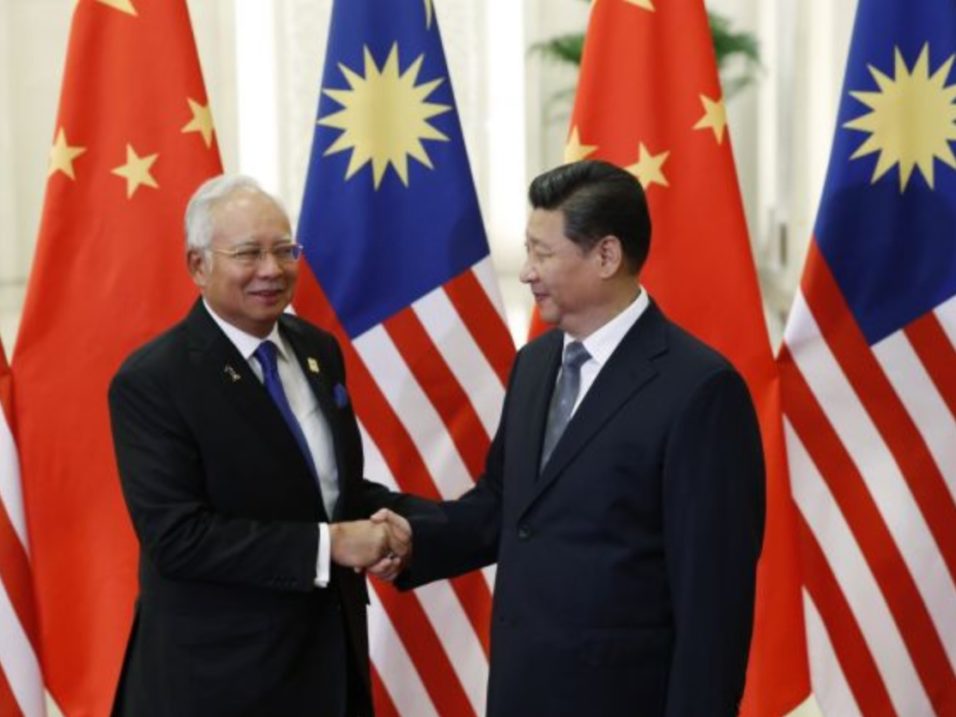
    China’s investment in Malaysia has risen since Mr Xi Jinping took power in 2012, with the president describing ties with Mr Najib as the “best ever”. Beijing is readying a state visit by Mr Xi to Malaysia in the coming months, according to three people with knowledge of the plans who asked not to be identified given the sensitivity of the discussions.

    China has committed to import goods worth US$2 trillion from Malaysia over the next five years (a nearly eight-fold jump from 2016 imports over that period), invest up to US$150 billion in the country and offer 10,000 places for training in China.

    Mr Najib brought home US$33.6 billion in deals when he visited China in November — the biggest haul yet between the countries — plus an agreement to buy four patrol boats from China.

    China has been Malaysia’s largest trading partner since 2009, displacing Singapore, with two-way trade last year valued at US$83.4 billion. China is Malaysia’s biggest export market.

    Malaysia, like Singapore, has strong historical links to China. About a quarter of its population is ethnically Chinese, and traders for centuries stopped at ports in Malacca and Penang to sell silk, tea and porcelain while buying cinnamon and nutmeg. There is even a fusion cuisine based on Chinese and Malay ingredients, called Peranakan or Nyonya.

    Chinese companies accounted for 8 billion yuan (S$1.6 billion) in construction projects in Malaysia in 2015, DBS analyst Chong Tjen-San said in an April report — nearly half the total value of projects clinched by foreign contractors.

    “We are going to be drawn into the economic gravity of China,” said Mr Steven CM Wong, deputy chief executive of the Institute of Strategic and International Studies Malaysia, at a conference on Mr Xi’s Belt-and-Road trade project in Kuala Lumpur last month. “Just as if you are in North America, you are drawn into the economic gravity of the United States,” he said. “This is not what we want or we don’t want. It’s just the way things are.”

    Still, the money risks being caught up in domestic politics. Mr Najib’s critics, including former premier-turned-opposition leader Mahathir Mohamad, say the country will need to cede influence to China in exchange for its money, and that local businesses will lose out.

    “Much of the most valuable land will now be owned and occupied by foreigners,” Dr Mahathir wrote on his blog in January. “In effect they will become foreign land.”

    Mr Najib, in an article published in May in the South China Morning Post before a visit to China, said that he made “no apologies for wanting to build world-class infrastructure for Malaysia that will, with local ownership being preserved, open up huge swathes of our country”. His office did not respond to requests for comment.

    Some analysts said Najib risks being painted as too close to China. While the countries both claim parts of the disputed South China Sea, for example, Malaysia has been mostly quiet on China’s military build up in the region.

    “There are perceptions that Najib is being bought by the Chinese,” said Professor Bridget Welsh, a political scientist at John Cabot University in Rome and author of The End of UMNO? Essays on Malaysia’s Dominant Party.

    “Within Malaysia, China’s interventions have the potential to bring about greater ethnic tensions and political instability, as well as affect Malaysia’s relationships with its neighbours,” she said.

    The Malacca Strait already has sufficient port facilities, according to opposition Selangor state legislator Teng Chang Khim. “Why can’t you make use of the present ports?” Mr Teng said at the Belt-and-Road conference.

    Deputy Secretary General for Trade Isham Ishak said the government would seek to balance its relationship with China.

    “We want to make sure that there’s fair value in terms of investments from China into Malaysia,” he said at the same conference. “It’s not only about Chinese products coming in, Chinese money coming in, and Chinese foreign workers coming in.”

    Investment in infrastructure is good for Malaysia whether it comes from China or the US, according to Mr Xu Bu, China’s ambassador to the Association of South-east Asian Nations.

    “Whoever comes to power that really doesn’t matter,” he said in a July interview. “Whoever comes to power in Malaysia, the leaders or the people in Malaysia they need investment.”

    Mr Harrison Cheng, a senior analyst with Control Risks in Singapore, said there were signs of unease in some quarters of Mr Najib’s United Malays National Organisation about Chinese investments.

    Still, UMNO’s core voters are more interested in bread-and-butter issues, he said. “There has yet to be any strong signs of a serious backlash within UMNO and the public.”


    Source: http://www.todayonline.com