Tag: dead

  • Body Found In Water Beside Sengkang Riverside Park; Family Of Victim Had Posted About Him Missing Since Yesterday

    Body Found In Water Beside Sengkang Riverside Park; Family Of Victim Had Posted About Him Missing Since Yesterday

    A body was found in the water beside Sengkang Riverside Park on Friday (Sept 29) morning.

    Reader Elsie Soh told The Straits Times that her husband was passing by the area at 7.20am when he saw some police officers.

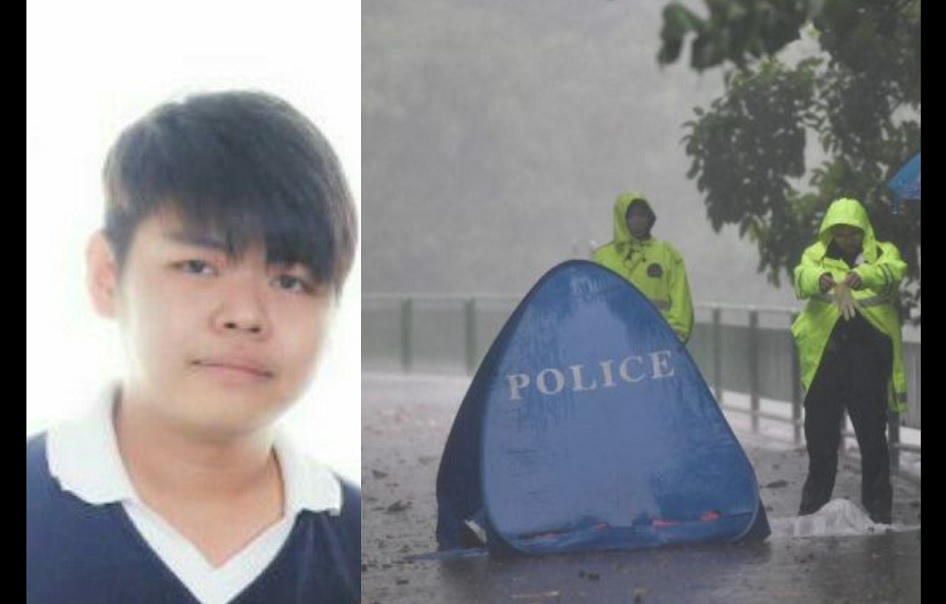
    When The Straits Times arrived at the scene just before 9.30am, a tent used by police to cover bodies was placed along a cycling and jogging track across the canal from Sengkang Riverside Park, near Sengkang Sports Centre.

    A police cordon stretching about 300m had been set up.

    Ms Joy Perez, 34, a housewife living nearby, said she was turned away from the cordon while jogging at about 8am and had to make a big detour into the residential areas which are a few hundred metres away.  Other track users were being turned away as well.

    On Facebook, it turns out that the family had been searching for the victim since last night. They posted online to appeal for information on the victim who was last seen at about 8pm and was in the vicinity of 281B Sengkang East Avenue.

    One James Ang on Facebook wrote, “My brother is missing since yesterday 8pm. Last seen yesterday 8plus @ 281B Sengkang East Avenue wearing black shirt and navy bermudas. Please help to share around and PM if any saw him anywhere.. appreciated all of your help as we are really worried about him.”

    At 10.41am today (29 Sept) one Angela Ang wrote on her timeline, “Thanks for sharing everyone. Dont have to further share. My brother’s body has been found. He is not missing. He is gone. Gone forever. He just leave us like that, without a word. Rest in peace my brother. 谢谢大家关心和帮忙。不用再分享了。他的尸体以被发现了。他不是不见,是走了。。。永远的离开我们了。。。弟弟,你一路走好!”

    Our condolences to the family of the victim. RIP


    Rilek1Corner

  • Crisis In Rakhine State Evoked Strong Emotions Across The Muslim World Drawing In ISIS And Al-Qaeda

    Crisis In Rakhine State Evoked Strong Emotions Across The Muslim World Drawing In ISIS And Al-Qaeda

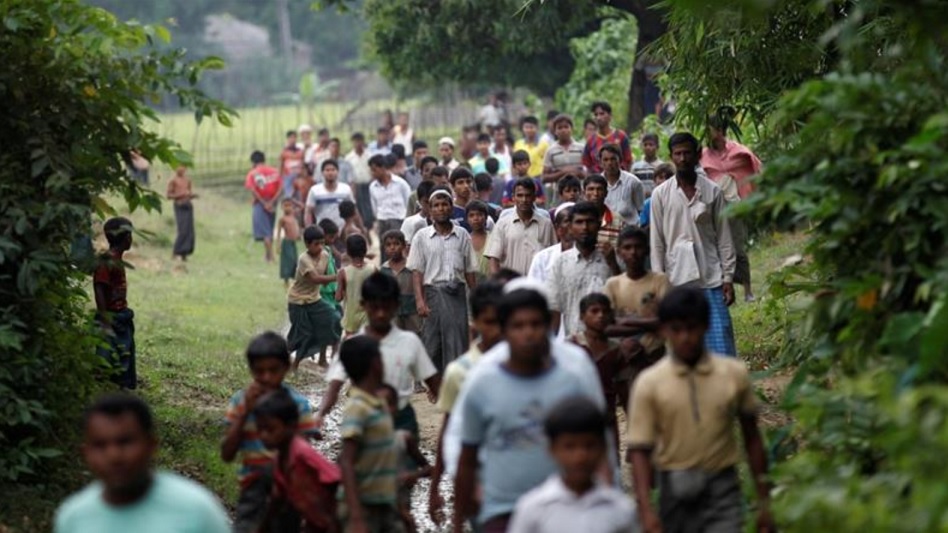
    The plight of the Rohingya, an Islamic minority in Buddhist-majority Myanmar, has evoked strong emotions across the Muslim world.

    Many countries have protested against the persecution of the community, following a violent crackdown by the Myanmar army that left hundreds dead and sparked an exodus of more than 410,000 people from Rakhine to Bangladesh.

    But as rights groups urge world leaders to impose sanctions on Myanmar’s military, which is accused of “ethnic cleansing”, a darker danger lies ahead.

    Counter-terrorism experts say the crisis has attracted the attention of the Islamic State in Iraq and Syria (ISIS), as well as Muslim militants and hardliners in Indonesia and Malaysia.

    This may result in another longstanding conflict in South-east Asia, following the ongoing siege in the southern Philippine city of Marawi by Islamist militants.

    Echoing its strategy in southern Philippines, ISIS has routinely, through its online publication Dabiq, claimed that it plans to establish a base in Bangladesh to launch revenge attacks on the Myanmar government over its treatment of the Muslim Rohingya.

    Malaysian counter-terrorism chief Ayob Khan Mydin Pitchay said earlier this week that ISIS is exploiting the Rohingya crisis to recruit more fighters, particularly from South-east Asia.

    Indeed, latest developments out of Kuala Lumpur have revealed that a group of Malaysians had travelled to Myanmar, via Bangladesh and Thailand, to take on government troops there.

    Malaysian police in Kelantan state, which shares a border with southern Thailand, told news agency Bernama that it has identified more than 100 “rat trails” used for smuggling, and has stepped up patrols there to prevent the illegal entry of Rohingya and “untoward incidents”.

    Meanwhile in Indonesia, the Islamic Defenders Front (FPI) had called for “jihadists” to travel to Rakhine to fight on behalf of the Rohingya. The FPI has shown that it has the ability to mobilise hundreds of thousands of people, as seen in the many rallies it led against former Jakarta governor Basuki Tjahaja Purnama, a Chinese-Christian politician, for insulting Islam earlier this year.

    FPI spokesman Slamet Maarif was quoted by The Australian newspaper earlier this month as saying that the group is prepared to wage “jihad”, or a holy war, in Myanmar if the need arises. “That is why one of the main requirements for our recruits is the willingness to die as a martyr,” he said.

    Centre for Radicalism and Deradicalisation Studies executive director Adhe Bhakti said the real danger for Indonesia lies in whether elements of the Jemaah Ansharut Daulah (JAD), a local terrorist network with ties to ISIS, join the fray. “More influential groups in the context of ‘jihad’ such as the JAD have yet to appeal for fighters. If they do, that may pose a greater risk,” said Mr Adhe.

    Islamist militant groups have previously exploited the Rohingya crisis for their cause, notably in 2012 and 2015, but this current conflict has drawn wider attention.

    Mr Iftekharul Bashar, an associate research fellow at the S. Rajaratnam School of International Studies, said the crisis is unfolding at a time when ISIS is losing much of its territory in the Middle East and is trying to expand its hold in South Asia and South-east Asia.

    “The recent siege of Marawi… shows that ISIS penetration in the Rakhine state conflict cannot be ruled out,” he added.

    Datuk Ayob warned that Myanmar’s proximity to Malaysia would encourage ISIS to tap the conflict in Rakhine. “Myanmar is closer to Malaysia than Syria and the southern Philippines… and now Rakhine has become their latest destination for ‘jihad’,” he told Bernama news.

    The resurgent Al-Qaeda, which was behind the Sept 11, 2001, attacks in the United States, has also started to make its move, issuing a statement on Sept 12 calling for attacks against the Myanmar government over the Rohingya.

    While most of the attention by security agencies has been on ISIS, Mr Bashar warned that Al-Qaeda, and its affiliate in the Indian subcontinent known by the acronym AQIS, is equally dangerous.

    AQIS has not carried out any major attacks in Bangladesh in the past few years, but it has recently mentioned the Myanmar military as a key target, added Mr Bashar. “Although the majority of Muslims still support a peaceful settlement with Rohingya returning to their homeland, a smaller segment thinks that an armed ‘jihad’ is the only solution left to end the plight of the Rohingya.”


    Source: http://www.straitstimes.com/

  • Man Found Dead At Fajar LRT Station Was Run Over Twice; Ruled As Accident

    Man Found Dead At Fajar LRT Station Was Run Over Twice; Ruled As Accident

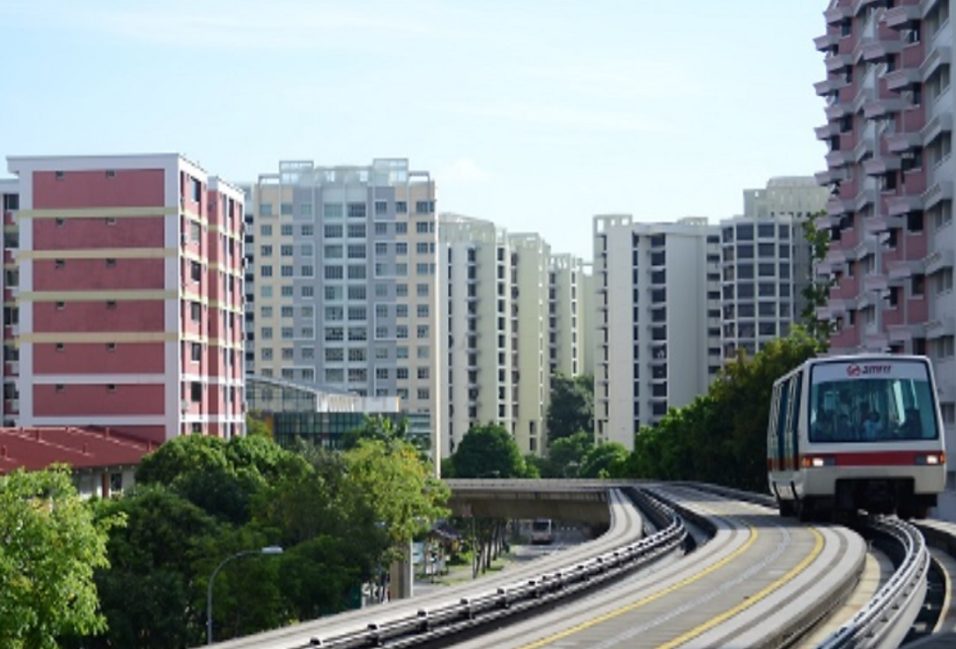
    A 43-year-old man who was found dead at Fajar LRT station in March had been drunk when he fell onto the tracks, a coroner’s inquiry heard on Wednesday (Aug 16).

    When he fell at 12.42am, Ang Boon Tong had 232mg of alcohol per 100ml of blood – almost three times the legal limit of alcohol for drivers, the inquiry heard.

    CCTV footage showed that although he had hit his head, he was still alive and able to sit up. But he was unable to find his way off the tracks and was hit by an off-service train seven minutes later.

    The sole passenger on the train – an SMRT employee riding the train back to the depot at the end of his shift – said he “heard a sound” as the train ran over Mr Ang’s body but did not think to investigate it, the inquiry heard.

    Ten minutes later, at 12.58am, a second train pulled into the station, running Mr Ang over again. This time, the station controller, Mr Mohamed Ariff Mohamed Yusoff, noticed the train seemed to move in “a bumpy and erratic manner” as it pulled into the station, and suspected it had run over something.

    It was when the train left the station that he realised there was a body on the tracks.

    Mr Ang died of multiple injuries “consistent with a run-over”, including an open skull fracture, multiple rib fractures and hip, arm and leg fractures, State Coroner Marvin Bay said. Mr Ang also suffered a 15cm-wide wound running from his neck to his groin.

    Bloodstains were found on both trains, although a forensic pathologist was not able to tell which impact killed Mr Ang, the coroner heard.

    NO ALERT SYSTEM, SHOULD SOMEONE FALL ONTO LRT TRACKS

    LRT trains are not equipped with obstacle detection systems, operator SMRT’s senior vice president for the Circle Line and Bukit Panjang LRT, Chia Chun Wah testified.

    He added that there is currently no system in place to alert the station or Operations Controrunl Centre (OCC) should a passenger fall onto the tracks, aside from 143 CCTV cameras monitoring the entire Bukit Panjang LRT line. The line comprises 14 stations, including Fajar.

    Around the time Mr Ang died in the early hours of Mar 24, one staff member based at the OCC in Woodlands was tasked with monitoring 46 CCTV feeds on 22 screens. At the time Mr Ang fell onto the tracks, the employee had been occupied with overseeing the closing of the station.

    Mr Chia testified there are currently no plans to install such systems. He said the safest option for passengers who have fallen onto the tracks is to stay at the “safe location” in the middle of two electrified train tracks, which is not clearly marked out. “We don’t publicise that,” Mr Chia said, adding that there are, again, no plans to do so.

    Another option for passengers who fall onto the tracks is to shout for help in the hope that someone on the platform would sound the alarm by pressing the emergency stop plunger located at either end of the platform. This would cut power to the trains.

    But, Mr Chia said, there is no signage to tell passengers what happens when they press the plunger – and there are no plans to do so.

    Yet another alternative is for a passenger who has fallen onto the tracks to make their way to the end of the platform, where there is a flight of stairs leading back into the station, Mr Chia said. However, there is “no signage to show where the stairs are”, he added.

    Mr Chia said that the Land Transport Authority (LTA) is currently trialling a video analytics system, which may be able to detect foreign objects on train tracks. However, even if the system was able to recognise an object on the tracks, it was unclear whether it would also be able to send an alarm to the OCC and stop the train.

    In ruling Mr Ang’s death an accident, State Coroner Marvin Bay said: “It is entirely conceivable that a person who falls onto the tracks may be infirm, inebriated, incapacitated or cognitively impaired and not have the required knowledge or ability to seek refuge at the (“safe location”) or make for the staircase to save themselves.”

    He added that Mr Ang had survived the initial fall, but “it would appear that he was too intoxicated or disoriented to fully appreciate his precarious situation. He remained on the track without calling for help or making any attempt to extricate himself from his predicament,” the coroner said.

    Mr Bay added that the LTA’s video analytics system was “a step in the right direction”.

    “It would also be useful to raise public awareness of the emergency stop plunger, the safety zone on the tracks and staircase access back to the platform to avert disaster whenever a person falls onto the tracks,” he added.

    Mr Ang’s death was “a truly tragic misadventure,” the coroner said.

    Mr Ang’s wife was in court for the inquiry. They have three children.


    Source: http://www.channelnewsasia.com/
  • Man Dies After Car Slams Into F1 Barrier; First Crash Incident Involving Member Of Public

    Man Dies After Car Slams Into F1 Barrier; First Crash Incident Involving Member Of Public

    A 29-year-old man died after his car crashed into a Formula One barrier along Raffles Boulevard near Marina Square yesterday morning.

    Mr Ng Phing Keen, who owns a car accessories business and had been set to be part of F1’s hospitality team, was believed to have lost control of his Honda Civic, which skidded and crashed into the concrete barrier.

    He was taken to hospital but later died from his injuries.

    Photos of the incident which happened around 2.50am showed the white car lodged in the barrier with its front badly damaged. Singapore Civil Defence Force officers found Mr Ng trapped in his vehicle and used hydraulic tools to extricate him.

    His long-time friend, events organiser Charleston Li, said he first heard of Mr Ng’s death yesterday morning but thought it was a joke.

    “I even scolded (the friend) for saying such things. But when I tried calling Keen (Mr Ng), his phone was turned off and I knew something must be wrong because he seldom had it off,” said the 31-year-old.

    Mr Li, who has known Mr Ng for nearly 10 years, added: “He was somewhat of a best friend and brother to me. He has helped me a lot with my business and it’s really painful to lose him.”

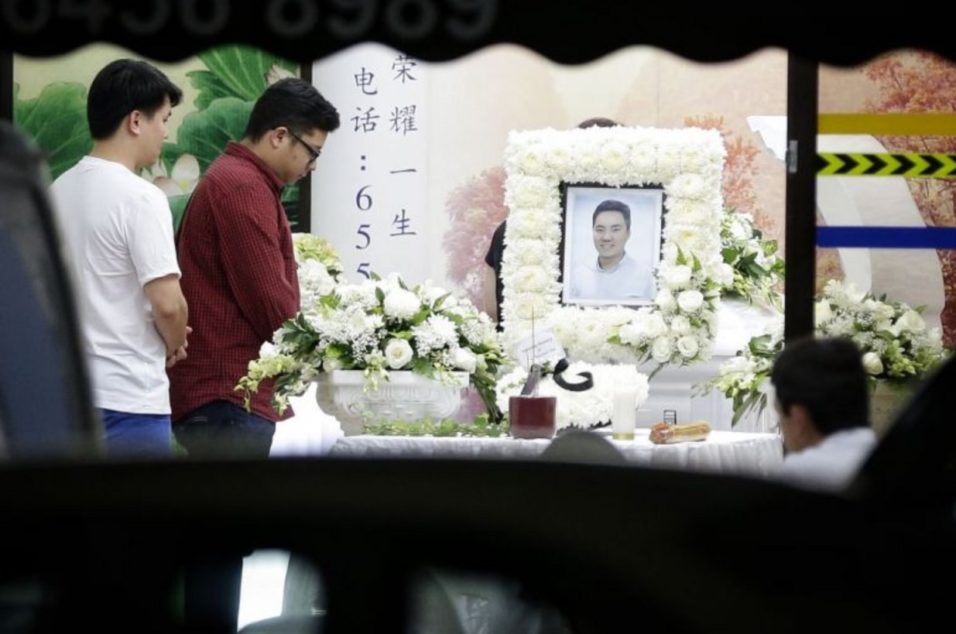
    Yesterday, several friends posted online tributes to Mr Ng, with many expressing shock at news of his death and sharing fond memories of him.

    Mr Ng was a car enthusiast who had, according to his Facebook page, raced for the first time on a track in Melaka late last month.

    Speaking to The Straits Times at his wake last night, Mr Ng’s younger brother, who declined to be named, said his brother was a joyful and happy-go-lucky person.

    He declined to say more, but had earlier told Shin Min Daily News that it was not clear what the cause of death was. Mr Ng was believed to have suffered a heart attack but it is not known if it happened before or after the accident.

    Singapore GP, which organises the F1 race here, offered its condolences and said Mr Ng had been scheduled to work at the grand prix for two weeks as a contract facility director next month and had been a valued member of the hospitality team for the past three races.

    Mr Ng was not on duty with Singapore GP at the time of the crash, it added. The incident is believed to be the first time that a member of the public had crashed into a Singapore Formula One Grand Prix barrier since the first race in 2008. The latest barriers are in place for the event next month.

    Speaking in general about such accidents, safety driving expert Gerald Pereira said normal cars, unlike F1 race cars, are not made to withstand great impact.

    The Singapore Safety Driving Centre training manager also said: “Such accidents can be avoided if drivers are more aware of the barriers around them, and, more importantly, they should not speed.

    “So slow down and even if you crash, perhaps the impact won’t be so great.”


    Source: http://www.straitstimes.com/

  • 4 Year Old Boy Found Dead At Bottom Of Yishun HDB Flat

    4 Year Old Boy Found Dead At Bottom Of Yishun HDB Flat

    The body of a four-year-old boy was found motionless in a pool of blood at the foot of Block 165, Yishun Ring Road, on Tuesday (Oct 6) morning by one of the residents in the block.

    Madam Lela V. was on her way to the market when she saw the body.

    The 58-year-old housewife recognised the child as her neighbour. His family had recently moved into the block.

    She said: “The family was very friendly and would say ‘Hi’ whenever we met in the lift or corridor.”

    The New Paper understands that the boy is believed to have fallen from a window of his family’s ninth-storey flat.

    It is not known if he was alone at home when he fell.

    A Singapore Civil Defence Force spokesman said they were alerted to the incident at 8.34am. The boy was pronounced dead by paramedics on arrival, he added.

    Police said they are investigating the case as an unnatural death.


    Source: www.tnp.sg