Tag: Dr Tan Cheng Bock

  • Dr Tan Cheng Bock: In A Democracy, We Must Question, Exchange Ideas

    Dr Tan Cheng Bock: In A Democracy, We Must Question, Exchange Ideas

    What is the definition of an Elected President? Does the government have the discretion to decide when to start a term count before a reserved election is triggered? And was the Attorney-General’s Chamber’s (AGC) advice to the Prime Minister on the reserved election a “mistake of law”?

    These were the issues that took centre stage during former presidential candidate Tan Cheng Bock’s appeal against a High Court ruling on his constitutional challenge to the timing of the reserved presidential election

    The case was heard on Monday (31 July) in a packed gallery at the Court of Appeal before five judges: Chief Justice Sundaresh Menon, Judge of Appeal Judith Prakash, Judge of Appeal Steven Chong, Justice Chua Lee Ming and Justice Kannan Ramesh. Some 50 members of the public, many of them supporters of Tan, also waited outside the courtroom.

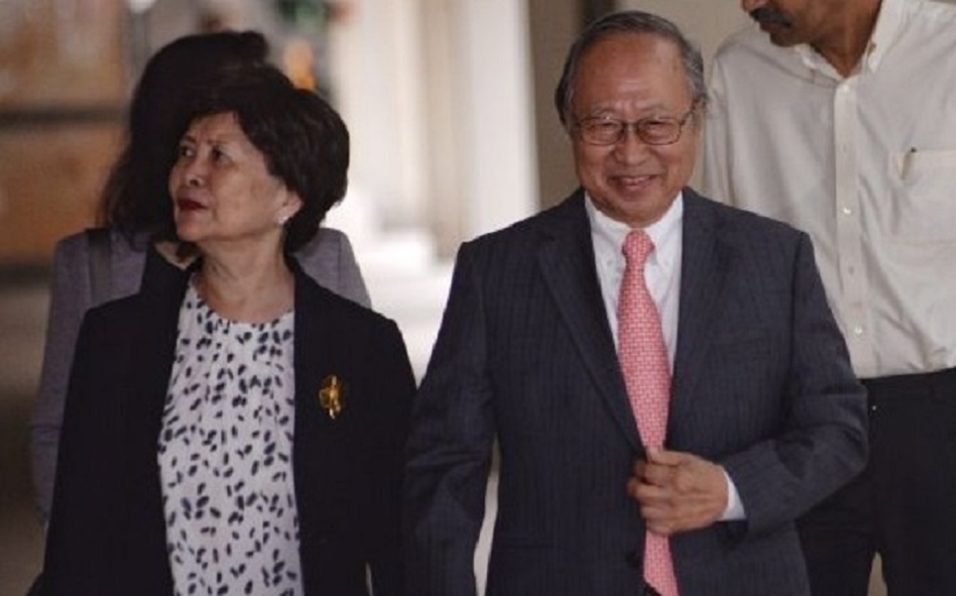
    Tan and his wife Cecilia were both present. Aljunied Member of Parliament Sylvia Lim, whose name was referenced several times during the hearing, was spotted in the gallery, along with former National Solidarity Party chief Lim Tean.

    The High Court ruling

    This year’s presidential election is reserved for Malay candidates, following constitutional amendments last year that reserves an election for a particular racial group that has not been represented in the office for five consecutive terms. The term count starts from the late Wee Kim Wee, according to the government, as he was the first to wield the powers of an Elected President.

    Earlier this month during a High Court hearing on his legal challenge, Tan argued through his lawyer Chelva Retnam Rajah that the term count should start from the late Ong Teng Cheong as Wee was not elected by a popular vote. In rejecting his arguments, Justice Quentin Loh noted that the Constitution states that a President can be “any person for the time being exercising the functions of the office of the President”.

    Loh referred to two articles of the Constitution. Specifically, “Article 19B(1) provides for a Reserved Election for a community if no person from that community has held the office of President for any of the five most recent terms of office of the President” while “Article 164(1)(a) provides for Parliament to specify the first term of office of the President to be counted under Article 19B(1) (“First Term”).”

    The High Court then also found that there is nothing in the text or textual context which limits Parliament’s power by requiring Parliament to start the term count from the term of office of a popularly elected President.

    The appellant’s claims

    Rajah, who represented Tan again, argued his case against the ruling on three main points. Firstly, he maintained that Article 2 of the Constitution, which sets out the definition of the “president of Singapore”, refers only to an Elected President. The term count should therefore start with the late President Ong.

    Secondly, President Wee’s second term in office was only chosen for the start of the term count because Parliament mistakenly thought he was an Elected President. Rajah pointed out that the “specific mischief” outlined in Article 19B(1) was to invoke a reserved election if a particular race had not been represented for five consecutive elections.

    Thirdly, Parliament acted under a “mistake of law”, based on the advice of the AGC, which has not been publicly disclosed. Rajah noted Prime Minister Lee Hsien Loong’s speech to Parliament on 7 November last year, when Lee said, “We have taken the Attorney-General’s advice. We will start counting from the first President who exercised the powers of the Elected President, in other words, Dr Wee Kim Wee. That means we are now in the fifth term of the Elected Presidency.”

    Rajah noted that during the parliamentary debate on amendments to the presidential election last November, Aljunied MP Sylvia Lim had prefaced her questions with a statement that the Attorney-General advised the PM to start the term count from President Wee, “no one corrected her, not even PM Lee”.

    CJ Menon noted, “You’re saying (that) Parliament’s decision was repeatedly framed by the Attorney-General’s advice (and) predicated on legal advice which you contend is wrong.”

    In response, Rajah quipped, “Your Honour has perhaps understood my argument better than I have.”

    The respondent’s claims

    Proceedings were temporarily interrupted when Zeng Guoyuan, a would-be parliamentary candidate on multiple occasions, was escorted out of the gallery by a security officer after he continually interrupted the hearing with his remarks. “Don’t waste the court’s time,” he said, as he walked off.

    Representing the government, Deputy Attorney-General Hri Kumar said, “There has been a narrative since this application was filed…that there has somehow been a re-writing of history…that Wee Kim Wee has been deemed an elected president. (But) no one said he was an elected president…the government had to start the count somewhere and it gave its reasons for starting with Wee Kim Wee.”

    Kumar charged that Tan’s case was based on “staggering errors of fact, law and logic”. He stressed that Article 164, a transitional provision for Article 19B, gives Parliament “unfettered” discretion to decide when to start the term count and does not restrict it to popularly elected presidents.

    Addressing Rajah’s claim that there had been a “mistake of law” following the Attorney-General’s advice on the reserved election, Kumar denied this. “The nature of the advice was not disclosed or even discussed in Parliament. The Prime Minister started the count from Wee Kim Wee not because he was an elected president, but because he exercised the powers of the Elected President. It was a policy decision.”

    He added, “The appellant asserted that the Attorney-General had told the Prime Minister to start the count from Wee Kim Wee, which is not what the Prime Minister said at all.”

    Judgement has been reserved in the case. It is not known when the Court of Appeal will make its decision known.

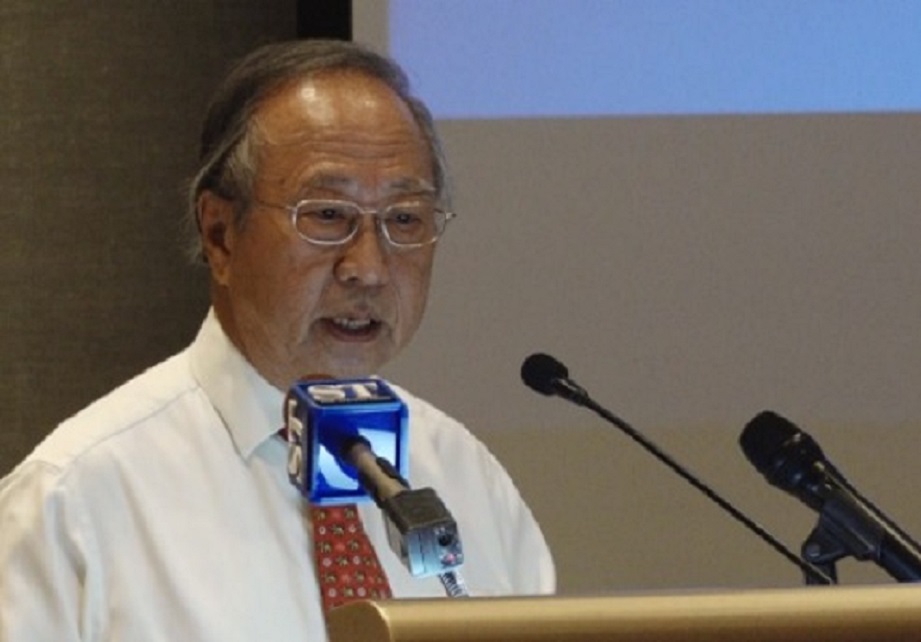
    Speaking to reporters at the end of the hearing, Tan said, “It is not just acceptance (of the government’s decision), we must question it…If at the end, it is found we were wrong, then we accept it. That is what democracy is about: exchange of ideas.”

    His wife Cecilia added, “If we are right, the government should accept it as well.”

    Source: https://sg.news.yahoo.com
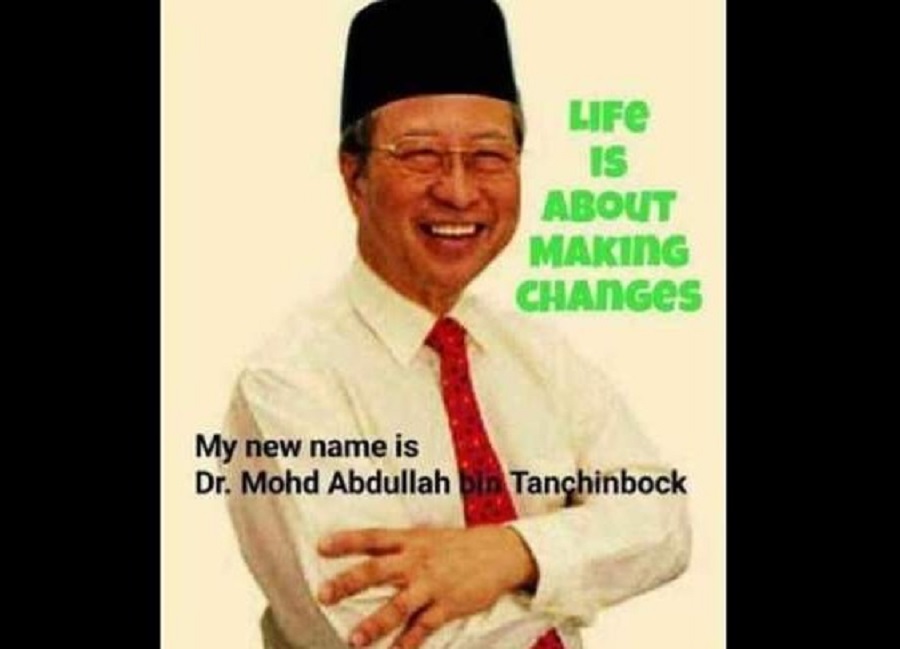
  • Singaporean Malays Should Endorse Dr Tan Cheng Bock As Malay So He Can Contest EP

    Singaporean Malays Should Endorse Dr Tan Cheng Bock As Malay So He Can Contest EP

    Halimah Yacob is considered a Malay by the Malay community. Therefore, we should not fetter about trying to say Halimah Yacob is or is not Malay.

    Instead, start by going to your local Malay community, neighbours, void decks, and convince your Malay friends/co-workers to consider Tan Cheng Bock as a Malay by the Malay community. (He does not need to be Muslim. Malay!= Muslim).

    Being part of the Malay community does not mean you have to be Malay by race, many Indians, Sarawakan, Peranakan, Javanese, Arabs can be considered Malay even though they are distantly related by race.

    As long as The Bock is legitimized as a member of the Malay Community, he would be eligible to run as President.

    Source: www.allsingaporestuff.com

  • Judgment Reserved For Dr Tan Cheng Bock’s Appeal Against Reserved EP

    Judgment Reserved For Dr Tan Cheng Bock’s Appeal Against Reserved EP

    The Court of Appeal has reserved judgement on the appeal by former presidential hopeful Tan Cheng Bock against the basis and timing of the coming reserved Presidential Election, after a panel of five judges heard the case on Monday (July 31).

    The court gave no date as to when the judgement by the five judges, among them Chief Justice Sundaresh Menon, would be delivered. The other four judges hearing the case are Judges of Appeal Judith Prakash and Steven Chong, as well as Justices Chua Lee Ming and Kannan Ramesh.

    Dr Tan told reporters: “Singaporeans must fully understand the issue, not just accept (it). If in the end, we are found to be wrong, then we accept it. That’s what democracy is about.”

    He filed the appeal to the apex court after his earlier legal challenge was dismissed on July 7.


    Source: www.todayonline.com

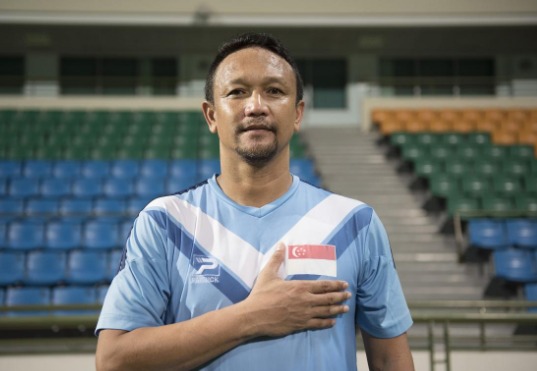
  • 6 Reasons Why Fandi Ahmad Should Not Run For Presidency

    6 Reasons Why Fandi Ahmad Should Not Run For Presidency

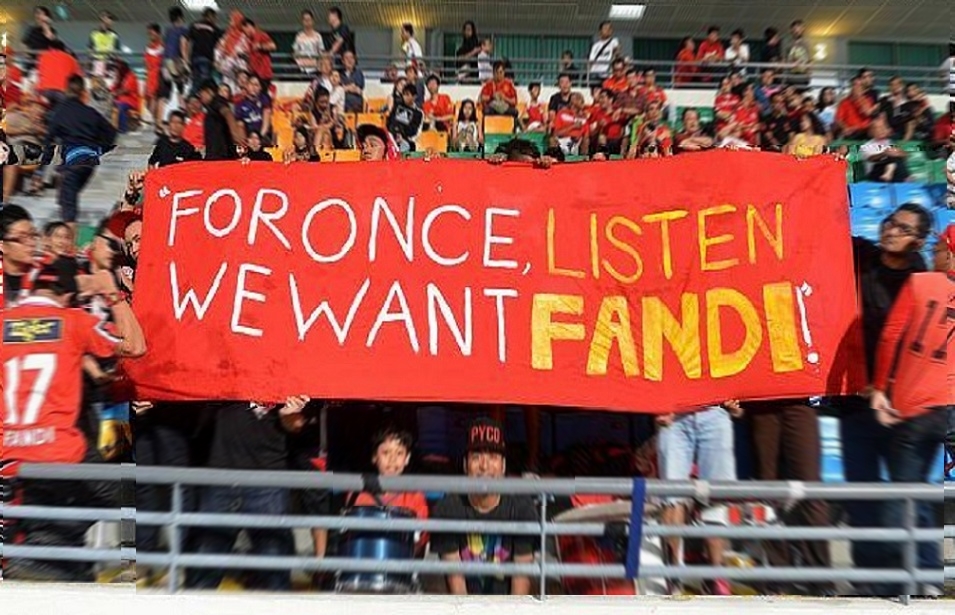
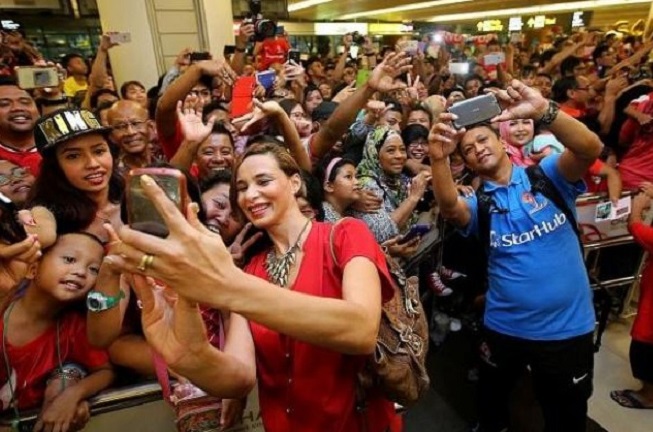
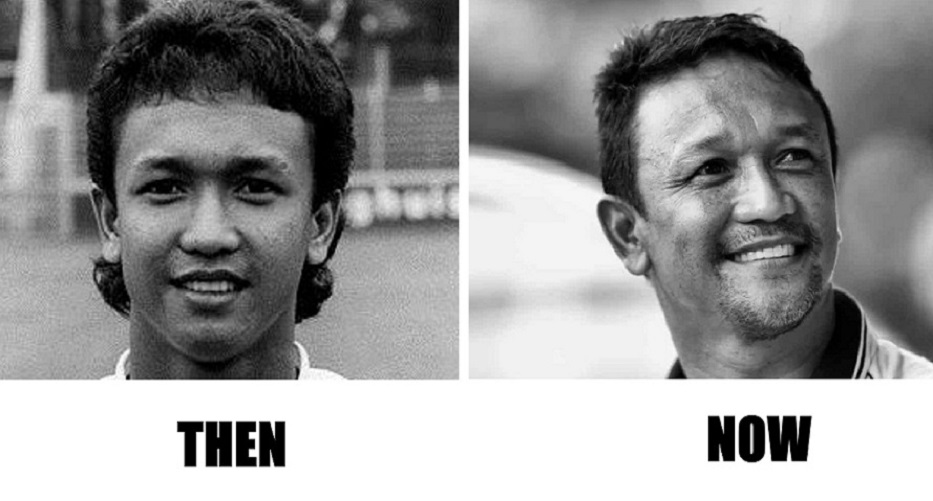
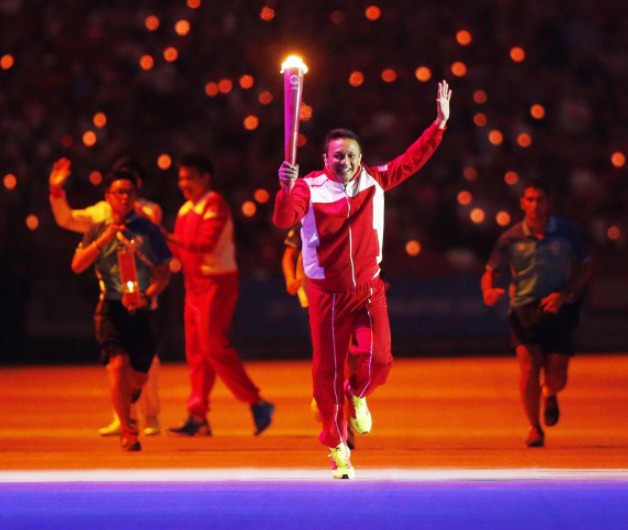
    Halimah Yacob, Salleh Marican and Farid Khan – three names that have not inspired confidence in their race to the Istana. Singaporeans are getting desperate to the point of encouraging presidential hopeful, Dr Tan Cheng Bock to become Malay. And then there’s Singapore’s favourite footballing son, Fandi Ahmad – a popular choice, even though we don’t see him qualifying as a candidate.

    Will Fandi make a good President?

    Here are 6 reasons why Fandi Ahmad should totally not become President:

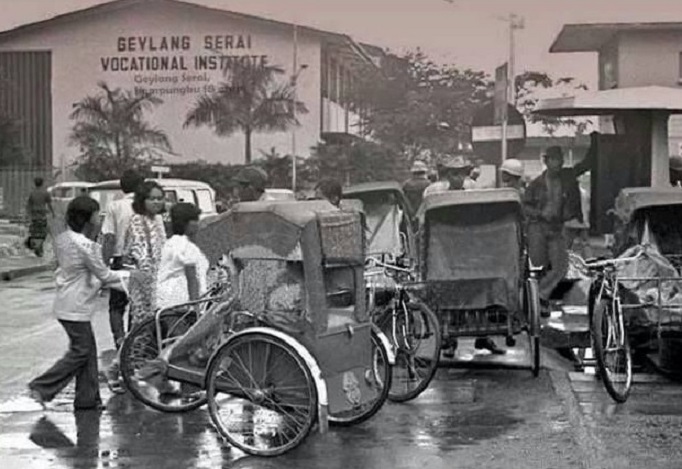
    1. He is not educated. He was from a vocational school and has never graduated from a university like many of our very elite millionaire Ministers. Even though he became rich from playing football and his business interests, he is still not considered elite like our Ministers.

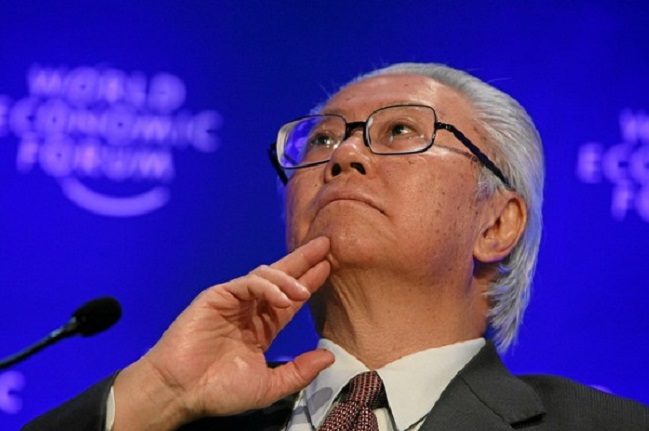
    2. Fandi doesn’t have the look of a President. He doesn’t have a back comb, and wear large glasses like our current President who is very Presidential and charming. When Tony Tan speaks, the room is quiet (because people fall asleep). Compare that to Fandi. Wherever he turns up, people make a lot of noise and mob him. How very un-presidential. Who would support Fandi?

    3. He is too handsome. The only President that was handsome was the late President Yusof Ishak. He will make all the men jealous. They will ban their wives from going to Istana open houses and National Day parades. We don’t want that too happen do we?

    4. Fandi is a sporting legend and national icon. How many sporting icons have served in public office? Sporting icons contribute back to the country through their grassroots work. Don’t meddle in the work of the elite leaders and the natural aristocrats of our land.

    5. For a prospective Malay President, he has too many friends from other races to be called truly Malay.

    6. Lastly, Fandi Ahmad is too humble. His humility is the stuff of legend, just like the man himself. Presidents cannot be too humble because they need to keep the political elites and natural aristocrats in check.

    There you have it, 6 reasons why abang Fandi shouldn’t run for Presidency. We totally don’t want a down-to-earth, humble, handsome and capable President who is Malay.

    Convinced yet?


    Rilek1Corner


    Disclaimer: We would totally vote abang Fandi if he runs for Presidency. Totally. We know Singaporeans would too. 

  • Osman Sulaiman: Changes To EP Entrenches PAP In Our Political System

    Osman Sulaiman: Changes To EP Entrenches PAP In Our Political System

    The civil service certainly has no dearth of talent. If it decides to gather people of talent, Im sure it can put up a few good men.

    Sadly, the civil service serves not the nation but panders to political influence.

    Recently, the 9-member Constitutional Commission formed to review Elected Presidency system had made some changes to our elected presidency.

    On the surface, it looks like a tweak but these changes to the presidential system are actually monumental. It ravages our democratic rights.

    To be the president, the requirement for private sector candidate is that the person must have been heads of companies with paid-up capitals of $500 million in shareholders’ equity on average over three years

    The rationale is that the candidate must have experience managing big amount of money to safeguard our national reserve.

    The above policy is ill fitted.

    Point 1, it disqualify a huge majority of the people from becoming the President. Nowhere in the world has such a policy existed.

    Now comes the second part:

    The President will have to consult Council of Presidential Advisers (CPA) on ALL fiscal matters and key public sector appointments. Disagreement between the two, will have to be brought before parliament.

    If President acts agaisnt CPA’s advice, Parliament can then reject president’s veto power with a majority.

    With the above system, the President would no longer have any discretion to decide on important matters. Its decision can be overridden by CPA or when it disagree with the CPA, its veto power can be neutralized by parliament.

    Let’s revisit point 1. Why then set the bar so high to $500 million? What difference does it make between a hawker stall holder and a CEO of an MNC after becoming president, making important decisions but thereafter, all decision made, has to be consulted upon or can be vetoed?

    Why waste $2 million dollars of taxpayers’ monies paying the president’s salary? These are the kinds of policies that cost us as a nation.

    Where the gov is a real scrooge on welfare, it finds no problem to bleed taxpayers money unnecessarily to entrench its hold on power.

    So this whole episode of forming the 9 member commission to review the Elected Presidency system is all but a comical exercise to hoodwink the public of the need to protect the system.

    What it actually does is to dupe the populace into believing that the nation is in need of these changes. Upon closer inspection, its deception is crystal clear.

    And we have not even started to discuss the policy of reserving the presidential election for Malay candidates. That will open up more cans of worms.


    Source: Khan Osman Sulaiman