Tag: entrepreneurs

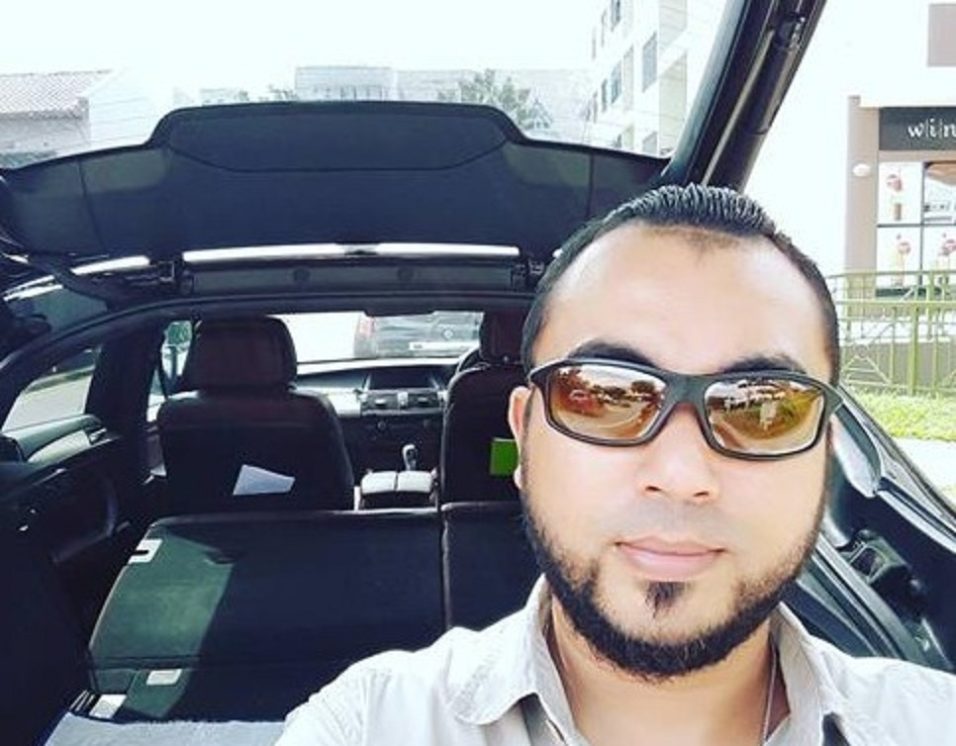
  • Hazrul Azhar Jamari: Malays In Businesses Have To Overcome Plenty Of Racial Biases

    Hazrul Azhar Jamari: Malays In Businesses Have To Overcome Plenty Of Racial Biases

    There are many startups that do no have any Malay founders. Some of them are my friends. Had a colleague once whom I managed and reported to me. They happen to be 2 Chinese guys who start a really cool startup. They attract attention, VCs, and it’s not that difficult to raise simply because of the privilege they possess.

    There are some startups that are founded by Indian guys. I had an intern once. Brilliant chap. Went on to found his startup with other Indian dudes. They’re pretty successful.

    And here we are. Malay chaps. Didn’t go to any of the big schools. Just trying to make it big in this world. We outdid ourselves last year. We have very limited resources. We started out much later in life because we have responsibilities at home. We never got to be on 30 people under 30. We’re all over 30, married and have a lot of responsibilities today. We have a mortgage. We have our health issues. We have our families to take care of. We have our colleague’s families to provide for. We don’t have privilege. We never started on an equal footing.

    But when it comes to running a company, the amount of bias we get is just astounding. It’s no longer shocking. Team dynamics they say. As if one’s skin colour makes a difference.

    It is a little bit like Primary 6. Football is often a Malay dominated sport. This time, there were 3 Chinese players that joined the school team. Football is a team sport. Every one played their part. I don’t remember my 3 Chinese school mates scoring in that final, but every player’s job was equal. That was a team because no one was big headed. That’s why we won the final that day and the entire P6 cohort witnessed a piece of school history. But lo and behold, the next day, my Chinese principal, singled out the 3 Chinese players in front of the whole school. No, he did not ask the entire team to stand before the school. Just these 3 Chinese players. For making the school proud. For winning a Football final that apparently 8 other players on the field weren’t as responsible for.

    It’s really funny how for a community that detests the racial quota, it doesn’t seem to be a problem when a team filled with the other has to open up a spot to make that team, acceptable, for them to support.

    How about if that spot becomes available, the right person with the right credentials get in? Irrespective of race. How about we actually live by our nation’s values for once? Support us irrespective of race. How about that?

    Against the backdrop of all the racial issues that have cropped up recently, it’s really funny how this sounds so familiar. But we cannot let ourselves feel sensitised with all this. Not anymore. We must change because it needs to. We cannot accept it just because that’s the way it is.

    This is a team. We will win. Against all odds. By God we will.

    Bismillah.


    Source: Hazrul Azhar Jamari

  • Self-Proclaimed “Business Mentors” Have No Credibility, Harming Community’s Progress

    Self-Proclaimed “Business Mentors” Have No Credibility, Harming Community’s Progress

    Don’t u dare call urself an Entrepreneur or a Businessman if all u do is rely on ur fake workshops to be full.. What happens when u run out of people to “inspire”, what happens when u run out of minds to manipulate?

    Trust me when I say that there are many that do not dare to speak up on this, for fear of being shut down, ridiculed or ganged up by these Fake Millionaire Mentors. Suit and tie konon, pose infront of other people’s cars, podah! Kocek kosong..

    Siapa makan cili, dia rasa pedas. Not happy, delete and block me or straight up challenge me but make sure u are better then me or I will shut u down. If u have to knw, before u go up against me in business prowess, the sales target is 2 million a year, coz thats my sales target. If the target is too high for u, then turn around and walk away but If u think the target is not much for u or anyone in ur “Mentor Community”, get this, I achieve this target year in and year out, even when im sitting at home doing nothing. Even when Im sleeping. Even when Im on holiday. Even when Im ranting about u on Facebook. And I dont have to cheat and promise anyone the World to achieve this target. I make new prospects each minute of each day being who I am. U loose prospects everyday pretending to be who u are definitely not. So if u think, u can teach me about business, lu relak sua bruder….

    U wanna go toe to toe with me, then make sure ur businesses are also toe to toe with mine. Otherwise, just take my rants as they are and do ur business elsewhere (like on a different continent perhaps) and please STOP cheating my fellow Muslim sisters and brothers out of their time, ambitions and money.

    I am the real “Zero to Hero” … not u.
    U are more like the Zero to Minus One…
    And dont think I do not knw where ur awards came from or how much u had to pay for em…lol

    There are NO short cuts when it comes to making money or running a business and as soon as the Malay community realise and believe that, ur classes will be empty… then what u gonna do? Teach baking ah? At least that is a profession and business I can respect 10x more…

    On the same note, I urge everyone who is about to be duped of their time and money, pls do a proper background check on these mentors. Find out,

    1) Is my mentor the real deal, or a copy and paste on the blackboard kinda guy? They better be teaching something that u cant get free from Google.

    2) Does my mentor have and own the luxuries that he claims to have? Or is it all just hocus pocus and mambo jumbo.

    3) If my mentor is rich, how did he become rich? Did he make it from a business or did he make it from his so called seminars and classes, and if he did become rich from his full house classes, then u are better off if he teaches u how to run classes instead of teaching u on how to start up and be successful at a business he never owned or never did…

    P.s : Im about to loose at least 10 FB friends…
    But I am about to make a hundred more new and genuine ones…

    #BhaiAngullia
    #InYourFaceMentorForFree


    Source: Bhai Hafiz Angullia

  • Ground-Up Initiative Founder: Take Ownership Of Choices, Don’t Blame Government

    Ground-Up Initiative Founder: Take Ownership Of Choices, Don’t Blame Government

    To some, Tay Lai Hock is a “hippie” who’s misleading the youth; to others, he is just one Singaporean who is promoting the philosophy of living in harmony with nature.

    Tay is founder of the Ground-Up Initiative (GUI), a non-profit group that aims to reconnect city dwellers with the earth. The group’s 26,000sqm Kampung Kampus site in Khatib is designed as a low carbon footprint area featuring tropical sustainable architecture. Their idea is not only to enable people to be with nature, but also actively look after the space, get their hands dirty and in the process, learn how to take risks and be leaders – all while working as a team with a 21st century kampong spirit.

    Previously a highly-paid IT executive, the SilkAir crash in 1997 prompted Tay to have a rethink of what he was doing with his life. He later quit his job, backpacked around the world, and then started GUI.

    Debates over land use in Singapore and the loss of rustic spaces are issues which resonate with him. He went “On the Record” with Bharati Jagdish about this, values in an ideal society, and what it means to put your money where your mouth is. But first, he took on what it meant to be called a “hippie”.

    Tay Lai Hock: Well, I always say that if I’m a hippie, then I’m a hippie who promotes free love, free play, free spirit, but I don’t talk about free drugs or free sex, things like these. What I’m trying to do is help Singaporeans free their minds.

    So often, we hear people say that they are very stifled. They’re very caught up with all the day-to-day running around and making a living that they have forgotten how to live. What’s wrong with what I’m trying to do? I’m not against anything. I’m just not doing what the mainstream thinks everybody should be doing.

    So I’m just providing an alternative platform for Singaporeans. So naturally, the government officials when they started to try and understand what I’m trying to do, they asked me about it. Of course, the more progressive ones, the more open-minded ones will think that I’m doing good. But there are people who said I’m misleading youth.  That one really hurts me.

    Bharati Jagdish: Are you at liberty to say who said this about you?

    Tay: No, I don’t think I should.

    Bharati: But it was a government official?

    Tay: Of course. I had more than one government official telling me this.

    Bharati: Why do you think they think this of you?

    Tay: I don’t know. I was shocked, I was like “Why are you saying this? What have I done? What did I do wrong?” Fortunately, that was about three years ago. I was really upset that day. Why do they think I’m poisoning the minds of the young? What have I done wrong?

    CREATING A CULTURE OF RISK-TAKING AND CREATIVITY

    Bharati: To what extent do you think this is because in Singapore, we have a culture of focusing on certain things – academic success, material success, but what you’re trying to do is quite different?

    Tay: We all know that we’re chasing the five Cs right? You’ve probably heard that I backpacked around the world for four years. And in the last year, the last few months of my travels, I was sitting in the Sahara Desert, and I was looking back at Singapore and I said, “Okay Lai Hock, you haven’t died yet, you did well in the last few years, so what are you going to do now?”

    So I said, “I’m going back to Singapore.”

    At that time, our Government released the Remaking Singapore blueprint. Two things caught my attention. The first thing was, we want to teach Singaporeans how to take risks. I thought, “Wow, how do you create that, how to do that when the whole environment doesn’t even promote risk-taking?” Of course compared to back then in the early 2000s, I think Singapore is doing better now.

    If you read the press, if you interview our local institutions, they are promoting a lot of entrepreneurship.  The Government is putting in a lot of money to promote all kinds of things. But in my opinion, a lot of people are only taking risks because there’s a lot of money being put into them.

    The second thing they said was, “We want to teach Singaporeans how to be more creative.” But our definition of creativity is narrow. For people like me, I will never be classified as a creative person.

    Bharati: Why not?

    Tay: You must be an artist, you must be this, you must be that.

    Bharati: Yeah, that’s the conventional definition of “creative”.

    Tay: But my four years of travelling around the world living as a backpacker in so many countries made me have this confidence. I said, “I am a creative person. I’m living creatively.” Now creativity need not be confined to just an art skill, but if you’re able to live creatively, and that’s where you need to be that free spirit. You need to be able to freely conceive things and adapt along the way, and change if you need to change. And –

    Bharati: Solve problems.

    Tay: Solve problems and not be just “uhh.” So when I came back, I really wanted to do all these kinds of things. And of course it was five years later that I decided that I will start my own organisation.

    Bharati: In your opinion, why do we lack a culture of risk-taking and creativity?

    Tay: It’s recognised that we have a good government. And the people do look up to them. It’s either we’re too comfortable or everything has been too convenient. The other thing is the lesser emphasis on character building; everything is always about results. Also, the majority of our population is Chinese. Chinese traditionally have Confucian ethics. So maybe it’s in the Chinese blood to always to be a little bit more driven to study, right?

    Bharati: Nothing wrong with studying.

    Tay: Nothing wrong with studies, but traditionally studying means rote learning.

    Bharati: It’s about how you study isn’t it?

    Tay: Yeah, but I think our Education Ministry is one of the most progressive ministries. Almost every year, they will come up with new policies. But I think if you talk to any teachers enough, everybody is jaded. There’s a disconnect somewhere, and that’s the truth. I’m sure we all know that.

    Bharati: What do you think needs to happen to bridge this disconnect?

    Tay: I remember one Minister for Education who said that we must treat our students as clients. With this American philosophy of customer is king, suddenly a lot of parents started to behave like kings and started going to schools and making demands, and so I did tell the last Minister, who’s now the Minister for Finance –

    Bharati: Mr Heng Swee Keat.

    Tay: Yeah, I did tell him that; I’m glad that one day in the press it was reported that he said no to this. And I feel that we need to have a fine balance. So I’m not entirely sure that these are the reasons, but I think that our teachers are already under stress. And then they have added stress to deal with ugly parents. I’ve met some outstanding teachers, and they’re trying their best to do this, implement teaching to encourage creativity, for example.

    But I think it has come to the point where a lot of them just do it for the sake of doing it. There are many things affecting our system here. The whole world is facing this – prevalent technology and the internet, but the things that anchor us as human beings are eroding.

    I know our country is trying to bring back Character and Citizenship Education, but this is after 20 years of cutting that away. That’s why I’m trying to do what I’m doing, to first focus on you as a person, as a character, and asking you to understand your place on earth and in this world, and as a living person.


    Source: www.channelnewsasia.com

  • Entrepreneurs Don’t Have Special Gene For Risk – They Come From Families With Money

    Entrepreneurs Don’t Have Special Gene For Risk – They Come From Families With Money

    We’re in an era of the cult of the entrepreneur. We analyze the Tory Burches and Evan Spiegels of the world looking for a magic formula orset of personality traits that lead to success. Entrepreneurship is on the rise, and more students coming out of business schools are choosing startup life over Wall Street.

    But what often gets lost in these conversations is that the most common shared trait among entrepreneurs is access to financial capital—family money, an inheritance, or a pedigree and connections that allow for access to financial stability. While it seems that entrepreneurs tend to have an admirable penchant for risk, it’s usually that access to money which allows them to take risks.

    And this is a key advantage: When basic needs are met, it’s easier to be creative; when you know you have a safety net, you are more willing to take risks. “Many other researchers have replicated the finding that entrepreneurship is more about cash than dash,” University of Warwick professor Andrew Oswald tells Quartz. “Genes probably matter, as in most things in life, but not much.”

    University of California, Berkeley economists Ross Levine and Rona Rubenstein analyzed the shared traits of entrepreneurs in a 2013 paper, and found that most were white, male, and highly educated. “If one does not have money in the form of a family with money, the chances of becoming an entrepreneur drop quite a bit,” Levine tells Quartz.

    New research out this week from the National Bureau of Economic Research (paywall) looked at risk-taking in the stock market and found that environmental factors (not genetic) most influenced behavior, pointing to the fact that risk tolerance is conditioned over time (dispelling the myth of an elusive “entrepreneurship gene“).

    Resilience is undoubtably a necessary trait for success; many notable entrepreneurs experienced success only after leading failed ventures. But the barrier to entry is very high.

    For creative professions, starting a new venture is the ultimate privilege. Many startup founders do not take a salary for some time. The average cost to launch a startup is around $30,000, according to the Kauffman Foundation. Data from the Global Entrepreneurship Monitor show that more than 80% of funding for new businesses comes from personal savings and friends and family.

    “Following your dreams is dangerous,” a 31-year-old woman who runs in social entrepreneurship circles in New York, and asked not to be named, told Quartz. “This whole bulk of the population is being seduced into thinking that they can just go out and pursue their dream anytime, but it’s not true.”

    So while yes, there’s certainly a lot of hard work that goes into building something, there’s also a lot of privilege involved—a factor that is often underestimated.

    Source: http://qz.com