Tag: family

  • Lunch With Sumiko – When The Going Gets Tough, Muft Fatris Bakaram Writes Poetry

    Lunch With Sumiko – When The Going Gets Tough, Muft Fatris Bakaram Writes Poetry

    My lunch with the Mufti of Singapore is held in the shadow of the Sultan Mosque.

    I’m early at The Landmark, a restaurant at the Village Hotel Bugis overlooking the swimming pool.

    It is just past 1pm and I’m suddenly aware of a different sound in the air. Ah, I realise, the call to prayer, or azan.

    Dr Fatris Bakaram, the Mufti, arrives soon after. I nod and wave my hello.

    He’s accompanied by Mr Zainul Abidin Ibrahim, director of strategic engagement at the Islamic Religious Council of Singapore, otherwise known by its Malay acronym Muis.

    A mufti is an Islamic scholar who helms the religious leadership in a Muslim community. He interprets Islamic law and provides spiritual guidance to the community, which numbers about 500,000 here.

    The Office of the Mufti is part of Muis, a statutory board under the Ministry of Culture, Community and Youth and supervised by the Minister-in-charge of Muslim Affairs.

    Among his many duties, the Mufti chairs the committee that issues fatwas, which are Islamic legal rulings.

    His office also issues Friday sermons, gives direction for programmes in mosques and Islamic education, and advises the Government on Islamic matters.

    Dr Fatris, 47, became Singapore’s third Mufti in 2011. He has also been an ustaz, or religious teacher, since the 1990s, and still conducts a class at a mosque every Sunday.

    I ask what it’s like to be in the public eye.

    “I think I manage to live with it, although at times it has caused a bit of discomfort to my wife,” he says with a laugh. He lets on that these days, she would rather he wait for her in the car when they go to the market and shops around their home in Yishun.

    The Mufti comes from a family of religious teachers. His father, Bakaram Osman, was an ustaz in the Pasir Panjang village Dr Fatris grew up in, and his mother is a housewife. He is the third of four children, and an elder brother and younger sister are religious teachers.

    His father, who died in 1995, was a major influence in his life. “He always emphasised the need to be calm in the face of challenges, and the importance of appreciating different points of view even if we disagree with them,” he says.

    “That shaped me as a person. Some of his students say they see his reflection in me. I am a person who does not vent. Even when times get tough, I have to be tough in my thoughts, in my thinking, in the process of coming to a decision, but in my interaction, Fatris is Fatris.”

    He studied at Pasir Panjang Primary School before switching to Madrasah Aljunied. In 1988, he left for Egypt’s prestigious Al-Azhar University to study Islamic theology, returning in 1993.

    After he returned, he taught at a madrasah before joining Muis. He later became a principal of a madrasah, did his master’s in education in Malaysia, and then went back to Muis where he was manager of the Office of the Mufti.

    In 2004, he was told by Muis that he would succeed Mufti Syed Isa Semait, who had been mufti since 1972 and had postponed his retirement several times.

    To prepare for his new role, he went to the University of Birmingham in Britain to do his doctorate in Islamic law.

    He took part in a week-long multi-faith conference in Germany and got to know Jewish rabbis and Christian leaders. “We had meals together, we openly discussed our different faiths. That’s when I saw the human side of religion rather than just the theological part.”

    A large part of Dr Fatris’ job is chairing the fatwa committee, and in recent years, fatwas have been issued on topics such as organ transplants.

    Fatwas, he explains, are different from religious advisories. For example, whether it is okay for Muslims to wish Christians “Merry Christmas” is not a fatwa but an advisory. (For the record, it is okay.)

    A recent fatwa he took satisfaction in shaping was on adoptions. Muslim couples who wanted to adopt or foster had some questions on the permissibility of adopting girls, as they understood that there are guidelines that a male and a female should not be in closed premises when they do not have a family relationship.

    The committee studied the Quran, prophetic precedents and sought expert opinions on child and family psychology. It concluded that no child should be denied the love and care of a family. An adopted child, regardless of gender, should be treated as part of the family.

    Muis explained its decision to religious teachers and they understood and supported the fatwa, Dr Fatris says. He is happy to see more couples coming forward to adopt and foster children.

    A few days before our interview, terror group Islamic State in Iraq and Syria claimed responsibility for an attack in Berlin that killed 12 people. I wonder if it would be insensitive to raise the issue of terrorism, but he is unperturbed when I bring it up.

    To a large degree, he says, Muslims in Singapore are very enlightened compared with those in many other countries.

    “Only a small number of individuals are attracted to deviant teachings,” he says, and points out how most Muslims will speak out if they attend classes by teachers who “get carried away” or espouse radical or extremist views.

    “Muslims in Singapore are able to differentiate between what true Islam should be, how it should be practised in Singapore, and which practices would be inappropriate here. So I take comfort in that.”

    Does he feel the need to defend Islam each time an attack happens?

    “I think we have come to a stage now where it’s not fruitful to continuously keep making statements, because it doesn’t help. We need to go beyond this,” he says firmly.

    The best way Muslims here can help to dispel the idea that Islam is a troubled religion is to be a community that is productive, which contributes to the country and upholds the values and principles of peace, he says.

    I ask what’s the most difficult part of being mufti and his reply is swift: Managing expectations.

    There are people who say the Government should do more to support Muis, but there’s also another group that wants the Government to do less as they want Muis to be independent.

    There are some who want the Mufti to be more visible in mosques, yet others say it’s inappropriate for the Mufti to be conducting classes in the mosque because of his position.

    There’s also the matter of Friday sermons. A group in Muis – including outside experts – prepares the sermons which are sent to mosques. While they sometimes check with him on what to say, he usually leaves it to them because “I want my officers to be empowered”. The imams can make adjustments to the sermons while keeping the core message.

    There are those who think it is not Muis’ job to write the sermons, but others want Muis to continue doing so as they feel Singapore is too small for different mosques to be preaching different messages.

    He has concluded that the key in managing expectations is integrity.

    “In the midst of managing those expectations, really building up your integrity is important. You just have to convince people with action, with your programmes, deliver results.”

    One result he likes to cite is Singapore’s mosque-building programme, which is wholly funded by the Muslim community.

    When Muis started the programme in 1975, there was scepticism. Today, there are 25 new, multi-function satellite mosques, many not just beautiful but also buzzing with programmes for all segments of the community, including the larger Singapore society.

    Dr Fatris points out how in many parts of the Muslim world, mosques are used only as a place of ritual and worship.

    Singapore’s mosques are also progressive. Dr Fatris relates how a visiting female Muslim community leader from Britain was surprised to learn how mosques here have prayer spaces for women, and how many of the activities are driven by women.

    “She was shocked. She asked, ‘What else?’ I said, ‘In Singapore we have female scholars, female religious teachers who will conduct lectures and we males will just sit down and listen to them and get instruction from them, not only from the males.’ She said, ‘Are you sure?’

    “It’s something that they cannot imagine in their part of their world – that Muslim men would be able to listen to a female preacher talking about religion.”

    Still, being Mufti has its challenges, and to relax, he writes Malay poetry, a passion since secondary school.

    One poem is about his dreams for his daughter and three sons. They are aged 22, 21, 19 and 16 and studying. Some lines go: “One by one, you will go on to build your own lives/Fly into the clouds without worry/Because God’s sky is your umbrella/And my prayers are your wings”.

    He writes about “anything”, he says. “Sometimes I write about life in a kampung, sometimes I write about children, about family, about religion, about society.”

    He adds self-deprecatingly: “Kampung boy, sometimes get very sentimental, romanticising about the good old days… something that my wife can read but cannot understand. My wife is totally a city person, she was raised in Toa Payoh.”

    He used to enjoy handicraft too, but “now in an HDB flat, how can you knock-knock on wood without disturbing others”, he chuckles.

    Our lunch has taken us to nearly 3pm. We decline an offer for dessert but get tea.

    Before we go, I ask if there’s anything he wants to add. He laughs and says he has shared a lot already. Then, turning serious, he adds that there is something very important he wants to talk about – the influence former mufti Syed Isa has had on his life.

    He tells me that Mr Syed Isa was mufti at a time when he didn’t have the luxury of having a team of officers behind him, but he was very confident, courageous and ahead of his time.

    He cites an example of how, back in the 1970s, Mr Syed Isa decided to base Hari Raya dates on scientific calculations rather than ritual visibility sightings. “It was very, very tough for the people to accept that but he just believed in it.”

    Today, he and the former mufti – now 78 – still have long chats whenever Mr Syed Isa is in Muis.

    Do you see yourself serving as long as your predecessor’s 40 years, I ask.

    “I do not know whether I can stay or whether I should stay that long,” says Dr Fatris. “Sometimes it gets tough.”

    But, he adds with a charming smile: “Writing poetry is a way for me to release that stress without venting my anger. It’s an outlet for me.”


    Source: www.straitstimes.com

  • Help Bring Me And My Children Back To Life

    Help Bring Me And My Children Back To Life

    I wish to share my unfortunate & difficult life story that has made me suffer financially, mentally, emotionally & psychologically, having to raise my 4kids on my own.

    14 years ago, I was married to a man from a broken family. Things were fine initially,until my Husband started job jumping. He finds that all the jobs he was working were unsuitable for him. Eventually he started abusing me physically & verbally after I began pressing on him the importance of a stable job as our financial were beginning to tumble. Being temperamental as he was, he would occasionally abused me, and after which he would apologised and promised that he would not repeat his mistakes. Despite being trapped and afraid, I always forgave him, thinking that this time he would change for the better. This patience in me has held on until we had 4 kids. Instead of becoming better, he became worse over time. Eventually he stopped working & just didn’t bother about the family and our needs. There are times where our children barely had anything to eat even but my husband just didn’t care.

    In 2014, I decided to file a Personal Protection Order(PPO) against my Husband after being physically abused until I broke my nose recently.

    As a mother, I tried hard looking for jobs to sustain my kids but it is too difficult to manage. It came to a point where I have utilities arrears ,there are days where we stayed in the dark even. I tried applying for financial assistance throughout many organisations, but barely getting enough to support my kids’ education as my Husband is still able & fit to work. His laziness & attitude has cost me my life,struggling around for assistance just to raise my kids.

    I am now filing a divorce against him, hoping that without him in our lives, I would be able to pick myself up & continue nurturing my kids in a decent environment.

    Currently I am raising this fund to save my house, the only asset & shelter left for my 4 kids & I from being taken away. Beside that I have pile of arrears with town council & power supply.

    I sincerely hope that this would raise awareness to all kind souls out there who can financially assist for me to be able to support in upbringing my kids while I desperately find a job to get back on my feet from this big drop in life. Whatever that has happened to me, I never want my kids to suffer the same fate. May God Bless all of you.


    Source: https://give.asia

  • Man Arrested Over Deaths Of Wife, Daughter, On Chinese New Year

    Man Arrested Over Deaths Of Wife, Daughter, On Chinese New Year

    Singapore police arrested a 41-year-old man in connection with the suspected murder of a 39-year-old woman and her 4-year-old daughter on 28 January, the first day of Chinese New Year. The suspect is believed to be the deceased woman’s husband and was arrested from his flat, where the incident happened.

    The police were asked for assistance at a sixth-floor unit at Woodlands Drive 52, Block 619, at around 6.35pm, following the SCDF sent one fire engine, one red rhino, one ambulance and a support vehicle to the scene. The two bodies were discovered in the bedroom and the paramedics declared them dead at the scene. However, the cause of death still remains unknown.

    According to Straits Times, police said there was a burning smell in the air at the site. A 47-year-old transport supervisor also said that he noticed the smell of burning plastic when he left the house at around 7am that day. “At first, I thought people were burning things for Chinese New Year, but when I returned in the evening around 5pm the smell was still there,” he said, as reported.

    The supervisor also said that he last saw the woman, identified as Madam Choong Pei Shan, on Monday or Tuesday morning hanging clothes.

    It was also reported that another neighbour, who lives a few units down, said the couple moved into the unit about five years ago and they mostly kept to themselves. However, the woman, who was a housewife, used to greet and smile at people.

    The neighbours also said that they were completely unaware of the incident as there were not sounds, shouting or screaming. Police have ordered an investigation into the case.


    Source: www.ibtimes.sg

  • Khoo Teck Puat Hospital: Sister Is Not Family, Get Out Of A&E Room

    Khoo Teck Puat Hospital: Sister Is Not Family, Get Out Of A&E Room

    Dear A.S.S. Editors

    Here’s the story about my terrible experience at KTPH. My Brother was rushed to the A&E at KTPH due to high fever, severe vomiting and chest pains. We arrived at the Hospital at 4am. While waiting, my Father asked the nurse “around what time can my Son see the doctor?” And the nurse simply glared at him and walked away.

    My Brother was still vomiting non stop and had hyperpehia due to severe pains. Did X-ray and blood test. Doctors couldn’t diagnose the problem and suspect that it is food poisoning and said that maybe can be discharged at 4pm.

    At 9am, my Brother was finally warded to the EDTU and put on IV drip. My brother’s right hands were ice cold so we asked the nurse, and the nurse said “you touch my hand, my hand also very cold.” laughed and left. So we had no idea what was going on and we waited patiently for the results.

    Finally at around 5pm, results came out. Doctor say it might be food poisoning but it cannot be confirmed. What? Then, proceeded to say that his white blood count is too high and have to do blood test again. Cannot be discharged and have to stay until tomorrow morning for further observation.

    At around 8pm the doctor said that the test results are out, the blood count has been reduced slightly but not enough to be discharged. And the x-ray shows that my Brother’s left shoulder is dislocated and have to do second x-ray. What?

    Brother was then wheeled to do the second x-ray and then the x-ray was cancelled because another doctor said it wasn’t necessary because it is just “flexible joints” and my Brother can be discharged. And that we had to wait 1 hour to get the MC and the discharge summary.

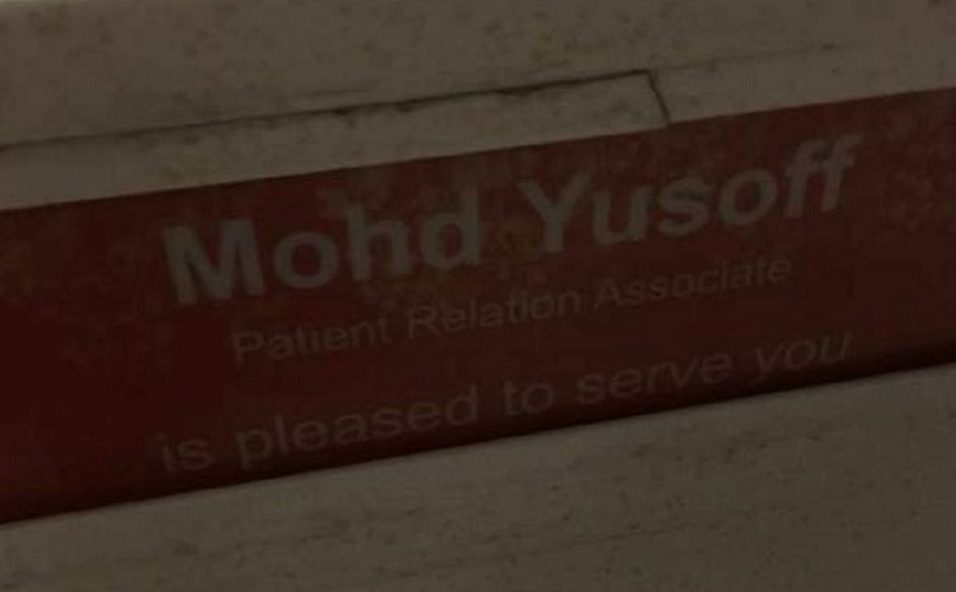
    While waiting, A&E patient relation associate Mohd Yusof came in and suddenly asked my Mother if she’s the parent. Then he asked me “who are you?” I said I’m the Sister. He said “Sister is not family, you get out” So I said “huh? Sister is family. We are waiting for him to be discharged, he will be discharged soon.” And he said “no, Sister is not family, you get out. doctor can just talk to the Mother”

    So I had to wait outside because apparently “Sister is not family” at Khoo Teck Puat Hospital. Absolutely ridiculous. Terrible terrible experience at KTPH and will never go back again.

    Upset Family Member
    A.S.S. Contributor


    Source: www.allsingaporestuff.com

  • Commentary: Inter-Racial Marriages Nothing Special, Until I Met Those Facing Challenges

    Commentary: Inter-Racial Marriages Nothing Special, Until I Met Those Facing Challenges

    My own inter-ethnic relationship has been obstacle-free, writes Kane Cunico, but a documentary on mixed marriages has spurred others to share with me the struggles they face in gaining acceptance.


    SINGAPORE: Sàam gu ma, sei gu ma, baat gu che, sahp suk – Cantonese words I would have never imagined myself learning by heart, had I not married my ethnically Chinese wife whose dad’s side of the family is from Ipoh, Malaysia.

    Respectively, they mean this:

    Sàam gu ma: My father-in-law’s third oldest sister.

    Sei gu ma: My father-in-law’s fourth oldest sister.

    Baat gu je: The eighth sibling in the family and my father-in-law’s younger sister.

    Sahp suk:  The tenth sibling and my father-in-law’s younger brother.

    In my Indian-Eurasian household, which feels neither very Indian nor very Eurasian, we just call them aunty (insert name) and uncle (insert name).

    I have always been indifferent to my cultural roots, flippant to a point. I wouldn’t consider myself religious, but I am constantly open and curious about other people’s heritage.

    The same goes for my wife, who identifies herself as a third-culture kid.

    We both were fortunate to have parents who were willing to break their own cultural and religious traditions for their children, and compromise on a wedding that made everyone happy. Even while dating, race or religion never became an issue. I would call us rather happy-go-lucky.

    But the recent On The Red Dot series, Love Is (Colour) Blind, prompted me to reflect on just how lucky perhaps we were. The documentary profiled three mixed-race couples who spoke about the ups and downs of their relationships, from gaining family acceptance to bringing up their mixed-heritage children.

    In response, hundreds of netizens have commented on Facebook, eager to share their own experiences in inter-ethnic marriages. I was heartened to see all those different races and religions coming together – it was like those United Colors of Benetton ads I wished the world could be more like.

    Watch: The story of Martin and Esther

    But on the flip side, friends and not a few commentators on Facebook have asked: “Why is this even a story? Why talk about this? What’s the big deal? Inter-racial marriages have been around for a long time. Why single it out?”

    And in a way, they were right. I had never before seen it as a problem.

    WE’VE HAD IT EASY

    Yet in talking to some of those who wrote on our Facebook page, and re-watching the episodes, it struck me – my wife and I have had it easy, relationship wise.

    The same can’t be said of Facebook writer Hui Jing Ong. A Singaporean Chinese who is Buddhist, she married an Indian national who is Sikh. They have two children.

    In a telephone interview, she told me: “My parents are divorced, but my father until now cannot accept our marriage or children. He’s kind of a racist. My mum says as long as I’m happy, she’s okay with it.”

    Hui Jong Ong with her husband, Gurdev Singh, have two children. (Photo: Hui Jing Ong) 

    Another Facebook user, Jasmine Jay, had dated her husband-to-be for four years. He is Malaysian, Malay and Muslim, and she is Singaporean, Sikh and Catholic.

    Three and a half years ago, when she became pregnant, they decided to tie the knot. For three months, both deliberated on who should convert. They ultimately decided neither should. His family snubbed their wedding.

    “Even my mum said no to the wedding. But since the birth of our daughter, his family have accepted us,” said Jasmine in a phone interview.

    She added: “Today we have two children. I have a younger son and we both agreed the children will be Catholic.”

    Despite the continuing struggles, both have found happiness where their relationship once floundered in a quagmire of disapproval.

    Last year, 4,142 marriages in Singapore involved couples of different races, making up 21.5 per cent of all marriages for the year. In 2005, inter-ethnic marriages made up just 14.9 per cent.

    So mixed marriages may be becoming normalised; but many couples still face familial and societal obstacles to make it work.

    Watch: The story of Simon and Veronica

    Friends of ours in inter-racial relationships have had to try hard to win over their culturally traditional in-laws-to-be, who were worried about what others in their community might say or think.

    And such cultural conservatism isn’t just confined to our parents’ generation. Some young couples my wife and I meet have no qualms telling us that they wouldn’t want their children dating someone of another race.

    A recent survey by Channel NewsAsia, in partnership with the Institute of Policy Studies, reflects some of these response. The survey found that fewer than one in four Chinese respondents were accepting of a non-Chinese marrying into the family; while fewer than half of Indian respondents indicated acceptance of a non-Indian into their family, according to the survey.

    WHEN CHILDREN COME INTO THE PICTURE

    For newlyweds like my wife and me, who are looking forward to having children, we know we cannot keep taking a laissez-faire approach to our mixed marriage.

    At some point, matters of race and religion will come up, and perhaps these may actually turn out to be issues for both sets of parents, as Jasmine learnt.

    “Managing families – that is still a challenge,” said the 23-year-old stay-at-home mother and trained nurse.

    “So many awkward moments. How you spend your festivities and whose religion you follow. You will argue about what cultural name the child will have. Should it be Indian or Malay in our case? And what religion will the child practice?” she added.

    Jasmine Jay with her husband, Abdul Rahim, daughter Raphaela 3, and son Rayden, 6 months. (Photo: Jasmine Jay)

    “To be honest, it is tough, but my husband and I, only because we are quite neutral with race and religion, we told our parents to leave the decision to us. So we gave the children neutral names. There is no “daughter of” to follow my Indian heritage, and no “bin or binte” to follow his Malay heritage.

    “But the beauty is that they get to be a part of both our cultural and religious practices and festivities,” said Jasmine.

    “So just follow your heart and fight for your right, and hopefully, both sides can still remain a strong family.”

    Watch: The story of Norsham and Anne

    Another Facebook user, Hazre Salim, told me it’s really about planning far ahead.

    A Malay Muslim, he married a Chinese Buddhist about two years ago after they dated for a year. Hazre, a secondary school educator, was upfront about how religion was important to him. With her full understanding, they both pre-empted their parents very early on in their relationship.

    “I knew first and foremost there were going to be challenges: Parents, friends, religion. But we had supportive parents,” the 35-year-old said.

    “There will be instances where we cannot solve the problem straight away. Children will definitely be an issue; we will face it when it comes.

    “But we both believe that when two people get together and have faith and trust in each other, it will work out,” said Hazre, adding that when they cannot resolve matters on their own, “we go to our parents and figure it out”.

    Hazre Salim and Nur Iviana Tham sought the approval of their parents early on. (Photo: Hazre Salim)

    Hazre’s and Jasmine’s advice are timely. My wife and I will soon have to decide which religion our child will be a part of, and what second language they should learn at school.

    What race do we categorise our children under, when their ancestral tapestry has Italian, Indian, Chinese and Peranakan heritage woven into it?

    These are questions we do not have the answers to yet. But we are fortunate and optimistic.

    Fortunate, to be in a place where inter-ethnic marriages are fast becoming normalised, if they aren’t already; and where strangers, who have shared their stories online, are willing to give us the perspective we need.

    Optimistic, that our families, made up of a suks, gu mas, aunties, uncles, mums, dads, mamas and grandmas, are around to hopefully be as open as they have always been with two happy-go-lucky and culturally impartial children.


    Source: CNA