Tag: Farid Khan

  • Gilbert Goh: Send Strong Signal To Government, Spoil Your Vote

    Gilbert Goh: Send Strong Signal To Government, Spoil Your Vote

    Once again, we reiterate our call for Singaporeans who are against this racist Presidential Election to spoil their votes.

    We believe in a meritocratic election whereby the best most-suitable candidate stands for election and let the people decide who is going to be their next President than letting race gets in the way.

    Singaporeans are fed up with our government who tried to lie to the people about taking care of the needs of the minority race by introducing a Reserved PE when in fact the main goal is to deter a unpreferred candidate from standing for the election.

    Its a known fact that Dr Tan Cheng Bock will lose in the forthcoming court appeal and Halimah – a Indian-Muslim will be the PAP’s preferred choice candidate.

    During last PE, 1.76% of the electorate spoilt their votes amounting to 37,000 voters. A spoilt vote is a legitimate vote of protest and it is not against the law.

    The Presidential Election is unlike that of a general election whereby much is at stake. The President has only custodial power and can’t intervene in the governance of the country. His main aim is to safeguard the billions of reserves we have in the country’s coffers.

    Its also a known fact that Halimah will win heavily due to her long-standing popularity with decades of strong grassroot experience having helmed the labour movement as the second in command.

    Even if all the opposition voters vote otherwise, she will still win heavily as most PAP supporters will root for her.

    Why not take this opportunity to unite together and spoil your vote to send a strong signal to the government that we are against this racist PE?

    We would rather that the government appoint our future President and do away with any PE as its wasting everybody’s time and the country’s resources.

    A strong spoil-vote PE will definitely send the right signal to the government not to meddle anymore with our constitution and stop abusing their power!

    #spoilvotecampaign


    Source: Gilbert Goh

  • Speaker Halimah Yacob To Run For The Presidency: Sources

    Speaker Halimah Yacob To Run For The Presidency: Sources

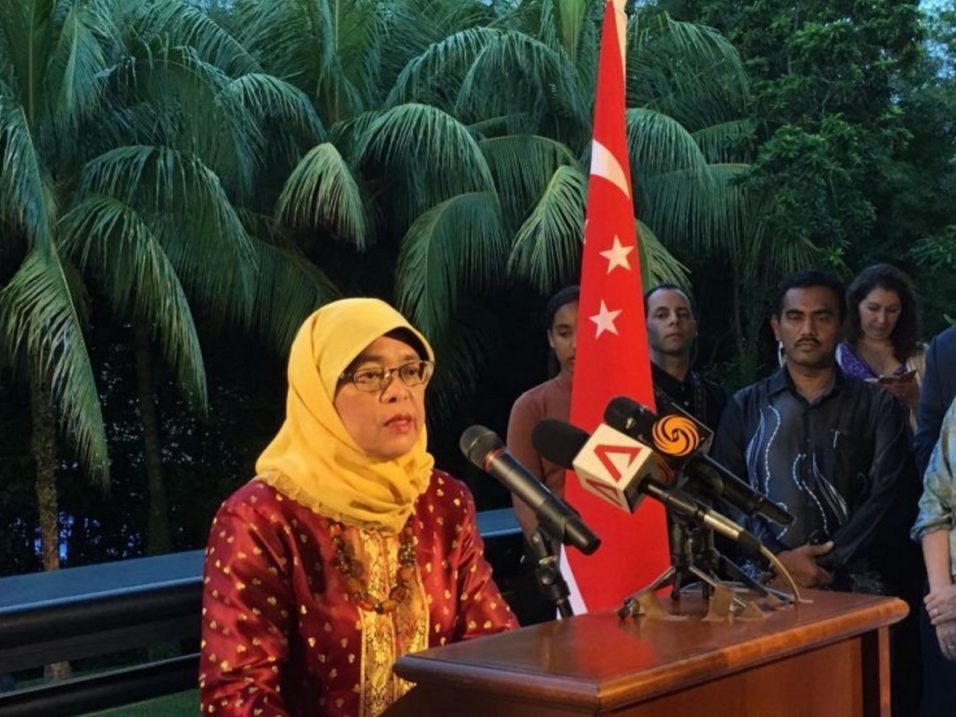
    Speaker of Parliament Halimah Yacob has decided to run in this year’s presidential election (PE), according to a source close to the 62-year-old.

    Halimah, who is also a Member of Parliament for Marsiling-Yew Tee GRC, has communicated her decision to run in the September election to grassroots leaders and People’s Action Party (PAP) activists, the source told Yahoo News Singapore on Thursday (27 July).

    The former union leader said that she is sad to leave her constituency after having served there for the past two years, added the source.

    When Yahoo News Singapore asked Halimah to comment on her bid for the presidency, she replied, “No. I am still considering.”

    Earlier this month, Halimah told reporters that she is thinking about running for the presidency. “The elected presidency is a very heavy responsibility and an important institution in Singapore, so it’s not something that one should take lightly,” Halimah said then.

    Signs of her impending run for the presidency have been growing for months. Another source in the PAP told Yahoo News Singapore that Halimah had indicated to party members as far back as March that she was planning to run for the country’s top office.

    If Halimah were to be elected as president, Singapore’s already strong ties with the Muslim-majority countries in Southeast Asia would be further enhanced, said the second sourceThis year’s PE has been reserved for Malay candidates following amendments made to the Presidential Elections Act earlier this year.

    Trained as a lawyer, Halimah began a long association with the labour movement in 1978 when she joined the National Trades Union Congress as a legal officer. She eventually rose to become Deputy Secretary-General of NTUC.

    The mother of five entered politics in 2001 when she successfully ran as part of the PAP team that contested Jurong GRC. The team was re-elected twice before she crossed over to Marsiling-Yew Tee GRC for the 2015 General Election, following the redrawing of electoral boundaries.

    Along the way, she also served as Minister of State at the Ministry of Community Development, Youth and Sports and the Ministry of Social and Family Development.

    In 2013, Halimah became Singapore’s first female Speaker of Parliament, replacing Michael Palmer after he was forced to step down over an extramarital affair.

    Prior to Halimah’s announcement, two other potential candidates, Farid Khan and Salleh Marican, had also announced their intention to run for the presidency.

    Farid, the chairman of Bourbon Offshore Asia Pacific, made the announcement at a press conference held at the Village Hotel Changi on 11 July.

    Salleh, the Second Chance Properties founder and CEO, spoke to  Yahoo News Singapore in an exclusive interview about his candidacy and Halimah as a potentially strong opponent in the election.

    Halimah has been stepping up her engagements with the unions, senior public servants and other groups in recent weeks, according to the posts on her public Facebook page.

    Halimah has been meeting union leaders and workers from the steel, petroleum, HDB, chemicals and other industries. She met with the French ambassador to Singapore, Marc Abensour, on Monday. At a dialogue organised by the Institute of Policy Studies on 17 July, she had a discussion with 50 corporate associates about improving Singapore and the lives of Singaporeans.

    In a Facebook post on her dialogue session with union leaders on Wednesday, she said, “We’re all fellow Singaporeans and regardless of race, we have stood together in solidarity for a common cause of securing a better life for our workers.

    “During our dialogue, I am reminded that it’s been almost 40 years and we shared many experiences of heartaches and celebrations of our journey together. There will be more to come as we strive to build a stronger Singapore for the next generations.”

    Source: https://sg.news.yahoo.com

  • Lack Of Credible, Capable Candidates In Presidential Race A Worrying Sign

    Lack Of Credible, Capable Candidates In Presidential Race A Worrying Sign

    The Malay community in Singapore should stop bickering about the “Malayness” of the three potential candidates for September’s presidential election.

    What is of greater concern is that despite the election being reserved for Malay candidates, only two – Salleh Marican and Farid Khan – have stepped forward to announce their intentions to run. The third, Speaker of Parliament Halimah Yacob, has only hinted that she is looking to run for the nation’s highest office.

    The fact that only two individuals from the private sector have announced their intentions is indeed worrying for the Malay community. Could this be seen as the Malay community being incapable of producing enough potential leaders to serve our country?

    To be fair, the requirement for private-sector candidates to have been heads of companies with paid-up capitals of $500 million in shareholders’ equity on average over three years immediately disqualifies most Singaporeans, regardless of their race.

    This issue aside, I have been talking to community leaders to better understand if there really is a dearth in potential Malay leaders here. Most of them pointed out that there are successful individuals who are more than capable of performing the duties of a president.

    Names such as Shafie Shamsuddin, CEO of PT Trans Retail, which operates the Carrefour supermarket in Indonesia, and Bahren Shaari, CEO of the Bank of Singapore, were brought up. Former Members of Parliament such as Zainul Abidin Rasheed and Abdullah Tarmugi were also mentioned.

    To date, however, none of these individuals has stepped forward to announce an interest to contest the election.
     
    Community showing signs of progress

    But are they the only Malay candidates capable of competing in the election?

    The Malay community has made tremendous progress since independence. There are more Malays now holding important roles in the Singapore Armed Forces. We have successful Malay businessmen and scientists. The number of Malay graduates has been increasing throughout the years. We even have two full ministers in the Cabinet heading important ministries.

    But despite all these achievements, I think it is a shame that, thus far, only two members of the community have stepped forward to throw their hats into the ring.

    It is like looking for a top striker to play in our national football team. Despite all the efforts made, the team have been unable to find someone capable of filling Fandi Ahmad’s boots.

    I have heard of complaints from the community that Singapore should have a Malay president again.

    “It is time. I think a Malay president should be elected as it is a symbol of our community’s success throughout the years,” said a friend of mine a few years ago.

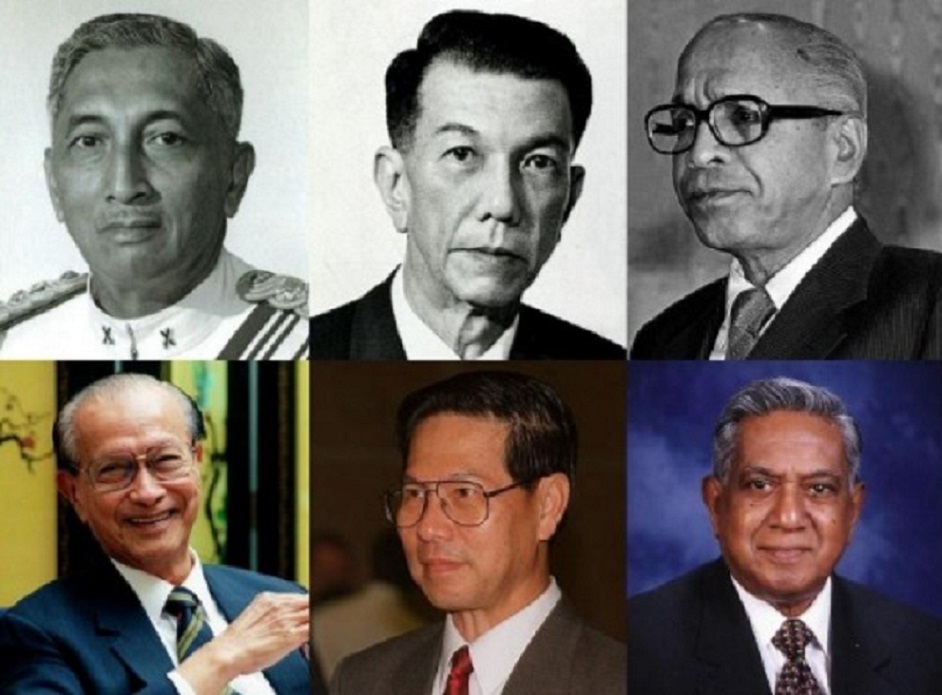
    She pointed out that it is only fair that a Malay is given a chance to head the republic, pointing out that since the country’s first president Yusof Ishak, there have been three Chinese, two Indians and an Eurasian holding the post.

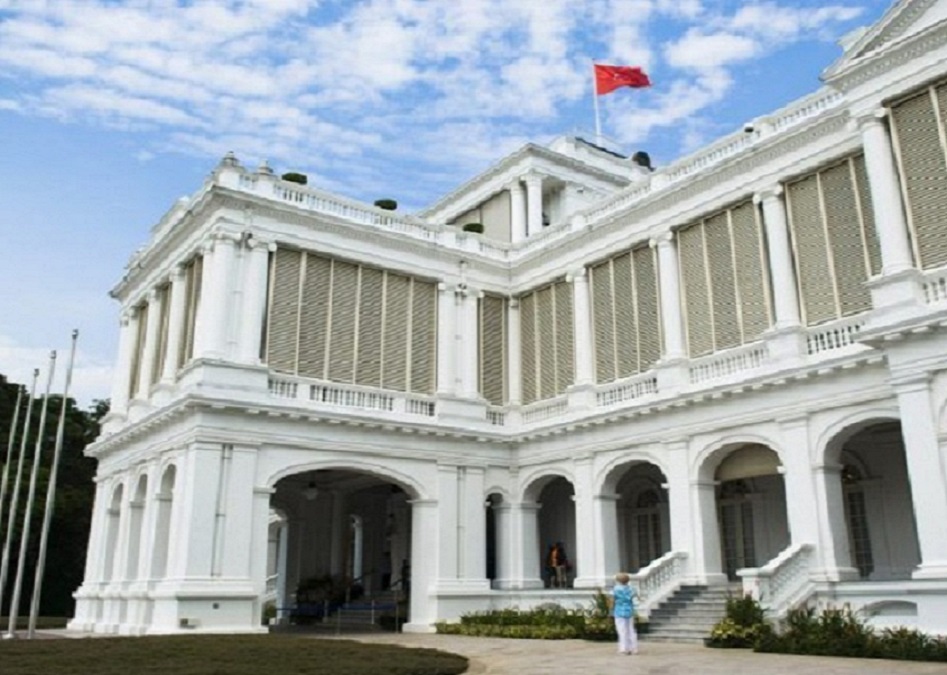
    Then again, do we elect a candidate into the Istana just because he or she is Malay? Or are voters going to choose the best person for the job?

    Potential Malay leaders out there but…

    I recently had a discussion with a community leader on Malay leadership in Singapore. He pointed out that there are potential leaders out there who have been identified for future roles in shaping the country.

    However, he also noted that these people may be contented with their jobs and are therefore reluctant to step forward to serve the nation.

    “There are Malays out there who can (do the job as president) but they are unwilling to do so. They have their reasons. Privacy is one of them and you have to understand this is not any job. This is the presidency we are talking about,” he said.

    Another veteran community leader whom I met said that the times have changed and that the younger generation of Malays are driven more by personal success in the private sector. Hence, there is a lack of interest in community service or public service at the highest levels among them, he added.

    “Do you think that they have time to give back to the community? I don’t think so!” he said.

    He has a point. Personally, I have friends who have successful careers in the private sector and are unwilling to give back to the community.

    “I contribute to Mendaki every month. That should be enough,” is the common answer I get whenever I ask them about serving the community.


    Source: https://sg.news.yahoo.com

  • Osman Sulaiman: Changes To EP Entrenches PAP In Our Political System

    Osman Sulaiman: Changes To EP Entrenches PAP In Our Political System

    The civil service certainly has no dearth of talent. If it decides to gather people of talent, Im sure it can put up a few good men.

    Sadly, the civil service serves not the nation but panders to political influence.

    Recently, the 9-member Constitutional Commission formed to review Elected Presidency system had made some changes to our elected presidency.

    On the surface, it looks like a tweak but these changes to the presidential system are actually monumental. It ravages our democratic rights.

    To be the president, the requirement for private sector candidate is that the person must have been heads of companies with paid-up capitals of $500 million in shareholders’ equity on average over three years

    The rationale is that the candidate must have experience managing big amount of money to safeguard our national reserve.

    The above policy is ill fitted.

    Point 1, it disqualify a huge majority of the people from becoming the President. Nowhere in the world has such a policy existed.

    Now comes the second part:

    The President will have to consult Council of Presidential Advisers (CPA) on ALL fiscal matters and key public sector appointments. Disagreement between the two, will have to be brought before parliament.

    If President acts agaisnt CPA’s advice, Parliament can then reject president’s veto power with a majority.

    With the above system, the President would no longer have any discretion to decide on important matters. Its decision can be overridden by CPA or when it disagree with the CPA, its veto power can be neutralized by parliament.

    Let’s revisit point 1. Why then set the bar so high to $500 million? What difference does it make between a hawker stall holder and a CEO of an MNC after becoming president, making important decisions but thereafter, all decision made, has to be consulted upon or can be vetoed?

    Why waste $2 million dollars of taxpayers’ monies paying the president’s salary? These are the kinds of policies that cost us as a nation.

    Where the gov is a real scrooge on welfare, it finds no problem to bleed taxpayers money unnecessarily to entrench its hold on power.

    So this whole episode of forming the 9 member commission to review the Elected Presidency system is all but a comical exercise to hoodwink the public of the need to protect the system.

    What it actually does is to dupe the populace into believing that the nation is in need of these changes. Upon closer inspection, its deception is crystal clear.

    And we have not even started to discuss the policy of reserving the presidential election for Malay candidates. That will open up more cans of worms.


    Source: Khan Osman Sulaiman

  • Dr Tan Cheng Bock’s EP Appeal To Be Heard On 31 July

    Dr Tan Cheng Bock’s EP Appeal To Be Heard On 31 July

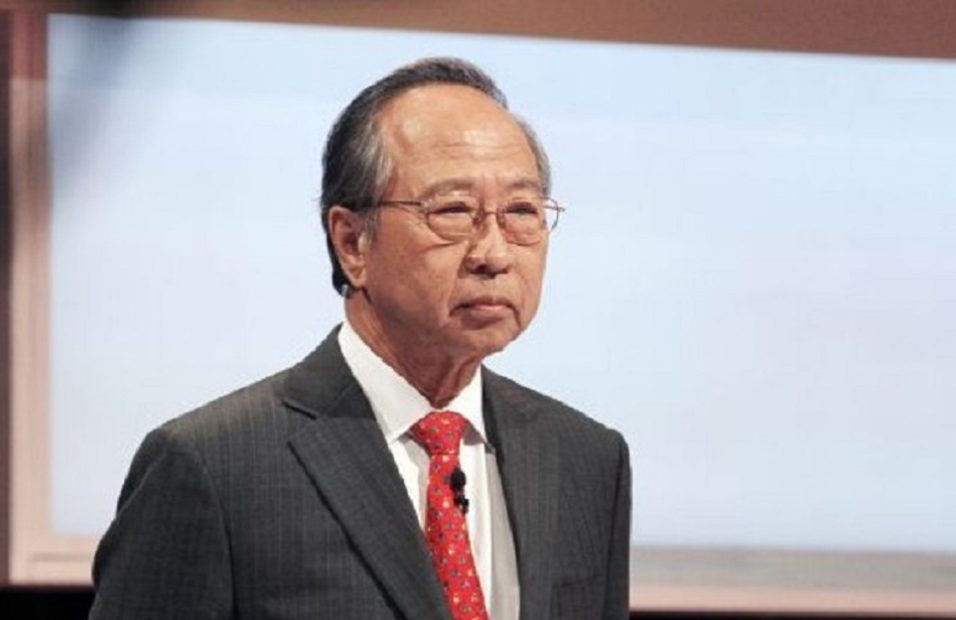
    Former presidential candidate Tan Cheng Bock’s appeal against the High Court’s decision to dismiss his legal challenge on the timing for the reserved presidential election will be heard on July 31.

    In a Facebook post on Sunday (July 23), Dr Tan wrote that the hearing in the Court of Appeal will also be open for members of the public to attend.

    “I look forward to a final judicial clarification on whether the Government had correctly picked President Wee (Kim Wee) as the first of five presidencies to trigger a Reserved Election for 2017,” he said.

    After his legal challenge was dismissed on July 7, Dr Tan said his lawyers have advised that “the judge may have misconstrued the relevant constitutional provisions”, and proceeded to file an appeal to the apex court.

    Dr Tan had earlier challenged the Attorney-General’s Chambers’ (AGC) findings that Dr Wee was Singapore’s first elected President, which formed the basis for the Government to trigger a reserved election for Malay candidates for the coming polls in September.

    After changes to the Elected Presidency scheme were passed, a reserved election will be triggered for a particular race that has not seen an elected representative for five consecutive terms.

    The Government, on the advice of AGC, started counting the five terms from Dr Wee’s presidency. The late Dr Wee was the first President to exercise powers under the EP scheme, after it was introduced in 1991 while he was in office.

    But Dr Tan said it was unconstitutional to start counting from Dr Wee’s term, and the Government should have started counting from the popularly-elected Mr Ong Teng Cheong instead, who succeeded Dr Wee. This would make it four terms since the Republic has had an elected Malay President.

    Earlier this month, Justice Quentin Loh dismissed the appeal. He ruled that after amendments to the EP scheme were passed, Parliament was “entitled… to specify President Wee’s last term in office as the first term” of office of the President to be counted under the relevant article for a reserved election.

    He found that “on a plain reading” of Article 164, Parliament is not limited to choosing a particular term of office of the President as the “first term”. There was also nothing in the text or textual context of Article 19B that limits Parliament’s power by requiring it to start the count from the term of office of a popularly-elected President, said the judge.

    Dr Tan said on his Facebook page on Sunday that the legal case has allowed him “to express a different legal view”, adding:  “The case will end on 31 July 2017. But it is good to let our conversation on these national issues continue.”


    Source: www.todayonline.com