Tag: isolationism

  • Alfian Sa’at: Donald Trump Wants To Keep America Safe, But Who Would Protect The World From Them?

    Alfian Sa’at: Donald Trump Wants To Keep America Safe, But Who Would Protect The World From Them?

    I remember making a joke when I was visiting New York last October: “It’s my last chance to visit the US before Trump becomes president and decides to ban Muslims.”

    That offhand joke is now a real nightmare, and laughter has turned to bile in the throat.

    I don’t intend to set foot on American soil again. The problem is that it’s easy to overlook the kinds of darkness that reside there because for a long time at least in a bipolar world, the US, compared to the Soviet Union, looked like the lesser of two evils. In addition there’s also something about soft power that throws a veil of gauze over sharp edges, that puts the horror into soft focus. America is in our earphones, in our cinemas, on our computer screens and smartphones, and all these help to domesticate its otherness. But alas that soft power is just a pretty collar on a dangerous animal and is not a leash.

    There is an America, ostensibly, of Disney and jazz and Instagram. But there is also that other America of unending gun violence, mass incarcerations, a militarised police, a broken healthcare system, white nationalism, a history of Native American genocide and African slavery; an America that exports weapons, that installs puppets and brutal dictators, that undermines popular sovereignty and stages coups, that lies to the world about Weapons of Mass Destruction and steals oil and turns entire neighbourhoods into rubble. How much hatred there must be towards this factory whose main manufacturing products are widows and orphans. And how convenient that those who are anti-American are seen as people who are ‘radicalised’ instead of people who refuse to accept the narrative churned out by the American propaganda machine.

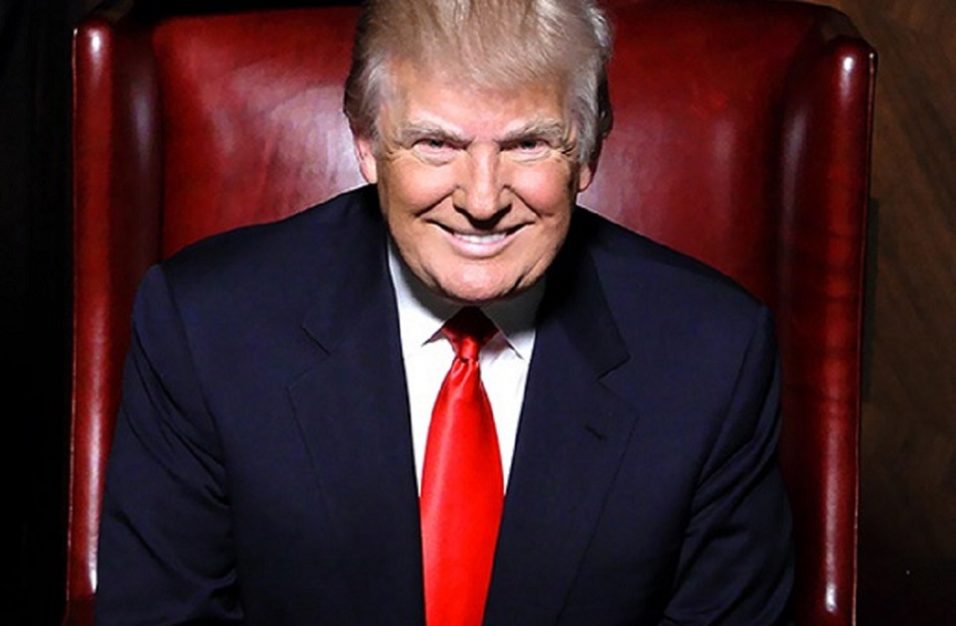
    Trump has unmasked this other face of America, or at least made it more public than it ever was before. As a man voted in for being able ‘to say it like it is’, there is no better man for the job.

    On the other hand there is an Iran, of unsmiling black robed mullahs and Hezbollah and Ahmadinejad. But there is also another Iran, of rose gardens and fountains and nightingales, of the poets Hafez and Ferdowsi, of some of the greatest films ever made by the likes of Abbas Kiarostami, Mohsen Makhmalbaf, Jafar Panahi and Asghar Farhadi. I remember once wanting to visit Iran but wondering whether it would in any way jeopardise any future entry into the US. What foolishness that was. It is both a gift and a curse to be reading and writing in this language. One has access to so much knowledge, but at the same time how susceptible one becomes to American imperialism, one of whose effects is to think of America’s enemies as our own. America fears what it cannot bend to its will. By sharing this fear we are also bending to America’s will.

    America wants to be safe. But who will keep the world safe from America?


    Source: Alfian Sa’at

  • Mufti: Teachings That Promote ‘Exclusivity And Isolationism’ A Cause For Worry

    Mufti: Teachings That Promote ‘Exclusivity And Isolationism’ A Cause For Worry

    Teachings on the Internet that promote “exclusivity and isolationist” inclinations are a “serious cause for worry” because they can go as far as to deny the rights of others to exist, said the Mufti of Singapore, Dr Mohamed Fatris Bakaram.

    It is not unfounded for some to be sceptical about the role of religion in enriching the “common space” in society, if religion preaches isolation, said Dr Fatris, who was delivering a speech at the SRP Distinguished Lecture and Symposium today (Jan 20) on Islam and developing the common space.

    In extreme cases, Dr Fatris noted, isolationist tendencies with the potential to fragment societies are not limited to rejecting certain thoughts, cultural practices or beliefs, but go on to deny the right of others to exist. This has been the case with perpetrators of terrorist activities, who have “cloaked their crimes with twisted religious arguments”, he said, calling such beliefs “extremely dangerous and totally unacceptable.”

    Despite the existence of clear and constructive religious resources and narratives on the “common space”, these will be rejected by those who spread isolationist teachings. As such, it will not help to increase the number of “pro-common-space narratives”, said Dr Fatris.

    “We then end up with a meaningless debate and endlessly quibble over whose evidence is stronger, which will only lead to more confusion. The prejudicial approach of some groups will only bolster their resolve to reject the notion of a ‘common space’,” he said.

    Dr Fatris was speaking a day after Law and Home Affairs Minister K Shanmugam, outlining the threats of terrorism and radicalisation Singapore faces, said community leaders have to help lead the “fight for hearts and minds” for a united Singapore.

    A resource that could be tapped are religious institutions like mosques and madrasahs, which can promote deeper interfaith understanding and offering activities for others to participate in, said Dr Fatris.

    “In our respective institutions, we ought to foster a sense of bonding with other communities, to nurture respect and love for humanity and fellow citizens, to deepen what one may refer to as, the “emotional common space” between us. This ought to be a key component of our religious curricula,” he said.

    Speaking to the media after his speech, Dr Fatris noted interfaith dialogues have been going on for years, and while there is still some “sense of discomfort and lack of confidence among minorities” who question the need for interfaith dialogues, this attitude has changed over the years.

    “If we do not start now with a serious and constructive interfaith dialogue, I think it will be a waste for Singapore as a nation. It is something that is, for me, crucial for the next 50 years, that we have a deeper understanding of racial differences and religious diversity,” he said.

    He also said there must be eagerness and willingness to come together to discuss aspects of differences in faith, adding: “Socially, we are strong enough to embark on this.”

    The symposium was organised by the S Rajaratnam School of International Studies.


    Source: www.todayonline.com