Tag: Malays

  • How Malays Define Malayness? Well Truth Is Its Very Confusing And Inconsistent

    How Malays Define Malayness? Well Truth Is Its Very Confusing And Inconsistent

    So how does one define who is or isn’t Malay? Having actually researched this for my thesis for the past two years, please let me share with ya’ll SOME of what I’ve learned.

    How Malays define Malayness has always been head-scratchingly confusing to those who are not Malay and even to us who identify as Malay in Singapore, it’s blatantly inconsistent. It is something of a pet passion of mine, probably because people keep assuming I’m chinese. Also, why is Malayness confusing? This is because there are actually competing definitions of Malayness. Dr. David Tantow identifies three which can be found in Sg:

    1) there is the Islamic ummah, which basically imagines ALL Muslims in the Malay archipelago regardless of ethnicity as being part of the larger Malay community (basically, it’s: you are Arab? Pakistani? Well, hello, welcome, cuz as long as you Muslim, you my bro). Apparently, This emerged as kind of an identity-based counter to Western imperialism and colonialism in the 19th and early 20th centuries but which has now gotten a pretty bad rep because talk about a southeast Asian caliphate now (which is what this definition alludes to) and people will be like, eh, don’t become Isis leh, I call police.

    2) Then, for the second, we have Malayness defined by cultural signifiers and codes, where we talk about people who practise Malay customs (adat), speak the Malay language (Bahasa), and practise Islam (agama). These three thingies form the basis of whether someone is either Malay (Melayu) or if that person has “enter (has become) Malay” (masuk Melayu). What confuses people about THIS definition is that it does NOT take genetic heritage into account. Basically, it’s: oh, you have Pakistani parents? But you now speak Malay, love motorcycles, know how to eat nasi ambeng, and go Friday prayers? Then we same-same Melayu lah bro.

    3) The third definition is the one Mendaki and the gahmen loves cuz it’s the simplest one; using parentage/ancestry or “genetic and territorial qualifiers”. It’s really just, oh, your father is Malay, your mother is Malay, then two plus two equals four cikgu. It’s the most exclusive kind of Malayness but also one that people who are not Malay are least confused by. Also, can anyone spell “administrative convenience”?
    (Source: www.tandfonline.com/doi/abs/10.1080/13639811.2012.725553)

    4) THEN, as if these three ways of defining Malayness is not enough, we’ve not even touched on the fact that “Malay” also refers to an umbrella term for “the Malay races”, which is when we further divide Malays up into whether they are Minang, or Bawean (Boyan), or Javanese, or Bugis, even Filipinos and Orang Asli,etc, etc, oh so many many, many of which have their own languages, customs, even religious practices, some of whom are chill with being called Malay and others who are less chill because of reasons. All of them are represented in singapore so JOY.

    5) THEN, as if I don’t have a migraine already, not only are all these different ways of defining Malays competing with each other, they are COEXISTING in some kind of strange equilibrium because, you know, we Malays don’t have enough problems in our lives. It’s why some of us say, Wah, this Marican cannot Bahasa Melayu, is he really Melayu (second definition)? Then with Khan, whom no one has criticised for not being able to speak Malay, people are like, eh, he Pakistani ancestry means he’s not Malay right (third definition).

    6) THIS EQUILIBRIUM SHIFTS, because Malays cannot duduk diam-diam, between each other but also internally within the three definitions as well. For example, increased religiosity in recent decades means many Malays absolutely require someone to be Muslim to be considered Malay while others like the 1960s Malay nationalists placed a premium on customs and heritage. Before that, there was also the phrase “Bahasa jiwa bangsa” (language is the soul of a nation) which was a huge draw for the malay intelligentsia because they ardently believe that MALAY LIT IS MORE LIT THAN YOUR ROKOK. It’s only really with the (racist) British system of colonial administration, and later on with the (rac-Er-problematic) CMIO system that the third definition really became much more dominant in the lives of Malays in sg. All in all, these shifting lines evolve to adhere to historical and cultural changes.

    7) So, really, what I am trying to say is defining who is Malay and how has been one long historical ?&$?? that has resulted in the inconsistency many people are now seeing in how the Malay community is treating the candidates. ALSO, AND MOST IMPORTANTLY, it has resulted in me extending my MA Programme by one semester, WHICH LIKE WAHLAO NI MELAYUNESS MAKAN MELAYU KE PE, incidentally. Now, with this development in the Presidential Election, this headache is finally going to be passed on to, as it usually happens here, a committee. I’m kinda looking forward to what they’re gonna say. For research purposes. Of course, they could just use the simplest, most boring way which is the third, genetically defined one, which will disqualify Khan. But this would leave us with Marican who many Malays would like to instinctively disqualify because of the second definition.

    Of course, likely, both will be disqualified because of the 500 million dollar in whatever equity rule, neatly avoiding this headache, which will mean, happily, that this migraine will continue, resulting in more MC days for my Malay brethren and me.

    Disclaimer: While Malay identity is important to my thesis, it’s not the main subject I am investigating for my research project. As such, what I know is limited and no doubt incomplete. So please feel free to add in any gaps or correct any inaccuracies as you spot them.


    Source: Hidhir Razak

  • Amrin Amin Turun Padang Sertai Operasi Serbuan Banteras Salah Guna Dadah

    Amrin Amin Turun Padang Sertai Operasi Serbuan Banteras Salah Guna Dadah

    Ini jarang-jarang kita saksikan – iaitu Anggota Parlimen sama-sama menyertai operasi anti-dadah di lapangan. AP yang dimaksudkan ialah Setiausaha Parlimen Ehwal Dalam Negeri Amrin Amin, yang turun padang menyertai para pegawai Biro Narkotik Pusat (CNB) pada awal pagi Rabu (12 Jul) untuk melancarkan serbuan ke atas pesalah-pesalah dadah.

    Serbuan tersebut dijalankan ke atas sebuah pusat hiburan malam di kawasan Orchard, dan dilakukan dari waktu tengah malam hingga 4.00 pagi dinihari tadi (12 Jul).

    Seramai lima orang yang disyaki pesalah dadah dicekup semasa serbuan itu, dedah Encik Amrin, menerusi laman Facebook beliau.

    Encik Amrin menyatakan: “Penguatkuasaan adalah teras utama bagi strategi anti-dadah kami. Para pegawai CNB kami bekerja keras, melancarkan serbuan kerap bagi memastikan kelab-kelab dan jalanan kami bebas dadah, di samping selalu mengutamakan negara sebelum diri mereka.”

    CNB: BUKAN LUMRAH, AP SERTAI SERBUAN ANTI DADAH

    BERITAMediacorp difahamkan bahawa bukan menjadi suatu kebiasaan bagi seseorang Anggota Parlimen untuk menyertai operasi serbuan seumpama itu.

    “Encik Amrin menyertai serbuan tersebut untuk lebih memahami dengan lebih lanjut apa yang berlaku di sebalik suatu serbuan itu. Ini bukanlah suatu yang lumrah,” dedah seorang jurucakap CNB kepada BERITAMediacorp.

    Dalam serbuan tersebut, Encik Amrin turut berkongsi beliau menyaksikan sendiri “dedikasi penuh” para pegawai CNB.

    Ini termasuk merancang serbuan itu dengan “teliti”, menguji mereka yang disyaki menyalahgunakan dadah dan menguruskan individu-individu yang ditangkap.

    “Saya berasa penuh yakin dan bangga dengan adanya para pegawai cekap seperti itu yang berkhidmat untuk Singapura. Terima kasih!” tulisnya lagi.

    (Gambar-gambar: Amrin Amin/Facebook)

    KEMPEN ANTI DADAH MASYARAKAT MELAYU/ISLAM

    Antara usaha memerangi dadah di kalangan masyarakat Melayu/Islam, yang sudah dijalankan Encik Amrin selaku Setiausaha Parlimen MHA, ialah memperhebat kempen menangkis najis dadah.

    Pada 30 April lalu, Encik Amrin turut melancarkan kempen “Dadah Itu Haram” demi meningkatkan kesedaran tentang gejala negatif dadah.

    Satu pakatan masyarakat Melayu/Islam untuk memerangi masalah dadah turut didedahkan semasa pelancaran kempen itu.

    Kempen itu dipimpin oleh golongan asatizah, iaitu Persatuan Ulama dan guru-guru Agama Islam (PERGAS) dan mesej kempen itu disebarkan oleh sekurang-kurangnya enam badan Melayu/Islam tempatan.


    Source: http://berita.mediacorp.sg

  • Marine Company Chairman Farid Khan Born In Geylang Serai Is Running For Presidency

    Marine Company Chairman Farid Khan Born In Geylang Serai Is Running For Presidency

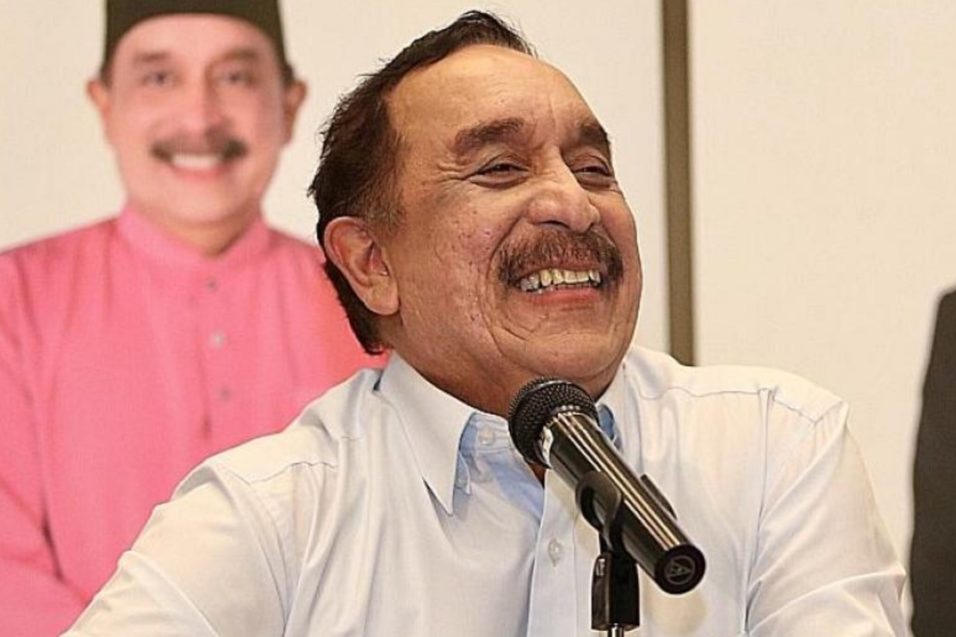
    An entrepreneur of Pakistani descent yesterday announced his bid to become the next president.

    Mr Farid Khan Kaim Khan, 62, the chairman of marine services provider Bourbon Offshore Asia Pacific, said he intends to stand in the upcoming presidential election (PE) because he wants to “serve the nation” and feels “capable of doing so to the best of my knowledge and ability”.

    This PE, due in September, has been reserved for Malay candidates after the Presidential Elections Act was amended to ensure the presidency is representative of the country’s multiracial society.

    Speaking in English and Malay, Mr Farid told reporters at the Village Hotel Changi that his identity card indicates he is Pakistani but he was born in Geylang Serai and celebrates Hari Raya every year.

    “I am of Pakistani descent and my wife is of Arabic descent. Yet our family and relatives speak Malay and practise the Malay culture. So I am part of the Malay community,” he said.

    In his speech, Mr Farid outlined five areas of concern: the growing threat of radicalism, strengthening the trust among the people, helping the needy, enhancing Singapore’s prosperity and strengthening families.

    He is the second candidate to throw his hat into the ring.

    Second Chance Properties founder and chief executive officer Mohamed Salleh Marican, 67, said on May 31 that he planned to run for president.

    Political analyst Mustafa Izzuddin told The New Paper that Mr Farid addressed his ethnicity head-on to clear the air in the hope of quelling any doubts about his candidacy.

    “He did not want the question whether he is Malay to hijack other issues he wants to discuss, and probably anticipated it,” he said.

    ELIGIBLE

    Associate Professor Eugene Tan, a law don at the Singapore Management University, echoed Dr Mustafa’s observations, noting that Mr Farid wanted to reassure his stakeholders by “asserting his claim to be eligible”.

    He said: “Certainly now that he has indicated he would make an application, there is the question of eligibility.”

    Dr Mustafa said the decision whether Mr Farid is Malay lies with the Community Committee.

    Prospective candidates must submit a form to the Presidential Elections Committee (PEC) to get a certificate of eligibility, and another form to the Community Committee to declare that they are part of the Malay community to obtain a Community Certificate.

    “I suspect the committee is going to stretch the definition to consider not just what you are born as, but what your experience is like, your environment, and whether or not the community sees you as Malay,” Dr Mustafa said.

    Prof Tan also weighed in on another requisite – private sector candidates have to helm a company with at least $500 million in shareholder equity.

    However, the PEC has the discretion to waive this requirement.

    Bourbon Offshore Asia Pacific, a subsidiary of a French multinational marine company, reportedly has shareholder equity of US$300 million (S$415 million), but Mr Farid said he is confident of qualifying.

    Mr Farid, who is married to Madam Naeemah Shaikh Abu Bakar, 61, with a daughter, 23, and son, 18, has been with the company for more than 10 years.

    It has about 800 workers in the region.

    Said Prof Tan: “If it does not appear that he qualifies outright, then he will have to go under the discretionary route, and the PEC will have to decide.”


    Source: http://www.tnp.sg

  • Early P1 Ballot Likely At 5 Popular Schools; Not For Malay Students

    Early P1 Ballot Likely At 5 Popular Schools; Not For Malay Students

    Parents hoping to place their six-year-olds in five of the most popular primary schools this year may face a ballot next week.

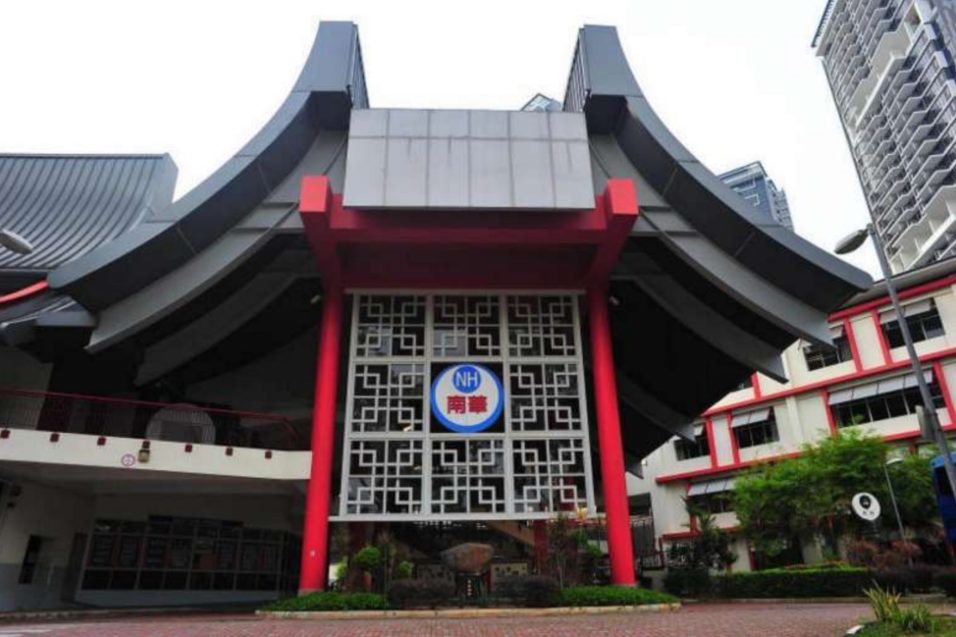
    The schools are CHIJ St Nicholas Girls’ School, Nanyang Primary, Nan Hua Primary, Red Swastika School and Catholic High School.

    A total of 29 schools were left with fewer than half of their vacancies after Phase 2A1, the second of seven Primary 1 registration stages, closed on Wednesday. Last year, only 19 schools were in this situation.

    The phase, which follows Phase 1 for children with siblings currently studying in the school, is for children whose parents had joined the school alumni association at least one year ago, or are on the school advisory committee.

    The next phase, 2A2, is for children whose parents or siblings are former pupils, or whose parent is a staff member at the school. Registration starts next Tuesday and ends the next day.

    A rule introduced in 2014, which requires all primary schools to set aside 40 places for children in the later stages, may also put a squeeze on places available for the next phase. The 40 places will be split equally between children registering in Phases 2B and 2C.

    In the past three years, balloting has been taking place at an earlier stage of the registration exercise, partly as a result of this new rule.

    Phase 2B is for children whose parents are school volunteers, active community leaders or have ties with church or clan associations directly connected with the schools. Phase 2C is for children with no ties to the school.

    After reserving the 40 places, CHIJ St Nicholas has only seven spots left for Phase 2A2, after 95 children registered this week.

    Nanyang Primary and Nan Hua Primary have 10 and 19 places respectively left for Phase 2A2, while Red Swastika and Catholic High have 23 and 31 spots respectively left for Phase 2A2.

    Communications professional Ow Yong Weng Leong successfully registered his daughter for a place at Red Swastika School this week.

    “The school offers Higher Chinese from Primary 1, so I hope it will help my daughter in becoming bilingual as she currently speaks English more,” said the 37-year-old.


    Editors Note:

    Based on sources, students who take Malay as a second language cannot enrol in any of the five popular primary schools namely CHIJ St Nicholas Girls’ School, Nanyang Primary, Nan Hua Primary, Red Swastika School and Catholic High School (https://www.moe.gov.sg/a…/primary-one-registration/vacancies). Perhaps if they make millions, one day one of them they can become President of Singapore. What a shame.

    Is the kind of elite tokenistic multiracialism the DAG believes in?


    Source: StraitsTimes

  • China’s Warship Liaoning Has 10 Cafeterias With 20 Ethnic Minorities On Board

    China’s Warship Liaoning Has 10 Cafeterias With 20 Ethnic Minorities On Board

    Last weekend, China is opened up its aircraft carrier Liaoning to the public for the first time. The ship arrived in Hong Kong on Friday (July 7), accompanied by two destroyers and a frigate. Only 2,000 tickets for the tour at the weekend were handed out, leaving many who had lined up for hours disappointed. But for the lucky few, the visit is a peek into a highly specialised community, one that works, eats and sleeps together in a maze of hallways and rooms, surrounded by some of the most sophisticated technology and weapons in the Chinese military.

    There are more than 3,800 rooms in the ship, including ones for sleeping, eating, exercise and laundry. There’s also the mess hall and even a store, where sailors can buy snacks and everyday items. For security reasons, every sailor carries a photo ID, which must be swiped to enter areas. Access is restricted according to a sailor’s assigned department. Men and women live apart, and fingerprint scanners restrict entry to the women’s quarters. Most sailors are given single beds about 1m wide and 2m long.

    With nearly 20 ethnic minorities on board, it’s varied. The ship’s crew eat in 10 cafeterias, including ones specially designed for Muslims. They are offered four appetisers, six main courses and two desserts, going through two to three tons of food per day. When the crew really need to stretch out, the flight deck is turned into a makeshift soccer pitch. There is also an annual basketball competition, with 15 teams competing.


    Editors note:

    The Chinese Navy can accept 20 ethnic minorities. The RSN cannot even accept one because its ships don’t have halal kitchens. Which one is more inclusive? Hendak seribu daya, tak nak seribu daleh kan. They won’t be ‘losing face’ so to say if they employ a handful of Malays on board because everyone knows that Malays are just a small group in Singapore. We are the minorities and that perhaps may not be changing anytime soon.

    What if food was not the issue here since there are halal combat ration already available in SAF. Are they still questioning our loyalty? Still having doubts in Malays in Singapore? Maliki Osman dan Yacoob Ibrahim diam ke tentang isu ini?

    What are your thoughts?


    Source: Todayonline