Tag: Muslim

  • Celebration Of 50 Years Of National Service Forgets Past Discrimination Against Malays

    Celebration Of 50 Years Of National Service Forgets Past Discrimination Against Malays

    Despite all our gripes and grouches about National Service (and its yearly reservist call-ups) it’s widely regarded as A Good Thing for a variety of reasons: Singapore has too small a population to rely on citizens volunteering for the military, it forces people from different backgrounds to assimilate, etc. etc.

    It’s been 50 years since mandatory conscription came into effect, and it’s become a cultural phenomenon unique enough to inspire films and literature revolving around national service. Criticisms abound, of course, but nobody can deny that Singapore stands ready when disaster (or God forbid, war) goes down.

    NS50, the year-long commemoration of National Service’s 50th anniversary, however does not bring back warm nostalgic memories for all Singaporean men. We’re not even talking about recalling the time you messed something up and caused everyone else to be punished, nor the time you wore the same dirty underwear for a week straight in the field — we’re talking about structural discrimination that disadvantaged people based on their race.

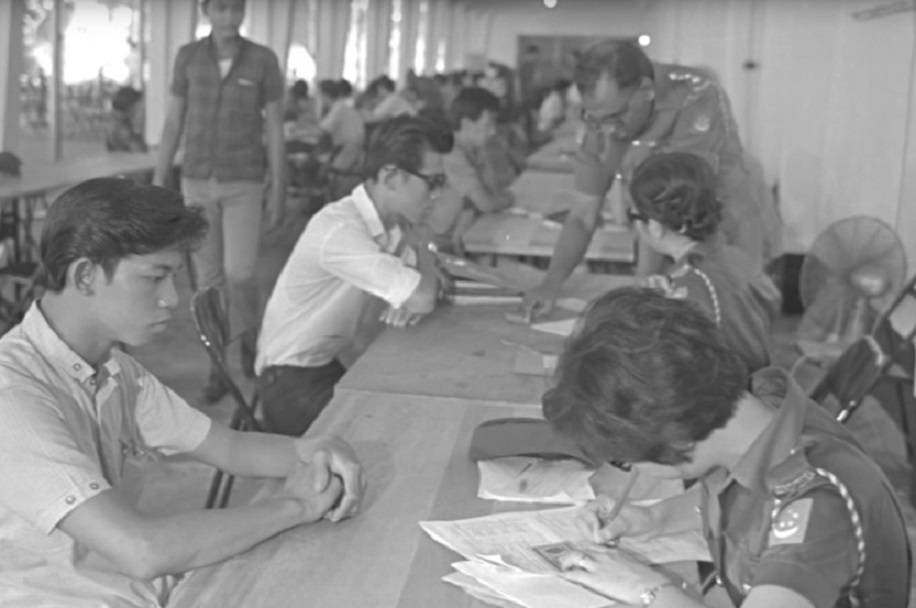
    Suspiciously missing from all the NS50 bluster and forced pride is the fact that Malay youths were virtually (not officially, mind you) excluded from conscription from 1967 till 1977.

    Even when they were eventually let in, they were mainly positioned to serve in the police force or the fire brigade. The small minority of Malays who manage to be called up into the military were given menial jobs, and are (almost always) excluded from key defense roles such as intelligence, the air force, commandos, artillery units and more — a practice that arguably continues to this day.

    The Ministry of Defence keeps insisting that the selection of personnel in various military vocations is not based on race. “The ethnic composition of commanders is similar to that in the general population,” Minister for Defence Dr Ng Eng Hen said in a  2014 response to a Parliamentary query about the racial breakdown across National Service vocations.

    The unofficial, widely understood reason is this: There is uncertainty as to where the loyalties of the Malay community lie should Singapore engage in war with neighboring Muslim-majority countries such as Indonesia and Malaysia.
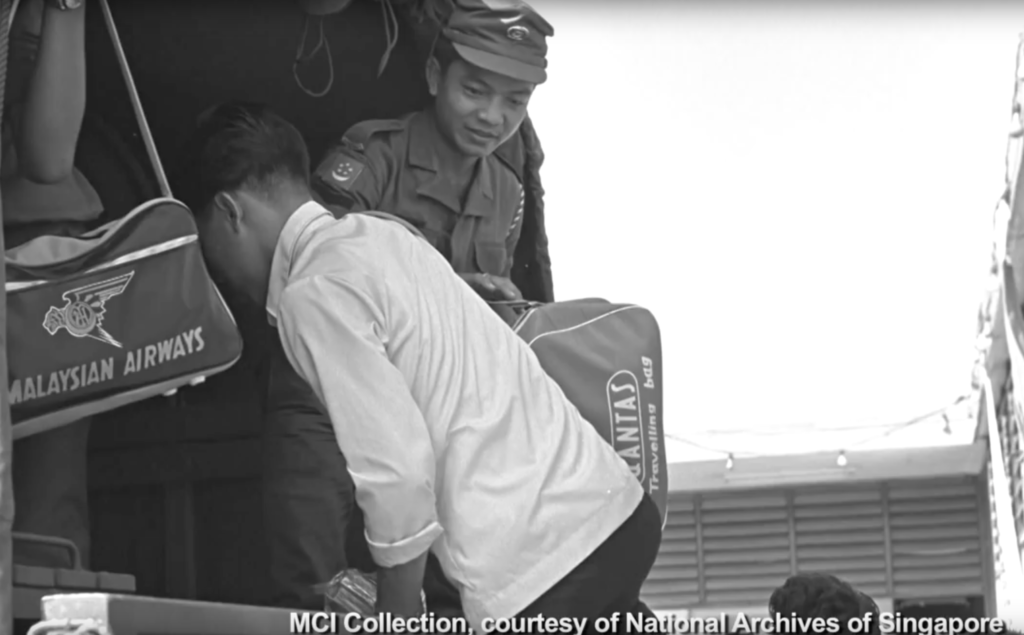
     

    Alon Peled, an associate professor and political scientist at the Hebrew University of Jerusalem, noted in his paper (A Question of Loyalty: Ethnic Minorities, Military Service and Resistance) that discrimination against Malays in the military didn’t need to be spoken out loud to be felt.

    “By the second half of the 1970s, Malay exasperation with military recruitment and discrimination polices reached an all-time high. Even without official data, Malay parents knew that their children alone were not called upon to serve. Malay officers and (non-commissioned officers) who had been transferred from field command positions to the logistics corps were also frustrated. Nearly every officer knew that military units had informal quotas on Malays.”

    Though pleas were made to Malay leaders to change things, the figures of the day didn’t help ease the malaise. They stated that Malay youth lacked education and couldn’t speak English well (even though drafted Chinese Hokkien youth were the same). They argued that the government didn’t have enough facilities to train Malay soldiers (even though race should make no difference to when it comes to military training).
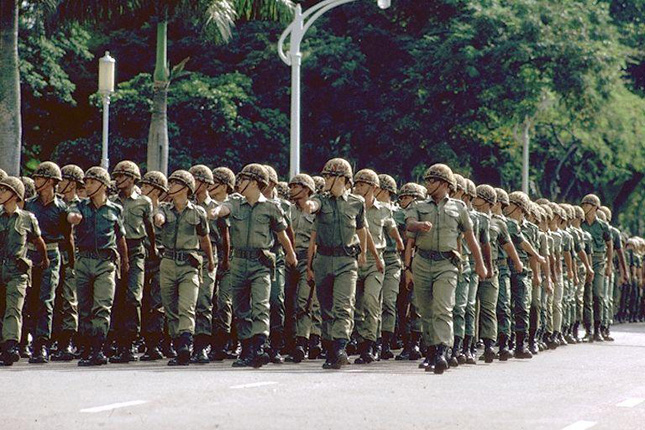
    1969 image from National Archives of Singapore

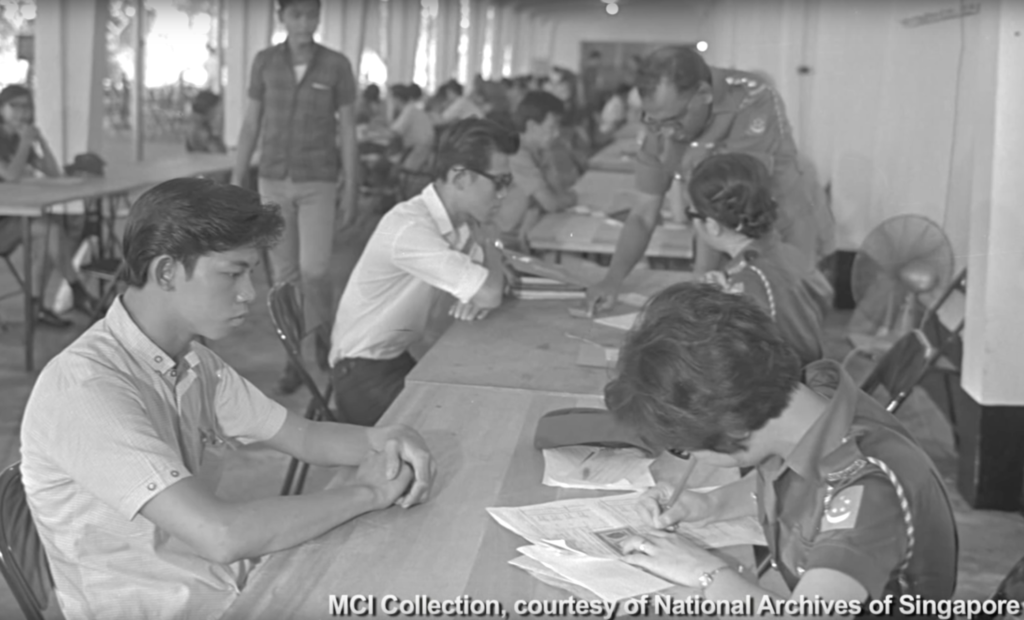
    It may not be much of an issue today, but the impact of Singapore’s blatant exclusion of Malays in the service back then was severe. Tania Li argues in her book Malays in Singapore: Culture, Economy, and Ideology that it left the Malay community behind in socio-economic standing.

    “There was an unfortunate side effect to the non-recruitment of Malays into National Service. Employers in Singapore are generally unwilling to recruit or train young male workers who have not completed National Service or obtained exemption papers as these youths can be called up at any time. Since Malays were not officially exempted from National Service, Malay youths were unable to obtain apprenticeships or regular jobs, and many were forced into an extended limbo period of about 10 years from ages 14 to 24 … (this) was in part responsible for the high percentage of Malay youths who became involved in heroin abuse during the late 1970s”.
    Peled repeats similar sentiments.

    “Malay servicemen were pushed out of the military, and young Malays found that the military doors, once their prime avenue for social mobility and a promising career, were firmly closed. Years of exclusion resulted in social bitterness, frustration and a major collision between the state and its principal ethnic minority group”.

    The silent ostracizing did not last, fortunately. Policies were eventually eased as the Malaysian invasion threat diminished, and Malay citizens were slowly integrated into the military. By the 1980s, more Malays were being posted in sensitive positions, including the Commando Battalion, while more began graduating as officers.

    The memories of the past however are hard to erase, and for former Straits Times’ senior political correspondent Ismail Kassim, the ongoing NS50 campaign did nothing but revive painful memories. Nonetheless, he asserts that it’s a good time for the government to make amends for the past wrongdoings.

    “Surely it is not beyond the ability of the present star-studded scholar-leaders to think of some way to assuage the hurt of the past.”


    Source: https://coconuts.co

  • Damanhuri Abas: PAP No Champion Of Racial Equality, Malays Marginalised

    Damanhuri Abas: PAP No Champion Of Racial Equality, Malays Marginalised

    This is another ugly truth of how labels are conveniently thrown by them at persons to distract from the issue of contention.

    They are no champion of racial equality. For if they were, there would be no discriminatory practises of excluding the Malays from so-called sensitive positions in the SAF for the last 5 decades sowing the poison of distrust into the minds of Singaporeans towards the entire race, the Malay schools would not have closed down, the Madrasah would have stop ‘begging’ long time ago for a decent premise to educate our children while SAP schools are showered with endless tax-payers money, or would the Malays be systematically marginalised in so many other ways in society. Instead, race have been abused by the PAP to institutionalise deceptive mechanism such as the GRC to their political advantage. And now the EP.

    The fact that after more than 50 years of PAP led Malay leadership in government, the Malays are still behind in education, over represented in drug abused cases, prison inmates, delinquents, divorce, low income, etc., etc., are a damning indictment of the failures of the chosen PAP Malay leadership. The reserved EP is neither our community’s priority, need nor want for a show-puppet Malay President. Its a disgrace.

    We have seen few days ago what parliament has become when 1 party rules and now the last bastion of the people’s defence will simply become another tool of the PAP.

    Come on Singaporeans, lets take back our country from the current double tongue bunch of financially bloated elites that knows no shame oozing out their hypocrisy and taking the entire nation for their joy ride.


    Source: Damanhuri Bin Abas

  • 3 Anak Melayu Raih Kelulusan Kepujian Kelas Pertama Dari NUS

    3 Anak Melayu Raih Kelulusan Kepujian Kelas Pertama Dari NUS

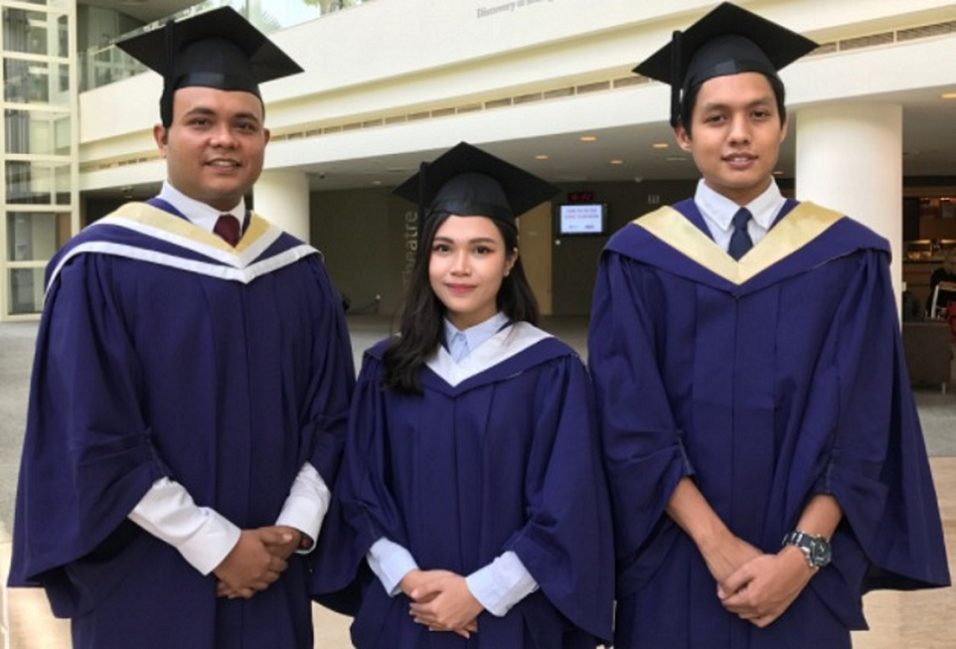
    Tiga anak Melayu/Islam muncul sebagai antara lulusan cemerlang dari NUS tahun ini degan lulusan dengan ijazah Kepujian kelas pertama.

    DISIPLIN, PENGURUSAN MASA FAKTOR KEJAYAAN

    Syasya Naqiyah Amir misalnya berada dalam senarai dekan buat tiga semester.

    Bagaimanapun, penerima Sarjana Muda Pentadbiran Perniagaan ini masih sempat meluangkan masa menjadi relawan di Jamiyah dan anggota tiga kelab di NUS.

    “Untuk saya, cabaran utama adalah persaingan sengit antara pelajar-pelajar. Tetapi saya suka sekitaran sebegitu kerana ia memotivasi saya untuk mencapai kecemerlangan untuk memperbaiki diri sendiri dan untuk bekerja keras,” katanya.

    Seperti Syasya, Khalid Othman yang meraih Sarjana Muda dalam jurusan Sains Hayat dimasukkan dalam senarai Dekan.

    Tanggapan bahawa matematik dan sains adalah subjek sukar mendorong beliau memilih kerjaya seorang guru. Khalid kini bertugas di sebuah sekolah menengah.

    Khalid memberitahu BERITAMediacorp: “Saya rasa yang lebih penting adalah bagaimana saya dapat tinggikan keyakinan diri saya di dalam universiti untuk berbual dan bercakap di dalam kelas, dalam khalayak orang ramai. Itulah yang saya rasa penting untuk menjadikan saya seorang guru.”

    INGIN JADI CONTOH KEPADA ADIK BERADIK

    Bagi Muhammad Khairul Anwar Jamil, beliau ingin menjadi contoh kepada lima adiknya.

    Mentelah lagi, beliau pernah gagal memasuki universiti setelah meraih keputusan peringkat “A “yang kurang memuaskan.

    “Pada ketika itu saya merasa sangat kecewa. Tetapi pada saat itu, keluarga dan rakan-rakan saya mendorong saya untuk meneruskan pelajaran. Bila saya masuk ke politeknik, saya mendapat tahu yang saya mula meminati bidang kejuruteraan,” ujarnya.

    Peluang kedua itu tidak disia-siakan dan Khairul bakal berangkat ke Ecuador bulan depan untuk bertugas di salah sebuah syarikat minyak terbesar di dunia.


    Source: http://berita.mediacorp.sg

  • Dr Tan Cheng Bock: My Challenge Is To Uphold The Constitution, Not Undermine Race And Religion

    Dr Tan Cheng Bock: My Challenge Is To Uphold The Constitution, Not Undermine Race And Religion

    My fellow Singaporeans

    The High Court has decided against my application. My lawyers are studying the 65-page judgment in which Justice Quentin Loh acknowledged that I have “put forward serious arguments on the start of the count”.
    I am, of course, disappointed with the result and will announce whether I will appeal, after this weekend.

    Meanwhile, I am more disappointed with a Channel News Asia (CNA) report on 7 July 2017, 2.53 pm. In the paragraph titled “Dr Tan “Selfishly” Trying To “Undermine” Multi Racial Presidency’, the report quoted:
    [“His motives are purely selfish and he has shown no regard for the principle of multiracial representation which Parliament intended to safeguard,” Deputy Attorney-General (DAG) Hri Kumar Nair said.]

    I wish to respond.
    First, the report gave the impression that Justice Loh accepted the DAG’s remarks about me (which was also unfair and untrue). In fact, the judge did not entertain this submission anywhere in his judgment, presumably because that submission was irrelevant to the case.
    Second, in my political life, I championed multi-racialism and continue to do so. I was fortunate enough to take care of a constituency comprising 27% Malay constituents. We served together well and they graciously supported me with record high election percentages including 88% in 2001. I am thankful for the great rapport I had with my Malay constituents and grassroot leaders – some of whom still continue to visit my home during Chinese New Year until this day.

    For the DAG to call me “selfish” and having “no regard for the principle of multiracial representation” is hitting below the belt, highly inflammatory and encroaches into dangerous racial politics. The DAG is a public servant and an ex-PAP MP. He should not have made such a statement, which is now widely reported by the press.

    This case is not about race. It is about process and procedures. It is about upholding the Constitution. Let’s keep it that way.


    Source: Dr Tan Cheng Bock

  • Madrasah Wak Tanjong Student Becomes 2-Time Valedictorian

    Madrasah Wak Tanjong Student Becomes 2-Time Valedictorian

    Valedictorian Nisha Mohd Rafiq, who will graduate with a PhD in Biological Sciences from NUS and King’s College London on 9 July, has been interested in science since she was young.

    At fourteen years of age, the avid reader established a Science Club in her secondary school — Madrasah Wak Tanjong — so that she could gather like-minded individuals for discussions about science. Generous with her time and knowledge, Nisha conducted extra lessons and practical sessions in the laboratory for her peers in Secondary Four. Upon completion of her O Levels, Nisha studied biomedical science at Temasek Polytechnic and as part of her course, served as an intern with a research institute. The experience inculcated in her a deep passion for scientific research, so much so that as an undergraduate, the NUS Life Sciences major would seek every opportunity to work in the laboratories during school vacations.

    Nisha is the inaugural PhD student for the four-year PhD programme jointly offered by NUS and King’s College London under the NUS Research Scholarship. As part of her graduate degree, Nisha conducted research on the mechanical signalling in podosomes. Podosomes, which are found in cells such as immune cells, break through barriers, allowing cells to move to a new location. The study of podosomes appealed to Nisha as cancer cells also had structures similar to podosomes, and she hoped that the study of the latter would provide some insight into the migration of cancer cells.

    Speaking of what drives her, Nisha said, “In science research, more than 90 per cent of your experiments are likely to fail, but there is always this excitement and promise about uncovering something new or totally unexpected. And this really motivates me to pursue science.”

    nisha_rafiq-2.jpg

    For her PhD degree, Nisha carried out research on mechanical signalling in podosomes

    In June 2016, Nisha served as the co-chair of the Gordon Research Seminar meeting on “Signalling by Adhesion Receptors”. These two-day meetings, which take place before the Gordon Research Conference, provide post-doctoral fellows and students with the opportunity to meet with established professors in their respective fields. The week-long Conferences are intensive affairs, with sessions starting at 7.30am and ending around 11.00pm daily. Earlier this year, Nisha gave two talks on fibronectin, integrins and related molecules at a Gordon Research Conference held in California, US.

    During her PhD candidature, Nisha also co-authored four research papers in peer-reviewed international journals, including Nature Communications and The Journal of Cell Biology. In spite of her busy schedule, Nisha makes time for the Women in Science Initiative at Mechanobiology Institute, Singapore (MBI) where she is currently a Research Associate. The Initiative seeks to encourage more girls to pursue science through interactive platforms such as talks and visits.

    The two-time valedictorian — the first time being upon completion of her undergraduate degree — had this to share with aspiring researchers, “They should know that they will keep failing.” Nisha opines that success is achieved when a researcher, with minimal supervision, is able to shed light in a particular field.

    Upon graduation, Nisha will continue working at MBI till the end of the year, after which she will seek a post-doctoral fellowship position in either Europe or the US. Her heart remains rooted to Singapore though, and she sees herself returning in the future to work on issues that the country faces, such as an ageing population.


    Source: NUS