Tag: Muslims

  • Islam Keeps Me Calm, Says Johor Princess’ Future Hubby

    Islam Keeps Me Calm, Says Johor Princess’ Future Hubby

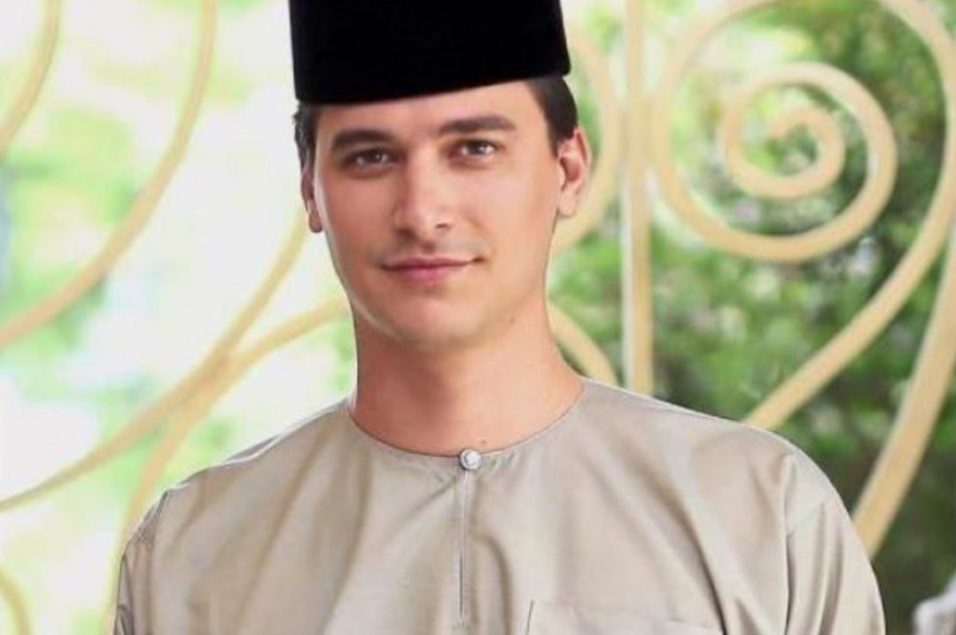
    The Dutch-born future husband of Johor princess Tunku Tun Aminah Maimunah Iskan­daraiah, who embraced Islam in 2015, says the religion keeps him calm.

    Dennis Muhammad Abdullah (pic) said he started getting close to Islam in 2014 when he was in Amsterdam.

    He said that was when he started to receive advice and views from Muslim friends residing there about the religion. He even asked them to take him to the mosque.

    Dennis said he was curious about Islam and wanted to experience how they prayed at mosques, and began learning about the religion in Dutch.

    “My heart is open to accepting the religion and I am grateful to Allah for being able to catch up on all the knowledge that has been given to me, without any obstruction.

    “Even my parents have given me their support to embrace the religion,” he told the Royal Press Office in an interview at Istana Bukit Serene.

    He said he had become a calmer person since embracing the religion.

    Dennis, who embraced Islam on May 31, 2015 at Pejabat Kadi Johor Baru, said he was an avid reader of reference materials related to the religion on the Internet besides visiting the mosque frequently to pray.

    “After obtaining the blessings of Johor Ruler Sultan Ibrahim Ibni Almarhum Sultan Iskandar to have his daughter’s hand in marriage, I was told to gain deeper knowledge about the religion,” he added.

    Dennis said he began attending Fardhu Ain classes and tried to memorise the shorter surah passages in the Quran since the beginning of the year.

    “I also managed to fast throughout the whole month of Ramadan since 2015 and performed the terawih prayers at the mosque,” he added.

    Born Dennis Verbaas on May 1, 1989, in Lisse, a town near Amsterdam, he said he had also learned Jawi.

    “I was advised by religious experts not to rush into the religion and take it slow to gain deeper knowledge,” he said, adding that he would take heed of the advice to become a good Muslim.

    Tunku Tun Aminah and Dennis are set to marry on Monday.

    The public can follow the royal wedding “live” from Istana Besar on video screens at Dataran Bandaraya and the Johor Baru City Council building.


    Source: http://www.thestar.com.my

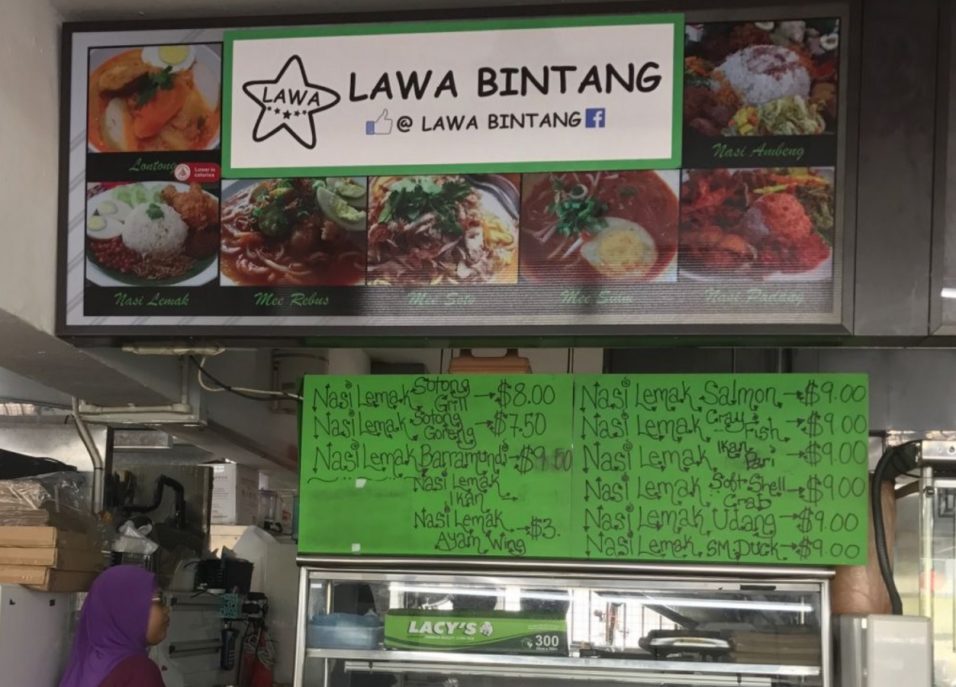
  • Lawa Bintang’s Nasi Lemak Lobster Is Prove That Malay Singaporeans Can Succeed Through Diligence & Holding Belief That Sustenance And Wealth Is Given Only By Allah

    Lawa Bintang’s Nasi Lemak Lobster Is Prove That Malay Singaporeans Can Succeed Through Diligence & Holding Belief That Sustenance And Wealth Is Given Only By Allah

    Best regards

    Amongst my many years of experience dabbling in business, the current one is the most challenging and inflicted with trials.

    We are just a humble stall so for somw to compare us with a restaurant eg. how efficient Mcdonalds manage extremely long queues, would be ridiculous.

    There are only 4 stoves and 1 rice cooker in our small kitchen.
    Imagine if the rice cooker has a voice, it will definitely say that it cooks and cooks till boss say stop 😅

    We are proud to be a part of Malay Singaporeans that have proven we can succeed if we are diligent and hold on to the belief that our sustenance and wealth (rizq) is given only by Allah, in due course.

    Never crossed our minds that our Nasi Lemak Lobster will be the talk of the town.

    This makcik stall does not and will continue not to provide food for others anyhow or cincai, as some may call it.

    Yes, we know it is part and parcel of the service industry, to receive positive and negative comments.

    Those who like it Alhamdulillah, and those who do not, we appreciate your kind understanding that each person’s tastebuds is different.

    We apologise if we are unable to please and cater to everyone’s taste.

    But we deeply hope, kindly refrain from looking down on the food should you find it undesirable as food in any form, is a blessing from God.
    Having the desire and the means to eat is also a blessing from God.

    Thank you all for supporting me.

    Alhamdulillah.


    Source: Lawa Bintang

  • Seeking A Dream, Indonesian Family Finds Nightmare In Raqqa

    Seeking A Dream, Indonesian Family Finds Nightmare In Raqqa

    The 17-year-old Indonesian girl made a persuasive case to her family: Lured by what she had read online, she told her parents, sisters, aunts, uncles and cousins they should all move to Syria to join the Islamic State group.

    Each of her two dozen relatives found something in it for them. Free education and health care for the girls. Paying outstanding debts for her father and uncle. Finding work for the youngest men.

    And the biggest bonus: a chance to live in what was depicted as an ideal Islamic society on the ascendant.

    It didn’t take long before their dreams were crushed and their hopes for a better life destroyed as each of those promised benefits failed to materialize. Instead, the family was faced with a society where single women were expected to be married off to IS fighters, injustice and brutality prevailed, and a battle raged in which all able-bodied men were compelled to report to the frontline.

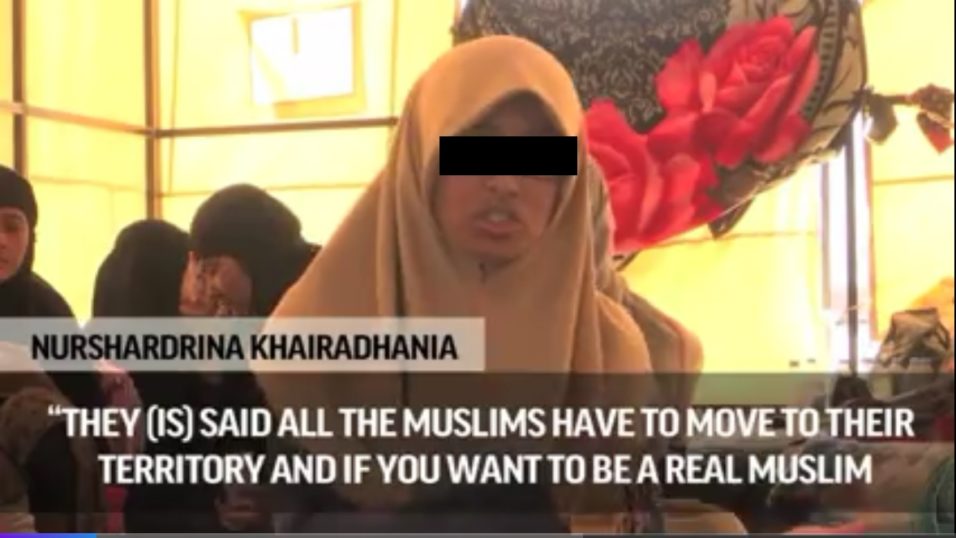
    In an interview with The Associated Press, Nurshardrina Khairadhania, now 19, recalled her family’s fateful decision to immigrate to the IS stronghold of Raqqa two years ago — and how, only months later, their bid to escape began.

    During that time the family endured separation, her grandmother died and an uncle was killed in an airstrike.

    “IS shared only the good things on the internet,” said the young woman, who goes by her nickname, Nur.

    She now lives with her mother, two sisters, three aunts, two female cousins and their three young sons in Ain Issa, a camp for the displaced run by the Kurdish forces fighting to expel IS from Raqqa. Her father and four surviving male cousins are in detention north of there. While the men are being interrogated by the Kurdish forces for possible links to IS, the women wait in a tent in the searing heat, hoping for the family to be reunited and return to their home in Jakarta.

    Nur’s family is among thousands from Asia, Europe, Africa, North America and the Middle East who chased the dream of a new Islamic society advertised by IS in slickly produced propaganda videos, online blogs and other social media. By the time they got there, the group’s brutal campaign of beheadings, kidnappings and enslaving women was well underway.

    For Nur and her sister, such images were part of a hate campaign against the nascent Islamic caliphate or simply justified punishment for crimes committed there.

    “I was afraid to see that. I first thought it was another group … who hates IS,” Nur said.

    Nur recalled calling her family together just months after the extremists’ declared their “caliphate” on territory seized in Syria and Iraq in the summer of 2014.

    Making her pitch, she recounted the benefits laid out on the IS blogs: her 21-year-old sister could continue her computer education for free. Her 32-year-old divorced cousin, Difansa Rachmani, could get free health care for herself and her three children, one of whom was autistic. Her uncle could get out from under the debt he incurred trying to save a struggling auto mechanic business in Jakarta — and could even open a new one in Raqqa, where mechanics were in high demand to build car bombs, the extremists’ signature weapon.

    For Nur, the Islamic State seemed to be the perfect place to pursue her desire to study Islam and train to be a health practitioner.

    “It is a good place to live in peace and justice and, God willing, after hijrah, we will go to paradise,” she recalled thinking, using the Islamic term for migration from the land of persecution to the land of Islam. “I wanted to invite all my family. … We went to be together forever, in life and afterlife.”

    The family sold their house, cars and gold jewelry, collecting $38,000 for the journey to Turkey and then on to Syria.

    But once in Turkey, the first quarrels began, over how or even whether to sneak into Syria. Seven relatives decided to head out on their own and were detained by the Turkish authorities while trying to cross the border illegally. They were deported back to Indonesia where, the family says, they remain under surveillance because the rest of their relatives had lived in IS territories.

    The saga of family separation had only just begun, however.

    After arriving in Islamic State group territory in August 2015, the family was divided again: the men were ordered to take Islamic education classes, and ended up jailed for months because they refused military training and service. After their release, they lived in hiding to avoid forced recruitment or new jail sentences. The women and girls were sent to an all-female dormitory.

    Nur was shocked by life in the IS-run dormitory. The women bickered, gossiped, stole from each other and sometimes even fought with knives, she said. Her name and those of her 21-year-sister and divorced cousin were put on a list of available brides circulated to IS fighters, who would propose marriage without even meeting them.

    “It is crazy! We don’t know who they are. We don’t know their background. They want to marry and marry,” she said.

    “IS wants only three things: women, power and money,” she and her cousin, Rachmani, said in unison.

    “They act like God,” Nur added. “They make their own laws. … They are very far from Islam.”

    In a separate, monitored, interview with the AP at a security center run by Kurdish forces in Kobani, north of Raqqa, where he and the other male family members were being questioned for possible IS ties, her 18-year-old cousin said that living under the extremists was like living in “prison.”

    “We (didn’t) want to go to Syria to fight,” he said, speaking on condition of anonymity for fear of retribution from IS or trouble with the Kurdish authorities or those back home in Indonesia. “We just wanted to live in an Islamic state. But it is not an Islamic state. It is unjust, and Muslims are fighting Muslims.”

    IS officials ignored Nur’s persistent queries about continuing her education in Raqqa. And because they refused to enroll in military service, the men never got the jobs they had been promised. When the battle for Raqqa intensified in June, IS militants set up checkpoints around the city, searching for fighters and came looking for the men.

    Rachmani did get free surgery for a chronic neck ailment and her son got attention for his autism and was finally able to walk. Soon after the family’s arrival, she was sent to the then-IS stronghold of Mosul in Iraq for the surgery.

    “I left my country for my stupid selfish reason. I wanted the free facilities,” Rachmani said. “Thank God I got my free (surgery) but after that all lies.”

    The family searched for months for a way to escape, a risky endeavor in the tightly controlled IS territory.

    When the Kurdish-led campaign to retake Raqqa from IS intensified in June, the family finally saw their opportunity. At great personal risk, Nur used a computer in a public internet cafe to search for “enemies of IS,” despite the danger posed by frequent raids carried out by IS there. She contacted activists and eventually found smugglers, who, for $4,000, got the family across the front line and into Kurdish-controlled territory. They turned themselves in to Kurdish forces on June 10.

    An Indonesian Foreign Ministry official said authorities have known for several months about the presence of Indonesian nationals, including Nur’s family, in the Ain Issa camp and were investigating their condition.

    “However, they have been two years living in the IS area, so the risk assessment of them is required and we have been facing obstacles to reach them as they are in an area not controlled by any official government, either Iraq or Syria,” said Lalu Muhammad Iqbal, the ministry’s director of Indonesian citizen protection.

    “I am very regretful. I was very stupid and very naive. I blame myself,” Nur said of the family’s plight. “May God accept my repentance because you know … it is not like a holiday to go to Turkey. It is a dangerous, dangerous trip.”

    Source: https://sg.news.yahoo.com
  • Bus Seats Mistaken For Burqas By Members Of Anti-Immigrant Group

    Bus Seats Mistaken For Burqas By Members Of Anti-Immigrant Group

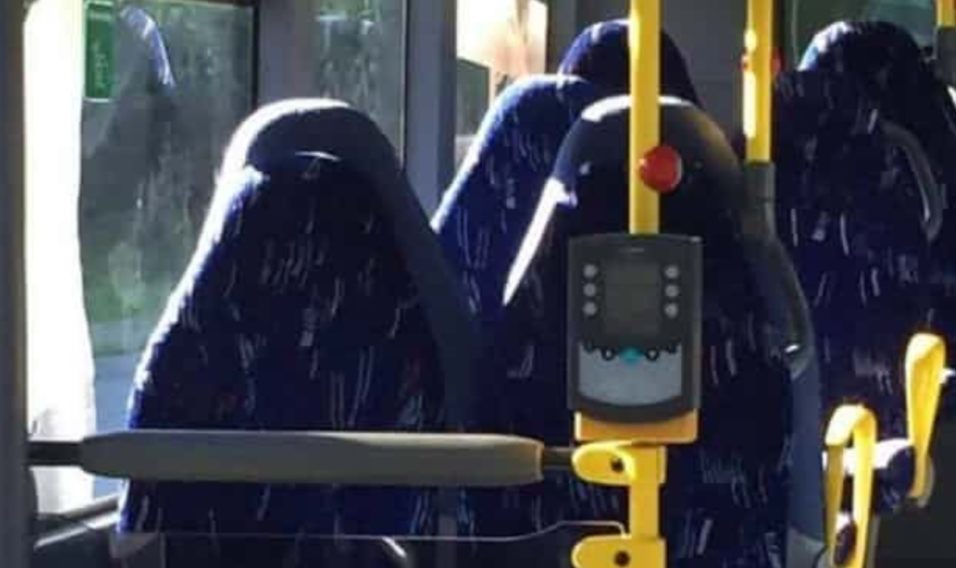
    A Norwegian anti-immigrant group has been roundly ridiculed after members apparently mistook a photograph of six empty bus seats posted on its Facebook page for a group of women wearing burqas.

    “Tragic”, “terrifying” and “disgusting” were among the comments posted by members of the closed Fedrelandet viktigst, or “Fatherland first”, group beneath the photograph, according to screenshots on the Norwegian news website Nettavisen.

    Other members of the 13,000-strong group, for people “who love Norway and appreciate what our ancestors fought for”, wondered whether the non-existent passengers might be carrying bombs or weapons beneath their clothes. “This looks really scary,” wrote one. “Should be banned. You can’t tell who’s underneath. Could be terrorists.”

    Further comments read: “Ghastly. This should never happen,” “Islam is and always will be a curse,” “Get them out of our country – frightening times we are living in,” and: “I thought it would be like this in the year 2050, but it is happening NOW,” according to thelocal.no and other media.

    The photograph, found on the internet, was posted “for a joke” last week by Johan Slåttavik, who has since described himself as “Norway’s worst web troll and proud of it”, beneath a question asking the group: “What do people think of this?”

    Slåttavik told Nettavisen and Norway’s TV2 he wanted to “highlight the difference between legitimate criticism of immigration and blind racism”, and was “interested to see how people’s perceptions of an image are influenced by how others around them react. I ended up having a good laugh.”

    It went viral in Norway after Sindre Beyer, a former Labour party MP who said he has been following Fatherland first for some time, published 23 pages of screenshots of the group’s outraged comments.

    “What happens when a photo of some empty bus seats is posted to a disgusting Facebook group, and nearly everyone thinks they see a bunch of burqas?” he asked in a post shared more than 1,800 times.

    The comments suggested the vast majority of the anti-immigrant group’s members saw the photo as evidence of the ongoing “Islamification” of Norway, although a small number pointed out it was in fact a picture of bus seats. One warned the group was making itself look ridiculous.

    Beyer told Nettavisen: “I’m shocked at how much hate and fake news is spread [on the Fedrelandet viktigst page]. So much hatred against empty bus seats certainly shows that prejudice wins out over wisdom.”

    The head of Norway’s Antiracist Centre, Rune Berglund Steen, told the site that people plainly “see what they want to see – and what these people want to see are dangerous Muslims”.

    Norway recently became the latest European country to propose restrictions on the wearing of burqas and niqabs, tabling a law that will bar them from kindergartens, schools and universities. France, the Netherlands, Belgium, Bulgaria and the German state of Bavaria all restrict full-face veils in some public places.

    The country’s minority government, a coalition of the centre-right Conservatives and the populist Progress party that faces elections next month, said in June it was confident it would find opposition support for the move.

    Per Sandberg, then acting immigration and integration minister, told a press conference that face-covering garments such as the niqab or burqa “do not belong in Norwegian schools. The ability to communicate is a basic value.”


    Source: https://www.theguardian.com

  • Commentary: I’m Indian Muslim And That Defines My Trail Of Thoughts

    Commentary: I’m Indian Muslim And That Defines My Trail Of Thoughts

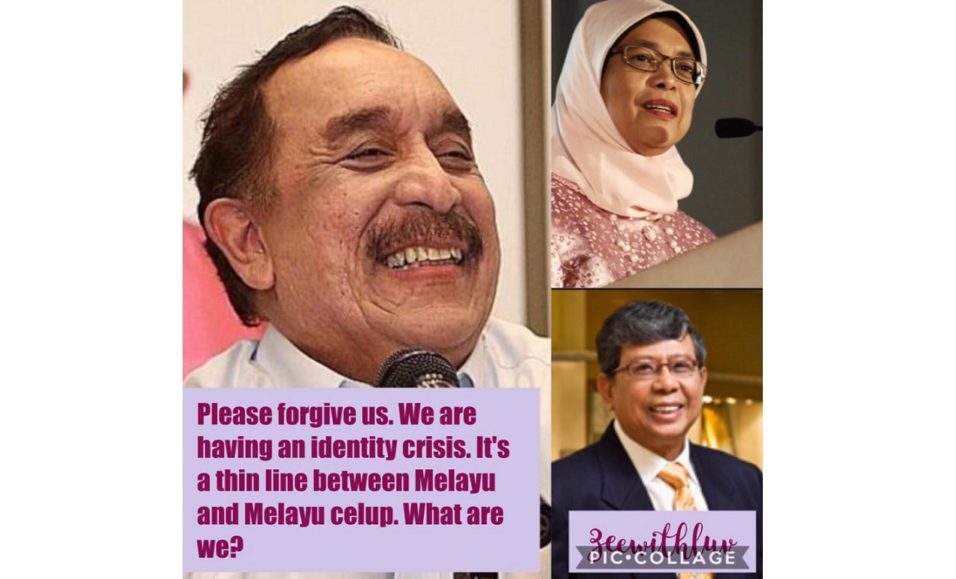
    The upcoming PE has definitely once again throw the spotlight on Malays and Indian Muslims. In Singapore context, Indian Muslims have always been the sandwich race. We are sandwich between our Malay living lifestyle and our identity. Mendaki double standard is not helping in this matter.

    Malay and Muslim are used interchangeably in Singapore context as and when they feel the need for it (Senang cakap ikut suka hati mak bapak dorang lah).

    I give you a true point in case. Most of my Indian Muslims relatives contributed to both Mendaki and Sinda. When their children applied for the bursary or financial assistance, the favorite quote would be ‘sorry, Mendaki are for Malays. You can try applying to Sinda.”

    But lo and behold, when any of this INDIAN MUSLIMS did well, suddenly they will be invited to Mendaki for whatever not ceremony to pose for pictures with you know who and claim their success under MENDAKI MALAY / MUSLIM banner. And Sinda never does that before. It’s very confusing tau for us! it leads to our own IDENTITY CRISIS…..Sad right?…..

    This has always been our bone of contentions and I don’t think much has changed since.

    As a Mendaki spokesman had declared and confirmed this biases “Malay-Muslim self-help group Yayasan Mendaki has a set of criteria for its financial assistance schemes for students administered on behalf of the Government. Among other things, the recipients “must be of Malay descent” as stated in their identity cards. It spells out a list of what it considers to be “Malay descent”, and this includes 22 ethnicities including Acehnese, Javanese, Boyanese, Sumatran, Sundanese, and Bugis. Students with “double-barrelled” race are eligible if the first race is listed on the identity cards as Malay, said a Mendaki spokesman. For example, a student who is Malay-Arab would qualify for the schemes but an Arab-Malay student would not, he added.”

    CONFUSED HOR!

    P.S – My daughter did not get any financial help from Mendaki after finding out all the stringent rules attached to it. It works out to something like ‘I scratch your back and you have to scratch more of mine’. However, when she did well, she was invited to attend the Mendaki ceremony, giving the impression that she owes her success to Mendaki.

    WHATEVER!


    Source: Zarina Jaffar