Tag: Salleh Marican

  • PE 2017 Candidate Farid Khan: Rationale Behind Reserved Presidency Is Noble

    PE 2017 Candidate Farid Khan: Rationale Behind Reserved Presidency Is Noble

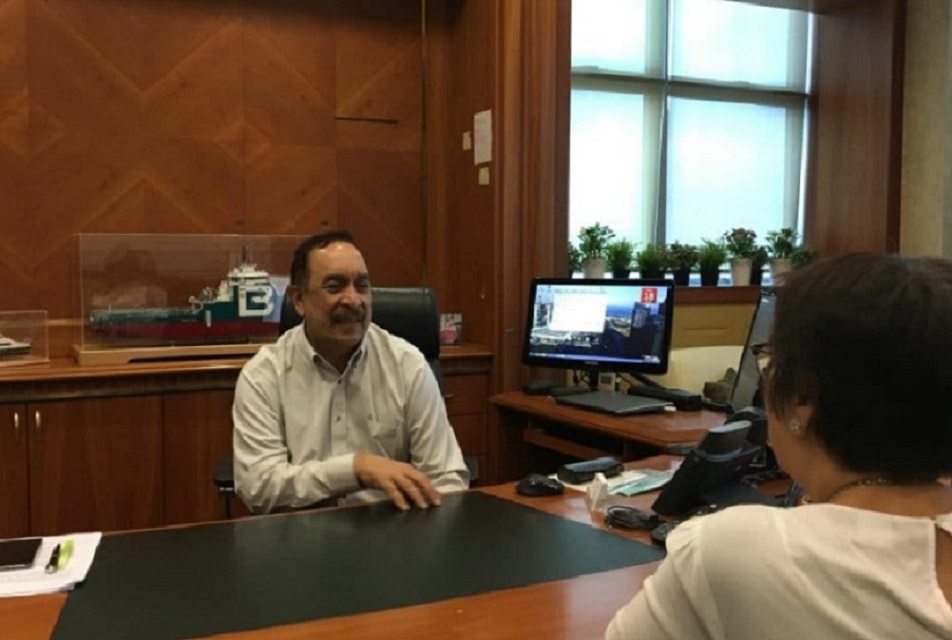
    Like his rival contender, Mr Salleh Marican, Mr Farid Khan, 62, his is a rags-to-riches story that has made the rounds of media publications. He stopped school when he was 13 years-old to support his family. He worked his way through jobs like cleaning toilets, and cutting grass before ending up in the marine sector as a captain’s steward on a ship when he turned 21. Now, he’s chairman of a regional marine sector company with a shareholder’s equity of US$300 million (S$407 million).

    Jokingly, I said that a scion of some billionaire family would do well to stay out of the presidential fray given the sterling background credentials of the two potential candidates. It is a story that he hopes would resonate with the populace – a poor boy made good who is now trying to serve his country. But why president? The answers came out readily: about being asked to serve, having reached the stage of life when he can put aside family and business cares, and deciding to heed the call of duty. A man, he said, had asked him if he was willing to die for his country. He said he would and the man retorted: “Then why are you afraid to serve?”

    He laughs easily. He is a tall, strapping man who would dignify any room of people. He looks the part but can he play the part? Over an hour, we ranged over several issues.

    His suitability as president

    He laments that the private sector qualification threshold has been set so high. At $500 million shareholder equity, few companies would cross the bar. Even his French employer, Bourbon, which deals in offshore oil and gas marine services like freight and cargo, has only four times as much in shareholder equity at 1.2 billion euros last year. But he thinks his appointments in other companies would help raise the numbers. What else would he bring before the Presidential Elections Committee? He cited his international links. As the chairman of Bourbon Offshore Asia, he is used to talking business with foreigners.

    He also stressed his non-partisan, independent stance. Clearly, he is no Establishment figure. He meets government officials only at business events, has never been to the Istana or even spoken to any previous presidents besides saying “hi’’ to the late President S R Nathan whom he bumped into while jogging in East Coast Park. He has no party political connections, not with the People’s Action Party nor the Workers’ Party, both of which were said to have courted Mr Salleh.

    It led me to think about whether he knew enough of the workings of government to be able to talk to the Prime Minister and his Cabinet as equals. Several times, he bumped his fists together, saying that he was not in favour of a confrontational relationship. He saw himself as a representative of the people and that should be the chief consideration for any G executive who has to deal with him. He saw himself as mediator or adviser.

    What would he do, for example, if he objects to the G’s choice of a key appointment holder? “I would approach a different way. If you want me to decide, give me three good names. And to the best of my judgement, I will make the decision. If I’m not sure, I ask my Council of Presidential Advisors (CPA).”

    That is how business is usually done, he said. He would after all be advised by his CPA. Who are the three he would name to be part of the eight member council, we asked. He said it would depend on what sort of expertise was lacking in the council, which also has three members nominated by the Prime Minister, one by the Chief Justice, and one by the Chairman of the Public Service Commission. Thinking aloud, he thought a constitutional expert would be useful given his own inexperience in the area, “a good financial guy” with knowledge of global finance and someone very strong in social work.

    We got into a tangle over the constitution.

    Did he think the provisions on the presidency should be entrenched? He confessed that he was unclear about why the G was balking on this and it would be something to discuss if he was elected president.

    He was also asked about the late President Ong Teng Cheong’s open squabble with the G on the extent of his powers in 1999. Mr Farid said the elected presidency was a new concept then. As a former PAP man, Mr Ong had to play a “completely independent” role as President, which was then “quite uncharted territory”. Personally Mr Farid thought the G felt “challenged” by Mr Ong’s approach. Maybe his approach was “right” at that point in time, but for himself Mr Farid would ask questions in a “little bit different way”.

    As much as he is “is diligently going to watch the reserve”, it’s “quite difficult” if the G is asked for “each and every detail” he said. Instead, he would get input from the G and ask how a financial crisis for example can be managed, rather than for the detailed value of every asset.

    He was on firmer ground on the subject of the reserves, ticking off on his fingers the number of times presidential assent has been sought and given. Like in Oct 2008 during the global financial crisis when former President S R Nathan approved a $150 billion guarantee on all bank deposits in Singapore to be backed by past reserves. It was not used. And three months later, when Mr Nathan gave the G approval to draw on $4.9 billion of reserves to fund the Jobs Credit Scheme and the initiative which helped certain companies have greater access to credit. In the end, $4 billion was drawn and the sum returned to the coffers by Feb 2011. He said his “confidence is high because of that”.

    Given the G’s track record in financial management, he reckons the President’s “job is little bit easier” because he’s “sure there is a mechanism in place”. And that is what he wants to know more about: “the kind of mechanisms you have in place, rather than how much money you have inside the bank”, he said.

    Role of president

    At his maiden press conference on July 11, his comment that there was a “thin line’’ between what a President can do or not do had raised eyebrows. Asked to elaborate, he clarified that while the “the scope and responsibility of the president is quite clear”, it was easy to cross the line. Not that he had any intention of doing so. For him, it was a clear line. He would stay out of the business of government, but would advocate social issues, like strengthening the trust between different races and religions, help the needy and youth at risk, and strengthening families.

    What about his statement that he would get involved in countering radicalisation of Muslims? Would this not be dipping his toes in controversial waters, given the range of Muslim thought and practice? “Not really. I’m more into the perception of Islam, on radicalism where not everybody is like that… make sure that other [communities] do not isolate them.” And this is not about protecting the Muslim community alone because radicalism affects all Singaporeans, he said.

    As a Muslim, he follows the Shafi’i jurisprudence, which is the predominant school of thought in the Malay community, unlike Pakistan which generally follows the Hanafi school. He is active in Masjid Tentera Diraja at Clementi Road, next to the National University of Singapore (NUS), which has a youth-at-risk programme that he supports financially. Annually, about 70 to 80 youths are supported through the mosque. Whether it’s through providing them with positive role models or help with finding jobs, “somebody needs to be there, to hold their hand, bring them in”, said Mr Farid.

    His multi-racial credentials

    He was prepared for questions on a reserved presidency. He said that as a non-Chinese, he has to “thank the government” for ensuring minority representation in the highest office of the land. He was looking forward to a more crowded arena, so that the people can see that the community was throwing up enough qualified choices for them to pick from.

    And he would have run even if this was an “open’’ election. Why not the last time? Because he was still building his company and raising a family with two children.

    What about charges that he was trying to get into office through the back door? “In fact the bar has been raised much higher compared to PE2011. The only difference is that this time round it has been reserved for the Malay community. To convince the other races, that is the difficult part. I can see that. But if I’m independent, non-political, I care for all Singaporeans… you can see my team, it’s a mixture of a races.

    “I always want to look at positive impact than negative. If the door is open, go down there, don’t throw stones from outside… Find out what exactly is the true intention. If the intention is minority representation, that is a noble thing.”

    His chief asset on the multi-racial front is his work in Careers@Maritime programme at Mendaki SENSE which he started in mid-2013. He made clear that G-aligned or not, the platform “can reach a lot of people” at the grassroots level. So “take the politics out of it, and see how we can use the platform to benefit the people”. A year into the programme he lobbied for it to be opened to all races. His committee had members of various races who also reached out to the Chinese self-help group CDAC, Indian self-help group Sinda and The Eurasian Association.

    Still, he acknowledges that “it will be tough” to campaign because he’s a “very private person” and “not many people know” him. Those who do, know him as a nice man, he said, a point he made several times. Which made us wonder how he would fare in the hurly-burly of an election campaign, however staid and sedate, and if he could stand up to personalities in the G if elected.

    When we mentioned that it was like jumping from a private to a public swimming pool, he replied with a hearty laugh:  “But I can swim ah, I’m a good swimmer.”

    May things go swimmingly for Mr Farid.


    Source: http://themiddleground.sg


  • Halimah Yacob Must Make Up Mind About Running For Presidency

    Halimah Yacob Must Make Up Mind About Running For Presidency

    This position is not for Prima Donnas.

    You do not play hard to get, dance around speculations and play games with Singaporeans.

    If you want to be our President, convince us that you want the office.

    Look at Farid Khan and Salleh Marican. Despite knowing that they do not meet the eligibility criteria of $500 million dollars of the shareholder’s equity, it did not stop them from coming forward, calling a press conference and showing conviction that they are ready to answer to the calling.

    Madam Halimah, on the other hand, is hesitant.

    One day she says she is focused on her job as a speaker and as an MP and the next, she says she is seriously considering the position.

    Even her ‘announcement’ yesterday was from a leaked source.

    Eh hello makcik. Why like that leh?

    You want or don’t want? Please don’t act coy. The Presidency is a serious business.


    Source: www.thoughtssg.com

  • Halimah Yacob’s Candidacy Will Raise Questions About Her Independence & “Malayness”

    Halimah Yacob’s Candidacy Will Raise Questions About Her Independence & “Malayness”

    The Speaker of Parliament, Halimah Yacob, should not run for the elected presidency, even if she is by law qualified. There are several reasons why Mdm Halimah’s candidacy would not be in the best interests of Singapore.

    But before we get into the specific arguments on this, let us recall what, fundamentally, the Elected President (EP) scheme was supposed to do.

    It is, basically, to be a check on the government of the day. Although still largely ceremonial in its functions, the EP is also endowed with various specific powers designed to hold the government to account.

    These powers include being the so-called second key to the nation’s financial reserves; having a say in the appointment of key members of statutory boards and public institutions; and the ability to instruct the CPIB to carry out investigations.

    The EP, it is to be noted, is advised by the Council of Presidential Advisers (CPA), whose members are experienced in various fields and industries.

    Mdm Halimah, as the Speaker of Parliament, qualifies under the Presidential Election Act to contest the elected presidency, even though she has little financial experience. This, some have pointed out, does not put her in good stead to oversee the financial reserves, which run into the hundreds of billions, and how the government spends these, which in itself is a complex matter.

    Although Mdm Halimah has some experience in handling public funds in her roles as a Member of Parliament for her constituency, and as a Minister of State previously, the elected presidency is an entirely different ball game altogether.

    Would she be able to understand the complexities of how the reserves are used and spent?

    The second reason why Mdm Halimah should not throw her hat into the ring in September is that even today, 28 July, she is still undecided if she would run in the elections which will take place in less than 2 months.

    One would have thought that anyone who is serious about taking on the highest office in the land would have given it much thought over an extended period of time, and would have already made up her or his mind at this point.

    And for someone who is a member of a political party, she would also be expected to resign from her party post and membership, so that there is some distance between her resignation from the party and her candidacy in the election.

    Remember that the EP is supposed to be politically neutral, and to stand above party and partisan politics.

    If Mdm Halimah decides to run for election, she would have to resign from the People’s Action Party (PAP) in very short notice, and almost immediately submit her name for the September contest.

    Former PAP MP Inderjit Singh was also apparently concerned about this, and wrote about this on his Facebook page on Friday:

    “While the constitution is open about having a current sitting government politician standing for the PE, some Singaporeans have expressed concerns on the prospects of a current government MP, still in parliament, resigning as an MP and immediately standing for the PE. The spirit of the Elected President is independence of office as intended by Mr Lee Kuan Yew when the idea was mooted. While I have no question about how each person will do his or her duty to serve the office they are elected to serve, public perception is also important. While Mr Ong Teng Cheong also did the same in 1993, I sense people are increasingly uncomfortable with this.”

    Given that Mdm Halimah has also been a PAP MP since 2001, it is questionable if she will be able to fulfill the independent role required of an EP.

    Can you suddenly resign from a party you have been with for decades and then claim to be independent of it, overnight? One may perhaps be able to do so technically, but it is not unreasonable to expect that emotionally and personally, this may not be the case.

    If, as would be expected, the PAP or its ministers, or any government-affiliated organisation (such as the NTUC), come out to endorse Mdm Halimah, it would further raise doubts about how independent she would be, if she needed the support of government ministers and organisations. Would she be able to be a check on them if she becomes the EP?

    The third reason why Mdm Halimah should not opt to run is that there have been questions raised about her “Malayness” to be a candidate in a Reserved Election for the Malay community.

    The significance of this first Reserved Election to elect a Malay president can not be understated. All candidates must be accepted as Malay, otherwise the office of the President loses its credibility and respect from the community and from Singaporeans in general.

    Questions about Mdm Halimah’s race were raised because her late father was an Indian-Muslim. Does that not make her an Indian and thus disqualified to run?

    While the law may in fact be on her side (for it gives the Community Committee the discretion to accept a candidate’s declaration of his or her race), there is also another pertinent question, as Inderjit Singh pointed out:

    “The concept of “Malayness” has also become a debatable issue. Questions about how Mendaki and SINDA classify who is a Malay and who is an Indian do not seem to be aligned with how a Malay or an Indian is defined for the purposes of a GE or a PE. For now, it is critical that the leaders of the Malay community and the government come out and make this position clear and hopefully this position will apply to all aspects of life in Singapore. I hope this can be resolved before the formal process of PE 2017 starts.”

    It is doubtful that such an intensely controversial issue would be resolved in a matter of weeks (before the election takes place). One suspects there will be even more debates, and perhaps even court challenges filed with regard to this.

    What is “Malay” and who is a Malay are now important questions given that different Government organisations have defined it differently, as some have pointed out.

    As president, the person must not be seen to have been treated differently from other ordinary Malays in society.

    It it thus of paramount importance that the question of what makes a “Malay”, in law, be set out clearly, and that the presidential candidates be held to these same standards and definitions.

    You cannot have Mendaki saying an Indian-Muslim does not qualify for its assistance schemes, and then say that an Indian-Muslim can contest in a Malay-only Reserved Election.

    And lastly, Mdm Halimah’s candidacy would leave her residents in Marsiling-Yew Tee without a minority-race MP to represent them. This would be an affront to the very idea of the Group Representation Constituency (GRC) system. Her Malay residents would be left without someone whom they could look to for help.

    Minister Chan Chun Sing has indicated that the Government will not call a by-election to elect a set of new MPs for Marsiling-Yew Tee if Mdm Halimah should leave to contest the presidential election.

    With all of the above unresolved issues and questions surrounding Mdm Halimah, it would be best if she does not contest the September polls. If she does contest and wins, it will leave the elected presidency opened to all sorts of criticisms.

    And for an institution which is supposed to be a symbol of unity for all Singaporeans, that would be most regrettable indeed.


    Source: https://publichouse.sg

  • Gilbert Goh: Send Strong Signal To Government, Spoil Your Vote

    Gilbert Goh: Send Strong Signal To Government, Spoil Your Vote

    Once again, we reiterate our call for Singaporeans who are against this racist Presidential Election to spoil their votes.

    We believe in a meritocratic election whereby the best most-suitable candidate stands for election and let the people decide who is going to be their next President than letting race gets in the way.

    Singaporeans are fed up with our government who tried to lie to the people about taking care of the needs of the minority race by introducing a Reserved PE when in fact the main goal is to deter a unpreferred candidate from standing for the election.

    Its a known fact that Dr Tan Cheng Bock will lose in the forthcoming court appeal and Halimah – a Indian-Muslim will be the PAP’s preferred choice candidate.

    During last PE, 1.76% of the electorate spoilt their votes amounting to 37,000 voters. A spoilt vote is a legitimate vote of protest and it is not against the law.

    The Presidential Election is unlike that of a general election whereby much is at stake. The President has only custodial power and can’t intervene in the governance of the country. His main aim is to safeguard the billions of reserves we have in the country’s coffers.

    Its also a known fact that Halimah will win heavily due to her long-standing popularity with decades of strong grassroot experience having helmed the labour movement as the second in command.

    Even if all the opposition voters vote otherwise, she will still win heavily as most PAP supporters will root for her.

    Why not take this opportunity to unite together and spoil your vote to send a strong signal to the government that we are against this racist PE?

    We would rather that the government appoint our future President and do away with any PE as its wasting everybody’s time and the country’s resources.

    A strong spoil-vote PE will definitely send the right signal to the government not to meddle anymore with our constitution and stop abusing their power!

    #spoilvotecampaign


    Source: Gilbert Goh

  • Speaker Halimah Yacob To Run For The Presidency: Sources

    Speaker Halimah Yacob To Run For The Presidency: Sources

    Speaker of Parliament Halimah Yacob has decided to run in this year’s presidential election (PE), according to a source close to the 62-year-old.

    Halimah, who is also a Member of Parliament for Marsiling-Yew Tee GRC, has communicated her decision to run in the September election to grassroots leaders and People’s Action Party (PAP) activists, the source told Yahoo News Singapore on Thursday (27 July).

    The former union leader said that she is sad to leave her constituency after having served there for the past two years, added the source.

    When Yahoo News Singapore asked Halimah to comment on her bid for the presidency, she replied, “No. I am still considering.”

    Earlier this month, Halimah told reporters that she is thinking about running for the presidency. “The elected presidency is a very heavy responsibility and an important institution in Singapore, so it’s not something that one should take lightly,” Halimah said then.

    Signs of her impending run for the presidency have been growing for months. Another source in the PAP told Yahoo News Singapore that Halimah had indicated to party members as far back as March that she was planning to run for the country’s top office.

    If Halimah were to be elected as president, Singapore’s already strong ties with the Muslim-majority countries in Southeast Asia would be further enhanced, said the second sourceThis year’s PE has been reserved for Malay candidates following amendments made to the Presidential Elections Act earlier this year.

    Trained as a lawyer, Halimah began a long association with the labour movement in 1978 when she joined the National Trades Union Congress as a legal officer. She eventually rose to become Deputy Secretary-General of NTUC.

    The mother of five entered politics in 2001 when she successfully ran as part of the PAP team that contested Jurong GRC. The team was re-elected twice before she crossed over to Marsiling-Yew Tee GRC for the 2015 General Election, following the redrawing of electoral boundaries.

    Along the way, she also served as Minister of State at the Ministry of Community Development, Youth and Sports and the Ministry of Social and Family Development.

    In 2013, Halimah became Singapore’s first female Speaker of Parliament, replacing Michael Palmer after he was forced to step down over an extramarital affair.

    Prior to Halimah’s announcement, two other potential candidates, Farid Khan and Salleh Marican, had also announced their intention to run for the presidency.

    Farid, the chairman of Bourbon Offshore Asia Pacific, made the announcement at a press conference held at the Village Hotel Changi on 11 July.

    Salleh, the Second Chance Properties founder and CEO, spoke to  Yahoo News Singapore in an exclusive interview about his candidacy and Halimah as a potentially strong opponent in the election.

    Halimah has been stepping up her engagements with the unions, senior public servants and other groups in recent weeks, according to the posts on her public Facebook page.

    Halimah has been meeting union leaders and workers from the steel, petroleum, HDB, chemicals and other industries. She met with the French ambassador to Singapore, Marc Abensour, on Monday. At a dialogue organised by the Institute of Policy Studies on 17 July, she had a discussion with 50 corporate associates about improving Singapore and the lives of Singaporeans.

    In a Facebook post on her dialogue session with union leaders on Wednesday, she said, “We’re all fellow Singaporeans and regardless of race, we have stood together in solidarity for a common cause of securing a better life for our workers.

    “During our dialogue, I am reminded that it’s been almost 40 years and we shared many experiences of heartaches and celebrations of our journey together. There will be more to come as we strive to build a stronger Singapore for the next generations.”

    Source: https://sg.news.yahoo.com