Tag: Salleh Marican

  • Lack Of Credible, Capable Candidates In Presidential Race A Worrying Sign

    Lack Of Credible, Capable Candidates In Presidential Race A Worrying Sign

    The Malay community in Singapore should stop bickering about the “Malayness” of the three potential candidates for September’s presidential election.

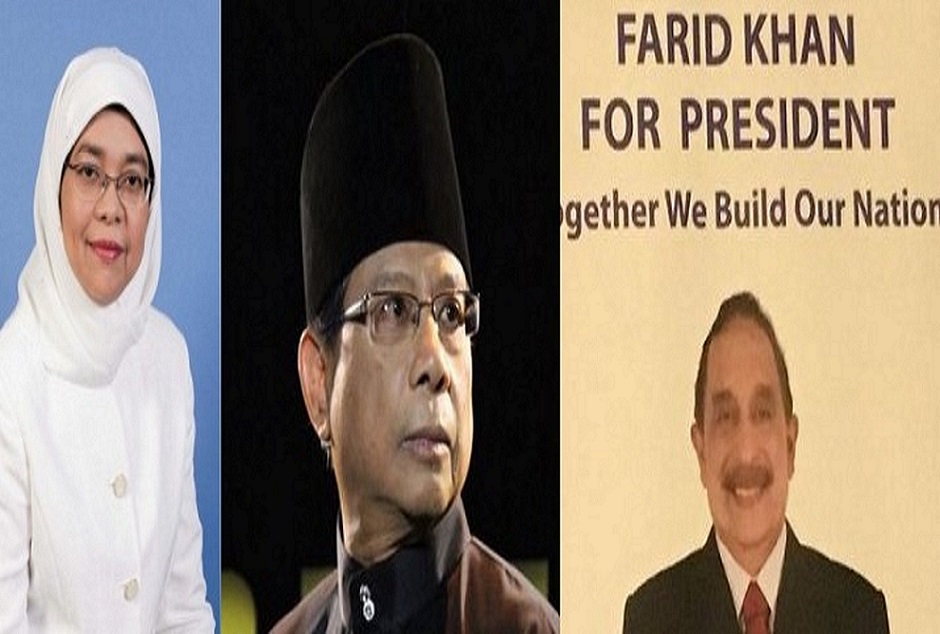
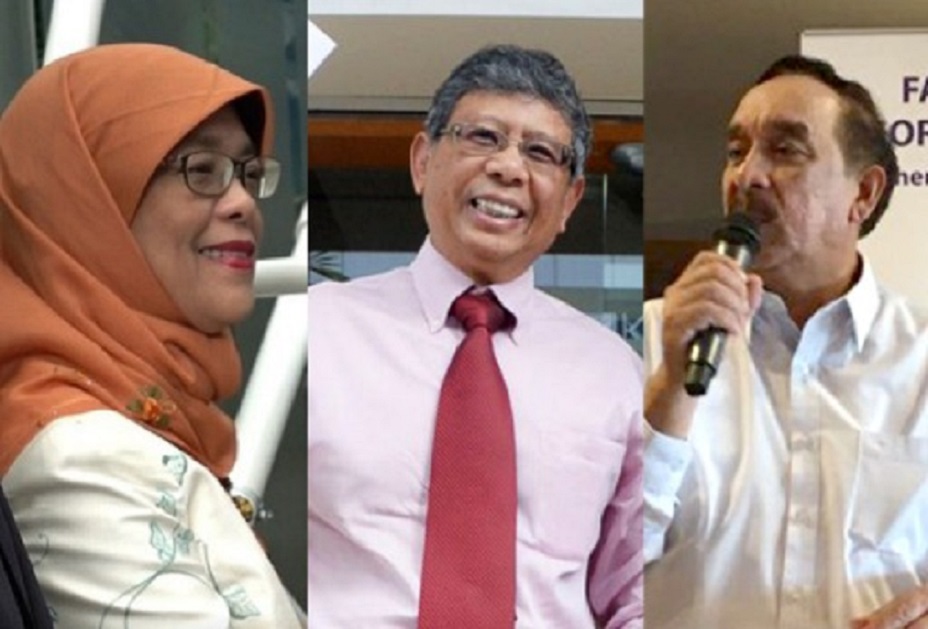
    What is of greater concern is that despite the election being reserved for Malay candidates, only two – Salleh Marican and Farid Khan – have stepped forward to announce their intentions to run. The third, Speaker of Parliament Halimah Yacob, has only hinted that she is looking to run for the nation’s highest office.

    The fact that only two individuals from the private sector have announced their intentions is indeed worrying for the Malay community. Could this be seen as the Malay community being incapable of producing enough potential leaders to serve our country?

    To be fair, the requirement for private-sector candidates to have been heads of companies with paid-up capitals of $500 million in shareholders’ equity on average over three years immediately disqualifies most Singaporeans, regardless of their race.

    This issue aside, I have been talking to community leaders to better understand if there really is a dearth in potential Malay leaders here. Most of them pointed out that there are successful individuals who are more than capable of performing the duties of a president.

    Names such as Shafie Shamsuddin, CEO of PT Trans Retail, which operates the Carrefour supermarket in Indonesia, and Bahren Shaari, CEO of the Bank of Singapore, were brought up. Former Members of Parliament such as Zainul Abidin Rasheed and Abdullah Tarmugi were also mentioned.

    To date, however, none of these individuals has stepped forward to announce an interest to contest the election.
     
    Community showing signs of progress

    But are they the only Malay candidates capable of competing in the election?

    The Malay community has made tremendous progress since independence. There are more Malays now holding important roles in the Singapore Armed Forces. We have successful Malay businessmen and scientists. The number of Malay graduates has been increasing throughout the years. We even have two full ministers in the Cabinet heading important ministries.

    But despite all these achievements, I think it is a shame that, thus far, only two members of the community have stepped forward to throw their hats into the ring.

    It is like looking for a top striker to play in our national football team. Despite all the efforts made, the team have been unable to find someone capable of filling Fandi Ahmad’s boots.

    I have heard of complaints from the community that Singapore should have a Malay president again.

    “It is time. I think a Malay president should be elected as it is a symbol of our community’s success throughout the years,” said a friend of mine a few years ago.

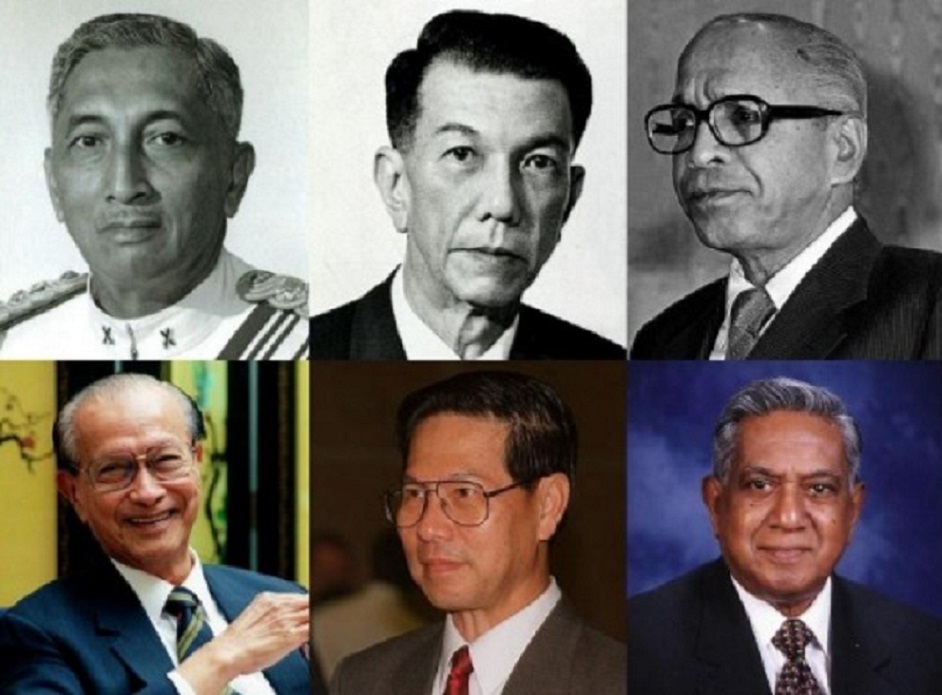
    She pointed out that it is only fair that a Malay is given a chance to head the republic, pointing out that since the country’s first president Yusof Ishak, there have been three Chinese, two Indians and an Eurasian holding the post.

    Then again, do we elect a candidate into the Istana just because he or she is Malay? Or are voters going to choose the best person for the job?

    Potential Malay leaders out there but…

    I recently had a discussion with a community leader on Malay leadership in Singapore. He pointed out that there are potential leaders out there who have been identified for future roles in shaping the country.

    However, he also noted that these people may be contented with their jobs and are therefore reluctant to step forward to serve the nation.

    “There are Malays out there who can (do the job as president) but they are unwilling to do so. They have their reasons. Privacy is one of them and you have to understand this is not any job. This is the presidency we are talking about,” he said.

    Another veteran community leader whom I met said that the times have changed and that the younger generation of Malays are driven more by personal success in the private sector. Hence, there is a lack of interest in community service or public service at the highest levels among them, he added.

    “Do you think that they have time to give back to the community? I don’t think so!” he said.

    He has a point. Personally, I have friends who have successful careers in the private sector and are unwilling to give back to the community.

    “I contribute to Mendaki every month. That should be enough,” is the common answer I get whenever I ask them about serving the community.


    Source: https://sg.news.yahoo.com
  • Osman Sulaiman: Changes To EP Entrenches PAP In Our Political System

    Osman Sulaiman: Changes To EP Entrenches PAP In Our Political System

    The civil service certainly has no dearth of talent. If it decides to gather people of talent, Im sure it can put up a few good men.

    Sadly, the civil service serves not the nation but panders to political influence.

    Recently, the 9-member Constitutional Commission formed to review Elected Presidency system had made some changes to our elected presidency.

    On the surface, it looks like a tweak but these changes to the presidential system are actually monumental. It ravages our democratic rights.

    To be the president, the requirement for private sector candidate is that the person must have been heads of companies with paid-up capitals of $500 million in shareholders’ equity on average over three years

    The rationale is that the candidate must have experience managing big amount of money to safeguard our national reserve.

    The above policy is ill fitted.

    Point 1, it disqualify a huge majority of the people from becoming the President. Nowhere in the world has such a policy existed.

    Now comes the second part:

    The President will have to consult Council of Presidential Advisers (CPA) on ALL fiscal matters and key public sector appointments. Disagreement between the two, will have to be brought before parliament.

    If President acts agaisnt CPA’s advice, Parliament can then reject president’s veto power with a majority.

    With the above system, the President would no longer have any discretion to decide on important matters. Its decision can be overridden by CPA or when it disagree with the CPA, its veto power can be neutralized by parliament.

    Let’s revisit point 1. Why then set the bar so high to $500 million? What difference does it make between a hawker stall holder and a CEO of an MNC after becoming president, making important decisions but thereafter, all decision made, has to be consulted upon or can be vetoed?

    Why waste $2 million dollars of taxpayers’ monies paying the president’s salary? These are the kinds of policies that cost us as a nation.

    Where the gov is a real scrooge on welfare, it finds no problem to bleed taxpayers money unnecessarily to entrench its hold on power.

    So this whole episode of forming the 9 member commission to review the Elected Presidency system is all but a comical exercise to hoodwink the public of the need to protect the system.

    What it actually does is to dupe the populace into believing that the nation is in need of these changes. Upon closer inspection, its deception is crystal clear.

    And we have not even started to discuss the policy of reserving the presidential election for Malay candidates. That will open up more cans of worms.


    Source: Khan Osman Sulaiman

  • Dr Tan Cheng Bock’s EP Appeal To Be Heard On 31 July

    Dr Tan Cheng Bock’s EP Appeal To Be Heard On 31 July

    Former presidential candidate Tan Cheng Bock’s appeal against the High Court’s decision to dismiss his legal challenge on the timing for the reserved presidential election will be heard on July 31.

    In a Facebook post on Sunday (July 23), Dr Tan wrote that the hearing in the Court of Appeal will also be open for members of the public to attend.

    “I look forward to a final judicial clarification on whether the Government had correctly picked President Wee (Kim Wee) as the first of five presidencies to trigger a Reserved Election for 2017,” he said.

    After his legal challenge was dismissed on July 7, Dr Tan said his lawyers have advised that “the judge may have misconstrued the relevant constitutional provisions”, and proceeded to file an appeal to the apex court.

    Dr Tan had earlier challenged the Attorney-General’s Chambers’ (AGC) findings that Dr Wee was Singapore’s first elected President, which formed the basis for the Government to trigger a reserved election for Malay candidates for the coming polls in September.

    After changes to the Elected Presidency scheme were passed, a reserved election will be triggered for a particular race that has not seen an elected representative for five consecutive terms.

    The Government, on the advice of AGC, started counting the five terms from Dr Wee’s presidency. The late Dr Wee was the first President to exercise powers under the EP scheme, after it was introduced in 1991 while he was in office.

    But Dr Tan said it was unconstitutional to start counting from Dr Wee’s term, and the Government should have started counting from the popularly-elected Mr Ong Teng Cheong instead, who succeeded Dr Wee. This would make it four terms since the Republic has had an elected Malay President.

    Earlier this month, Justice Quentin Loh dismissed the appeal. He ruled that after amendments to the EP scheme were passed, Parliament was “entitled… to specify President Wee’s last term in office as the first term” of office of the President to be counted under the relevant article for a reserved election.

    He found that “on a plain reading” of Article 164, Parliament is not limited to choosing a particular term of office of the President as the “first term”. There was also nothing in the text or textual context of Article 19B that limits Parliament’s power by requiring it to start the count from the term of office of a popularly-elected President, said the judge.

    Dr Tan said on his Facebook page on Sunday that the legal case has allowed him “to express a different legal view”, adding:  “The case will end on 31 July 2017. But it is good to let our conversation on these national issues continue.”


    Source: www.todayonline.com

  • Presidential Candidates Must Have Clear Conscience Declaring Themselves “Malay” When Even Other “Half-Malays” Are Not Considered As One

    Presidential Candidates Must Have Clear Conscience Declaring Themselves “Malay” When Even Other “Half-Malays” Are Not Considered As One

    Assalaamu’alaikom, semua. Actually, I have a real-life personal story to tell.

    My younger sister is married to a Singaporean Arab (not the rich one, mind you). His son, that is my nephew, was accepted into NTU about 10 years ago. He applied for Mendaki Scholarship but was rejected because he is considered NOT a Malay by Mendaki. My nephew is considered of Arab race based on his identity card as my brother-in-law is an Arab and needless to say, my sister is a Malay as I am. I did ask my MP at that time but he said that my nephew is not considered a Malay by “constitutional” definition.

    So, he had to apply for Mendaki Study Loan which he did and got the loan with my brother-in-law and I as guarantors.

    He graduated and started working and subsequently settled his loan with Mendaki several years ago.

    With due respect to all potential presidential candidates who claim to have some “Malayness” in them, ask yourself honestly and with a clear conscience: Is it fair to claim yourself to be a Malay when others who are “half-a-Malay” are not considered as one?

    Demi Allah, this is a true story. Assalaamu’alaikom warahmatullahi wabarokaatuh.


    Source: Yahya Hamid in Suara Melayu Singapura

  • Academic: Malay Presidential Candidates Should Be Judged By Ability To Articulate Singapore’s Interests

    Academic: Malay Presidential Candidates Should Be Judged By Ability To Articulate Singapore’s Interests

    Just who should be considered a “Malay”? Article 19B of the Singapore Constitution defines a Malay as “any person, whether of the Malay race or otherwise, who considers himself to be a member of the Malay community and who is generally accepted as a member of the Malay community by that community”.

    This definition also applies to Malay candidates intending to stand in a Group Representation Constituency (GRC) in a general election. The law requires that in a GRC, at least one member of the team is a Malay, an Indian or from other minority communities.

    The definition of Malay here is quite an open, all-inclusive one.

    In Malaysia, the issue of Malay identity has been widely discussed by sociologists. Debates over who qualifies as Malay took place against the backdrop of the New Economic Policy, which grants Malays certain economic and other benefits.

    Sociologists underline three schools of thought on Malay identity. The first is primordialism, which underscores the role of ancestry. Thus, a person’s ethnic identity is determined by birth. But inter-ethnic marriages have made this perspective irrelevant.

    The second is constructivism, which highlights the heterogeneity of the social group called “Malays”. Essentially, this argues that identity is constructed socially and that, over time and across communities, the definition of what a Malay person is can become porous.

    Scholars upholding more extreme interpretations of this perspective grapple with the role of Islam: how important a marker of Malay identity is it? Can someone living in Malaysia (or Singapore), become Malay (masuk Melayu) if he or she embraces Islam?

    The third perspective is situationalism, which implies that some people identify with Malayness when it is advantageous to be part of the community.

    Ultimately, there is generally a stable core which the majority of Malays identify with. In Malaysia, this is recognised in the Malaysian Constitution: Malays are Muslims, speak the Malay language and follow Malay custom.

    VOICE OF THE COMMUNITY

    How is acceptance into the Malay community measured, as worded in the Singapore Constitution?

    So far, online discussions have emphasised the presidential aspirants’ race, their ability to converse in the Malay language and religion. The extent to which these aspirants have spoken for their community is somehow neglected.

    Here, Singaporeans should draw inspiration from the history of the Malays. Singapore Malays have identified some prominent names as part of their community, though they may not strictly come from the Malay race. These individuals have defended the Malays and struggled for their plight.

    One such individual was Abdullah Abdul Kadir Munshi (1796-1854), a famous chronicler, Malay language teacher and interpreter who worked for Sir Stamford Raffles. His grandfather was of Yemeni Arab descent and his grandmother a Tamil. Malays accept Munshi Abdullah as an intellectual. He wrote on the plight of the Malays during the feudal era and colonial period, and was critical of the Malay ruling class for not investing enough in educating their people.

    The other personality was Professor Syed Hussein Alatas (1928-2007), a former head of Malay Studies at the National University of Singapore. Of hadrami (Yemeni) descent, the sociologist spent most of his life in Malaysia and Singapore. His writings focused on the modernisation of the Malays and the community’s development lag. He also wrote a pioneering book, The Myth Of The Lazy Native, debunking negative stereotypes about the Malays imposed by colonial scholars.

    A name more familiar to Singaporeans is that of Mr Yusof Ishak, whose ancestors originated from Sumatra in Indonesia.

    Throughout his life, Mr Yusof struggled for the Malays. In 1939, he founded the newspaper Utusan Melayu because he wanted the Malays to have an equal voice in the public sphere which, he claimed, was dominated by Indian Muslims and Arabs. Having shown this empathy for his community, Mr Yusof fit smoothly into the role as Singapore’s first head of state.

    Today, Mr Yusof is remembered as an outstanding member of the pioneer generation, as someone who defended multiculturalism and meritocracy, the building blocks of Singapore society.

    In today’s context, there is a convergence of interests among all ethnic communities. It is difficult to distinguish Malay issues from Chinese or Indian ones, and problems facing Singaporeans are not unique to any community.

    Thus, Malay presidential candidates should be judged by their ability to articulate the interests of Singaporeans.

    Granted, the role of the presidency is not a political but symbolic one. The president is not required to act as a check and balance on the Government, apart from being a gatekeeper of the country’s reserves and key public appointments.

    Still, Singaporeans expect their president to rise to the occasion and unite all citizens in times of crisis. So, a candidate’s track record of speaking up for their people is key.

    • The writer, Norshahril Saat, is a fellow at the ISEAS – Yusof Ishak Institute, and author of Yusof Ishak: Singapore’s First President.


    Source: www.straitstimes.com