Tag: US

  • Michael D Barr: Singapore’s Government Embroiled In Domestic Crisis Management

    Michael D Barr: Singapore’s Government Embroiled In Domestic Crisis Management

    Author: Michael D Barr, Flinders University

    2017 was a horrible year for Singapore’s government — and for Prime Minister Lee Hsien Loong in particular.

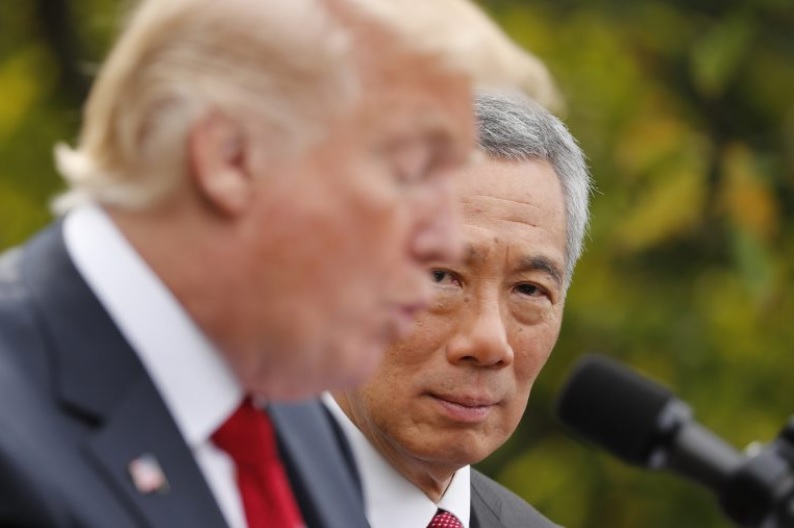
    It began with an open and vocal stoush with China. Late in 2016 the Chinese government confiscated millions of dollars’ worth of Singapore’s military hardware passing through the port of Hong Kong. The action was in part retaliation for Lee’s vocal endorsement of the US position on China’s militarisation of the South China Sea.

    China released Singapore’s military hardware in late January, but then sent a new message of displeasure — Singapore was not welcome at Xi Jinping’s Belt and Road Forum in May 2017. While Lee did not attend the Forum, he later led high-level delegations to both Beijing and Washington, successfully recovering much lost ground.

    Singapore’s ongoing balancing act between China and the US will continue in 2018 with a new factor in play — it is Singapore’s turn as Chair of ASEAN. This position puts Lee on the front line of regional attention. Awkwardly for this balancing act, Lee’s first statement as incoming Chair was a declaration of hope that the United States would continue its engagement with ASEAN and the region.

    Recovering lost ground in foreign policy might be a modest achievement. But domestically, the government is in a state of perpetual crisis management interspersed with misguided political judgements.

    The first domestic crisis of 2017 erupted in June when Lee’s brother and sister, Lee Hsien Yang and Lee Wei Ling, turned to foreign media and social media to reveal ongoing legal disputes over their father’s will. The dispute was not over money but rather over control of the family home. Prime Minister Lee wants to turn it into a national monument to his father, but his siblings want to follow their father’s wishes by bulldozing it.

    This family argument over inheritance became a national issue when the siblings accused Lee Hsien Loong of abusing his power as prime minister to build a family cult around his father’s name — all to bolster his own standing and to smooth the eventual rise to the prime ministership of his son, Li Hongyi. This unresolved dispute has damaged both the Lee brand and Li Hongyi’s prospects of entering politics.

    A second major crisis erupted in October when the regular pattern of train breakdowns on the Mass Rapid Transport system escalated into a major episode — a pumping station in a tunnel failed during an ordinary storm causing an entire train line to be closed by flooding for 20 hours. The cause of the problem proved to be mundane — maintenance work had been neglected and work sheets falsified.

    The Minister for Transport Khaw Boon Wan magnified the damage by unilaterally exonerating both the government and the senior management of Singapore Mass Rapid Transit Corporation. He was particularly singled out for exonerating its CEO Desmond Kuek, whom he thanked as a ‘volunteer’ — a role for which he is paid S$1.87 million (US$1.39 million) per year. Khaw went on to praise him for having his ‘heart in the right place’.

    This episode of ordinary mismanagement was politically significant because it highlights an established pattern of widespread administrative failures and deteriorating government services under Lee’s watch. It also confirmed the perception that highly paid ‘establishment’ figures are protected from the consequences of their actions. Back in 2008 Lee offered similar protection to former deputy prime minister and minister for home affairs Wong Kan Seng when he let an alleged terrorist escape police custody. Wong retained his positions in Cabinet for another three years because Lee stated he had only made ‘an honest mistake’.

    The government has also made several political missteps in 2017. Such missteps included Lee’s odd selection of topics for his National Day Rally Speech in August — a speech equivalent to the US State of the Union address. With Singapore facing challenges on many fronts — managing Xi Jinping and Donald Trump, the South China Sea, rising protectionism, trains, the economy and challenges to Singapore’s role as an air hub — he lectured the population on the dangers of diabetes, which seems to have left most people nonplussed.

    Singaporeans had also been anxiously awaiting new developments on Lee’s successor since he announced in 2016 that he intended to step down as prime minister in 2020. In a country where both the populace and the markets expect long lead times for prime ministerial succession planning — generally a warning of five years or more is given — concern is starting to grow that no clear successor has either been named or emerged.

    Perhaps Lee’s greatest misstep was his handling of the presidential election. The government’s preferred candidate for president was almost defeated in the 2011 elections by popular Chinese rival Tan Cheng Bock. Tan was planning to run again and so the government excluded him by restricting eligibility for election to ethnic Malays under the rather thin cover of enhancing multiracialism.

    This was effective in removing any challenge from Tan, but left just one candidate in the race after two of the three Malay candidates were excluded on other grounds. The episode left a widespread impression that the constitution and the electoral rules are just the plaything of the government, and has done significant damage to both the standing of the presidential office and the government.

    While Singapore’s government has made some positive steps in terms of foreign policy in 2017, its handling of domestic issues has been sub-par. It was a particularly messy year for a government that claims to be preparing for a generational handover in 2020, and it does not bode well for the longevity of the Lee Kuan Yew model of governance.

    Michael D Barr is an Associate Professor of International Relations in the College of Business, Government and Law, Flinders University.

    This article is part of an EAF special feature series on 2017 in review and the year ahead.


    Source: eastasiaforum.org
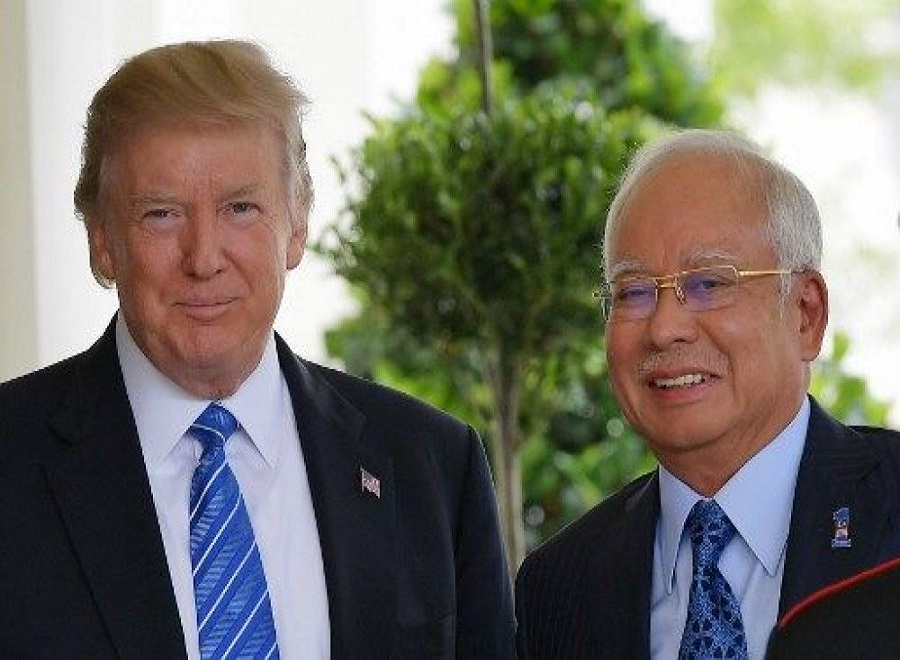
  • Malaysia’s Prime Minister Najib Razak To Issue Statement On US Recognition Of Jerusalem

    Malaysia’s Prime Minister Najib Razak To Issue Statement On US Recognition Of Jerusalem

    MALAYSIA will make an official statement on the United States’ decision to recognise Jerusalem as Israel’s capital, a move that is certain to have repercussions in the Middle East.

    Deputy Prime Minister Datuk Seri Dr Ahmad Zahid Hamidi said the Prime Minister would be making an announcement on the matter.

    He told reporters this after a 30-minute meeting with Hamas Political Bureau member Dr Maher Salah on the sidelines of the Umno general assembly here yesterday.

    Dr Maher said such a move would cause more concern among the Arabs and asked the Organi­sation of Islamic Cooperation to intervene.

    “This move is in contravention with international laws and the rights of the Palestinians. Jerusalem is the capital of Palestine and belongs to Islam.

    “I laud the Deputy Prime Min­ister’s stand on this issue,” he added.

    It was reported that US President Donald Trump would be declaring a formal recognition of Jerusalem as the capital of Israel and move its embassy from Tel Aviv.

    Later yesterday, Dr Ahmad Zahid launched the Home Ministry’s booth at the Putra World Trade Centre for the assembly.

    The booth will offer services from all agencies under the ministry, including the police, Prisons Dep­artment, Immigration Depart­ment and National Registration Department.

    He also unveiled a 238-page book on the ministry’s achievements and performance since he became Home Minister.

    Dr Ahmad Zahid, who is also Umno vice-president, took time off to sit in debates at the Umno Youth, Wanita Umno and Puteri wings.

  • Trump To Meet PM Najib On Sept 12 At White House

    Trump To Meet PM Najib On Sept 12 At White House

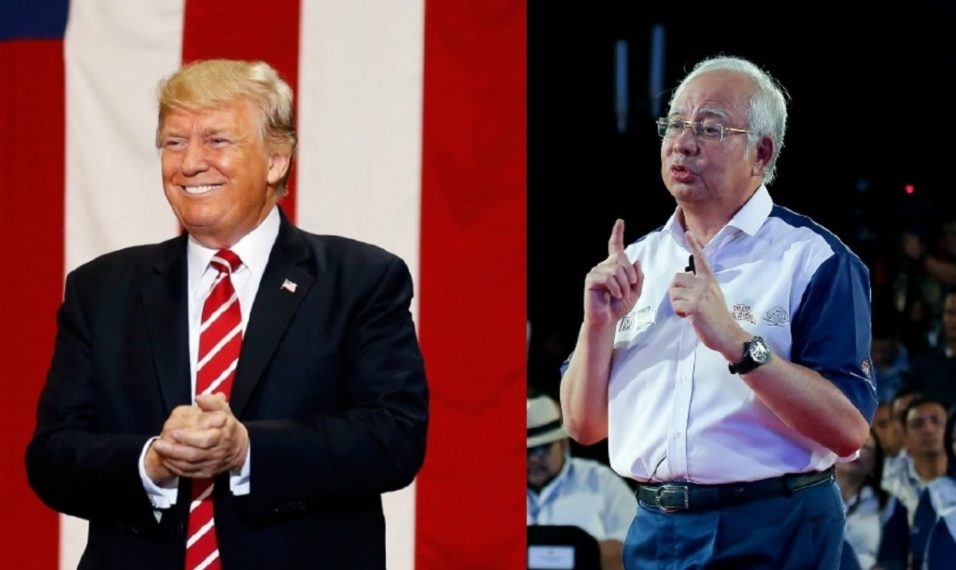
    US President Donald Trump plans to meet Malaysian Prime Minister Datuk Seri Najib Razak on September 12 at the White House.

    In a statement on Wednesday, the White House said Trump is looking forward to discuss ways to further strengthen and broaden US-Malaysia bilateral ties and expand regional cooperation with one of US’ closest partners in Southeast Asia.

    “President Donald J. Trump will welcome Prime Minister Najib Abdul Razak of Malaysia to the White House on September 12.

    “President Trump looks forward to celebrating the 60th anniversary of United States-Malaysia bilateral relations and discussing ways to strengthen and broaden our bilateral relationship and expand regional cooperation with one of America’s closest partners in Southeast Asia,” said the statement.

    The Wall Street Journal, which first reported the plan for a meeting, said Najib has been eager to emphasise his friendship with Trump.

    US relations with Malaysia, which the United States sees as an important partner in standing up to China’s extensive territorial claims in East Asia, had improved under former President Barack Obama, who in 2014 became the first US president to visit the country in 50 years.


    Source: https://www.nst.com.my/

  • Amos Yee Reportedly Robbed By Muscular Fellow Inmate

    Amos Yee Reportedly Robbed By Muscular Fellow Inmate

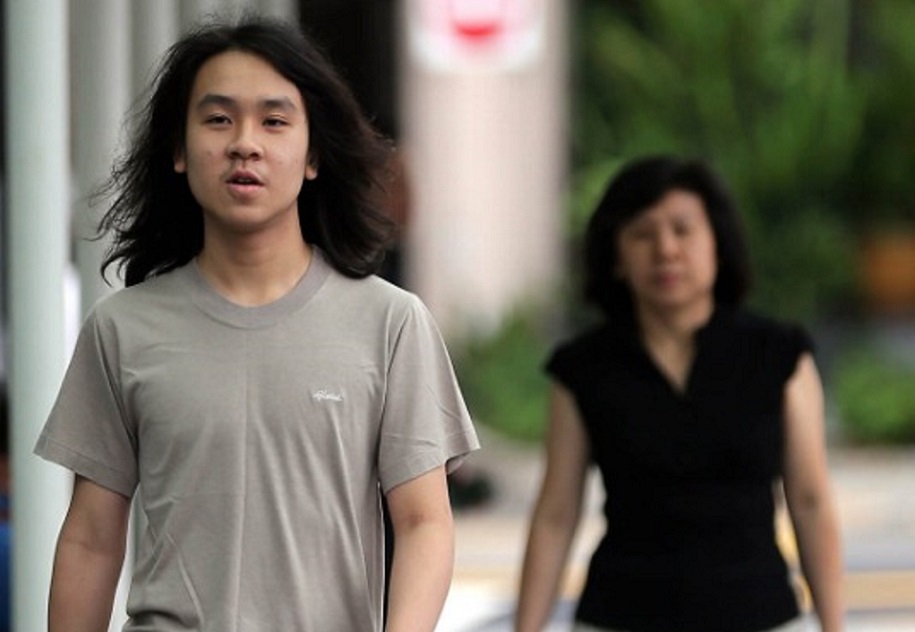
    Recently in prison Amos has been repeatedly robbed by a man named Emmanuel Reyes, also known as “Bubba.” Reyes is a 6’4” (1.93 m) 250 lbs (113.4 kg) muscular Black man covered in tattoos. Reyes is in prison for illegal weapons charges and for assault. Reyes was in possession of an illegal gun and he beat up his cousin after his cousin wanted to evict Reyes over constant noise complaints.

    Prisoners are allowed to purchase additional food and snacks at the prison kiosk with money sent to their commissary account by family and friends. Amos receives money on his account thanks to donations from people who care about him and is able to buy additional food.

    Reyes began targeting Amos and numerous other prisoners to intimidate and steal food from. Reyes specifically targeted Amos, Amos’s Filipino friend, Asians, and the elderly as he viewed them as easy targets. Reyes was recently placed into solitary confinement after attacking another inmate. Reyes approached a 72-year-old inmate and demanded that the man give him his chips. The 72-year-old man refused to give up his food so Reyes beat him badly.

    During Reyes’s solitary confinement, Amos requested that he be moved to a different part of the prison due to harassment. The prison honored his request. Amos’s Filipino friend, Jay, also made the same request for the same reason and was also transferred. Amos and his friend Jay are now safe after that ordeal.


    Source: Amos Yee

  • Academics Express Concerns On Huang Jing, Laments Inadequacy Of Background Checks

    Academics Express Concerns On Huang Jing, Laments Inadequacy Of Background Checks

    Members of Parliament (MP) and foreign relations experts reacted with concern and shock that a senior academic had been identified by the Government as an “agent of influence” working for an unnamed foreign country, given his involvement in several think-tanks and “privileged position” here.

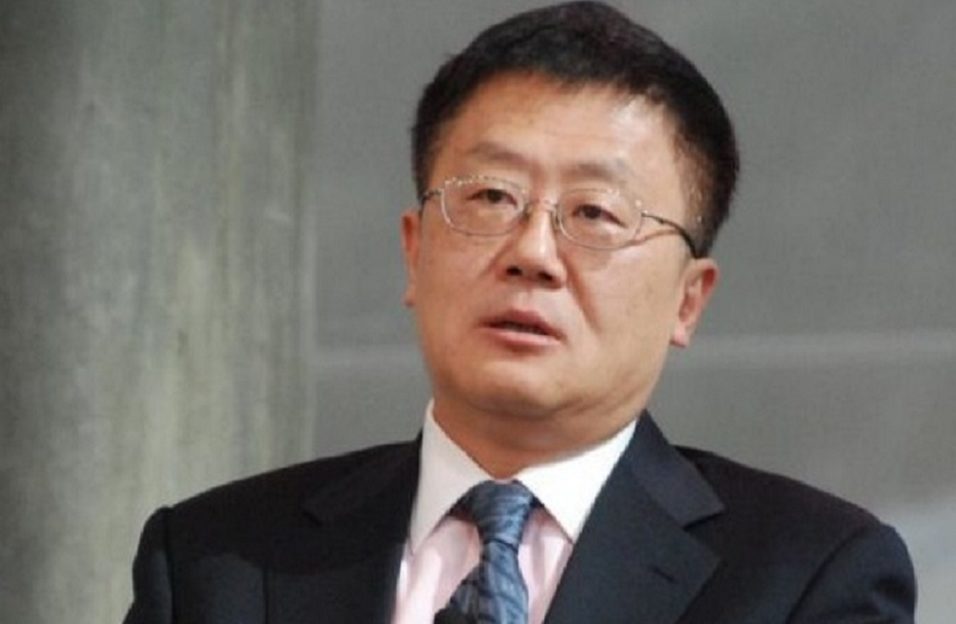
    Professor Huang Jing, 60, and his wife Shirley Yang, had their permanent residence statuses revoked by the Ministry of Home Affairs and will be barred from re-entering Singapore.

    National University of Singapore political scientist Bilveer Singh, pointing to the seriousness of the matter, said: “He is in (a) privileged position in Singapore, sitting on so many boards with people who are opinion-makers.”

    He was concerned that Prof Huang had held a senior position at “one of Singapore’s top think-tanks” and had lived here for several years.

    “A person like him is in a very strategic position to shape the mind, the thinking, and ideology of our key people who, in turn, can affect national policies, for example,” said Associate Professor Singh, who is also an Adjunct Senior Fellow at the Centre of Excellence for National Security at the S Rajaratnam School of International Studies.

    Sembawang MP Vikram Nair, who chairs the Government Parliamentary Committee for Defence and Foreign Affairs, described Prof Huang’s attempts to influence the Government as “very serious” and “worrying”.

    “It may not be so much the effect he had, but the intentions … Whether or not he succeeded, that is a worrying fact … I mean, if he was successful, it could be similar to what Marxists used to do to try and influence governments. (They start) by influencing the population, then the leaders,” said Mr Nair.

    Over the years, the Government has uncovered cases of individuals carrying out subversive activities for foreign countries.

    For example, in 1997, a female civil servant was detained for passing on classified government information to a man who was working under deep cover for a foreign intelligence service. In another case in 1998, four Singaporean men were detained for collecting classified government information for a foreign intelligence service. One of the four had also acted as a recruiter.

    The threat could be bigger now, with Bukit Panjang MP Teo Ho Pin pointing to the difficulties in mitigating “the influence of external agencies” in today’s “Internet world”.

    “Singaporeans must keep themselves informed of what’s happening in our country through reliable sources of information, such as government’s announcements,” he said.

    Referring to other countries’ experiences, Dr Teo reiterated that the potential impact of individuals working as agents of foreign countries “could be serious and will affect Singaporeans’ quality of life”.

    For someone to have not just his employment terminated but also be permanently barred from entering Singapore suggests that the extent and degree of foreign influence was “deeply troubling and problematic”, said Dr Mustafa Izzuddin, a fellow at the ISEAS-Yusof Ishak Institute.

    “Especially for a small state like Singapore, foreign interference in internal affairs is regarded as a serious threat which could also have long-term adverse implications for the governing of the country,” he added.

    Dr Mustafa and Assoc Prof Singh also questioned if the Republic may have let its guard down in this episode.

    “The domestic populace (would ask questions) on why a thorough background check was not done to sieve out such subversive activities before the said foreign person was hired in the first place,” said Dr Mustafa.

    Agreeing, Assoc Prof Singh said: “This is a good lesson for us that, in order to protect our interest, we should be a little bit more discerning, whoever is recruiting at the think-tanks.”

    News of Prof Huang’s expulsion also created some ripples overseas, with academics and political observers taking to social media to express their views.

    Dr Euan Graham, director of the International Security Programme at Lowy Institute, an independent think-tank based in Sydney, said on Twitter that he was “not entirely surprised” with the news, but “wow(ed) all the same”.

    Mr Nile Bowie, Singapore-based political commentator and columnist for The Malaysian Reserve newspaper, tweeted: “Elephant in the room is whether the country in question is #US or #China? … Curious to hear statement from #HuangJing and also how this incident will affect the already strained Sino-Singapore relationship.”


    Source: www.todayonline.com