Tag: Yusof Ishak

  • Commentari: Perlantikan Secara “Paksa” Adalah Langkah Ke Belakang / 10 Sebab Kenapa Orang Terasa Marah Terhadap PE2017

    Commentari: Perlantikan Secara “Paksa” Adalah Langkah Ke Belakang / 10 Sebab Kenapa Orang Terasa Marah Terhadap PE2017

    Sebenarnya perlantikan secara “paksa” ini adalah langkah ke belakang (Regressive move) dan ini bukanlah kali pertama ia berlaku di Singapura. Mungkin Dr Maza tidak tahu perkara ini, khususnya point no 7.

    Natijah (Wanita bertudung menjadi presiden) tidak menghalalkan cara.

    Jangan mudah terpedaya dengan bentuk, sistem dominan hari ini dalamannya bersopak, maka mereka harus bersungguh-sungguh untuk tutup dengan baju besi hebat yang berkilat.

    Memang kalau diperhatikan dalam sejarah yang tidak berapa lama, mereka yang suka melaungkan slogan “Tajdid” ala modenisasi ini biasanya bersifat literalis dalam bab menanggapi sistem yang datang dari barat, sifat yang mereka benci dalam membaca teks agama mereka buat dalam membaca konteks. Sedangkan bukan sahaja teks, konteks juga kadangkala perlu ditakwil.

    “Pemilihan secara paksa” ini adalah untuk memastikan tiadanya dissenting voice yang benar-benar substantial daripada Presiden terhadap PAP.

    Dari En Mohd Khair :

    10 Sebab Kenapa ada orang begitu marah terhadap PE2017

    1. Tan Cheng Bock terhalang dari bertanding kerana calon dihadkan hanya kepada orang Melayu

    2. Satu-satunya calon Presiden yang Terpilih mempunyai ayah bukan dari keturunan Melayu

    3. Kriteria Presiden Terpilih diubah sehingga menyempitkan pilihan bagi calon-calon Melayu yang layak

    4. Tiadanya calon Melayu yang benar-benar dianggap Melayu tampil ke depan untuk bertanding. Kedua-dua calon lelaki mohon untuk bertanding datang dari susur galur Marican dan Khan, manakala yang dua lelaki lain adalah dari kaum Cina

    5. Definisi siapakah itu orang Melayu oleh pemerintah tidak diterima kerana dianggap sebagai terlalu longgar

    6. Siapakah Presiden Terpilih yang pertama? – Ong Teng Cheong atau Wee Kim Wee? Tan Cheng Bock mencabar bahwa Presiden Terpilih pertama bukan Wee Kim Wee, tetapi Ong Teng Cheong. Oleh itu, menurut kata Tan Cheng Bock, pilihanraya Presiden kali ini bukan yang terhad kepada kaum minoriti. Menurut pemerintah, Wee Kim Wee adalah Presiden Terpilih pertama kerana beliau Presiden Singapura yang pertama mempunyai bidang kuasa yang diluaskan oleh perlembagaan yang dipinda.

    7. Menghadkan Presiden Terpilih hanya kepada calon Melayu melanggar dasar meritokrasi Singapura dan Perlembagaan Negara

    8. Menghadkan Presiden Terpilih hanya kepada calon Melayu menguatkan lagi tanggapan yang masyarakat Melayu tidak boleh maju ke depan tanpa bantuan pemerintah – pola pemikiran bertongkat atau “crutch mentality”

    9. Kenapa Presiden Terpilih boleh dihadkan atau dikhususkan kepada kaum minoriti tetapi tidak pula untuk jawatan Perdana Menteri

    10. Kenapa tiada pilihanraya kecil apabila Puan Halimah Yacob mengosongkan kawasan undinya untuk bertanding bagi jawatan Presiden Terpilih

    Beberapa fakta relevan mengenai Kedudukan Presiden Singapura, samada dilantik atau diplih

    1. Puan Halimah BUKAN calon Presiden yang pertama kali menang tanpa bertanding. Sebelum ini, Mendiang S R Nathan juga pernah menang tanpa bertanding sebanyak DUA kali, iaitu pada tahun 1999 dan 2005, apabila tiada calon lain yang layak untuk terima Sijil Kelayakan atau Certificcate of Eligibility.

    2. Presiden-Presiden berikut dilantik, dan tidak dipilih melalui proses pilihanraya:
    2.1 Yusof Ishak, 1965 – 1970
    2.2 Benjamin Henry Sheares, 1970 – 1981
    2.3 Devan Nair, 1981 – 1985
    2.4 Wee Kim Wee, 1985 – 1993

    3. Perlembagaan dipinda pada 1991 untuk menjadikan kedudukan Presiden bukan lagi diisi dengan perlantikan, tetapi dipilih melalui proses pilihanraya. Kuasa Presiden juga diluaskan merangkumi kuasa terhadap perbendaharaan negara dan juga perlantikan jawatan-jawatan penting dalam pemerintah. Pindaan ini dilakukan sewaktu tempoh Presiden Wee Kim Wee. Dengan pindaan perlembagaan tersebut, Presiden Wee Kim Wee diberi kuasa seorang Presiden Terpilih. Presiden-Presiden Terpilih selepas itu adalah berikut:
    3.1 Ong Teng Cheong, 1993 – 1999
    3.2 S R Nathan, 1999 – 2005 – 2011
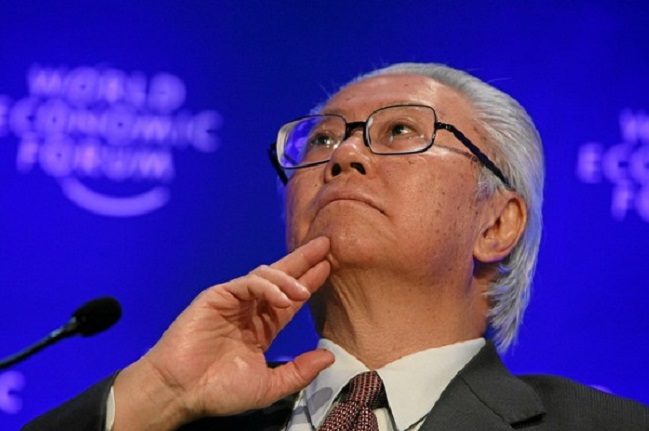
    3.3 Tony Tan, 2011 – 2017


    Source: Noor Deros
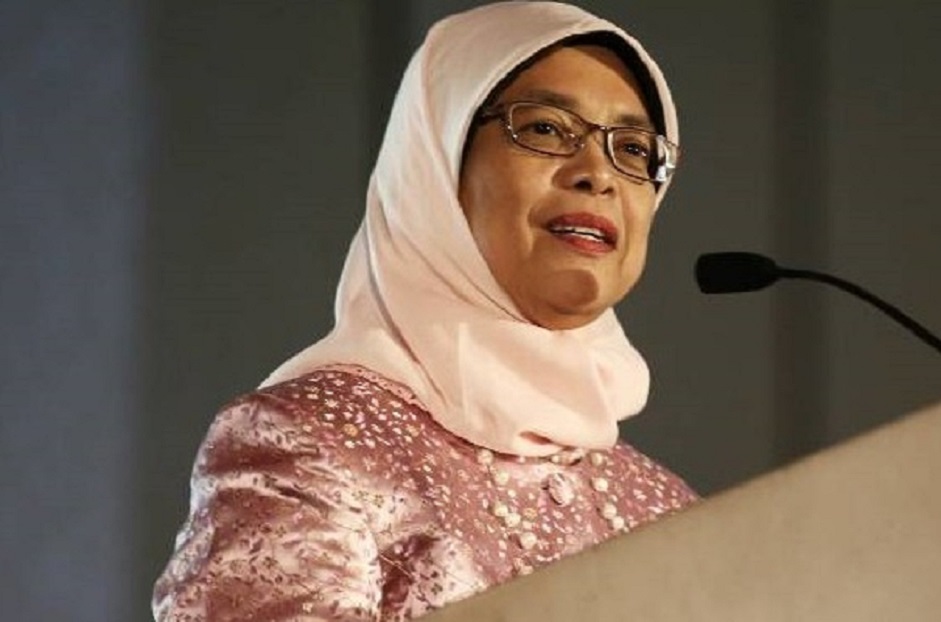
  • Halimah Yacob’s Candidacy Will Raise Questions About Her Independence & “Malayness”

    Halimah Yacob’s Candidacy Will Raise Questions About Her Independence & “Malayness”

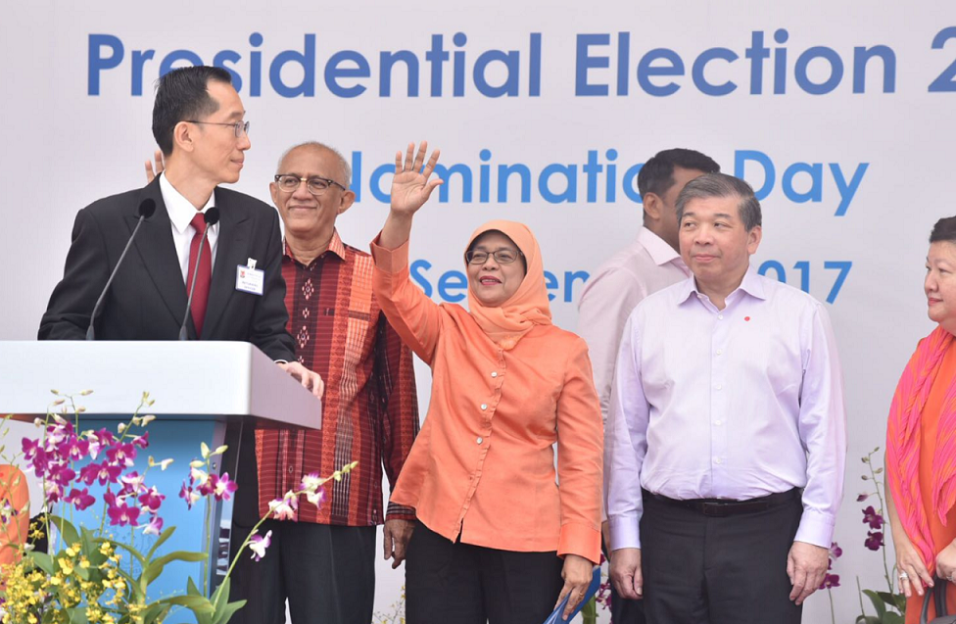
    The Speaker of Parliament, Halimah Yacob, should not run for the elected presidency, even if she is by law qualified. There are several reasons why Mdm Halimah’s candidacy would not be in the best interests of Singapore.

    But before we get into the specific arguments on this, let us recall what, fundamentally, the Elected President (EP) scheme was supposed to do.

    It is, basically, to be a check on the government of the day. Although still largely ceremonial in its functions, the EP is also endowed with various specific powers designed to hold the government to account.

    These powers include being the so-called second key to the nation’s financial reserves; having a say in the appointment of key members of statutory boards and public institutions; and the ability to instruct the CPIB to carry out investigations.

    The EP, it is to be noted, is advised by the Council of Presidential Advisers (CPA), whose members are experienced in various fields and industries.

    Mdm Halimah, as the Speaker of Parliament, qualifies under the Presidential Election Act to contest the elected presidency, even though she has little financial experience. This, some have pointed out, does not put her in good stead to oversee the financial reserves, which run into the hundreds of billions, and how the government spends these, which in itself is a complex matter.

    Although Mdm Halimah has some experience in handling public funds in her roles as a Member of Parliament for her constituency, and as a Minister of State previously, the elected presidency is an entirely different ball game altogether.

    Would she be able to understand the complexities of how the reserves are used and spent?

    The second reason why Mdm Halimah should not throw her hat into the ring in September is that even today, 28 July, she is still undecided if she would run in the elections which will take place in less than 2 months.

    One would have thought that anyone who is serious about taking on the highest office in the land would have given it much thought over an extended period of time, and would have already made up her or his mind at this point.

    And for someone who is a member of a political party, she would also be expected to resign from her party post and membership, so that there is some distance between her resignation from the party and her candidacy in the election.

    Remember that the EP is supposed to be politically neutral, and to stand above party and partisan politics.

    If Mdm Halimah decides to run for election, she would have to resign from the People’s Action Party (PAP) in very short notice, and almost immediately submit her name for the September contest.

    Former PAP MP Inderjit Singh was also apparently concerned about this, and wrote about this on his Facebook page on Friday:

    “While the constitution is open about having a current sitting government politician standing for the PE, some Singaporeans have expressed concerns on the prospects of a current government MP, still in parliament, resigning as an MP and immediately standing for the PE. The spirit of the Elected President is independence of office as intended by Mr Lee Kuan Yew when the idea was mooted. While I have no question about how each person will do his or her duty to serve the office they are elected to serve, public perception is also important. While Mr Ong Teng Cheong also did the same in 1993, I sense people are increasingly uncomfortable with this.”

    Given that Mdm Halimah has also been a PAP MP since 2001, it is questionable if she will be able to fulfill the independent role required of an EP.

    Can you suddenly resign from a party you have been with for decades and then claim to be independent of it, overnight? One may perhaps be able to do so technically, but it is not unreasonable to expect that emotionally and personally, this may not be the case.

    If, as would be expected, the PAP or its ministers, or any government-affiliated organisation (such as the NTUC), come out to endorse Mdm Halimah, it would further raise doubts about how independent she would be, if she needed the support of government ministers and organisations. Would she be able to be a check on them if she becomes the EP?

    The third reason why Mdm Halimah should not opt to run is that there have been questions raised about her “Malayness” to be a candidate in a Reserved Election for the Malay community.

    The significance of this first Reserved Election to elect a Malay president can not be understated. All candidates must be accepted as Malay, otherwise the office of the President loses its credibility and respect from the community and from Singaporeans in general.

    Questions about Mdm Halimah’s race were raised because her late father was an Indian-Muslim. Does that not make her an Indian and thus disqualified to run?

    While the law may in fact be on her side (for it gives the Community Committee the discretion to accept a candidate’s declaration of his or her race), there is also another pertinent question, as Inderjit Singh pointed out:

    “The concept of “Malayness” has also become a debatable issue. Questions about how Mendaki and SINDA classify who is a Malay and who is an Indian do not seem to be aligned with how a Malay or an Indian is defined for the purposes of a GE or a PE. For now, it is critical that the leaders of the Malay community and the government come out and make this position clear and hopefully this position will apply to all aspects of life in Singapore. I hope this can be resolved before the formal process of PE 2017 starts.”

    It is doubtful that such an intensely controversial issue would be resolved in a matter of weeks (before the election takes place). One suspects there will be even more debates, and perhaps even court challenges filed with regard to this.

    What is “Malay” and who is a Malay are now important questions given that different Government organisations have defined it differently, as some have pointed out.

    As president, the person must not be seen to have been treated differently from other ordinary Malays in society.

    It it thus of paramount importance that the question of what makes a “Malay”, in law, be set out clearly, and that the presidential candidates be held to these same standards and definitions.

    You cannot have Mendaki saying an Indian-Muslim does not qualify for its assistance schemes, and then say that an Indian-Muslim can contest in a Malay-only Reserved Election.

    And lastly, Mdm Halimah’s candidacy would leave her residents in Marsiling-Yew Tee without a minority-race MP to represent them. This would be an affront to the very idea of the Group Representation Constituency (GRC) system. Her Malay residents would be left without someone whom they could look to for help.

    Minister Chan Chun Sing has indicated that the Government will not call a by-election to elect a set of new MPs for Marsiling-Yew Tee if Mdm Halimah should leave to contest the presidential election.

    With all of the above unresolved issues and questions surrounding Mdm Halimah, it would be best if she does not contest the September polls. If she does contest and wins, it will leave the elected presidency opened to all sorts of criticisms.

    And for an institution which is supposed to be a symbol of unity for all Singaporeans, that would be most regrettable indeed.


    Source: https://publichouse.sg

  • 6 Reasons Why Fandi Ahmad Should Not Run For Presidency

    6 Reasons Why Fandi Ahmad Should Not Run For Presidency

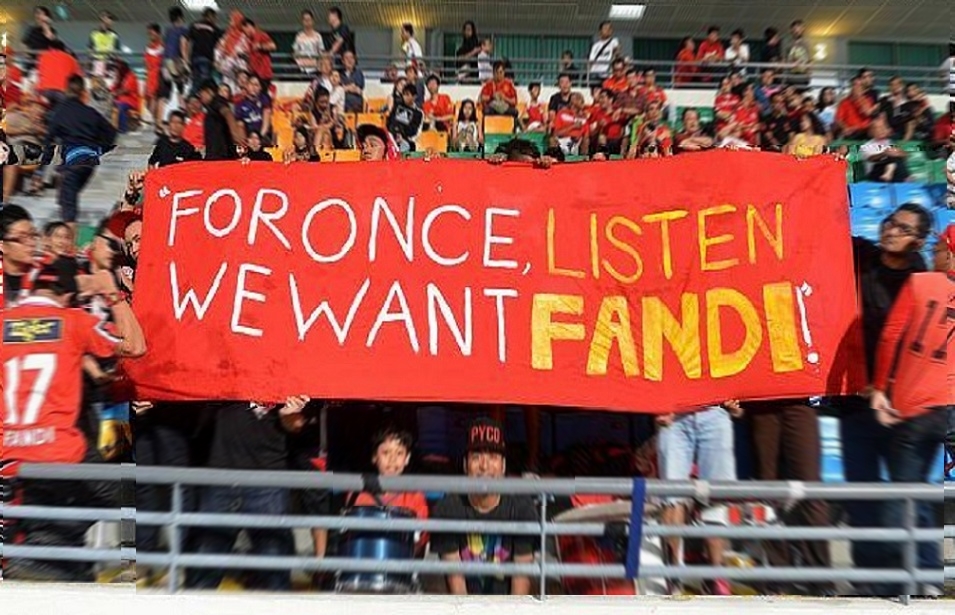
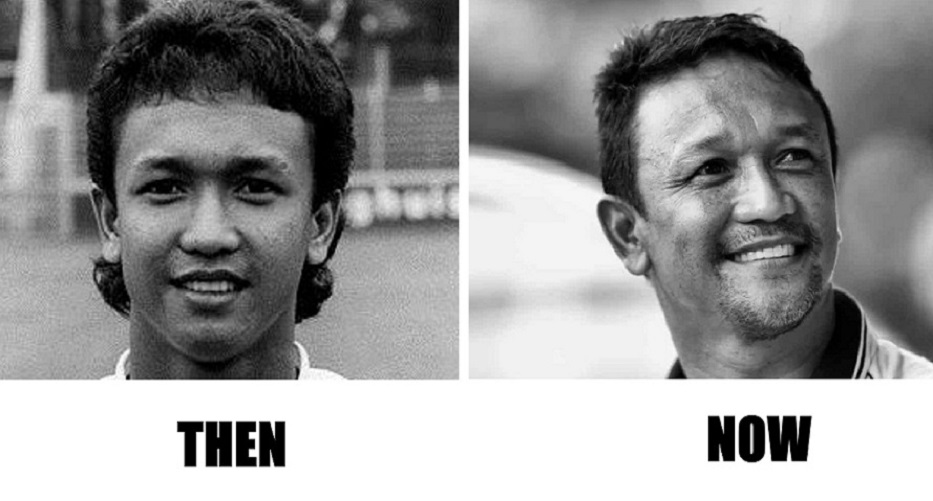
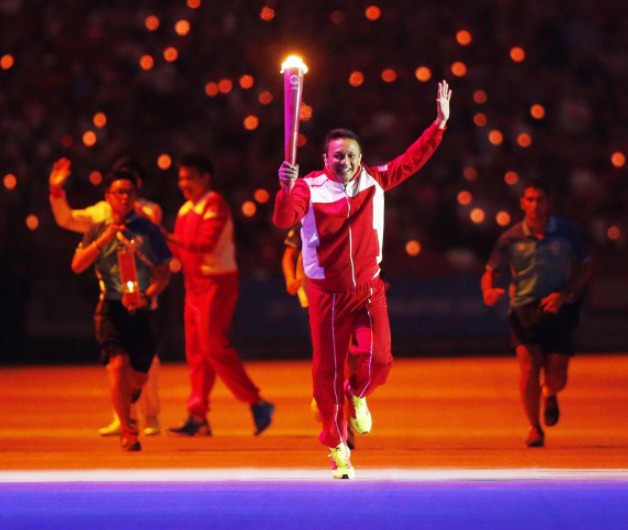
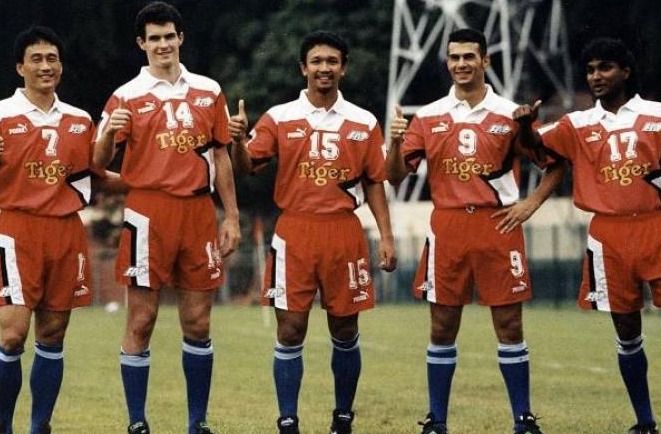
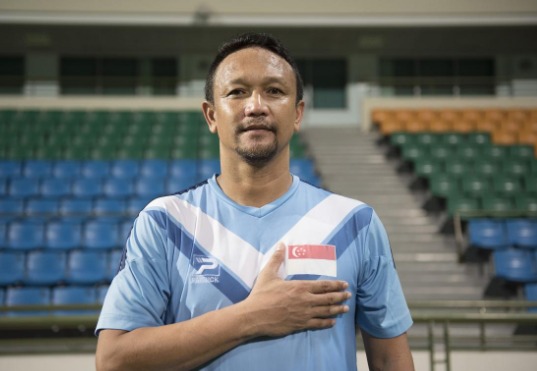
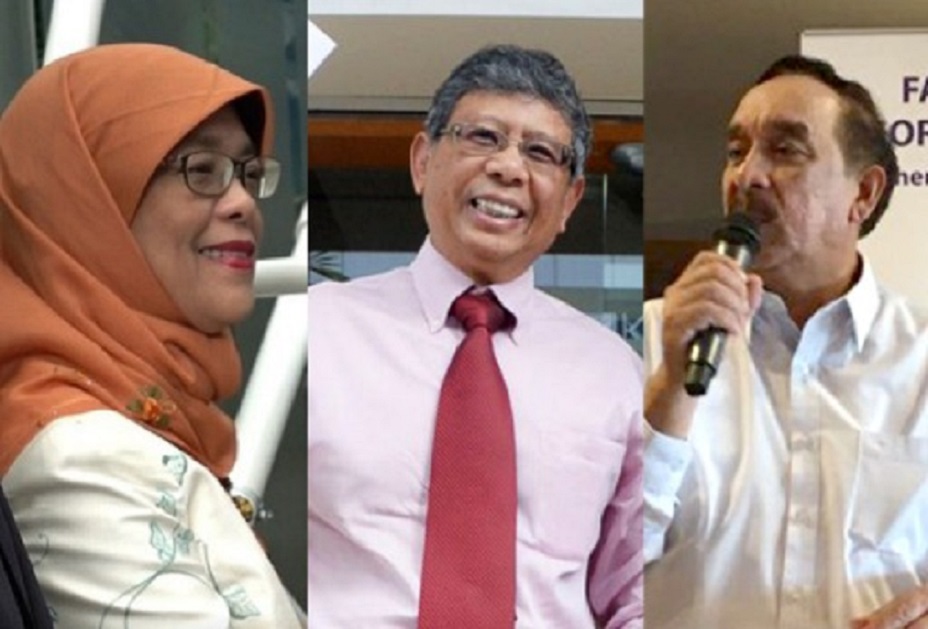
    Halimah Yacob, Salleh Marican and Farid Khan – three names that have not inspired confidence in their race to the Istana. Singaporeans are getting desperate to the point of encouraging presidential hopeful, Dr Tan Cheng Bock to become Malay. And then there’s Singapore’s favourite footballing son, Fandi Ahmad – a popular choice, even though we don’t see him qualifying as a candidate.

    Will Fandi make a good President?

    Here are 6 reasons why Fandi Ahmad should totally not become President:

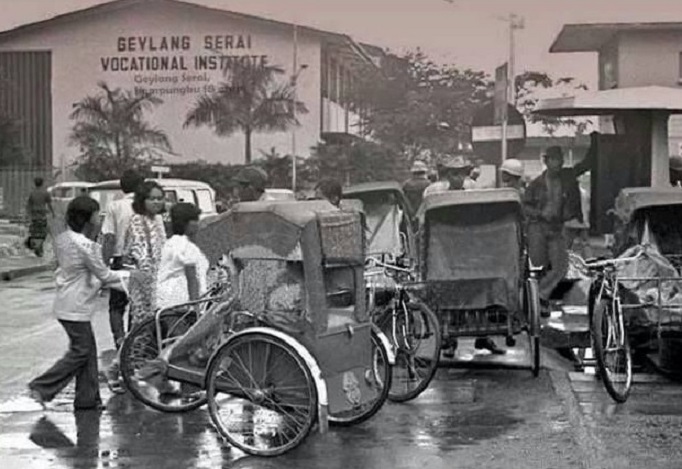
    1. He is not educated. He was from a vocational school and has never graduated from a university like many of our very elite millionaire Ministers. Even though he became rich from playing football and his business interests, he is still not considered elite like our Ministers.

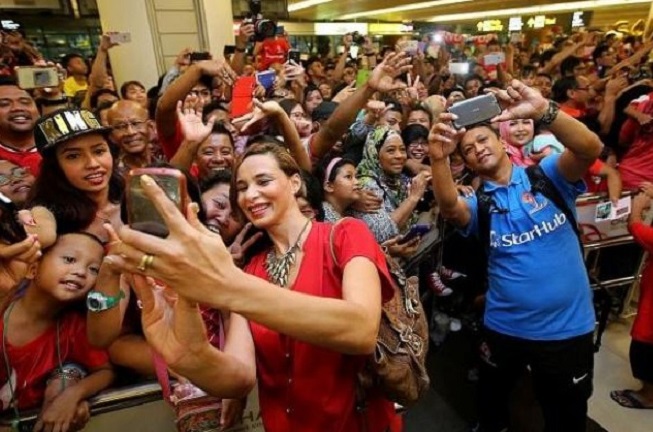
    2. Fandi doesn’t have the look of a President. He doesn’t have a back comb, and wear large glasses like our current President who is very Presidential and charming. When Tony Tan speaks, the room is quiet (because people fall asleep). Compare that to Fandi. Wherever he turns up, people make a lot of noise and mob him. How very un-presidential. Who would support Fandi?

    3. He is too handsome. The only President that was handsome was the late President Yusof Ishak. He will make all the men jealous. They will ban their wives from going to Istana open houses and National Day parades. We don’t want that too happen do we?

    4. Fandi is a sporting legend and national icon. How many sporting icons have served in public office? Sporting icons contribute back to the country through their grassroots work. Don’t meddle in the work of the elite leaders and the natural aristocrats of our land.

    5. For a prospective Malay President, he has too many friends from other races to be called truly Malay.

    6. Lastly, Fandi Ahmad is too humble. His humility is the stuff of legend, just like the man himself. Presidents cannot be too humble because they need to keep the political elites and natural aristocrats in check.

    There you have it, 6 reasons why abang Fandi shouldn’t run for Presidency. We totally don’t want a down-to-earth, humble, handsome and capable President who is Malay.

    Convinced yet?


    Rilek1Corner


    Disclaimer: We would totally vote abang Fandi if he runs for Presidency. Totally. We know Singaporeans would too. 

  • Academic: Malay Presidential Candidates Should Be Judged By Ability To Articulate Singapore’s Interests

    Academic: Malay Presidential Candidates Should Be Judged By Ability To Articulate Singapore’s Interests

    Just who should be considered a “Malay”? Article 19B of the Singapore Constitution defines a Malay as “any person, whether of the Malay race or otherwise, who considers himself to be a member of the Malay community and who is generally accepted as a member of the Malay community by that community”.

    This definition also applies to Malay candidates intending to stand in a Group Representation Constituency (GRC) in a general election. The law requires that in a GRC, at least one member of the team is a Malay, an Indian or from other minority communities.

    The definition of Malay here is quite an open, all-inclusive one.

    In Malaysia, the issue of Malay identity has been widely discussed by sociologists. Debates over who qualifies as Malay took place against the backdrop of the New Economic Policy, which grants Malays certain economic and other benefits.

    Sociologists underline three schools of thought on Malay identity. The first is primordialism, which underscores the role of ancestry. Thus, a person’s ethnic identity is determined by birth. But inter-ethnic marriages have made this perspective irrelevant.

    The second is constructivism, which highlights the heterogeneity of the social group called “Malays”. Essentially, this argues that identity is constructed socially and that, over time and across communities, the definition of what a Malay person is can become porous.

    Scholars upholding more extreme interpretations of this perspective grapple with the role of Islam: how important a marker of Malay identity is it? Can someone living in Malaysia (or Singapore), become Malay (masuk Melayu) if he or she embraces Islam?

    The third perspective is situationalism, which implies that some people identify with Malayness when it is advantageous to be part of the community.

    Ultimately, there is generally a stable core which the majority of Malays identify with. In Malaysia, this is recognised in the Malaysian Constitution: Malays are Muslims, speak the Malay language and follow Malay custom.

    VOICE OF THE COMMUNITY

    How is acceptance into the Malay community measured, as worded in the Singapore Constitution?

    So far, online discussions have emphasised the presidential aspirants’ race, their ability to converse in the Malay language and religion. The extent to which these aspirants have spoken for their community is somehow neglected.

    Here, Singaporeans should draw inspiration from the history of the Malays. Singapore Malays have identified some prominent names as part of their community, though they may not strictly come from the Malay race. These individuals have defended the Malays and struggled for their plight.

    One such individual was Abdullah Abdul Kadir Munshi (1796-1854), a famous chronicler, Malay language teacher and interpreter who worked for Sir Stamford Raffles. His grandfather was of Yemeni Arab descent and his grandmother a Tamil. Malays accept Munshi Abdullah as an intellectual. He wrote on the plight of the Malays during the feudal era and colonial period, and was critical of the Malay ruling class for not investing enough in educating their people.

    The other personality was Professor Syed Hussein Alatas (1928-2007), a former head of Malay Studies at the National University of Singapore. Of hadrami (Yemeni) descent, the sociologist spent most of his life in Malaysia and Singapore. His writings focused on the modernisation of the Malays and the community’s development lag. He also wrote a pioneering book, The Myth Of The Lazy Native, debunking negative stereotypes about the Malays imposed by colonial scholars.

    A name more familiar to Singaporeans is that of Mr Yusof Ishak, whose ancestors originated from Sumatra in Indonesia.

    Throughout his life, Mr Yusof struggled for the Malays. In 1939, he founded the newspaper Utusan Melayu because he wanted the Malays to have an equal voice in the public sphere which, he claimed, was dominated by Indian Muslims and Arabs. Having shown this empathy for his community, Mr Yusof fit smoothly into the role as Singapore’s first head of state.

    Today, Mr Yusof is remembered as an outstanding member of the pioneer generation, as someone who defended multiculturalism and meritocracy, the building blocks of Singapore society.

    In today’s context, there is a convergence of interests among all ethnic communities. It is difficult to distinguish Malay issues from Chinese or Indian ones, and problems facing Singaporeans are not unique to any community.

    Thus, Malay presidential candidates should be judged by their ability to articulate the interests of Singaporeans.

    Granted, the role of the presidency is not a political but symbolic one. The president is not required to act as a check and balance on the Government, apart from being a gatekeeper of the country’s reserves and key public appointments.

    Still, Singaporeans expect their president to rise to the occasion and unite all citizens in times of crisis. So, a candidate’s track record of speaking up for their people is key.

    • The writer, Norshahril Saat, is a fellow at the ISEAS – Yusof Ishak Institute, and author of Yusof Ishak: Singapore’s First President.


    Source: www.straitstimes.com

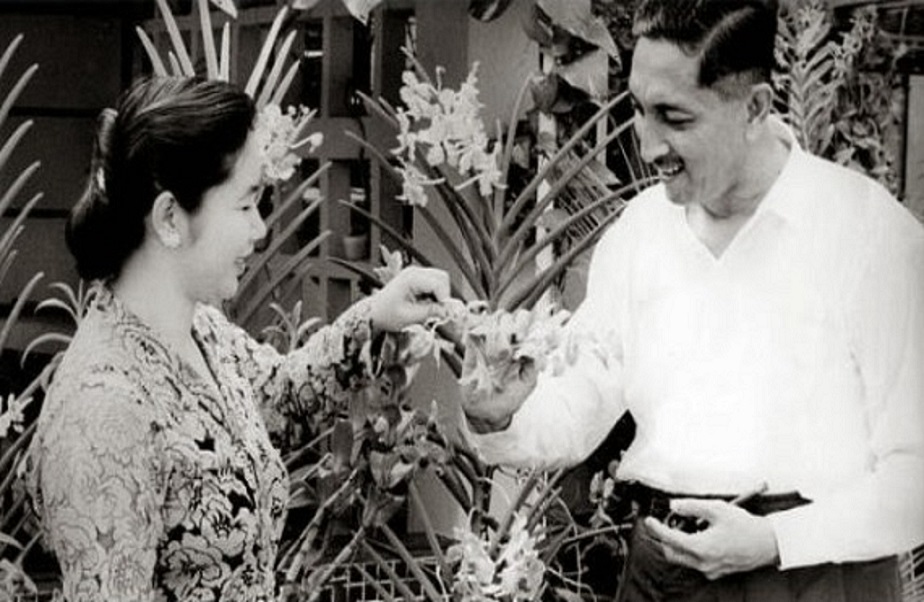
  • Puan Noor Aishah And President Yusof Ishak – Love At First Sight

    Puan Noor Aishah And President Yusof Ishak – Love At First Sight

    Puan Noor Aishah was just 26 when her husband Yusof Ishak was made Yang di-Pertuan Negara in 1959.

    Her role as the spouse of Singapore’s head of state was completely uncharted waters.

    Puan Noor Aishah was born in 1933, and adopted by Fatimah Ali and Mohammad Salim Jusoh, an Eurasian man originally known as Barney Perkins, who had converted to Islam.

    They lived an unassuming life in Penang – until Puan Noor Aishah caught the eye of Mr Yusof. He was then 39, and finally ready to settle down after years of rebuffing matchmaking attempts to focus on his work at Utusan Melayu, the Malay-language newspaper he co-founded.

    A close friend coaxed him into looking through photos of potential brides. The last photo was of Puan Noor Aishah.

    Something about her face intrigued Mr Yusof, who told his friend: “This one, I agree.”

    He was whisked away to Penang, where a first meeting was orchestrated. But, recalls Puan Noor Aishah, although her older sister had taken her to a garden one day to meet “a good man”, all she did was sit at a table sipping tea. She never saw Mr Yusof that day.

    He and his friend were seated somewhere nearby so Mr Yusof could steal glances at her. But, it later turned out, he was too shy to take a good look.

    Even so, he wanted to marry her. The couple had their first proper meeting two days later, on their wedding day.

    He helped Puan Noor Aishah along in her quest to learn more, bringing home books for her to read, and arranging for a teacher to help his wife hone her sewing skills.

    Their first home together was in a small kampung with no running water or electricity. One day, Mr Yusof, who loved growing orchids ,ended up quarrelling with a neighbour whose cow would wander into their compound, worried it would eat his beloved flowers.

    But it was tumultuous times for Singapore, and Puan Noor Aishah and Mr Yusof’s lives too would soon be thrown into upheaval.

    When the People’s Action Party won the 1959 general election, Mr Yusof was founding prime minister Lee Kuan Yew’s pick for Yang di-Pertuan Negara.

    And so Puan Noor Aishah had to start a new life at the Istana with her husband and three children.

    PM Lee in his speech noted how Puan Noor Aishah had insisted that they live simply so that their children’s lives could be as “normal” as possible.

    Unaccustomed to the grandeur of the Istana, the family chose to live in a small bungalow on the grounds, which had previously been the official residence of the under-secretary of the Straits Settlement.

    Mr Yusof called their new home Sri Melati, or Jasmine, and paid for the rent out of his own salary.


    The upcoming election, which will be held in September, is reserved for Malay candidates. This means Singapore can expect its first Malay president since Mr Yusof.

    PM Lee said: “I hope it will be a president who will bring as much distinction and honour to the office, and will be as well-loved and remembered by Singaporeans as Encik Yusof.”


    Source: www.straitstimes.com