Author: Rilek1Corner

  • Time To Master Asian Languages

    Time To Master Asian Languages

    I have noticed that many students in Singapore converse only in English.

    It causes me to wonder if our mother tongues have all been reduced to just examination subjects.

    This is of concern. In the light of Asia’s resurgence, are we pitching our sails right to catch the wind of change, vis-a-vis our language policies?

    English has served us well as a language for commerce and technology, but our grasp of the other languages seems less adequate in plugging us into the new realities of the future.

    Language is more than a code. It communicates customs and habits through the nuances embedded in it. Speaking the same language helps to strike instant rapport even between strangers, and enables people to understand and be understood by each other quickly.

    Asean’s 625 million inhabitants speak a myriad of tongues. Together with India and China, the region easily makes up half the world’s population. Its potential is beckoning and it is imperative that we prepare ourselves to tap the Asian market.

    While English has kept us ahead, this competitive advantage may be eroded as our Asian counterparts focus on English to complement their already strong mother tongues. They will be quicker in understanding contracts and conducting negotiations outside the English domain.

    Perhaps we can design a track that coaches students in the various languages’ official terms used in commerce, science and technology from an early age.

    The focus should be on enabling them to experience alternative cultures in Asia through extended cultural immersion programmes abroad.

    This would allow them to better grasp how others think, and network with future leaders. They could form the backbone of leaders in different disciplines, with Asian perspectives on geopolitics, the economy and diplomacy.

    A rethink of our language policy is timely, if not urgent.

    We will have to bear the blame if we fail to prepare our young for their future, which will be starkly different from ours.

    Lee Teck Chuan


    Source: www.straitstimes.com

  • Al-Qaeda Chief Denounces Islamic State Liars

    Al-Qaeda Chief Denounces Islamic State Liars

    WASHINGTON — Al-Qaeda leader Ayman al-Zawahiri has denounced what he said was a dishonest propaganda campaign by rival jihadist group the Islamic State against his organisation, in an audio message released Thursday (Jan 5).

    In the message found and translated by US-based watchdog the SITE Intelligence Group, the Egyptian extremist accuses IS leader Abu Bakr al-Baghdadi of slandering his group.

    Al-Qaeda, founded by the late Osama Bin Laden, is locked in a battle with the so-called Islamic State — which sprang from its Iraqi faction — for the leadership of a global jihad.

    In his message, the 65-year-old Zawahiri complained that Al-Baghdadi had alleged that Al-Qaeda opposes sectarian attacks on Shiites and was prepared to work with Christian leaders.

    “The liars insist upon their falsehood, to the extent that they claimed we do not denounce Shiites,” Zawahiri said, according to the translation of the message, which was released by Al-Qaeda’s media arm.

    Zawahiri denied he had said that Christians could be partners in the governance of a future Islamic caliphate, having only said that they could go about their affairs within it.

    “What I have said is that they are partners in the land, such as agriculture, trade, and money, and we keep their privacy in it, in accordance with the laws of our Sharia,” he said.

    And he insisted he had not called for Shiite Muslims to be spared, but had suggested focusing attacks on Shiite-led Iraqi forces and not on random atrocities against civilians.

    “I had told them several times to stop explosions in markets, husseiniyats and mosques, and to concentrate on military, security and police forces and Shiite militiamen,” he said.

    A husseiniyat is a Shiite place of worship and the Iraqi security forces, in their battle against the Islamic State group, are backed by Shiite religious militias.

    The Islamic State group and Al-Qaeda have both carried out hundreds of attacks on civilian targets, but some Al-Qaeda propaganda has called for less indiscriminate tactics.

    Zawahiri also denied Al-Baghdadi’s charge that Al-Qaeda had supported ousted former Egyptian president Mohammed Morsi, an Islamist who attempted to rule through the ballot box.

    The Al-Qaeda leader, who took charge after Bin Laden was killed by US commandos in 2011, is thought to be somewhere in Pakistan’s unruly border region hiding from a global manhunt.

    He communicates with the group’s remaining supporters through semi-regular video lectures, reiterating — as in his latest message — the need to target the United States.

    But Thursday’s message did not include any footage of Zawahiri speaking.

    The audio message restated the urgency of this goal — “Tell America, to other than Allah we do not kneel” — but also argued for a dialogue on tactics with other jihadists.

    “We are not infallible, but we are human beings and we hit and we miss. We must listen to advice,” he admitted, while rejecting Al-Baghdadi’s criticism.

    “What we want is to manage a conversation between those who are working for Islam — and the people of jihad at their forefront — around the best method and wisest techniques to bring victory to the religion,” he said, according to SITE. AFP


    Source: www.todayonline.com

  • WP Takes Backhanded Swipe At Minister Shanmugam’s Comments On Town Council Affairs

    WP Takes Backhanded Swipe At Minister Shanmugam’s Comments On Town Council Affairs

    The Law and Home Affairs Minister, K Shanmugam, in speaking on the the investigation of the General Manager of Ang Mo Kio Town Council (AMKTC) by the Corrupt Practices Investigation Bureau (CPIB) contrasted the approaches of PAP-run town council with the one run by Workers’ Party (WP). WP’s then-Aljunied-Hougang-Punggol East Town Council, has been under scrutiny for its relationship between its former managing agent FM Solutions and Services (FMSS) and Essential Maintenance Service Unit (EMSU) contractor FM Solutions and Integrated Services (FMSI).

    Mr Shanmugam alleged that unlike the PAP-run town council, the Workers’ Party-run town council has not been transparent with the general public.

    The Workers’ Party in responding to Mr Shanmugam’s harsh criticisms of its town council management said that “since CPIB is investigating the AMKTC case, we should let due process take its course and not jump to conclusions.”

    In its statement, WP pointed out that when their auditors released the report on AHTC in July 2016, “some people jumped prematurely on the possibility of fraud and fictitious payments without waiting for the results of the audit.”

    Their auditor, KPMG, had said in the July 2016 report that the use of this “highly irregular shortcut” made it “practically impossible” to have effective oversight of these transactions.

    They added: “Such large-scale use of this practice raises questions about the management of AHTC’s finance function. Consequently, it is easier for duplicate payments or fictitious payments to be made without being detected.”

    Mr Shanmugam had then taken issue with the manner the WP announced the lapses highlighted by its auditors. In a Facebook post, the Minister said KPMG’s report underlined that “AHTC’s leadership has neither upheld nor enforced integrity and ethical values”.

    “The rot is at the top,” he added. “This should come as no surprise. The High Court and the Court of Appeal have already criticised Ms Sylvia Lim and Mr Pritam Singh for suppressing the truth (designed to mislead) both in Parliament and in Court. To them, the truth is a tradable commodity.”

    Aljunied-Hougang Town Council subsequently ordered a 100% check on the $60m direct journal entry and dummy code issues.

    WP’s unsigned statement today said, “when no fraud and fictitious payments were found, the speculators kept quiet.”

    The statement further said: “Premature speculation, especially when done by influential people, may pervert the course of justice by shaping investigations. So let’s wait for the findings of the CPIB on the AMKTC case and let the law take its course.”


    Source: http://theindependent.sg

  • Chee Soon Juan: Singaporeans – A People Cut Adrift

    Chee Soon Juan: Singaporeans – A People Cut Adrift

    I STOOD ON the balcony of the school block and surveyed the campus of the Anglo-Chinese School at Barker Road. I had not been back there since I graduated some four decades ago (I was accompanying Shaw Hur to buy his textbooks during the year-end break as he prepared for secondary school).

    I searched for a familiar landmark – any familiar landmark – of the place I had spent ten years of my school life. I couldn’t. Every inch of the grounds had been razed and, in its place, new buildings erected.

    Gone were the open spaces and lawns (more like sandy patches from our constant trampling) that afforded students the space to play before and in between classes. And play we did: football, marbles, spider-catching, chatekkuti-kuti, hantam bola… We invented our own games and laid down our own rules. We found our own fun – lots of it. And when you sat quietly in the afternoons, you could hear the crickets chirp.

    My mind returned to the present and it dawned on me how much the multi-storey buildings, squished up against one another, resembled the HDB jungle. The school field, where many a scrape and bruise was inflicted, was missing, replaced by a carpark that shouldered a swimming pool above. A boarding school for foreign students was even jammed into the premises. Every square foot of real estate was manicured, exquisitely engineered for maximum capacity.

    What does all this do for (or to) students? Sure, the AV equipment was state of the art, the auditorium outfitted with cinema-like plushness, and the driveways pristinely landscaped. But how does the environment facilitate play? How do students find their own leisure? Where do they go to do that? Yes they are studying, but are they learning?

    If all this sounds depressingly familiar, that’s because the campus reminds us of the country itself. The island is blanketed with residential blocks built ever closer and stacked up ever higher. It teems with inhabitants, the number of which this city has never seen.

    But fast as it was, construction on the island was always one step behind a burgeoning population whose explosive growth, ignited by lax immigration laws, meant that the infrastructure would be overtaxed.

    With the mass influx of foreigners came the escalation of the cost of living. At the same time, wages for the locals were put under downward pressure. Retrenchments and unemployment have risen. Leisure has become a scarcity and where there was once spacious greenery, there is now only bodies and concrete. Stress and work-related psychological disorders, as one might expect, run high. For the average Singaporean, the quality of life has deteriorated.

    That wasn’t all. The school’s wholesale makeover also meant that there was little I could relate to my son. There was nothing to share with him about how I grew up in a place in which he was now going to grow up. The past-present dislocation was as rude as it was complete.

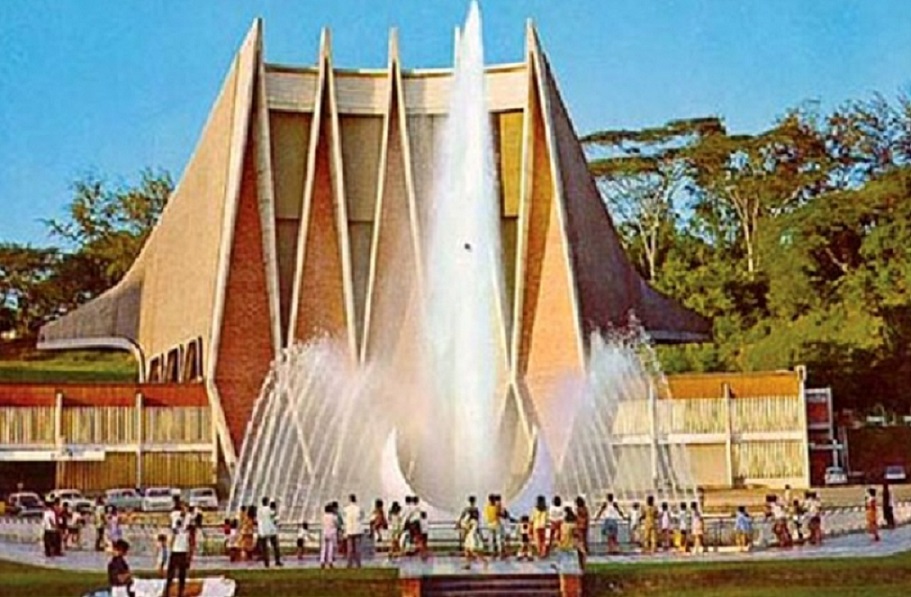
    Again, the situation is evocative of present-day Singapore. Anything and everything that served to remind us of days gone by – the National Theatre (photo above), Bugis Street, Satay Club, the National Library, Kallang Park – have been demolished and replaced by shopping centres, expressways and golf courses.

    When the break between past and present is so abrupt and comprehensive, we become unmoored from our own history. What, then, binds us to our roots? Need it be said that an undeveloped sense of belonging erodes our national identity?

    But can this country, one may be tempted to ask, afford to indulge in idle reminiscence? Why hanker for a past that would have impeded economic progress?

    These are wrong questions to ask. Progress and the retention of our collective past don’t have to be mutually exclusive; national development can proceed even as we preserve our history. What is needed to achieve a seemly balance are enlightened and dedicated planners. Japan and Europe, to cite but two examples, have done admirably in pushing the boundaries of modernisation while retaining their proud traditions and heritage.

    If we insist on hanging a price-tag on everything, as this country’s officialdom is wont to do, then what value do we put on places that tell the story of where we came from or where we’ve been? What amount of money do we place on Singaporeans emigrating because they don’t know what being Singaporean is anymore? What price do we figure for citizens living disengaged lives, tethered together only by that national creed that ‘No one owes us a living’ or its variant ‘What’s in it for me’?

    Even if we accept that nostalgic sentimentality has no place in the kind of hard-nosed pragmatic thinking needed for economc success, it is entirely appropriate to question what all the upheaval and change has brought us. A more genteel and less stressful lifestyle? A sustainable economic structure that ensures financial security for our retirees? A future that promises hope and opportunity for our youth? A system that can still deliver the Singapore Dream for our workers?

    When we cast our eyes ahead and see only ominous clouds, what conjures even more disquiet is to look behind and see that we’ve been cut adrift.


    Source: www.cheesoonjuan.com

  • Traffic Police: Driving Against Traffic Flow – 1 Arrested, 3 Assisting In Investigations

    Traffic Police: Driving Against Traffic Flow – 1 Arrested, 3 Assisting In Investigations

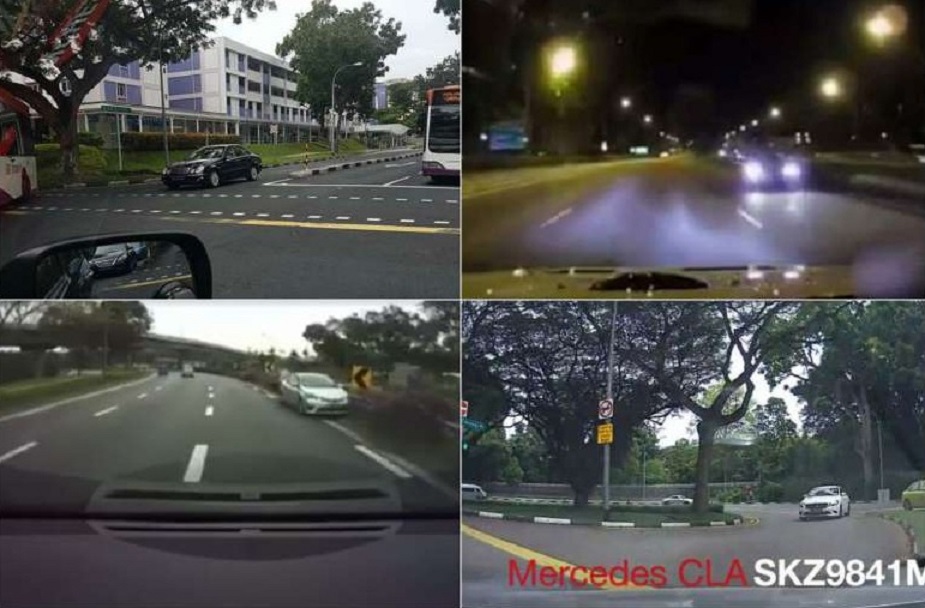
    The Traffic Police have identified four out of five drivers who were allegedly driving against the flow of traffic recently, police said on Friday (Jan 6).

    One driver has been arrested while three are assisting with investigations.

    A 30-year-old man believed to have driven against the flow of traffic along AYE towards Tuas on Jan 5 was arrested for reckless or dangerous driving, police said.

    The other three are:

    • An 85-year-old man who allegedly drove against the flow of traffic along Bedok North Street 1 towards Bedok North Avenue 3 on Dec 28 last year;
    • A 42-year-old male driver who alleged took a wrong turn against the flow of traffic along Cavenagh Road towards Bukit Timah Road on Jan 5;
    • A 28-year-old man driving along CTE towards SLE when he is believed to have lost control of his car, causing it to spin and hit the road divider, before it stopped in the opposite direction of traffic, on Jan 2.

    Police are investigating another case of a vehicle allegedly going against traffic along Gateway Drive towards Westgate Shopping Centre on Jan 2.


    Source: www.straitstimes.com

deneme bonusu