Category: Politik

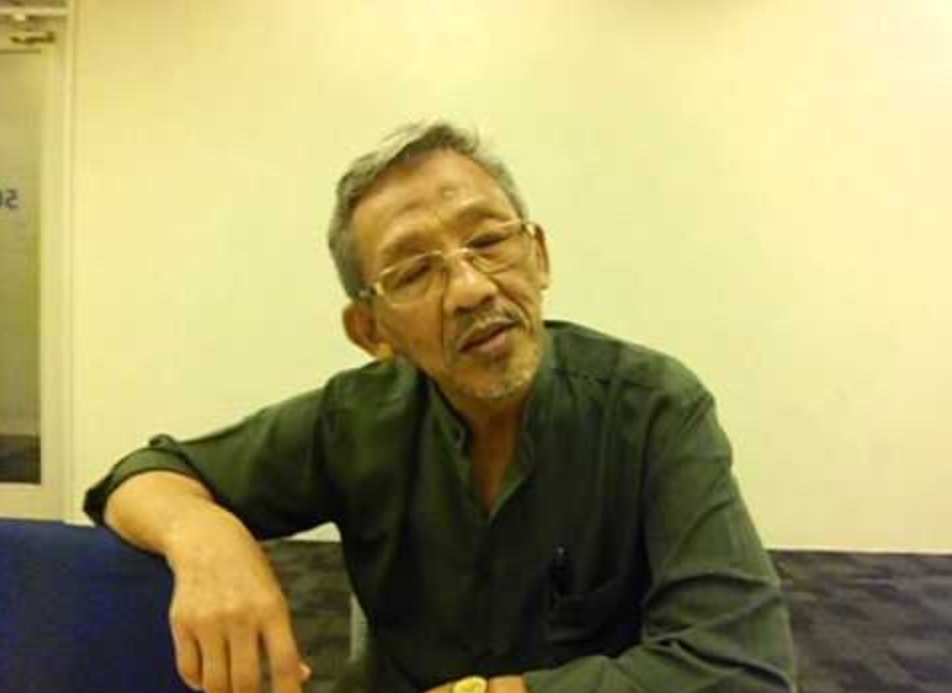
  • Mohamed Jufrie: Takkanlah Presiden Bertudung Tapi Sesetengah Jawatan Lain Tidak Dibenarkan Kerana ‘Problematic’

    Mohamed Jufrie: Takkanlah Presiden Bertudung Tapi Sesetengah Jawatan Lain Tidak Dibenarkan Kerana ‘Problematic’

    Terdapat harapan di sebahagian masyarakat Melayu Islam agar isu-isu yang membelenggu masyarakat kita itu, seperti pemakain tudung, diskriminasi dalam perkhidmatan negara dan banyak lagi, akan terhurai semasa tempuh perkhidmatan seorang Presiden Melayu Islam.
    Jika benar berlaku ia akan memberi makna kepada pindaan perlembagaan yang memberi giliran kepada masyarakat minoriti menyandang jawatan tertinggi negara itu.
    Sangat anih dan menghampakan jika peluang yang diberi ini tidak membuahkan perubahan yang diharapkan dan ianya hanya untuk dipamir-pamirkan kepada dunia tentang kewujudan masyarakat berbilang bangsa di Singapura.
    Takkanlah presiden bertudung tetapi sesetengah jawatan lain tidak dibenarkan pemakain tudung kerana akan menimbulkan masalah (problematic kata mereka)? Dan presiden seorang Melayu Islam tetapi masyarakat Melayu Islam didiskriminasi dalam angkatan bersenjata? Lucukan?
    Sama-samalah kita tunggu dan lihat. Tariklah nafas panjang-panjang dan urut dada sementara menanti. Bukankah penantian seperti ini, yang berdekad-dekad lamanya, satu penyiksaan batin?


    Source: Mohamed Jufrie Bin Mahmood

  • ST Commentary: Of Minorities, Majorities And Sensitivities Across Race And Religion

    ST Commentary: Of Minorities, Majorities And Sensitivities Across Race And Religion

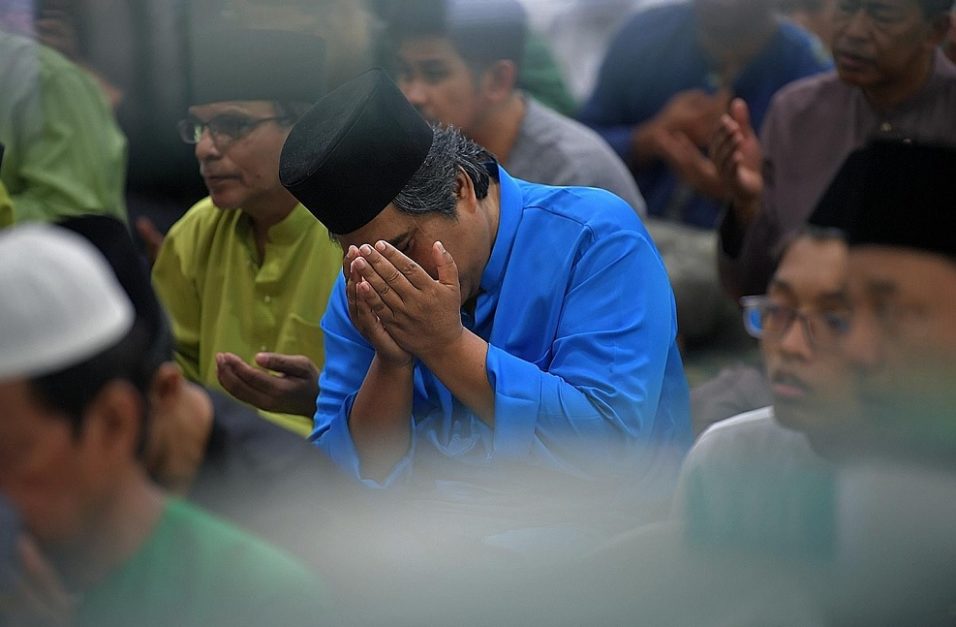
    Do individual Muslims have a special obligation to speak up when radicalised Muslims are in the news for attacks or arrests – such as by condemning the acts or clarifying that Islam is a religion of peace?

    Some non-Muslims in Singapore think so, and it can cause unease among their Muslim friends.

    This discomfort was given voice in Parliament this month, in speeches by two Muslim MPs, in the debate on a motion to strengthen multiracialism in the fight against terror.

    Ms Rahayu Mahzam (Jurong GRC) cited a conversation with a non-Muslim friend about terrorism. She was made to feel defensive and frustrated when he pressed her to say what “true Muslims” were doing to address the problem.

    “I told him, I do not know these people, I do not understand their psyche and it was unfair to put the burden on Muslims alone to resolve this issue,” she said.

    She found a similar situation playing out on social media, noting: “I saw many Facebook postings of Muslim friends condemning the terrorist attacks but also expressing similar frustrations of having to explain to non-Muslim friends that the terrorists’ actions were not aligned with Islamic teachings.”

    Dr Intan Azura Mokhtar (Ang Mo Kio GRC) also warned against “religious suspicion against the Muslims”, adding that “we cannot allow Muslims to feel apologetic for what these terrorist groups – which proclaim to carry out their heinous acts in the name of Islam – have done”.

    It is not that non-Muslims are not allowed to expect anyone from the Muslim community to come out firmly against terrorism or to detail what is being done about the problem within the community. The point here is that they should not expect each and everyone in the Muslim community to have to explain themselves to the satisfaction of any non-Muslim who happens to have doubts on where they stand.

    The fact is, each time someone in the Singaporean Muslim community is implicated in terrorist activity or detained for being radicalised, prominent representatives of the community do issue statements setting out in no uncertain terms the view of the community as a whole. These representatives may be from the Islamic Religious Council of Singapore or other groups, such as the Federation of Indian Muslims, or they may be political leaders who are Muslim. These statements should suffice.

    Non-Muslims should accept them in good faith as being representative of the views of Singaporean Muslims in general – which they are – and not require each individual Muslim they meet in the course of the day to have to prove his or her sincerity afresh.

    Pressing individual Muslims on the issue in person and on social media or requiring them to speak apologetically or to feel apologetic reflects an underlying distrust. It can feel like a slight. It is incumbent on non-Muslims here to be sensitive in their words and actions.

    The reality on the ground is that the Muslim community in Singapore is far more committed to multiculturalism and far less inclined towards the radical ideology of groups like the Islamic State in Iraq and Syria and Al-Qaeda than Muslims in most countries.

    The radicalised segment of Muslims here is very small by proportion. Furthermore, they receive virtually no support from the wider community. There is thus no basis for the kind of scepticism implied by the encounters Ms Rahayu spoke about. (If the radicals in fact receive a lot of latent warmth from ordinary Muslims, then it would be a different story. But that is not the case.)

    What non-Muslims should do, therefore, is: first, understand there is a majority who are distinct from a very small minority, and second, not let that minority colour the way they interact with the majority. But it is possible that the corollary is also true – that Muslims need to approach the issue in a similar way.

    Muslims can see things this way: There is a small minority of non-Muslims who lack prudence in the way they converse with Muslims on the issues of terrorism and radicalism. The broad majority of non-Muslims are not like that – they understand the subtleties or, if not, they are careful not to broach the topic. If this is true, then Muslims too should not allow the actions and words of a minority among non-Muslims to colour their interactions with the majority of non-Muslims.

    In other words, the majority of Muslims and the majority of non-Muslims – who together are the majority of Singapore – instinctively understand, believe in and show respect for multi-religious norms.

    But the two minorities complicate the picture – a Muslim minority who are radicalised, and a non-Muslim minority who are callous or ignorant in the way they speak or act.

    The worst outcome for Singapore is for the two minorities to be allowed to dominate the narrative, thereby dragging the whole of society into an insalubrious atmosphere of suspicion and counter-suspicion.

    The two majorities need to do two things. Each majority must draw a line of principle between itself and its minority, and it must then stand in solidarity with the other majority, so that society stays united.

    In the aftermath of terror attacks in the West, this majority-minority dynamic is often in play.

    In Britain, London and Manchester have reported sharp spikes in the number of anti-Muslim hate crimes after terrorist attacks in the two cities this year – that is, a minority of Muslims conducting attacks on society, and a minority of non-Muslims carrying out just as malignant reprisals on Muslims.

    But when the two majorities defend one another and show solidarity, they can prevail.

    An example of this was the #illridewithyou campaign, a social media campaign in Australia after the Sydney cafe hostage incident in 2014. Non-Muslim Australians offered to ride on public transport with Muslim Australians, to ensure the latter’s safety.

    When the two majorities stand as one, the two minorities are forced back into their dark corners on the fringe of society.

    In Singapore, no physical attack has happened yet, in one direction or the other. But if the country can guard against verbal unpleasantries, like those highlighted in Parliament this month, then there can be more confidence about preventing physical ones too.


    Source: http://www.straitstimes.com (Elgin Toh, Insight Editor)
  • Commentary: Maybe Non-Malays Would Not Vote For A Malay In An Open PE, But PAP, LKY And LHL Are Jointly Blamed For This

    Commentary: Maybe Non-Malays Would Not Vote For A Malay In An Open PE, But PAP, LKY And LHL Are Jointly Blamed For This

    Dear Prime Minister,
    if you sincerely believe that the Chinese majority and other non Malays would not vote for a Malay in an open presidential contest, you are probably right. But you also must be honest and have the courage to admit that your old man, your party and yourself are jointly to blame for it. All of you had the opportunity to forge unity among Singaporeans but you blew it, perhaps due to the ill advice and instigation of others who have no stake in our future.
    The distrust and discriminatory policies directed against the Malays are the main cause. The ill effect of these discriminatory policies, I suppose, would make the Chinese ask themselves why should they vote for a Malay as president if on the whole they cannot be trusted.
    For decades we have wasted the opportunity to get our youth to think and act as one people. Friendship built up from young would last a lifetime. Such friendship can naturally be forged when young men train, struggle, laugh and even cry together while performing their national service. The same thing goes with prejudice and suspicion. They also last a lifetime. The marked absence of Malays in the armed forces, especially in the navy and airforce is telling. The silly explanation to justify your government’s actions – no space for halal kitchen in naval vessels, etc – shows your contempt towards the discriminated community. Though only males are involved in national service, as head of their families such prejudice and distrust would somehow be transmitted to their spouses and children. I don’t have to belabour the point.
    Beside this there are other policies that are equally prejudiced and divisive like the SAP schools and selective immigration policies, just to name a few.The sad thing is, such policies are still in place.
    If you and your party have done it right for Singapore there would not have been necessary to have a reserved PE or even the GRC. After all we are Singaporeans are we not? You should give meaning to our national pledge – regardless of race, language or religion!
    Your calls for unity in the face of current threats sound hollow.


    Source: Mohamed Jufrie Bin Mahmood

  • President Halimah Yacob’s Campaign Spent $220,875, Raised $800,000 From 6 Individuals And A Marine Company

    President Halimah Yacob’s Campaign Spent $220,875, Raised $800,000 From 6 Individuals And A Marine Company

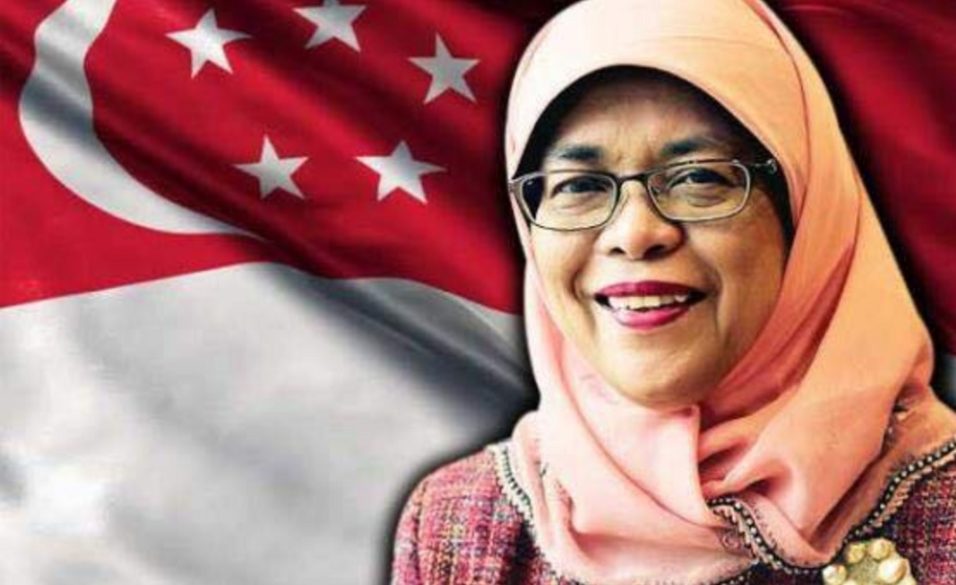
    President Halimah Yacob’s campaign spent $220,875 in total – most of it on promotional materials, according to papers she filed with the authorities this week.

    The expenses included $73,000 for 10,100 campaign posters, as well as $36,400 for 1.28 million postcards – which would have been mailed out to every household if the election had been contested.

    Her election returns, available for public inspection at the Elections Department from Saturday (Oct 7), included a list of donations. Her campaign raised $800,000 from six individuals and one marine company.

    Top of the list was businessman Ng Kim Choon, who gave $440,000. Others include Sheng Shiong boss Lim Hock Chee and marine firm Singapore Salvage Engineers – they each donated $50,000.

    All unused donations will be returned to donors, a statement from her campaign team said on Saturday.

    “The donors have been encouraged by Madam Halimah’s passion for social causes. Many of them have indicated that they intend to make a contribution to the next cycle of the President’s Challenge,” the statement added.

    In preparation for their unsuccessful bids for the presidency, marine services firm chairman Farid Khan spent $200,000, while property company chief executive Salleh Marican spent $90,000. The two said this came from their own money.

    That brings the total spent on the three campaigns to just over half a million dollars.

    At the last presidential election in 2011, which was contested by four candidates, total spending hit $1.32 million. Winning candidate Tony Tan spent $503,000, and runner-up Tan Cheng Bock, the top spender, spent $585,000.

    Campaign expenses by each candidate is subject to a legal limit – which was $754,982.40 this year. It was $682,431.90 in 2011.

    President Halimah was elected unopposed last month, after her two opponents – Mr Salleh and Mr Khan – failed to meet the criteria to contest in presidential elections.

    In her election returns, 90 per cent of spending – or $198,200 – was on promotional materials. Other items included room rental ($6,000), office supplies ($4,800), food ($3,400), transport ($2,900), and telephone and communications ($1,500).

    Much of the promotional materials were to be used in physical campaigning, which remains important in election campaigns here.

    She printed 10,100 posters at $73,000, and 200 PVC banners, measuring 4.5 metres by 1.2 metres each, at $20,300. In a contested election, these would have been put up at designated lamp posts and other public spaces across the island.

    Also purchased were 1.28 million A5-sized mailers. They would have mailed out to all household based on the electoral register – which her campaign paid $3,700 to obtain from the authorities.

    She also bought 10,000 fridge magnets, at just under 30-cents each, and 530 umbrellas for $1,640.

    The Straits Times understands that most of the unused posters, banners and postcards will be disposed of – where possible, they will be processed into recycled paper.

    Online campaigning also made up a significant part of expenses. This included $29,000 on video production and $16,000 on the website.

    The campaign also paid $8,900 to NTUC Centre for room rental, carpark charges, and the use of printing, phone and fax facilities.

    Food for volunteers – including a buffet by Casserole Catering, and curry puffs from Polar Puffs and Cakes – came up to $3,400.


    Source: http://www.straitstimes.com

  • PM Lee: Why Didn’t Malay Candidates Come Up In PE2011? Cause They Knew Non-Chinese Have No Chance

    PM Lee: Why Didn’t Malay Candidates Come Up In PE2011? Cause They Knew Non-Chinese Have No Chance

    Prime Minister Lee Hsien Loong made it plain that he knew the reserved presidential election would be unpopular and would cause the ruling party to lose votes, but said it had to be done because it was the right thing to do.

    Addressing the unhappiness over the election for the first time at a dialogue last Saturday (Sept 23), he said: “Did I know that this subject would be a difficult one? That it would be unpopular and would cost us votes? Yes, I knew. If I do not know that these are sensitive matters, I cannot be in politics.”

    “But I did it, because I strongly believe, and still do, that this is the right thing to do,” he added.

    The candid remarks were the first by the Prime Minister, since Madam Halimah Yacob was declared President in a walkover at the election reserved for Malay candidates.

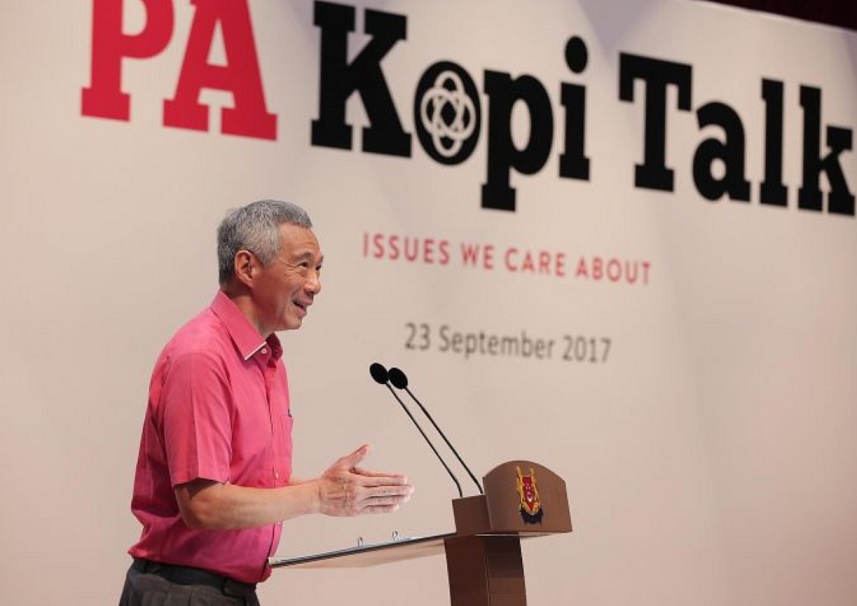
    PM Lee was speaking at a People’s Association Kopi Talk dialogue with about 500 grassroots leaders last Saturday, and the Prime Minister’s Office released an edited transcript on Friday (Sept 29).

    During the dialogue, he spoke about race, multiracialism, terrorism and the elected presidency, and gave a stout defence of why constitutional changes were made to reserve elections for groups that have not held the presidency for some time.

    Acknowledging that there was “some unhappiness” over the election, PM Lee said: “I can feel that; you don’t have to tell me.”

    He noted that the Government had spent nearly two years preparing to make changes to the Constitution, and had discussed and debated the issue continually since he first raised the subject in January 2016 during the opening of Parliament.

    “But it is only now that people are seized with it, after a reserved election in which only one candidate qualified,” he said.

    PM Lee added that while some people think “we may be going backwards towards racial politics”, the reality “is the opposite”.

    In fact, he said, ensuring that minorities are elected president from time to time will strengthen Singapore’s multiracial system.

    The current state of affairs, where Singaporeans of different races and religions live in harmony, is not a given, he said.

    “There is nothing natural about where we are – multiracial, multi-religious, tolerant and progressive. We made it happen, and we have got to protect it, nurture it, preserve it, and never break it.”

    Referring to the recently-concluded reserved election, Mr Lee said that three Malay candidates had put themselves up for the presidency, of whom two did not qualify.

    “But they came forward,” he added.

    In the 2011 presidential election, there was not one Malay candidate, he noted.

    “Was there a Malay candidate? Where were the Farid Khans and the Salleh Maricans? Why didn’t they come? It did not cross their minds? No. So why didn’t they come? Because they knew that in an open election – all things being equal – a non-Chinese candidate would have no chance,” he said.

    Citing President Halimah, who said when she was sworn in that she looked forward to the day when reserved elections are no longer needed, Mr Lee said: “I too hope that we will eventually not need such a mechanism to ensure minority representation.”

    But he said it would take time to work towards this ideal state.

    “In climbing towards that ideal state, we need guide-ropes and guard-rails to help us get there and to prevent us from falling off along the way. The reserved election for the President is one such guard-rail,” he added.


    Source: http://www.straitstimes.com