Blog

  • Marine Company Chairman Farid Khan Born In Geylang Serai Is Running For Presidency

    Marine Company Chairman Farid Khan Born In Geylang Serai Is Running For Presidency

    An entrepreneur of Pakistani descent yesterday announced his bid to become the next president.

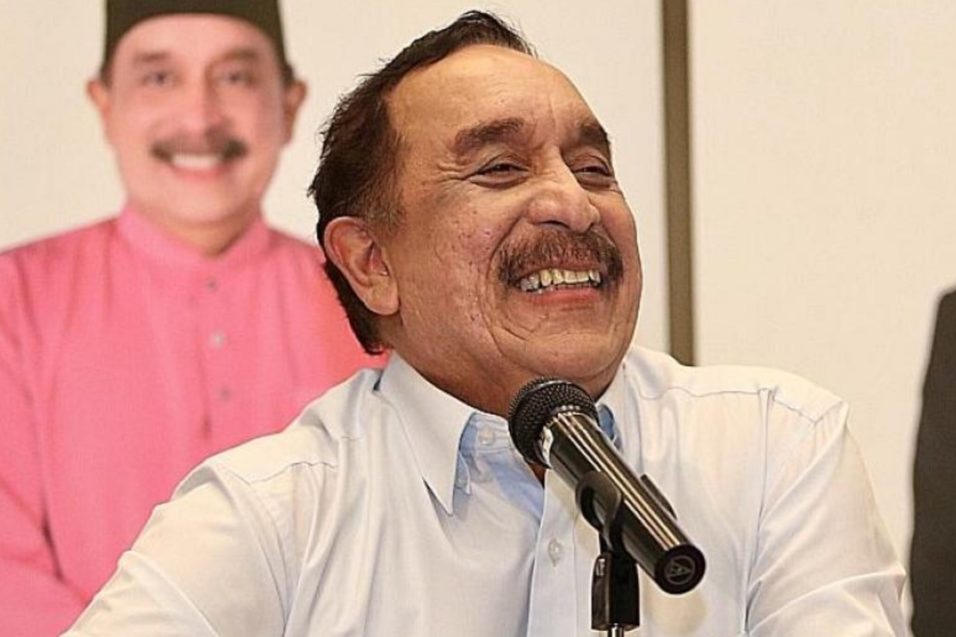
    Mr Farid Khan Kaim Khan, 62, the chairman of marine services provider Bourbon Offshore Asia Pacific, said he intends to stand in the upcoming presidential election (PE) because he wants to “serve the nation” and feels “capable of doing so to the best of my knowledge and ability”.

    This PE, due in September, has been reserved for Malay candidates after the Presidential Elections Act was amended to ensure the presidency is representative of the country’s multiracial society.

    Speaking in English and Malay, Mr Farid told reporters at the Village Hotel Changi that his identity card indicates he is Pakistani but he was born in Geylang Serai and celebrates Hari Raya every year.

    “I am of Pakistani descent and my wife is of Arabic descent. Yet our family and relatives speak Malay and practise the Malay culture. So I am part of the Malay community,” he said.

    In his speech, Mr Farid outlined five areas of concern: the growing threat of radicalism, strengthening the trust among the people, helping the needy, enhancing Singapore’s prosperity and strengthening families.

    He is the second candidate to throw his hat into the ring.

    Second Chance Properties founder and chief executive officer Mohamed Salleh Marican, 67, said on May 31 that he planned to run for president.

    Political analyst Mustafa Izzuddin told The New Paper that Mr Farid addressed his ethnicity head-on to clear the air in the hope of quelling any doubts about his candidacy.

    “He did not want the question whether he is Malay to hijack other issues he wants to discuss, and probably anticipated it,” he said.

    ELIGIBLE

    Associate Professor Eugene Tan, a law don at the Singapore Management University, echoed Dr Mustafa’s observations, noting that Mr Farid wanted to reassure his stakeholders by “asserting his claim to be eligible”.

    He said: “Certainly now that he has indicated he would make an application, there is the question of eligibility.”

    Dr Mustafa said the decision whether Mr Farid is Malay lies with the Community Committee.

    Prospective candidates must submit a form to the Presidential Elections Committee (PEC) to get a certificate of eligibility, and another form to the Community Committee to declare that they are part of the Malay community to obtain a Community Certificate.

    “I suspect the committee is going to stretch the definition to consider not just what you are born as, but what your experience is like, your environment, and whether or not the community sees you as Malay,” Dr Mustafa said.

    Prof Tan also weighed in on another requisite – private sector candidates have to helm a company with at least $500 million in shareholder equity.

    However, the PEC has the discretion to waive this requirement.

    Bourbon Offshore Asia Pacific, a subsidiary of a French multinational marine company, reportedly has shareholder equity of US$300 million (S$415 million), but Mr Farid said he is confident of qualifying.

    Mr Farid, who is married to Madam Naeemah Shaikh Abu Bakar, 61, with a daughter, 23, and son, 18, has been with the company for more than 10 years.

    It has about 800 workers in the region.

    Said Prof Tan: “If it does not appear that he qualifies outright, then he will have to go under the discretionary route, and the PEC will have to decide.”


    Source: http://www.tnp.sg
  • Ikhsan Fandi Gives Singapore U23 A Win Over India In SEA Games Boost

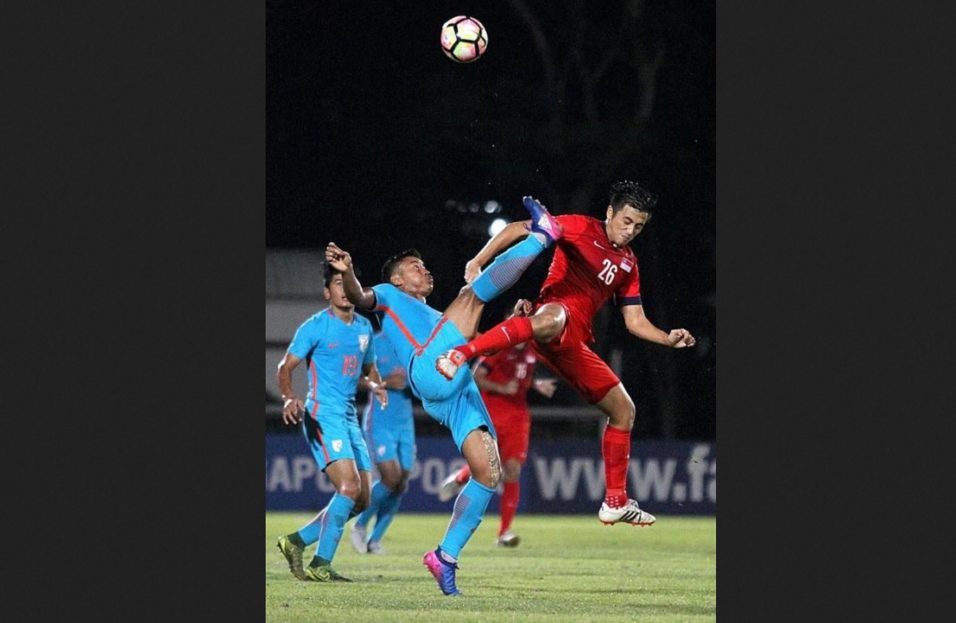
    Ikhsan Fandi Gives Singapore U23 A Win Over India In SEA Games Boost

    A penalty by Ikhsan Fandi helped the Singapore Under-23 national team claim a 1-0 win against their India counterparts in a friendly at Choa Chu Kang Stadium on Wednesday night.

    The result is a morale-booster for Richard Tardy’s charges before they depart for the AFC U23 Championship qualifiers next week, and it was achieved without injured key players Irfan Fandi and Adam Swandi.

    The Young Lions put up a starkly improved performance compared to a 1-0 defeat to the same opponents on Sunday, and could have scored as early as the seventh minute.

    Haiqal Pashia Anugurah went through on goal, via Hami Syahin’s pass, but the left winger’s goalbound shot was cleared off the line.

    The Young Lions created another good opening midway through the first half. Haiqal sent Ikhsan in the clear, but the latter was superbly closed down by India goalkeeper Vishal Kaith.

    India responded when towering forward Manvir Singh sending his header straight into Zharfan Rohaizad’s arms on 26 minutes.

    Singapore could have broken the deadlock six minutes before half-time, but Ikhsan’s 25-yard free kick sailed wide of the left-hand post.

    The Young Lions earned a penalty in the 51st minute with substitute Syahrul Sazali being felled illegally in the box.

    Ikhsan, second son of Singapore legend Fandi Ahmad, stepped up and slammed the resulting spot kick in off the bar to put the home side 1-0 up.

    Tardy’s charges could have doubled their advantage seven minutes later. However, captain Illyas Lee’s spectacular volley from outside the area went inches wide.

    Singapore’s intensity dropped towards the end with India almost finding an equaliser on 76 minutes.

    Manvir’s fierce snapshot from inside the area seemed destined for the bottom right corner, before Singapore substitute goalkeeper Hairul Syirhan pulled off a stunning save to tip it around the post.

    The Young Lions’ 1-0 win bodes well for the upcoming AFC U23 Championship qualifers in Mynamr and next month’s Southeast Asian (SEA) Games in Kuala Lumpur.

    Singapore Under-23: Zharfan Rohaizad (GK) (Hairul Syirhan 46′), Darren Teh, Lionel Tan, Amirul Adli (Shahrin Saberin 62′), Faizal Roslan (Syahrul Sazali 46′), Illyas Lee (C) (Hafiz Sulaiman 80′), Hami Syahin, Muhaimin Suhaimi (Zulqarnaen Suzliman 65′), Hanafi Akbar (Taufik Suparno 89′), Haiqal Pashia Anugurah, Ikhsan Fandi (Amiruldin Asraf 70′)

    India Under-23: Vishal Kaith (GK), Nishu Kumar (Davinder Singh 46′), Lalrutthara, Ranjan Singh (Sairuatkima 75′), Germanpreet Singh, Nikhil Chandrashekhar, Manvir Singh, Lalhlimpuia Daniel (C) (Alen Deory 75′), Lallianzuala Chhangte (Hitesh Sharma 46′), Jerry Lalrinzuala, Anirudh Thapa


    Source: http://www.espnfc.com

  • Early P1 Ballot Likely At 5 Popular Schools; Not For Malay Students

    Early P1 Ballot Likely At 5 Popular Schools; Not For Malay Students

    Parents hoping to place their six-year-olds in five of the most popular primary schools this year may face a ballot next week.

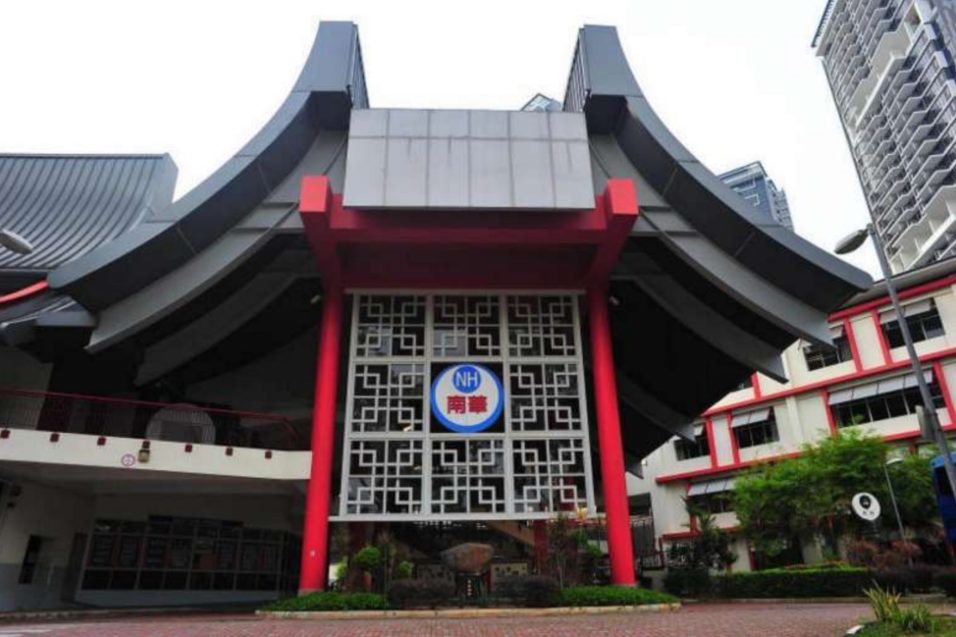
    The schools are CHIJ St Nicholas Girls’ School, Nanyang Primary, Nan Hua Primary, Red Swastika School and Catholic High School.

    A total of 29 schools were left with fewer than half of their vacancies after Phase 2A1, the second of seven Primary 1 registration stages, closed on Wednesday. Last year, only 19 schools were in this situation.

    The phase, which follows Phase 1 for children with siblings currently studying in the school, is for children whose parents had joined the school alumni association at least one year ago, or are on the school advisory committee.

    The next phase, 2A2, is for children whose parents or siblings are former pupils, or whose parent is a staff member at the school. Registration starts next Tuesday and ends the next day.

    A rule introduced in 2014, which requires all primary schools to set aside 40 places for children in the later stages, may also put a squeeze on places available for the next phase. The 40 places will be split equally between children registering in Phases 2B and 2C.

    In the past three years, balloting has been taking place at an earlier stage of the registration exercise, partly as a result of this new rule.

    Phase 2B is for children whose parents are school volunteers, active community leaders or have ties with church or clan associations directly connected with the schools. Phase 2C is for children with no ties to the school.

    After reserving the 40 places, CHIJ St Nicholas has only seven spots left for Phase 2A2, after 95 children registered this week.

    Nanyang Primary and Nan Hua Primary have 10 and 19 places respectively left for Phase 2A2, while Red Swastika and Catholic High have 23 and 31 spots respectively left for Phase 2A2.

    Communications professional Ow Yong Weng Leong successfully registered his daughter for a place at Red Swastika School this week.

    “The school offers Higher Chinese from Primary 1, so I hope it will help my daughter in becoming bilingual as she currently speaks English more,” said the 37-year-old.


    Editors Note:

    Based on sources, students who take Malay as a second language cannot enrol in any of the five popular primary schools namely CHIJ St Nicholas Girls’ School, Nanyang Primary, Nan Hua Primary, Red Swastika School and Catholic High School (https://www.moe.gov.sg/a…/primary-one-registration/vacancies). Perhaps if they make millions, one day one of them they can become President of Singapore. What a shame.

    Is the kind of elite tokenistic multiracialism the DAG believes in?


    Source: StraitsTimes

  • China’s Warship Liaoning Has 10 Cafeterias With 20 Ethnic Minorities On Board

    China’s Warship Liaoning Has 10 Cafeterias With 20 Ethnic Minorities On Board

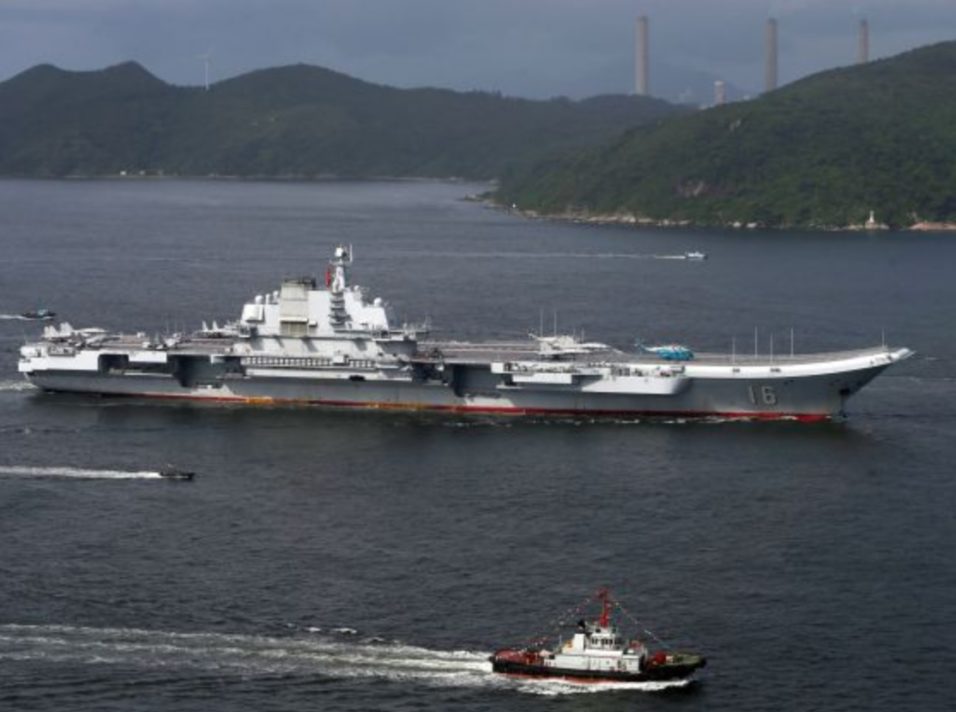
    Last weekend, China is opened up its aircraft carrier Liaoning to the public for the first time. The ship arrived in Hong Kong on Friday (July 7), accompanied by two destroyers and a frigate. Only 2,000 tickets for the tour at the weekend were handed out, leaving many who had lined up for hours disappointed. But for the lucky few, the visit is a peek into a highly specialised community, one that works, eats and sleeps together in a maze of hallways and rooms, surrounded by some of the most sophisticated technology and weapons in the Chinese military.

    There are more than 3,800 rooms in the ship, including ones for sleeping, eating, exercise and laundry. There’s also the mess hall and even a store, where sailors can buy snacks and everyday items. For security reasons, every sailor carries a photo ID, which must be swiped to enter areas. Access is restricted according to a sailor’s assigned department. Men and women live apart, and fingerprint scanners restrict entry to the women’s quarters. Most sailors are given single beds about 1m wide and 2m long.

    With nearly 20 ethnic minorities on board, it’s varied. The ship’s crew eat in 10 cafeterias, including ones specially designed for Muslims. They are offered four appetisers, six main courses and two desserts, going through two to three tons of food per day. When the crew really need to stretch out, the flight deck is turned into a makeshift soccer pitch. There is also an annual basketball competition, with 15 teams competing.


    Editors note:

    The Chinese Navy can accept 20 ethnic minorities. The RSN cannot even accept one because its ships don’t have halal kitchens. Which one is more inclusive? Hendak seribu daya, tak nak seribu daleh kan. They won’t be ‘losing face’ so to say if they employ a handful of Malays on board because everyone knows that Malays are just a small group in Singapore. We are the minorities and that perhaps may not be changing anytime soon.

    What if food was not the issue here since there are halal combat ration already available in SAF. Are they still questioning our loyalty? Still having doubts in Malays in Singapore? Maliki Osman dan Yacoob Ibrahim diam ke tentang isu ini?

    What are your thoughts?


    Source: Todayonline

  • Malaysian, Indonesian Muslim Groups Calls Starbucks Boycott Over LGBT Stance

    Malaysian, Indonesian Muslim Groups Calls Starbucks Boycott Over LGBT Stance

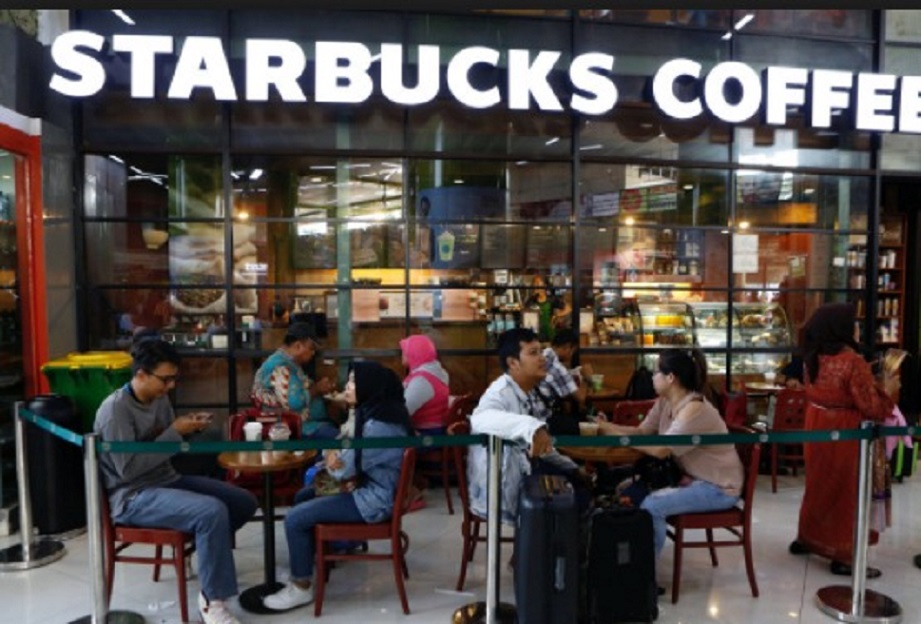
    A prominent Muslim group in Malaysia has joined calls by Islamic conservatives in Indonesia for a boycott of Starbucks to protest against the international coffee chain’s support of gay rights.

    Perkasa, a group with about 700,000 members that campaigns for the rights of ethnic Malay Muslims, said it agreed with calls this week by Muhammadiyah, Indonesia’s second-largest Muslim group, for a boycott of Starbucks over its pro-LGBT stand.

    Perkasa also agreed with the Indonesian group’s call for Starbucks’ operating license to be revoked, it said.

    Amini Amir Abdullah, who heads Perkasa’s Islamic affairs bureau, said Starbucks’ position challenged Malaysia’s constitution, which recognized Islam as the country’s official religion.

    “Our objection is because they are promoting something that is against the human instinct, against human behavior and against religion. That’s why we are against it,” Amini told Reuters in an interview on Wednesday.

    Muhammadiyah’s call for a boycott has gained support from the Indonesian Ulema Council, its top clerical body.

    The religious groups’ opposition to Starbucks came after a video from 2013 circulated online of pro-LGBT comments made by the company’s chairman and former chief executive, Howard Schultz..

    PT Sari Coffee Indonesia, which holds the license to run the Starbucks chain in Indonesia, said in a statement it was not affiliated with any political or ideological groups.

    “We are grateful and proud to have been a part of local communities in Indonesia for 15 years, always maintaining the deepest respect for, and adherence to, Indonesia’s local laws, culture and beliefs,” said Fetty Kwartati, a director at PT MAP Boga Adiperkasa, the parent company of PT Sari Coffee Indonesia.

    Some Muslims in Indonesia, however, said the boycott call would not stop them from buying Starbucks coffee.

    “I love their products, not their CEO,” said Jakarta resident Kornelius Kamajaya.

    The boycott call got a similar response from some in Malaysia.

    “Don’t make it such an issue that we have to boycott a company because of one small statement,” said Muhammad Azril Maridzuan, an assistant bank manager in Kuala Lumpur.

    Muslim groups should not “be so extremist” even though gay rights was against their religious beliefs, he said.


    Source: http://www.reuters.com