Tag: freedom

  • American-Muslim Preacher Yusuf Estes’s Views Not A Threat To Social Harmony

    American-Muslim Preacher Yusuf Estes’s Views Not A Threat To Social Harmony

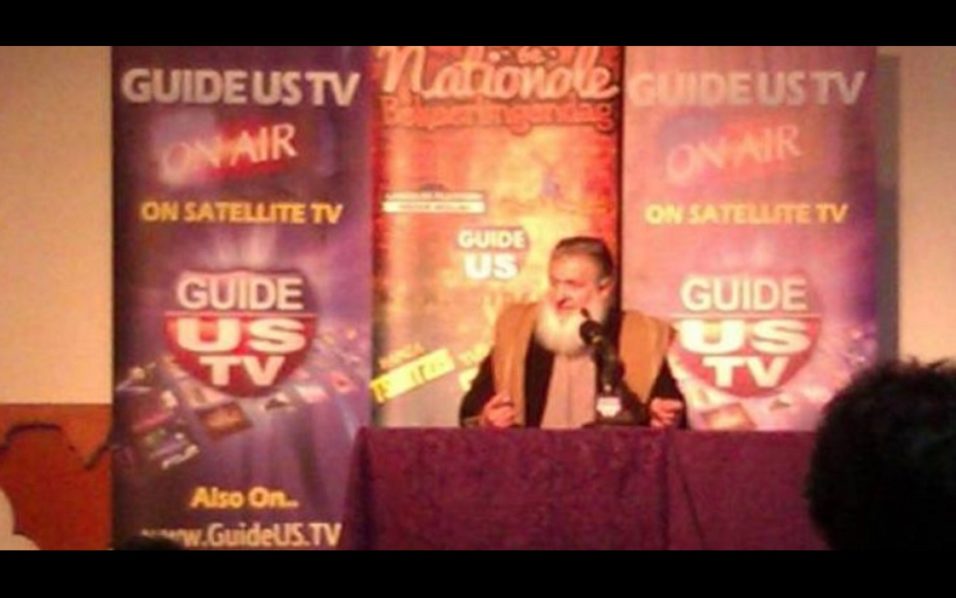
    As a Christian, I do not see how the views of American-Muslim preacher Yusuf Estes denigrate the Christian faith or “damage social harmony”, by claiming that it is “not part of Islam to celebrate other people’s holidays” or questioning the religious basis for Christmas. (“S’pore blocks American-Muslim preacher from entering to preach on Islamic-themed cruise”, Dec 2)

    A Muslim is fully entitled to refrain from participating in religious festivities of other religions.

    Article 16(3) of the Singapore Constitution guarantees that no person shall be required to receive instruction in or to take part in any ceremony or act of worship of a religion other than his own.

    In a 1999 case, the Singapore Court of Appeal explained that this is meant to protect a person’s right to choose his own religion. For example, a Muslim cannot be “required to take part in” a Christian ceremony such as the Holy Communion.

    Furthermore, Estes’ view that Christmas was ‘from the Solstice celebration, and had been going on for hundreds of years before the time of Jesus’, is neither new nor offensive.

    It is a widely known among many scholars that Jesus Christ was not born on Dec 25 of 1 AD.

    Historians and Christian scholars alike recognise that the ancient Roman Empire celebrated Saturnalia, a winter solstice festival, at or about the time of Dec 25 each year.

    According to Sam Moorhead of the British Museum, after the Roman Empire embraced Christianity as its official religion, Saturnalia was incorporated as a Christian holy day.

    While many Christians celebrate Christmas, there are also those who do not.

    The discussion is an ongoing one, among Christians and non-Christians alike, as to the origins of Christmas or whether it is acceptable to “redeem” such ancient Roman festivals. This is a natural and reasonable exercise of freedom of speech and religion.

    However, it is quite another thing for the Government to stifle the discussion by deeming certain perspectives as offensive or denigratory.

    In order to promote respect for religious freedom and harmony, the right of every person to pursue religious truth and live in line with his conscience should be respected and upheld. Short of real threats to public order, health or morality, the Government should respect the right of every person to profess, practise and propagate his religion.


    Source: todayonline

  • SOTA Student Puts Up Impromptu Installation In Memory Of Former Teachers, School Removed Art Work

    SOTA Student Puts Up Impromptu Installation In Memory Of Former Teachers, School Removed Art Work

    Yesterday, on the same day as all the ruckus about School of the Arts (SOTA) students not pursuing the arts after graduation, a current SOTA student put up an art installation in memory of the teachers who have left the school.

    It consisted of folded paper airplanes stuck in the crevices between the concrete slabs on level 5. Written on each folded paper airplane was the name of a teacher who had left the school. The installation was located just outside the general office, near where the Vice-Principals’ offices are.

    The art installation lasted about a day. It was removed by the school today.

    As a former SOTA teacher, I would like to say thank you to the student who created that heartwarming, short-lived piece.

    Source: Mark Rozells

  • The Economist Got Reminded – Bigotry And Hate Speech Is Not Free Speech

    The Economist Got Reminded – Bigotry And Hate Speech Is Not Free Speech

    High Commissioner to the UK Foo Chi Hsia has responded to an article by The Economist, saying it is not true teen blogger Amos Ye was prosecuted here for political dissent and not for making vicious statements about Christians and Muslims as implied in the report.

    On Mar 30, The Economist published the article, titled An outspoken Singaporean blogger wins asylum in America, which talked about how a US immigration judge granted Yee asylum, and the reasons for doing so. The article cited the judge’s reasons, including that while the blogger was legally prosecuted under Singapore law, his prosecution served a “nefarious purpose – namely, to stifle political dissent”.

    In a response published by the UK-based weekly on Apr 12, Ms Foo, referencing specific comments against Christians and Muslims made by Yee in 2015 and 2016, said The Economist may agree with the US judge that such bigotry is free speech, but Singapore “does not countenance hate speech” as it has “learnt from bitter experience how fragile racial and religious harmony is”.

    She added that contrary to the suggestion in the article, Singapore’s laws on contempt do not prevent fair criticisms of court judgements.

    “Singapore’s court judgments, including on Mr Yee’s case, are reasoned and published, and can stand scrutiny by anyone, including The Economist.”

    This is not the first time Ms Foo has responded to an article by The Economist. In March this year, she took issue with an article alleging restrictions on free speech in Singapore, saying that no country gives an absolute right to free speech.


    Source: www.channelnewsasia.com

  • Amos Yee Granted US Asylum

    Amos Yee Granted US Asylum

    CHICAGO — A US immigration judge in Chicago on Friday (March 24, US time) granted asylum to a Singaporean blogger, saying he was persecuted for his political opinions in the Republic.

    Amos Yee, 18, who had been jailed twice in Singapore, qualifies as a political refugee, according to a 13-page opinion by the US immigration judge.

    Amos is immediately eligible for release after having been held in US immigration detention since Dec 16, 2016, according to his attorney, Ms Sandra Grossman, who is based in Bethesda, Maryland.

    The Singapore Embassy in Washington could not be reached for comment after business hours on Friday evening.

    Judge Samuel Cole ruled Amos’ prosecution, detention and maltreatment at the hands of the Singapore authorities “constitute(s) persecution on account of Amos’ political opinions”, and called him a “young political dissident”.

    “The evidence presented at the hearing demonstrates Singapore’s prosecution of Amos was a pretext to silence his political opinions critical of the Singapore government,” Mr Cole wrote.

    The US Department of Homeland Security had opposed Amos’ asylum application, claiming the Singapore government legitimately prosecuted Amos.

    Ms Grossman said the judge’s decision supported the right of individuals to criticise their government.

    “The right to free speech is sacred, even when such speech is considered offensive,” she said in an email. “The decision timely underscores the vital need for an independent judiciary in a functioning democracy.”


    Source: www.todayonline.com


  • Singapore Ambassador: No Country Grants Absolute Right To Free Speech

    Singapore Ambassador: No Country Grants Absolute Right To Free Speech

    Ms Foo Chi Hsia, Singapore’s High Commissioner to the United Kingdom, has responded to a recent article in The Economist alleging a lack of free speech in Singapore, saying no country gives an absolute right to free speech.

    Society pays a price when the right to free speech is extended to fake news, defamation or hate speech, she added, citing the Brexit campaign and elections in America and Europe.

    “Trust in leaders and institutions, including journalists and the media, has been gravely undermined, as have these democracies. In contrast, international polls show that Singaporeans trust their government, judiciary, police and even media,” wrote Ms Foo in her letter to the UK-based weekly, which was published in its latest edition. “Singapore does not claim to be an example for others, but we do ask to be allowed to work out a system that is best for ourselves.”

    The article Ms Foo was responding to was published on March 9, titled Grumble and be damned. In it, the conviction of three protesters for creating a public nuisance at Speakers’ Corner was mentioned to back the allegation.

    Ms Foo noted that in this 2014 case, the individuals are not taken to court for criticising the government. Rather, they had “loutishly (barged)” into a performance by a group of special education needs children, “frightening them and denying then the right to be heard”.

    Ms Foo added that Singapore does not stifle criticism of the government, and there is free access to information and the Internet.

    “But we will not allow our judiciary to be denigrated under the cover of free speech, nor will we protect hate or libellous speech. People can go to court to defend their integrity and correct falsehoods purveyed against them. Opposition politicians have done this, successfully,” she said.

    Earlier this week, comments by one of the three protesters, blogger Han Hui Hui, on the same case were deemed by the Attorney-General’s Chambers as tantamount to scandalising the judiciary. Ms Han was given a week from Monday to remove and apologise for her various posts alleging impropriety on the part of judges who heard her case, or face contempt of court proceedings.

    Ms Han’s allegations of mistreatment by Singapore Prisons Service officers during her time in the lock-up for the case were also repudiated by the Ministry of Home Affairs.


    Source: www.todayonline.com