Tag: future

  • Commentary: We Didn’t Like #PE2017, But We Didn’t Resist, Either

    Commentary: We Didn’t Like #PE2017, But We Didn’t Resist, Either

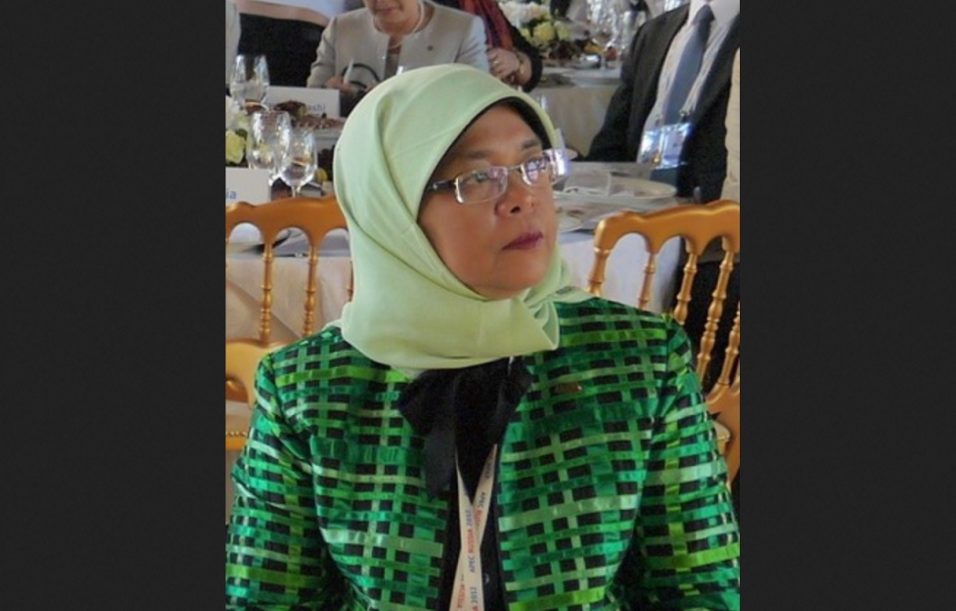
    Finally, Singapore has a female president. A woman as our head of state. Her photo will hang in every government building, not as the benevolently smiling wife, but as the boss.

    I would have expected myself to be bloody ecstatic.

    Instead, I’m feeling a range of emotions that run the gamut from a simmering anger to an exasperated eye-roll. The pride I should have felt over what would otherwise be significant progress in the political landscape of my country has been usurped by an overwhelming sense of having been taken for a ride.

    It’s been over a year since the People’s Action Party (PAP) government said that they would make changes to the Elected Presidency to include this “hiatus-triggered model”. Over a year of parliamentary speeches, of think pieces, of forums, of Facebook posts, of challenges in court, of “oops I called her Madam President” slips, of will-Halimah-run-or-not faux-suspense. Of wayang, wayang, wayang.

    I know that Singapore’s democracy flawed, an illusion in many respects. I know about the gerrymandering of electoral boundaries, of the obstacles deliberately erected to trip up opponents, of the calculated coercive actions that extract costs from opposition politicians and dissidents alike.

    Yet this presidential “election” has been its own sickening reveal—a demonstration of a ruling party so up itself that it would prioritise its own power and self-interest over what’s good for the country and its democratic processes. Or, and this is almost worse, a ruling party who has conflated itself with the country so much that it believes its self-interest is the country’s interest.

    The implications are terrifying; if the PAP’s #1 goal is to consolidate its own power, what will (or won’t) it do?

    After the optimistic-sounding “new normal” post-2011, civil and political space has been shrinking once again in Singapore. Key members of the opposition Workers’ Party are now facing lawsuits for huge amounts of money. We’ve been promised laws that will further restrict free speech and press freedom, all in the name of maintaining religious harmony and combating “fake news”. Academics, artists and activists have been pushed out of the country, either through the denial of visas and permits or of employment. The police have opened an investigation into activists, reporters and supporters—myself included—for attending a candlelight vigil for a death row inmate who was about to be hanged at Changi Prison.

    But it’s not enough to just look at the PAP. We need to look at ourselves too. Despite the presidential election triggering widespread scepticism and unhappiness, there was no organised grassroots resistance. There were plenty of frustrated, cynical social media posts; it was clear that there was no shortage of intellectual discussion or criticism. Yet there was little to no on-the-ground action, no mobilisation or organising to mount greater opposition to this farce.

    There are, of course, reasons for this: years of oppression, restriction and restraint, of an education purged of awareness of civil and political rights. But we can’t wait for the government to loosen the reins before we shake ourselves out of this inaction, because, as we’ve just seen, they have no intention of doing anything of the sort.

    It’s going to get tough; action will not be without risks. But silence and paralysis can’t be the answer. The more we resign ourselves to our fate, the more we tell ourselves that “this is just how Singapore is”, the more we wait for that magic election where the scales will suddenly tip in the opposition’s favour, the more inevitable results like this joke election will be.

    To resist further erosions of our democracy, we need to build: build awareness, build networks, build solidarity. We need to be activists for our own cause, and democracy is our own cause.

    This is not to say that we should all take to the streets right now (although, if that’s what you want to do, it should be your right). But we should find ways to push ourselves and the people around us a little more—to normalise (intelligent) political discussion, to be more critical about the assumptions we make on a daily basis, to refuse to simply sit down and accept. We need to find our comfort levels, then push ourselves a little further. If you’ve been a casual observer, educate yourself more. If you’ve been passively attending events, find ways to volunteer and contribute more actively. If you’re already a member of civil society, start working on how to organise more effectively and reach more people. There is no step too small, as long as we keep taking more steps.

    We can’t turn back the clock on this farcical election now. But we can do something about future erosions of our democracy—as long as we’re willing to work for it.


    Source: https://spuddings.net
  • PM Lee’s National Day Rally Speech Puts A Malay Family In The Spotlight As Exemplary

    PM Lee’s National Day Rally Speech Puts A Malay Family In The Spotlight As Exemplary

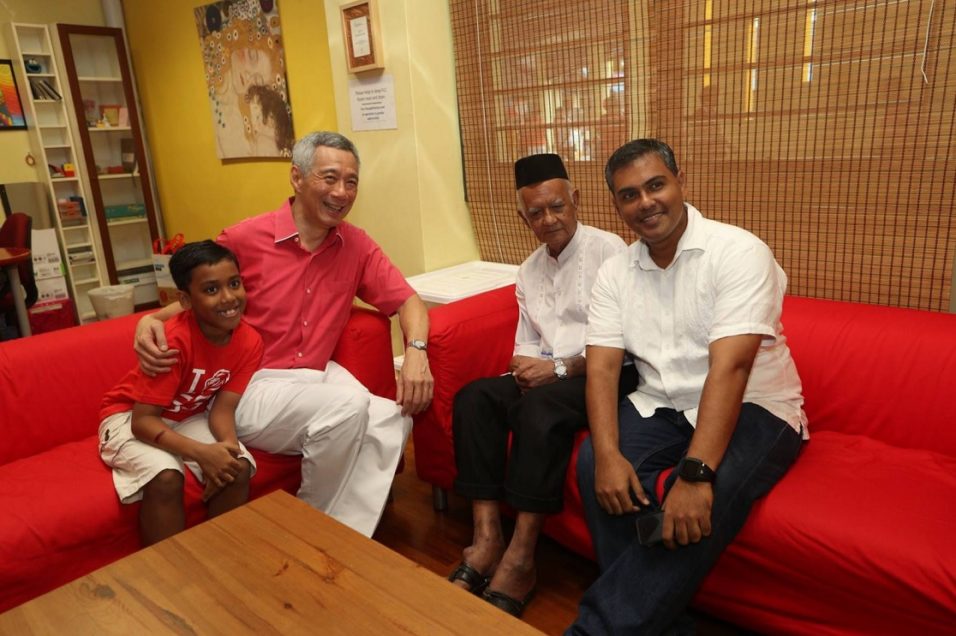
    In January, I presented Edusave Awards to my residents in Teck Ghee. One family I met moved me.

    I presented an Edusave Merit Award to Adam, a student from Teck Ghee Primary School. After the ceremony, I met Adam’s father, Aziz. He showed me an old photo of him, receiving an SBC House Union Bursary from me in 1986! So I have presented awards to father and son, 31 years apart! It was a special moment for Aziz, Adam, and also for me.

    I also met the grandfather, Ahmad, who was a gardener with SBC, the old Mediacorp. That is why Aziz qualified for the Bursary all those years ago.

    It is my Government’s duty to build for our future, so that every family can be like Ahmad, Aziz and Adam. This is the Singapore of the last half century: Every generation striving and building for the next, keeping our eye on tomorrow and investing in our children. Undaunted by challenges, but instead working together to overcome obstacles, seize every opportunity and realise a bright future for all of us.

    Thank you and Good Night!


    Source: Lee Hsien Loong / MCI

  • The Day I Got Drenched At Kampong Gelam

    The Day I Got Drenched At Kampong Gelam

    THE DAY I GOT DRENCHED AT KAMPONG GELAM

    #MYFsg office is located at 62A Arab Street, in the heart of Kampong Gelam. It is just 2 minutes walk to Sultan Mosque. I was often asked why I chose that location. To me, its a no brainer. It is a centralised youth hotspot.

    Today, I found out that its not just that.

    Throughout our stay in Kampong Gelam, there have been several funeral prayers conducted at Sultan Mosque for prominent community leaders who spent their life in His servitude, whose legacies helped set Singapore on a path of peace and progress. At MYF, we have a culture encouraging each other to take time to pay our last respect to our pioneer leaders, regardless of their fields. I didn’t think much of of it, then.

    Just recently, the nation laid to rest one of its first-generation leaders, the late Mr Othman Wok. The funeral prayer was conducted at Sultan Mosque. The congregation itself was filled with changemakers, old and young. The sky teared heavily the moment when the casket was being transported in the pouring rain to a gun carriage to begin its journey to the burial site.

    Witnessing the moment barely 5 metres away, its was solemn, drenched.

    That moment, I realised the reason God placed me in Kampong Gelam.

    He wants me to constantly be reminded of the contributions made by our pioneer leaders. The prosperity today could not be achieved without their sacrifices. More than I know, I needed these moments to gather strength to be steadfast in courage and passion into creating a better life, a better tomorrow for the community.

    I was also reminded that there are no such thing as retirement on the path of service. You simply serve till your last breath and may our death too benefits the community, triggering reflection and repentance. When that day come, we can only hope that the next generation is ready to carry on the torch. Moving faster than us. Breaking more things than us.

    It is up to us to live up to the legacy that was left for us, and to leave a legacy that is worthy of our children and of future generations.

    It is no longer a question of how much we believe we owe those living in the future, not just our own children or grandchildren, but the generations of people who will come long after we are gone.


    Rilek1Corner

    Credit: Shah Reza

  • Commentary: I Want To Save Water For My Future Generation

    Commentary: I Want To Save Water For My Future Generation

    I’m trying to see this from a positive light. Water is scarcity in Singapore, as land is.

    We depend on Malaysia for our water and our 4 taps may not be able to support everyone in the long run. Water conservation is indeed important and the only way to make us save, instead of water rationing which can be troublesome, is to increase the price of water so that we don’t waste water.

    Have you seen how we use our water? Reflect on the amount of water you use for wudhu’. Rasulullah saw only used a bowl of water. And us? We waste it. We’re wasting A LOT of commodities these days. Just like food. If Rasulullah saw was still alive, I am very sure he would disapprove of all the wastage.

    So this move, I approve. By making us feel the pinch financially and force us to save water, I think in the long run, it will help. I definitely want to save water for my future generation.


    Reader’s Contribution

    Ummul Ammatullah

  • Time To Master Asian Languages

    Time To Master Asian Languages

    I have noticed that many students in Singapore converse only in English.

    It causes me to wonder if our mother tongues have all been reduced to just examination subjects.

    This is of concern. In the light of Asia’s resurgence, are we pitching our sails right to catch the wind of change, vis-a-vis our language policies?

    English has served us well as a language for commerce and technology, but our grasp of the other languages seems less adequate in plugging us into the new realities of the future.

    Language is more than a code. It communicates customs and habits through the nuances embedded in it. Speaking the same language helps to strike instant rapport even between strangers, and enables people to understand and be understood by each other quickly.

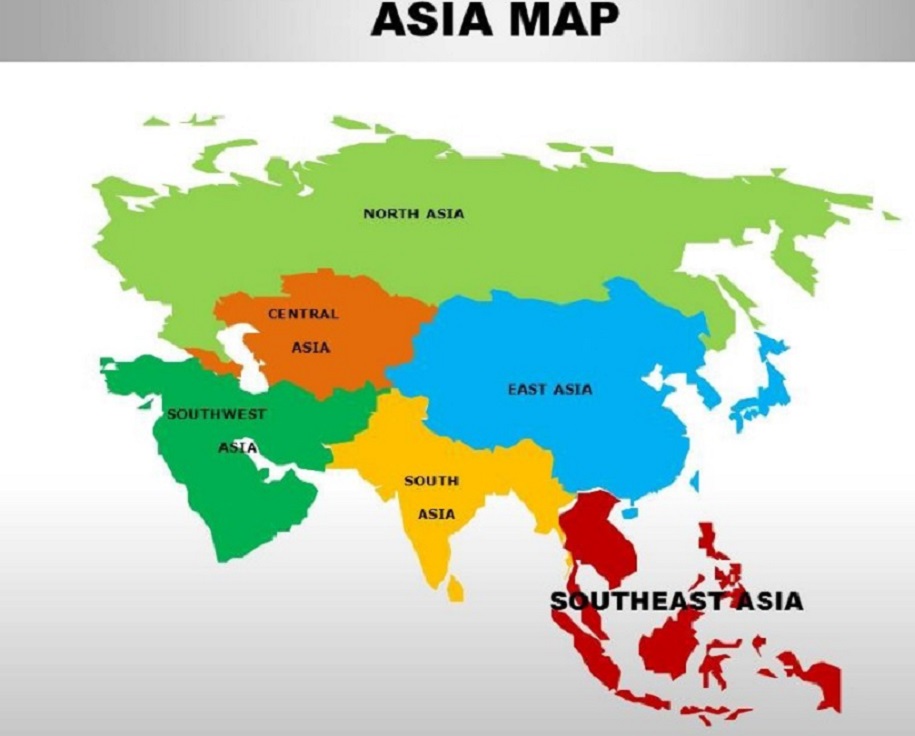
    Asean’s 625 million inhabitants speak a myriad of tongues. Together with India and China, the region easily makes up half the world’s population. Its potential is beckoning and it is imperative that we prepare ourselves to tap the Asian market.

    While English has kept us ahead, this competitive advantage may be eroded as our Asian counterparts focus on English to complement their already strong mother tongues. They will be quicker in understanding contracts and conducting negotiations outside the English domain.

    Perhaps we can design a track that coaches students in the various languages’ official terms used in commerce, science and technology from an early age.

    The focus should be on enabling them to experience alternative cultures in Asia through extended cultural immersion programmes abroad.

    This would allow them to better grasp how others think, and network with future leaders. They could form the backbone of leaders in different disciplines, with Asian perspectives on geopolitics, the economy and diplomacy.

    A rethink of our language policy is timely, if not urgent.

    We will have to bear the blame if we fail to prepare our young for their future, which will be starkly different from ours.

    Lee Teck Chuan


    Source: www.straitstimes.com