Tag: Muslims

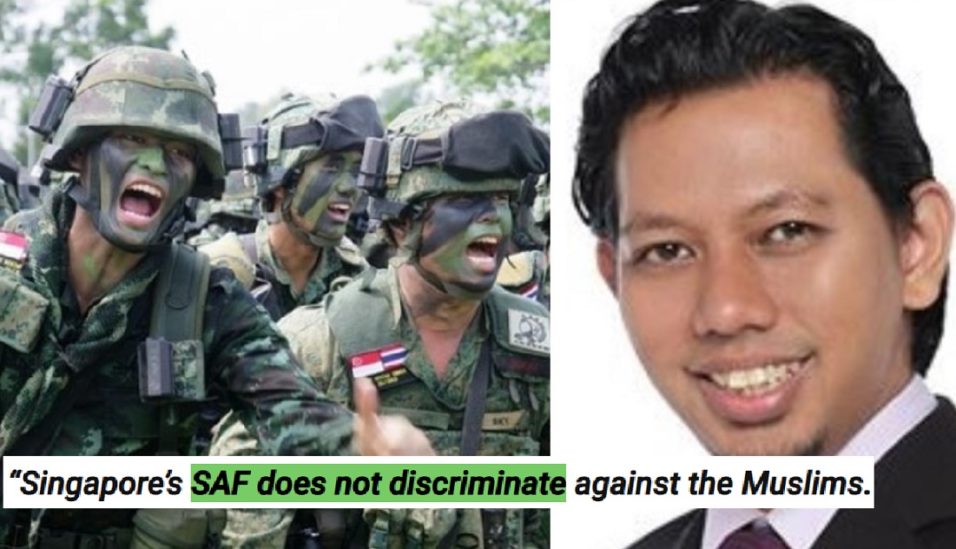
  • 2 real reasons why there are few Muslims in Singapore’s SAF; “it does not discriminate against the Muslims..”

    2 real reasons why there are few Muslims in Singapore’s SAF; “it does not discriminate against the Muslims..”

    Today, Singapore has a few Malay commandos and importantly, at least one fighter pilot according to an infamous Muslim convert Terence. He shared: “Will we have Malay commandos? We already do. Malay fighter pilots? We have one, and I still remember that there was a huge discussion behind the scenes about whether we could trust him. Common sense prevailed.”

    According to the ill-repute man among the Muslim community here in Singapore, there are but 2 real reasons why there are little to none Muslims officers in the SAF.

    #1: Bad in MATHEMATICS.

    ”One of the reasons we do not have more Malay pilots is simply because they fail the selection test – particularly the mathematics test.”

    I Malay.

    He added that today, the SAF puts “Malays in many sensitive positions, from SIGINT to MINDEF itself. As long as you are qualified and determined enough, the SAF will take you, regardless of race or religion.”

    #2: Navy’s policy of rejecting vegetarians, Hindus, people with food allergies and halal food.

    As far as the Navy is concerned, Terence said that Muslims are not present on naval vessels “due to logistics, not religious discrimination. RSN’s policy is to not have vegetarians, Hindus who do not eat beef, or people who have any sort of food allergies.”

    He added: “Our naval assets are meant to be ready for extended deployment. We do not have the luxury of stopping in the middle of a war to look for halal food.”

    Here is what he had to say in full.

    “Singapore’s SAF does not discriminate against the Muslims. We have a lot of Muslims in sensitive positions. I am, myself, a Muslim convert, and I have never felt that I lacked opportunities because of my religion. The issue is Malays, for historical reasons. The real reason why there were no Malays in much of the SAF is not found in our history books. It is no longer classified, but it is a forgotten episode, just like much of the events during the period of our Separation from Malaysia and the Konfrontasi. For those interested, there are people around who lived during that period, and were there when it happened, although all of them are very old.
    “When Singapore separated from Malaysia, the divorce was painful. In the election prior, when the PAP campaigned in Malaysia for a a “Malaysian Malaysia”, instead of a “Malay Malaysia”, UMNO were outraged and played the race and religion card.
    “The main instigator was Syed Jaafar Albar, the so-called “Lion of UMNO”. He was a radical Malay supremacist, despite the fact that he was clearly Yemeni Arab, and not Malay. He was vehemently against Singapore’s separation from Malaysia, and resigned as secretary-general of UMNO in protest. He went as far as to advocate that Malaysia militarily occupy Singapore.
    “At the time of Separation, almost half of the troops based here were from Malaysia. When the British gave control of the various units to Singapore, Malaysia and Brunei, they neglected to consider that the units were recruited from all over the Malay Peninsula. We had Singapore-born Malays and Malaysian-born Malays in the SAF and the Police, at SAFTI and elsewhere.
    “The 4th Malaysian Infantry Brigade consisted of two infantry regiments of about 1,000 soldiers each. Just over half of them were Malaysian, and they had divided loyalties. They were commanded by Brigadier-General Syed Mohamed Alsagoff, a relative of Syed Albar, and another Yemeni Arab. To say that he did not get along with Lee Kuan Yew is to put it mildly. He claimed it was a joke when he told Lee Kuan Yew that he could have had the PAP leaders arrested and shot. Lee Kuan Yew and his family moved out of the Istana and borrowed the Gurkha Regiment to guard them.
    “The Malaysian troops, all ethnic Malays, mutinied. Just over half of them supported Malaysia. One of the Singapore officers was killed. It was Col. Alkaff, BG Alsagoff’s cousin, who negotiated a withdrawal of the Malaysian troops. The 4th Malaysian Infantry Brigade withdrew from Singapore by November of 1967. The murderers of the Singapore officer were arrested. Two were hanged, and the others were only released from detention a decade or so ago.
    “As a consequence, Lee Kuan Yew used the Land Acquisition Act to dismantle the Alsagoff family landholdings in Singapore. Conscription was instituted, but no Malays were conscripted at first. The commandos, once dominated by Malays, now have none. The Malay officers and NCOs, even though they did not mutiny, were either never promoted or were let go. This included the entire ethnic Malay cohort of officer cadets. And of course, Singapore invited a few countries to come and train our soldiers. Only Israel accepted. They stood by us when we had nothing, and we do not forget our friends.”


    That being said, do you believe the reasons Terence gave? Is he even from SAF previously?
  • ‘I’ll Be Muslim Too’: Fans Embrace Liverpool’s Mo Salah

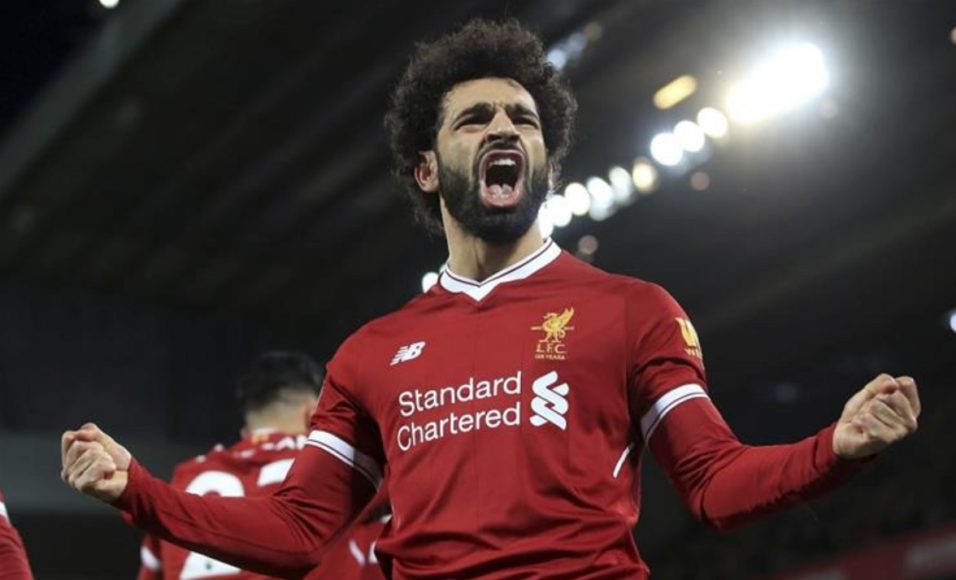
    ‘I’ll Be Muslim Too’: Fans Embrace Liverpool’s Mo Salah

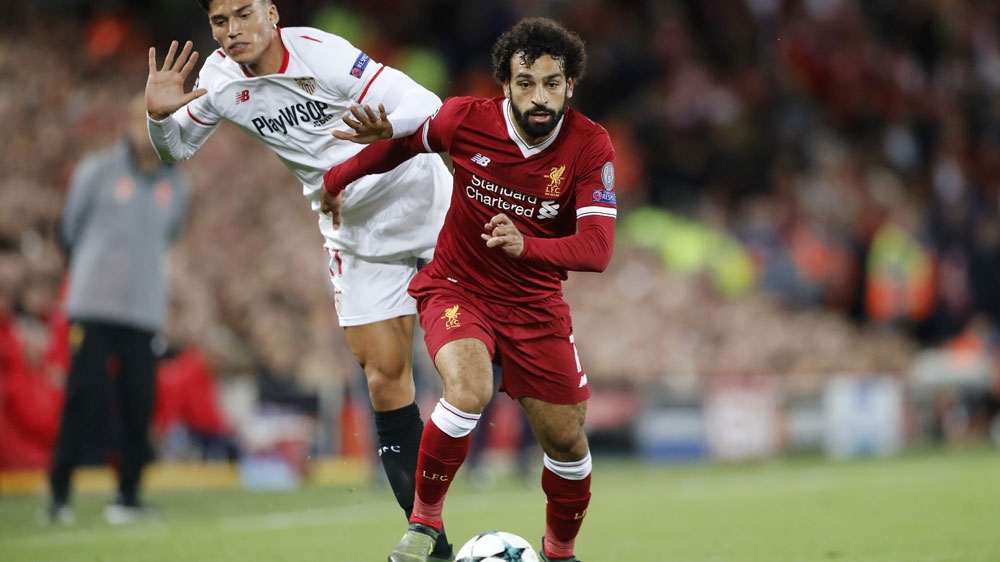
    Liverpool Football Club fans have embraced Mohamed Salah, an Egyptian player, with a new chant that celebrates the 25-year-old forward’s faith.

    “Mo Sa-la-la-la-lah, Mo Sa-la-la-la-lah, if he’s good enough for you, he’s good enough for me, if he scores another few, then I’ll be Muslim too,” fans have been filmed chanting from the stadiums to the pubs as they watch Salah’s footwork at play.

    The rhyme continues: “He’s sitting in the mosque, that’s where I want to be.”

    Saleh, who also plays for Egypt’s national team, is quickly becoming a darling of the English football community.

    In 2017, he was named the BBC’s African Footballer of the Year. 

    On Wednesday, he became the thirteenth player in Liverpool FC’s 125-year history to score his 30th goal in a season in a match against Porto, prompting some to compare Salah with Argentina’s footballing legend, Lionel Messi.

    Luis Suarez, who plays for FC Barcelona, was the last player to achieve 30 goals in a season, in April 2014.

    Liverpool’s Mohamed Salah is one of few footballers who has scored 30 goals in a season [Frank Augstein/AP]


    The chant for Salah, nicknamed the Egyptian King, is being seen by some as a feat against endemic racism in English football.

    In a report on February 7, Kick It Out – an organisation working to end discrimination in football – said the number of incidents of discrimination at the midway point of the 2017-2018 season had risen.

    The organisation received more than 300 reports relating to 282 incidents of discriminatory abuse by the end of 2017, covering the professional game, grassroots football and social media. This marked an increase of 59 percent from the same period last season, when there were 177 incidents.

    ‘Mo Salah is going to stop Islamophobia’

    Several people on social media welcomed the Liverpool FC fans’ chorus. 

    “Mo Salah doing more to end the clash of civilisations than anyone else in the world,” joked satirist Karl Sharro. 

    User @Femi_SB said: “Mo Salah is gonna stop Islamophobia.”

    “I’m not a Liverpool fan but you must believe Football builds bridges with this Red chant for Mo Salah,” wrote Gbolahan Obisesan, a writer and director.

    Sam Egerton, a rugby player for Old Elthamians, wrote on Twitter: “Loving this Mo Salah chant. [Love] for Muslims should be amplified.”

    Several people joked, as the song does, that they were considering converting to Islam on account of Salah’s talent.

    “Mo Salah is so good I’m considering turning Muslim #TheEgyptianKing” joked @bairdy_10. 

    “I think I’m about 10 Mo Salah goals away from becoming Muslim,” wrote @OSMLFC.

    “Mo Salah has turned me in to a devout Muslim catch me outside the mosque if you’re looking for me,” said @bradleymaguire_.

    Source: aljazeera


    Rilek1Corner

  • Not Welcomed, U.N. Investigator To Assess Human Rights Across Myanmar Barred Before Visit

    Not Welcomed, U.N. Investigator To Assess Human Rights Across Myanmar Barred Before Visit

    GENEVA (Reuters) – The U.N. independent investigator into human rights in Myanmar called on Wednesday for stronger international pressure to be exerted on Myanmar’s military commanders after being barred from visiting the country for the rest of her tenure.

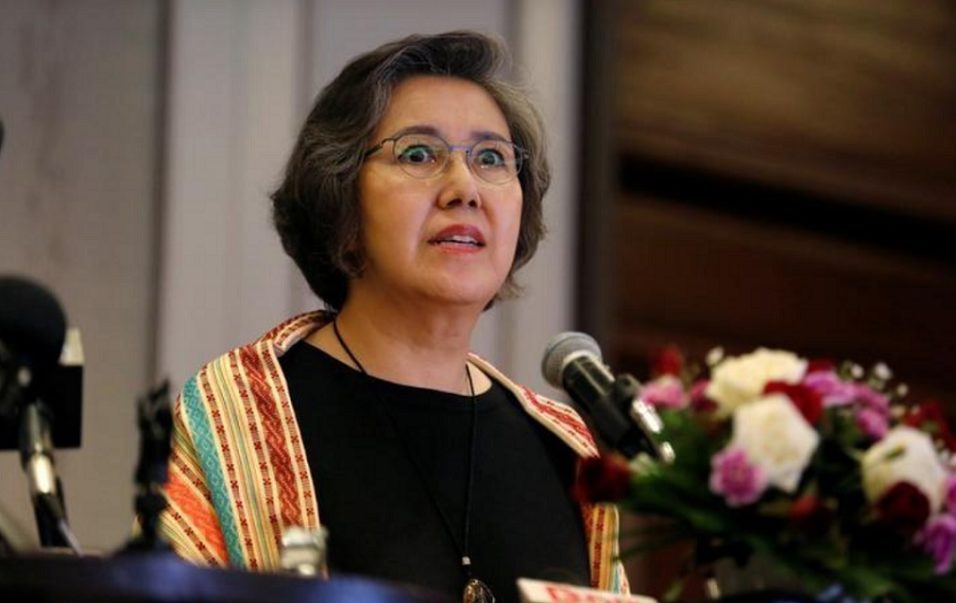
    Yanghee Lee, U.N. special rapporteur, had been due to visit in January to assess human rights across Myanmar, including alleged abuses against Rohingya Muslims in Rakhine State.

    But Myanmar had told her she was no longer welcome, she said, adding in a statement that this suggested something “terribly awful” was happening in the country.

    “From what I see right now I’m not sure if they are feeling pressured. I’m not sure if there is the right kind of pressure placed on the military commanders and the generals,” she later told Reuters by phone from Seoul.

    She said it was alarming that Myanmar was strongly supported by China, which has a veto at the U.N.’s top table in New York. Other countries including the United States and human groups were advocating targeted sanctions on the military, she said.

    “It has to work. And I’m sure the world has to find a way to make it work. And I think the United Nations and its member states should really try to persuade China to really act towards the protection of human rights,” she said.

    More than 650,000 Rohingya have fled into Bangladesh since Aug. 25, when attacks by Muslim insurgents on the Myanmar security forces triggered a response by the army and Buddhist vigilantes.

    Surveys of Rohingya refugees in Bangladesh by aid agency Medecins Sans Frontieres have shown at least 6,700 Rohingya were killed in Rakhine state in the month after violence flared up on Aug 25, MSF said last week.

    The U.N. High Commissioner for Human Rights Zeid Ra‘ad al-Hussein has called the violence “a textbook example of ethnic cleansing” and said he would not be surprised if a court eventually ruled that genocide had taken place.

    Lee had planned to use her visit to find out procedures for the return of Rohingya refugees, and to investigate increased fighting in the Kachin and northern Shan areas of Myanmar.

    Lee, in an earlier statement, said Myanmar’s refusal to cooperate with her was a strong indication that there must be “something terribly awful happening” throughout the country, although the government had repeatedly denied any violations of human rights.

    “They have said that they have nothing to hide, but their lack of cooperation with my mandate and the fact-finding mission suggests otherwise,” she said.

    She was “puzzled and disappointed”, since Myanmar’s Ambassador in Geneva Htin Lynn had told the U.N. Human Rights Council only two weeks ago that it would continue to cooperate.

    “Now I am being told that this decision to no longer cooperate with me is based on the statement I made after I visited the country in July,” she said.

    Lynn did not respond to a request for comment. Neither Zaw Htay, spokesman for Myanmar’s de facto leader Aung San Suu Kyi, nor Kyaw Moe Tun, a spokesman for the ministry of foreign affairs that Suu Kyi heads, were immediately available.


    Source: uk.reuters.com

  • Commentary: Artis-Artis Yang Tidak Bersalaman Di APM, Tidak Bererti Mereka Memegang Sikap Radikal

    Commentary: Artis-Artis Yang Tidak Bersalaman Di APM, Tidak Bererti Mereka Memegang Sikap Radikal

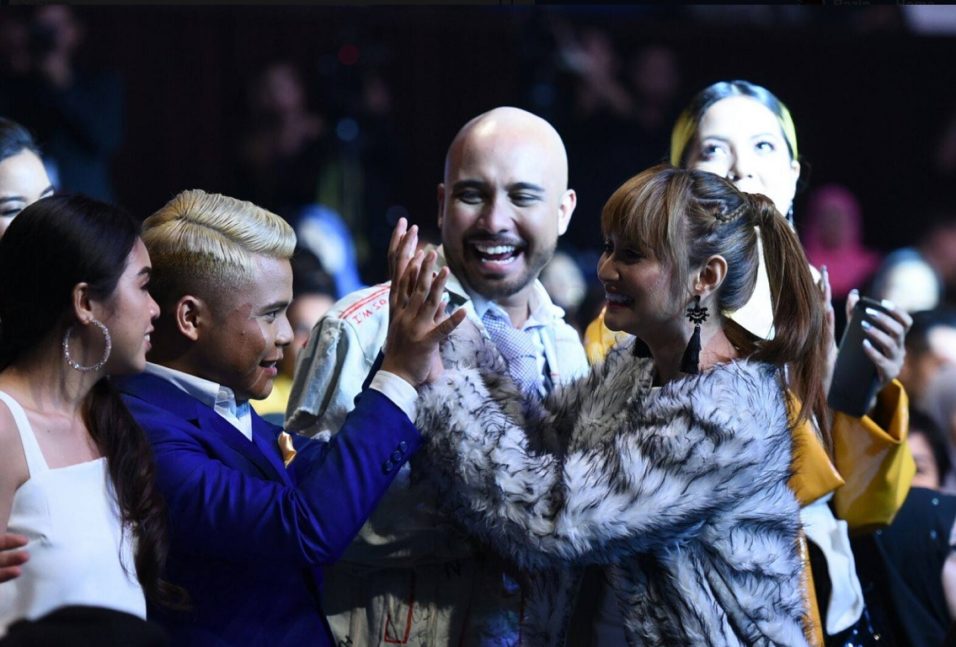
    Maher Zain tidak bersalaman dengan Puan Zakiah Halim semasa menerima Anugerah APM. Tidak bersalaman itu bukan bererti Maher Zain seorang radikal.

    Begitu juga Izzue Islam, artis dari Malaysia, ketika menyampaikan Anugerah APM kepada seorang artis Indonesia. Beliau setakat mendakapkan kedua tapak tangannya sendiri (macam aksi “ampun tuanku”) sebagai tanda hormat apabila artis itu menghulurkan tangannya ke arah Izzue Islam. Dengan bertindak demikian, itu bukan tanda yang Izzue Islam itu seorang radikal.

    Bersalam atau tidaknya di antara seorang lelaki dengan wanita tidak seharusnya dijadikan kayu ukur untuk menilik samada seseorang itu bersikap radikal atau tidak.

    Seharusnya, perkara ini dilihat dari sudut pendirian peribadi seseorang Muslim dan bukan petanda seseorang itu radikal kerana bersikap eksklusif.

    Kalau enggan bersalaman di antara lelaki dengan perempuan dianggap sebagai bersikap eksklusif lagi radikal, apakah boleh Maher Zain dan Iszul Islam dianggap sedemikian?

    Dalam usaha untuk membenteras radikalisme, usah pula kita jadi terlalu ekstrim atau melampau sehingga bersikap parochial lagi tidak berlapang dada terhadap kepelbagaian yang wujud dalam masyarakat.

    Jangan sampai diri sendiri jadi radikal dalam usaha membenteras radikalisme.

    Kalau ada Muslimah atau Muslimin yang tidak mahu bersalaman dengan lelaki atau perempuan yang bukan Mahram, usahlah mereka itu dilabel sebagai radikal.


    Source: Mohd Khair

  • ST Commentary: Of Minorities, Majorities And Sensitivities Across Race And Religion

    ST Commentary: Of Minorities, Majorities And Sensitivities Across Race And Religion

    Do individual Muslims have a special obligation to speak up when radicalised Muslims are in the news for attacks or arrests – such as by condemning the acts or clarifying that Islam is a religion of peace?

    Some non-Muslims in Singapore think so, and it can cause unease among their Muslim friends.

    This discomfort was given voice in Parliament this month, in speeches by two Muslim MPs, in the debate on a motion to strengthen multiracialism in the fight against terror.

    Ms Rahayu Mahzam (Jurong GRC) cited a conversation with a non-Muslim friend about terrorism. She was made to feel defensive and frustrated when he pressed her to say what “true Muslims” were doing to address the problem.

    “I told him, I do not know these people, I do not understand their psyche and it was unfair to put the burden on Muslims alone to resolve this issue,” she said.

    She found a similar situation playing out on social media, noting: “I saw many Facebook postings of Muslim friends condemning the terrorist attacks but also expressing similar frustrations of having to explain to non-Muslim friends that the terrorists’ actions were not aligned with Islamic teachings.”

    Dr Intan Azura Mokhtar (Ang Mo Kio GRC) also warned against “religious suspicion against the Muslims”, adding that “we cannot allow Muslims to feel apologetic for what these terrorist groups – which proclaim to carry out their heinous acts in the name of Islam – have done”.

    It is not that non-Muslims are not allowed to expect anyone from the Muslim community to come out firmly against terrorism or to detail what is being done about the problem within the community. The point here is that they should not expect each and everyone in the Muslim community to have to explain themselves to the satisfaction of any non-Muslim who happens to have doubts on where they stand.

    The fact is, each time someone in the Singaporean Muslim community is implicated in terrorist activity or detained for being radicalised, prominent representatives of the community do issue statements setting out in no uncertain terms the view of the community as a whole. These representatives may be from the Islamic Religious Council of Singapore or other groups, such as the Federation of Indian Muslims, or they may be political leaders who are Muslim. These statements should suffice.

    Non-Muslims should accept them in good faith as being representative of the views of Singaporean Muslims in general – which they are – and not require each individual Muslim they meet in the course of the day to have to prove his or her sincerity afresh.

    Pressing individual Muslims on the issue in person and on social media or requiring them to speak apologetically or to feel apologetic reflects an underlying distrust. It can feel like a slight. It is incumbent on non-Muslims here to be sensitive in their words and actions.

    The reality on the ground is that the Muslim community in Singapore is far more committed to multiculturalism and far less inclined towards the radical ideology of groups like the Islamic State in Iraq and Syria and Al-Qaeda than Muslims in most countries.

    The radicalised segment of Muslims here is very small by proportion. Furthermore, they receive virtually no support from the wider community. There is thus no basis for the kind of scepticism implied by the encounters Ms Rahayu spoke about. (If the radicals in fact receive a lot of latent warmth from ordinary Muslims, then it would be a different story. But that is not the case.)

    What non-Muslims should do, therefore, is: first, understand there is a majority who are distinct from a very small minority, and second, not let that minority colour the way they interact with the majority. But it is possible that the corollary is also true – that Muslims need to approach the issue in a similar way.

    Muslims can see things this way: There is a small minority of non-Muslims who lack prudence in the way they converse with Muslims on the issues of terrorism and radicalism. The broad majority of non-Muslims are not like that – they understand the subtleties or, if not, they are careful not to broach the topic. If this is true, then Muslims too should not allow the actions and words of a minority among non-Muslims to colour their interactions with the majority of non-Muslims.

    In other words, the majority of Muslims and the majority of non-Muslims – who together are the majority of Singapore – instinctively understand, believe in and show respect for multi-religious norms.

    But the two minorities complicate the picture – a Muslim minority who are radicalised, and a non-Muslim minority who are callous or ignorant in the way they speak or act.

    The worst outcome for Singapore is for the two minorities to be allowed to dominate the narrative, thereby dragging the whole of society into an insalubrious atmosphere of suspicion and counter-suspicion.

    The two majorities need to do two things. Each majority must draw a line of principle between itself and its minority, and it must then stand in solidarity with the other majority, so that society stays united.

    In the aftermath of terror attacks in the West, this majority-minority dynamic is often in play.

    In Britain, London and Manchester have reported sharp spikes in the number of anti-Muslim hate crimes after terrorist attacks in the two cities this year – that is, a minority of Muslims conducting attacks on society, and a minority of non-Muslims carrying out just as malignant reprisals on Muslims.

    But when the two majorities defend one another and show solidarity, they can prevail.

    An example of this was the #illridewithyou campaign, a social media campaign in Australia after the Sydney cafe hostage incident in 2014. Non-Muslim Australians offered to ride on public transport with Muslim Australians, to ensure the latter’s safety.

    When the two majorities stand as one, the two minorities are forced back into their dark corners on the fringe of society.

    In Singapore, no physical attack has happened yet, in one direction or the other. But if the country can guard against verbal unpleasantries, like those highlighted in Parliament this month, then there can be more confidence about preventing physical ones too.


    Source: http://www.straitstimes.com (Elgin Toh, Insight Editor)