Tag: Singaporeans

  • Call To Embrace Diversity In Islam

    Call To Embrace Diversity In Islam

    There is a growing confidence in the Malay-Muslim community about its place in Singapore, said Minister-in-charge of Muslim Affairs Yaacob Ibrahim.

    But even as it enjoys successes, challenges remain, he said, highlighting the need for the community to embrace diversity in Islam.

    In an interview with Malay newspaper Berita Minggu, Dr Yaacob said the community has made progress in three areas.

    First, Malay students are doing better in education. Besides more of them scoring well in national exams at the primary, secondary and polytechnic levels, there were also more who achieved first-class honours in universities last year, he said.

    There was progress made in the religious life of Malay Muslims too, he added. He cited how donations to mosques have increased, and low-income families are getting help through their programmes, among others.

    A third area of progress, which Dr Yaacob described as “more innate”, is that more Malays are stepping forward to do more not just for the community but also for other Singaporeans. Some have launched start-ups, while others do community work such as serving food and cleaning the homes of poor Singaporeans of other races.

    The community has progressed on many fronts, Dr Yaacob said. “Divorce rates are coming down, our educational achievements are going up, home ownership is stabilising, wealth is increasing in the community, (there are) better jobs and there is a greater diversity of talent.”

    But as the community grows in self-confidence, it also has to embrace diversity in Islam. The Islamic faith is “very diverse” and there is a need to respect differences, he said.

    As a vocal minority online and in the region has sought to sow discord against Shi’ites, Dr Yaacob said there is a need to respect minority Shi’ite Muslims in predominantly Sunni Muslim Singapore, noting that senior Muslim scholars have all along considered Shi’ites as part of the mainstream in Islam.

    “They pay MBMF (Mosque Building and Mendaki Fund). They come to our mosques. They pray together with us. They celebrate the same Hari Raya. So why are we not treating them as fellow Muslims but different?” he said.

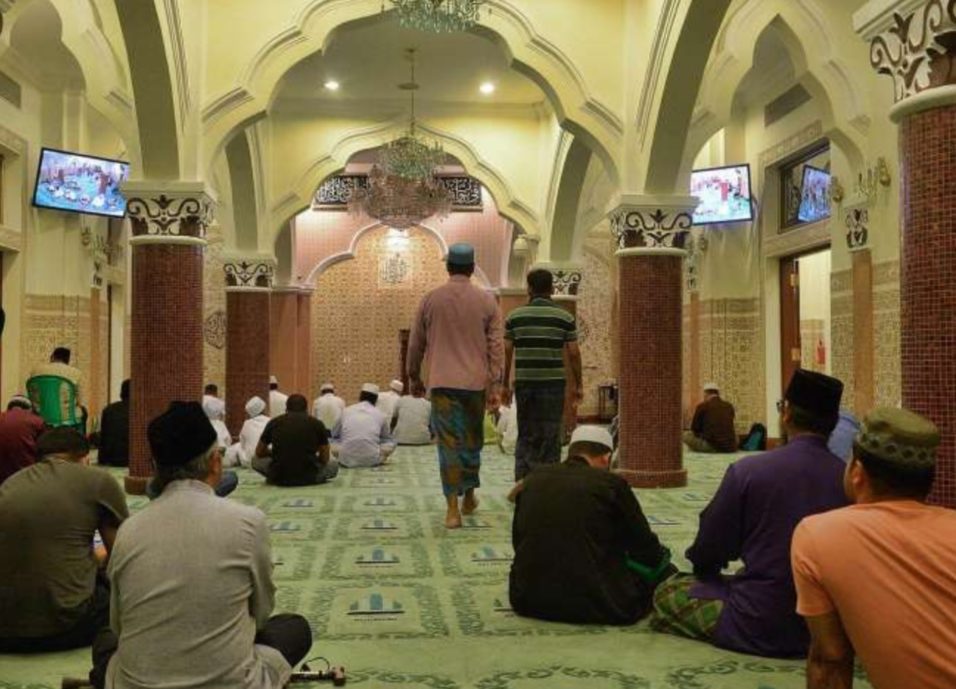
    He gave the example of how the chairman of the Moulana Mohamed Ali Mosque at UOB Plaza, Mr Mirza Namazie, is Shi’ite while the majority of its board is Sunni. “That’s a great example of how we deal with diversity, and we have to continue with that,” he added.


    Source: The Straits Times

  • Undergrad Part-Time Tutor Rejected By Tuition Agency Due To Parents’ ‘Racial Preferences’

    Undergrad Part-Time Tutor Rejected By Tuition Agency Due To Parents’ ‘Racial Preferences’

    Tuition has become a staple for school-going children in Singapore.

    While it is understandable that each child — and by extension, family — may seek specific tutors for specific needs, one tutor has come forward to share her experience of being repeatedly rejected for tuition jobs — despite being more than qualified for it.

    The tutor is an undergraduate student from a local university and is seeking part-time work at a local tuition agency for extra income.

    The agency essentially acts as a middleman by matching families with the tutors for the required subjects.

    Compiling all the requests of the different families, the tuition agency then sends them out to the tutors under them. Interested parties can apply to take up the vacant slots.

    censored-without-codecensored-without-code-2

    As the tutor in question specialises in English and Literature, she has repeatedly applied for positions that required tutors for those two subjects.

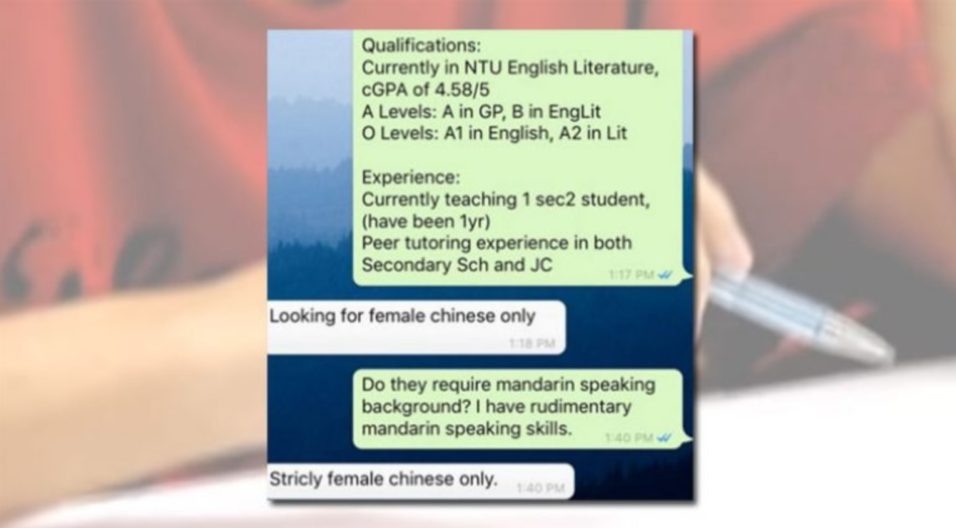
    However, time and time again, she has met with responses from families like the one below:

    rejected-profile-without-code


    Recently, it was more blatantly put across to her:

    screenshot-4


    Deep-rooted problem 

    Speaking to Mothership.sg, the tutor said she feels frustrated that she has to deal with this kind of issue time and time again.

    This is despite the fact that she is a first-class honours student.

    She also related that she has even met with a situation where after she was rejected by the family, the same tuition gig was offered to someone she knew, who is Eurasian Chinese.

    She also said any language or communication barrier with non-English-speaking families should not be a problem, particularly in her case, as she is from a mixed Malay-Chinese family.

    Acknowledging the sensitivity of the issue, she doesn’t demand recourse.

    Instead, she said she understands that some people just don’t feel comfortable with certain races.

    What have the authorities said about such practices

    According to TAFEP’s job advertisement guidelines stated in its fair employment practices handbook,

    “Employers who advertise a position requiring a specific attribute which may be viewed as discriminatory should ensure it is indeed a requirement of the job and state the reason for the requirement in the advertisement…

    Race should not be a criterion for the selection of job candidates as multiracialism is a fundamental principle in Singapore. Selection based on race is unacceptable and job advertisements should not feature statements like ‘Chinese preferred’ or ‘Malay preferred’.

    Religion is unacceptable as a criterion for recruitment except in cases where employees have to perform religious functions as part of the job requirement. In such cases, the requirements should be clearly and objectively presented”.

    But such practices are normalised

    However, a quick check on forums has shown how prevalent racial preference in tuition has become in Singapore.

    screen-shot-2017-01-06-at-11-12-39-amscreen-shot-2017-01-06-at-11-13-55-amscreen-shot-2017-01-06-at-11-19-30-am

    Ultimately, the student tutor said she hopes people, especially parents, can have a more open mindset towards tutors like her.

    She said: “I just wish that it wasn’t this way because it hasn’t changed since my mum’s time.”


    Source: mothership.sg

  • WP Takes Backhanded Swipe At Minister Shanmugam’s Comments On Town Council Affairs

    WP Takes Backhanded Swipe At Minister Shanmugam’s Comments On Town Council Affairs

    The Law and Home Affairs Minister, K Shanmugam, in speaking on the the investigation of the General Manager of Ang Mo Kio Town Council (AMKTC) by the Corrupt Practices Investigation Bureau (CPIB) contrasted the approaches of PAP-run town council with the one run by Workers’ Party (WP). WP’s then-Aljunied-Hougang-Punggol East Town Council, has been under scrutiny for its relationship between its former managing agent FM Solutions and Services (FMSS) and Essential Maintenance Service Unit (EMSU) contractor FM Solutions and Integrated Services (FMSI).

    Mr Shanmugam alleged that unlike the PAP-run town council, the Workers’ Party-run town council has not been transparent with the general public.

    The Workers’ Party in responding to Mr Shanmugam’s harsh criticisms of its town council management said that “since CPIB is investigating the AMKTC case, we should let due process take its course and not jump to conclusions.”

    In its statement, WP pointed out that when their auditors released the report on AHTC in July 2016, “some people jumped prematurely on the possibility of fraud and fictitious payments without waiting for the results of the audit.”

    Their auditor, KPMG, had said in the July 2016 report that the use of this “highly irregular shortcut” made it “practically impossible” to have effective oversight of these transactions.

    They added: “Such large-scale use of this practice raises questions about the management of AHTC’s finance function. Consequently, it is easier for duplicate payments or fictitious payments to be made without being detected.”

    Mr Shanmugam had then taken issue with the manner the WP announced the lapses highlighted by its auditors. In a Facebook post, the Minister said KPMG’s report underlined that “AHTC’s leadership has neither upheld nor enforced integrity and ethical values”.

    “The rot is at the top,” he added. “This should come as no surprise. The High Court and the Court of Appeal have already criticised Ms Sylvia Lim and Mr Pritam Singh for suppressing the truth (designed to mislead) both in Parliament and in Court. To them, the truth is a tradable commodity.”

    Aljunied-Hougang Town Council subsequently ordered a 100% check on the $60m direct journal entry and dummy code issues.

    WP’s unsigned statement today said, “when no fraud and fictitious payments were found, the speculators kept quiet.”

    The statement further said: “Premature speculation, especially when done by influential people, may pervert the course of justice by shaping investigations. So let’s wait for the findings of the CPIB on the AMKTC case and let the law take its course.”


    Source: http://theindependent.sg

  • Chee Soon Juan: Singaporeans – A People Cut Adrift

    Chee Soon Juan: Singaporeans – A People Cut Adrift

    I STOOD ON the balcony of the school block and surveyed the campus of the Anglo-Chinese School at Barker Road. I had not been back there since I graduated some four decades ago (I was accompanying Shaw Hur to buy his textbooks during the year-end break as he prepared for secondary school).

    I searched for a familiar landmark – any familiar landmark – of the place I had spent ten years of my school life. I couldn’t. Every inch of the grounds had been razed and, in its place, new buildings erected.

    Gone were the open spaces and lawns (more like sandy patches from our constant trampling) that afforded students the space to play before and in between classes. And play we did: football, marbles, spider-catching, chatekkuti-kuti, hantam bola… We invented our own games and laid down our own rules. We found our own fun – lots of it. And when you sat quietly in the afternoons, you could hear the crickets chirp.

    My mind returned to the present and it dawned on me how much the multi-storey buildings, squished up against one another, resembled the HDB jungle. The school field, where many a scrape and bruise was inflicted, was missing, replaced by a carpark that shouldered a swimming pool above. A boarding school for foreign students was even jammed into the premises. Every square foot of real estate was manicured, exquisitely engineered for maximum capacity.

    What does all this do for (or to) students? Sure, the AV equipment was state of the art, the auditorium outfitted with cinema-like plushness, and the driveways pristinely landscaped. But how does the environment facilitate play? How do students find their own leisure? Where do they go to do that? Yes they are studying, but are they learning?

    If all this sounds depressingly familiar, that’s because the campus reminds us of the country itself. The island is blanketed with residential blocks built ever closer and stacked up ever higher. It teems with inhabitants, the number of which this city has never seen.

    But fast as it was, construction on the island was always one step behind a burgeoning population whose explosive growth, ignited by lax immigration laws, meant that the infrastructure would be overtaxed.

    With the mass influx of foreigners came the escalation of the cost of living. At the same time, wages for the locals were put under downward pressure. Retrenchments and unemployment have risen. Leisure has become a scarcity and where there was once spacious greenery, there is now only bodies and concrete. Stress and work-related psychological disorders, as one might expect, run high. For the average Singaporean, the quality of life has deteriorated.

    That wasn’t all. The school’s wholesale makeover also meant that there was little I could relate to my son. There was nothing to share with him about how I grew up in a place in which he was now going to grow up. The past-present dislocation was as rude as it was complete.

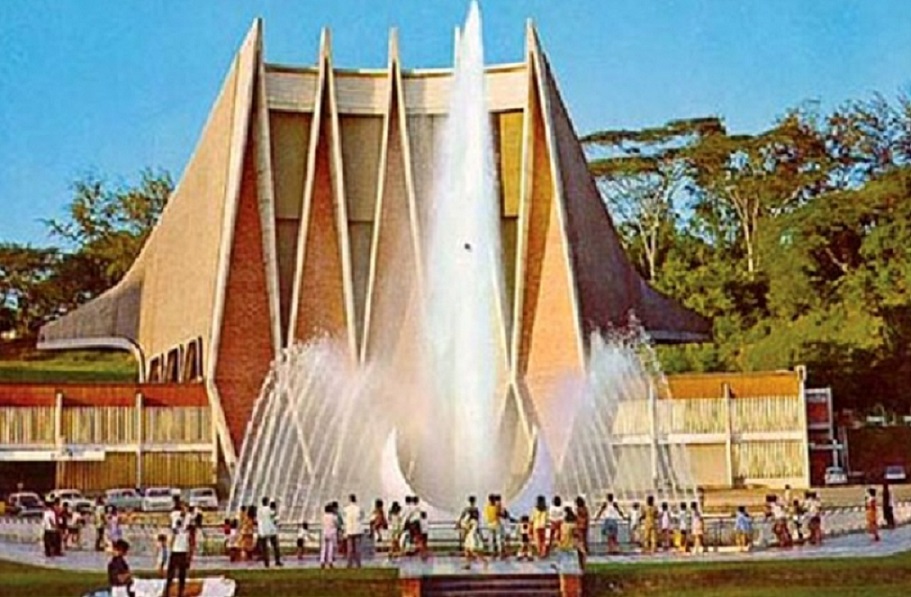
    Again, the situation is evocative of present-day Singapore. Anything and everything that served to remind us of days gone by – the National Theatre (photo above), Bugis Street, Satay Club, the National Library, Kallang Park – have been demolished and replaced by shopping centres, expressways and golf courses.

    When the break between past and present is so abrupt and comprehensive, we become unmoored from our own history. What, then, binds us to our roots? Need it be said that an undeveloped sense of belonging erodes our national identity?

    But can this country, one may be tempted to ask, afford to indulge in idle reminiscence? Why hanker for a past that would have impeded economic progress?

    These are wrong questions to ask. Progress and the retention of our collective past don’t have to be mutually exclusive; national development can proceed even as we preserve our history. What is needed to achieve a seemly balance are enlightened and dedicated planners. Japan and Europe, to cite but two examples, have done admirably in pushing the boundaries of modernisation while retaining their proud traditions and heritage.

    If we insist on hanging a price-tag on everything, as this country’s officialdom is wont to do, then what value do we put on places that tell the story of where we came from or where we’ve been? What amount of money do we place on Singaporeans emigrating because they don’t know what being Singaporean is anymore? What price do we figure for citizens living disengaged lives, tethered together only by that national creed that ‘No one owes us a living’ or its variant ‘What’s in it for me’?

    Even if we accept that nostalgic sentimentality has no place in the kind of hard-nosed pragmatic thinking needed for economc success, it is entirely appropriate to question what all the upheaval and change has brought us. A more genteel and less stressful lifestyle? A sustainable economic structure that ensures financial security for our retirees? A future that promises hope and opportunity for our youth? A system that can still deliver the Singapore Dream for our workers?

    When we cast our eyes ahead and see only ominous clouds, what conjures even more disquiet is to look behind and see that we’ve been cut adrift.


    Source: www.cheesoonjuan.com
  • Ustaz Sallim Jasman Sudah Keluar Hospital, Rehat Sebulan Dari Kuliah

    Ustaz Sallim Jasman Sudah Keluar Hospital, Rehat Sebulan Dari Kuliah

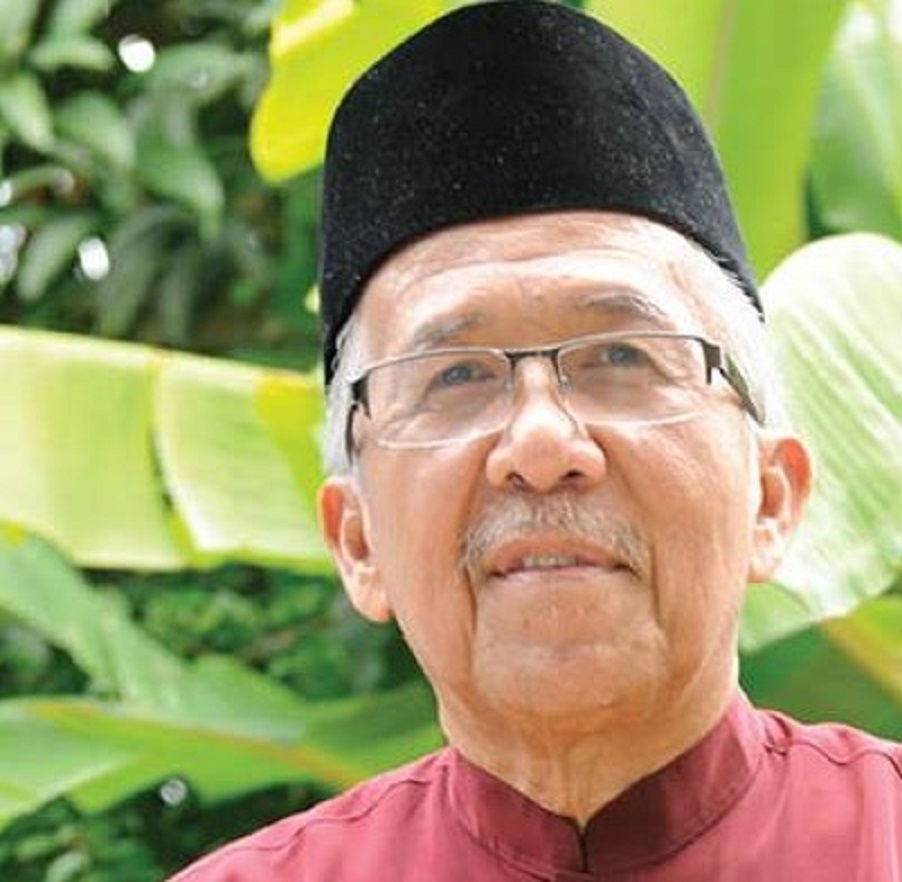
    BERITAMediacorp: Pendakwah veteran yang juga seorang kadi terkenal, Ustaz Sallim Jasman, sudah dibenarkan keluar dari hospital, dan kini perlu berehat selama sebulan daripada tugas-tugas seperti menjalankan kuliah.

    Ustaz Sallim, yang mengalami masalah injap (valve) jantung, menjalani pembedahan memasukkan alat perentak jantung ketika dirawat selama lima hari di Hospital Besar Singapura (SGH).

    Demikian dedah anak beliau, iaitu Ustaz Muhammad Ma’az Sallim, semasa dihubungi BERITAMediacorp bagi mendapatkan perkembangan terkini mengenai keadaan Ustaz Sallim, yang keluar hospital kelmarin (4 Jan).

    Ustaz Sallim, yang kini berusia awal 70-an tahun, dimasukkan ke SGH pada Sabtu lalu (31 Dis) setelah beliau mengalami lemah-lemah badan.

    (Gambar: Masjid Al-Iman/ Facebook)

    MASIH RAJIN MENGAJAR, NIKAHKAN ORANG WALAU KURANG SIHAT

    Ustaz Ma’az berkata, keluarganya menasihatkan ayahnya itu untuk menjalani pemeriksaan di hospital, setelah melihat keadaan kesihatannya itu tidak begitu baik.

    “Beliau mengalami masalah jantung yang lemah sebelum ini. Dan akhir-akhir ini, beliau aktif mengajar di kuliah-kuliah dan baru pulang dari umrah. Di samping itu, beliau juga masih menikahkan sehingga lebih 10 orang dalam seminggu,” kongsi Ustaz Ma’az.

    Disebabkan lemah jantung, Ustaz Sallim “harus memasang alat perentak jantung bagi menangani keadaan jantungnya itu,” jelas Ustaz Ma’az lagi yang juga mengikut jejak langkah ayahnya dengan menjadi naib kadi, selain memikul tugas selaku Imam Eksekutif Masjid Al-Taqua.

    (Gambar: Muhammad Salihin Sulaiman Jeem/ Facebook)

    Menyusuli pembedahan tersebut, Ustaz Sallim dinasihatkan oleh pihak hospital supaya banyak berehat, tambah beliau. BERITAMediacorp diberitahu, tiada pasangan yang dijadual bernikah yang terjejas dengan gangguan kesihatan Ustaz Sallim itu.

    KELUARGA MOHON MASYARAKAT DOAKAN KESIHATAN USTAZ SALLIM

    Ustaz Sallim Jasman, pernah menjadi Presiden Kanan Mahkamah Syariah dan bersara pada tahun 2006 setelah sekitar 40 tahun berkhidmat di mahkamah tersebut. Beliau kini terus aktif mengajar, antaranya di Masjid Darul Ghufran, Masjid Al-Iman, dan Masjid Assyafaah.

    Seorang yang peramah dan rajin tersenyum, perkataan ‘bersara’ nampaknya juga tiada dalam kamus Ustaz Sallim, dan merupakan antara golongan asatizah perintis Singapura sejak negara ini mencapai kemerdekaan.

    Beliau lulusan Diploma Pendidikan dari Kolej Islam Malaya. Di tengah-tengah negara berdepan dengan isu pengganasan, Ustaz Sallim juga berkhidmat sebagai salah seorang daripada kaunselor Kumpulan Pemulihan Keagamaan (RRG).

    “Kami mohon doa daripada semua agar beliau diberi kesihatan dan sokongan supaya dapat terus berbakti dan memberikan sumbangan kepada masyarakat Islam,” pinta Ustaz Ma’az menerusi BERITAMediacorp.

    Source: http://berita.mediacorp.sg

deneme bonusu