Tag: Singaporeans

  • Hero Mother Went Into Burning Flat To Save Daughter, Would Rather Sacrifice Own Life Than Watch Children Die

    Hero Mother Went Into Burning Flat To Save Daughter, Would Rather Sacrifice Own Life Than Watch Children Die

    The flat was ablaze, with thick smoke everywhere, and her neighbours persuaded her not to enter.

    Madam Cynthia Liew, 35, still rushed in to save her four-year-old daughter during Saturday evening’s fire.

    She had to use her sense of touch to manoeuvre for five minutes in the three-room flat before she found the little girl in the bedroom.

    The girl was calm and expressionless, and Madam Liew carried her out to safety. Both suffered smoke inhalation. The New Paper had reported yesterday about the fire in the 11th storey flat in Block 4, Haig Road.

    Madam Liew is now warded at Tan Tock Seng Hospital, while her daughter and son are warded at KK Women’s and Children’s Hospital.

    She told The New Paper: “My children are so young, I would rather perish than let them die.

    “But they were braver and calmer than me, they did not make noise and kept quiet throughout.”

    The housewife, whose partner is currently in remand, said the fire started from the kitchen, and she suspects it was the washing machine socket that caused it. Madam Liew is extremely thankful for her neighbours’ help.

    “I was coughing and even fainted when I got out of the house, but thankfully, my neighbours and the police were there to assist me and my children.”

    Her neighbours found her five-year-old son crying at the door and they prised the gate open so that he could crawl through.

    About 50 residents from the block were evacuated furing the fire.

    When TNP visited the flat again yesterday afternoon, Madam Liew’s children’s grandfather, Mr Ang Cee Hock, 77, said he will continue living in the flat.

    “There isn’t any electricity now and all my electrical appliances such as my fridge and washing machine are not working. But I have to stay here to take care of it because it is my home.”C

    But Madam Liew is worried as he is old and there is no one at home to look after him. “I hope he can move out until the flat is safe to live in.”


    Source: www.tnp.sg

  • Academic: Calls To Make Malay Official ASEAN Language Futile

    Academic: Calls To Make Malay Official ASEAN Language Futile

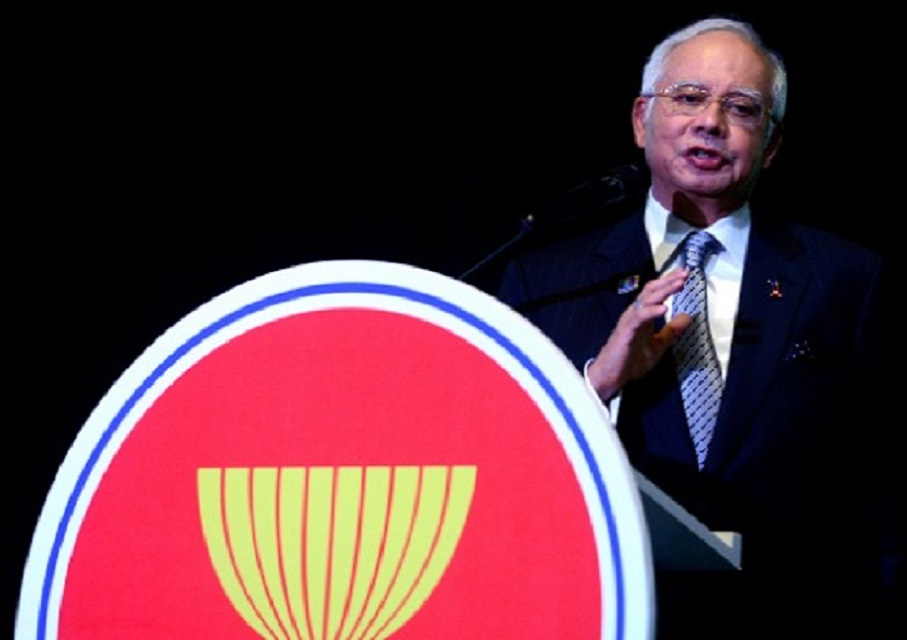
    The proposal to adopt the Malay language (Bahasa Melayu) as ASEAN’s “main and official language” is a non-starter, and even futile. This call, made by Malaysian Prime Minister Najib Tun Razak in Kuala Lumpur on 26 July 2017, comes after a similar suggestion by his Communications and Multimedia Minister Salleh Said Keruak in 2015 when Malaysia held the rotating ASEAN chairmanship. He made the case that Malaysia “need to show that the Malay language is a relevant and dynamic language that can act as the ASEAN language.”

    These calls will fall on deaf ears outside of selected audiences in Malaysia. In the first instance, ASEAN has adopted English as the working language since its establishment in 1967. This practice was later institutionalised in the ASEAN Charter in 2007, Article 34 of which unequivocally states that “the working language of ASEAN shall be English.” Revising this provision requires the unanimous support from Malaysia’s fellow ASEAN member states, most of whom may find it onerous to support a seemingly nationalistic cause to promote the cultural and linguistic heritage of only one particular member state.

    It is interesting to note that the ASEAN Leaders, in approving the Charter, opted for the term “working language” instead of “official language,” which can be interpreted as a sign of respect for the plethora of member states’ national languages. The adoption of any part of a specific Southeast Asian language as the official language would stir political backlash from other ASEAN communities, which may interpret the move as a form of political and cultural dominance. Arguably, the English language might be a non-native language of a former colonial power in the region, but this “neutral” attribute serves to unite ASEAN’s diverse socio-cultural make-up, providing a level political playing field for all member states.

    The fact that English is lingua franca has facilitated ASEAN’s interactions with its Dialogue Partners and the wider global community.  ASEAN can play a more effective role in bring the “regional story” beyond Southeast Asia and reaching out to other regions using a global language. In multilateral organisations throughout the world like the United Nations and World Trade Organisation, English is the working language. Thus, attempts to replace English as the working language with any other languages would rollback ASEAN’s gains in positioning the regional organisation as a global entity, and hamper future efforts to connect with the wider global community.

    At face value, Prime Minister Najib’s proposal is an attempt to bolster his political credentials by championing the Malay language ahead of the general elections due by May 2018. However, his actions cannot be summarily dismissed as a domestic matter because as an ASEAN Leader, he has the recourse to push this cause at ASEAN Summits. If he follows through with this unrealistic proposal at the regional level, he might force his fellow ASEAN leaders into the conundrum of having to defend the primacy of their respective languages and promote their language as ASEAN’s main and official language as well.

    Instead of focusing on the trivial, ASEAN should attend to more urgent and pressing matters of community-building. Playing up the divisive nature of language politics might fray ASEAN unity.

    The writer, Dr Tang Siew Mun, is Head of the ASEAN Studies Centre, ISEAS–Yusof Ishak Institute.


    Source: https://iseas.edu.sg


  • Dr Tan Cheng Bock: In A Democracy, We Must Question, Exchange Ideas

    Dr Tan Cheng Bock: In A Democracy, We Must Question, Exchange Ideas

    What is the definition of an Elected President? Does the government have the discretion to decide when to start a term count before a reserved election is triggered? And was the Attorney-General’s Chamber’s (AGC) advice to the Prime Minister on the reserved election a “mistake of law”?

    These were the issues that took centre stage during former presidential candidate Tan Cheng Bock’s appeal against a High Court ruling on his constitutional challenge to the timing of the reserved presidential election

    The case was heard on Monday (31 July) in a packed gallery at the Court of Appeal before five judges: Chief Justice Sundaresh Menon, Judge of Appeal Judith Prakash, Judge of Appeal Steven Chong, Justice Chua Lee Ming and Justice Kannan Ramesh. Some 50 members of the public, many of them supporters of Tan, also waited outside the courtroom.

    Tan and his wife Cecilia were both present. Aljunied Member of Parliament Sylvia Lim, whose name was referenced several times during the hearing, was spotted in the gallery, along with former National Solidarity Party chief Lim Tean.

    The High Court ruling

    This year’s presidential election is reserved for Malay candidates, following constitutional amendments last year that reserves an election for a particular racial group that has not been represented in the office for five consecutive terms. The term count starts from the late Wee Kim Wee, according to the government, as he was the first to wield the powers of an Elected President.

    Earlier this month during a High Court hearing on his legal challenge, Tan argued through his lawyer Chelva Retnam Rajah that the term count should start from the late Ong Teng Cheong as Wee was not elected by a popular vote. In rejecting his arguments, Justice Quentin Loh noted that the Constitution states that a President can be “any person for the time being exercising the functions of the office of the President”.

    Loh referred to two articles of the Constitution. Specifically, “Article 19B(1) provides for a Reserved Election for a community if no person from that community has held the office of President for any of the five most recent terms of office of the President” while “Article 164(1)(a) provides for Parliament to specify the first term of office of the President to be counted under Article 19B(1) (“First Term”).”

    The High Court then also found that there is nothing in the text or textual context which limits Parliament’s power by requiring Parliament to start the term count from the term of office of a popularly elected President.

    The appellant’s claims

    Rajah, who represented Tan again, argued his case against the ruling on three main points. Firstly, he maintained that Article 2 of the Constitution, which sets out the definition of the “president of Singapore”, refers only to an Elected President. The term count should therefore start with the late President Ong.

    Secondly, President Wee’s second term in office was only chosen for the start of the term count because Parliament mistakenly thought he was an Elected President. Rajah pointed out that the “specific mischief” outlined in Article 19B(1) was to invoke a reserved election if a particular race had not been represented for five consecutive elections.

    Thirdly, Parliament acted under a “mistake of law”, based on the advice of the AGC, which has not been publicly disclosed. Rajah noted Prime Minister Lee Hsien Loong’s speech to Parliament on 7 November last year, when Lee said, “We have taken the Attorney-General’s advice. We will start counting from the first President who exercised the powers of the Elected President, in other words, Dr Wee Kim Wee. That means we are now in the fifth term of the Elected Presidency.”

    Rajah noted that during the parliamentary debate on amendments to the presidential election last November, Aljunied MP Sylvia Lim had prefaced her questions with a statement that the Attorney-General advised the PM to start the term count from President Wee, “no one corrected her, not even PM Lee”.

    CJ Menon noted, “You’re saying (that) Parliament’s decision was repeatedly framed by the Attorney-General’s advice (and) predicated on legal advice which you contend is wrong.”

    In response, Rajah quipped, “Your Honour has perhaps understood my argument better than I have.”

    The respondent’s claims

    Proceedings were temporarily interrupted when Zeng Guoyuan, a would-be parliamentary candidate on multiple occasions, was escorted out of the gallery by a security officer after he continually interrupted the hearing with his remarks. “Don’t waste the court’s time,” he said, as he walked off.

    Representing the government, Deputy Attorney-General Hri Kumar said, “There has been a narrative since this application was filed…that there has somehow been a re-writing of history…that Wee Kim Wee has been deemed an elected president. (But) no one said he was an elected president…the government had to start the count somewhere and it gave its reasons for starting with Wee Kim Wee.”

    Kumar charged that Tan’s case was based on “staggering errors of fact, law and logic”. He stressed that Article 164, a transitional provision for Article 19B, gives Parliament “unfettered” discretion to decide when to start the term count and does not restrict it to popularly elected presidents.

    Addressing Rajah’s claim that there had been a “mistake of law” following the Attorney-General’s advice on the reserved election, Kumar denied this. “The nature of the advice was not disclosed or even discussed in Parliament. The Prime Minister started the count from Wee Kim Wee not because he was an elected president, but because he exercised the powers of the Elected President. It was a policy decision.”

    He added, “The appellant asserted that the Attorney-General had told the Prime Minister to start the count from Wee Kim Wee, which is not what the Prime Minister said at all.”

    Judgement has been reserved in the case. It is not known when the Court of Appeal will make its decision known.

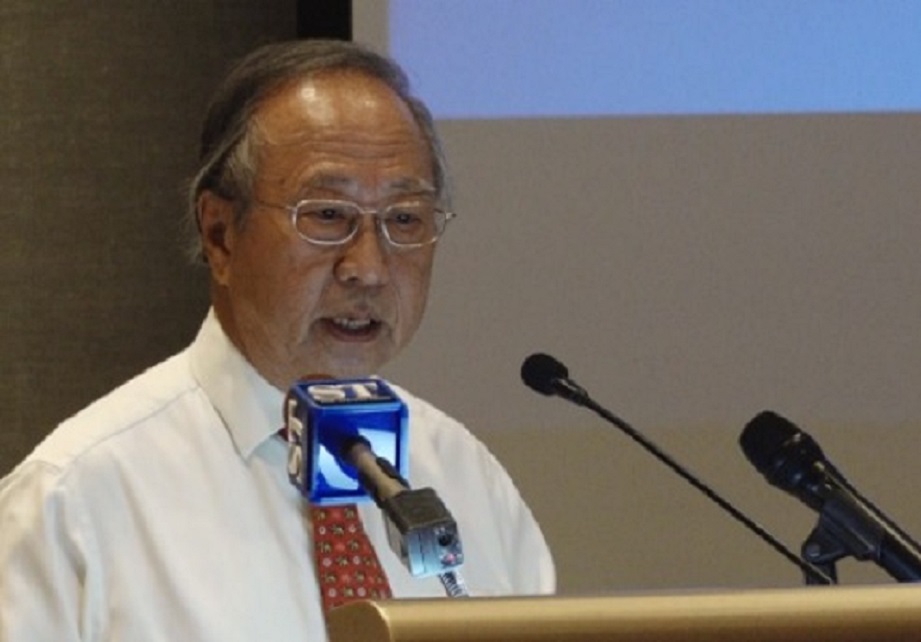
    Speaking to reporters at the end of the hearing, Tan said, “It is not just acceptance (of the government’s decision), we must question it…If at the end, it is found we were wrong, then we accept it. That is what democracy is about: exchange of ideas.”

    His wife Cecilia added, “If we are right, the government should accept it as well.”

    Source: https://sg.news.yahoo.com

  • Singaporean Malays Should Endorse Dr Tan Cheng Bock As Malay So He Can Contest EP

    Singaporean Malays Should Endorse Dr Tan Cheng Bock As Malay So He Can Contest EP

    Halimah Yacob is considered a Malay by the Malay community. Therefore, we should not fetter about trying to say Halimah Yacob is or is not Malay.

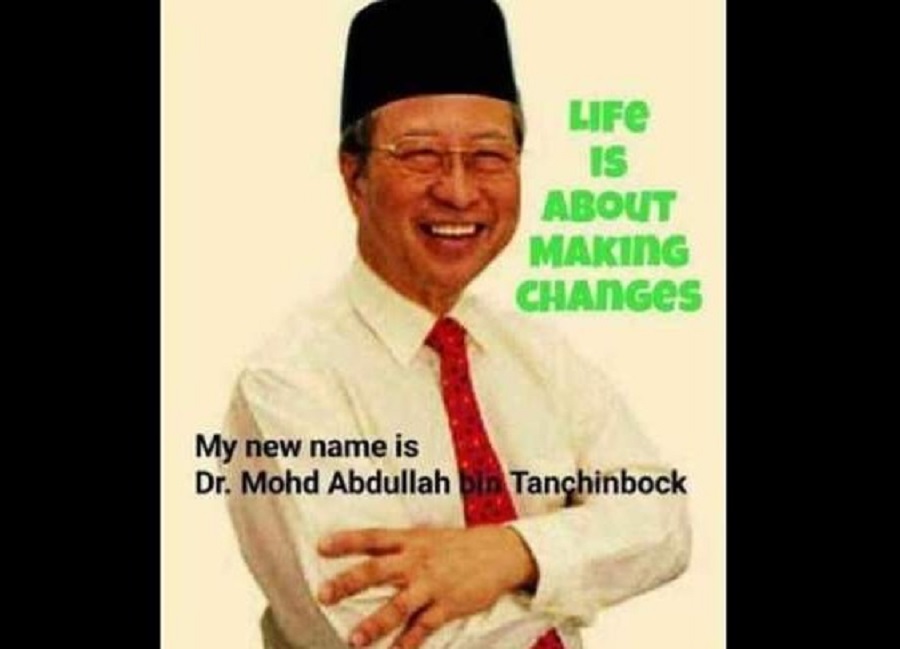
    Instead, start by going to your local Malay community, neighbours, void decks, and convince your Malay friends/co-workers to consider Tan Cheng Bock as a Malay by the Malay community. (He does not need to be Muslim. Malay!= Muslim).

    Being part of the Malay community does not mean you have to be Malay by race, many Indians, Sarawakan, Peranakan, Javanese, Arabs can be considered Malay even though they are distantly related by race.

    As long as The Bock is legitimized as a member of the Malay Community, he would be eligible to run as President.

    Source: www.allsingaporestuff.com

  • Armed Robbery At Upper Bukit Timah Shell Petrol Station, Man Has Been Arrested

    Armed Robbery At Upper Bukit Timah Shell Petrol Station, Man Has Been Arrested

    A 48-year-old man has been arrested after a case of armed robbery at a Shell petrol station along Upper Bukit Timah Road on Monday (Jul 31).

    The police said it was alerted to the incident at 219 Upper Bukit Timah Road at about 12.50pm, and the suspect was arrested at around 4.50pm.

    Channel NewsAsia understands that the suspect, who was armed with a knife, took off with about S$1,000 from the petrol station.

    In a statement, Shell Singapore said its staff and customers were not injured.

    “As this incident is currently under police investigation, we are unable to comment further. The station has now resumed its business operations,” it added.


    Source: http://www.channelnewsasia.com/