Tag: Singaporeans

  • Speaker Halimah Yacob To Run For The Presidency: Sources

    Speaker Halimah Yacob To Run For The Presidency: Sources

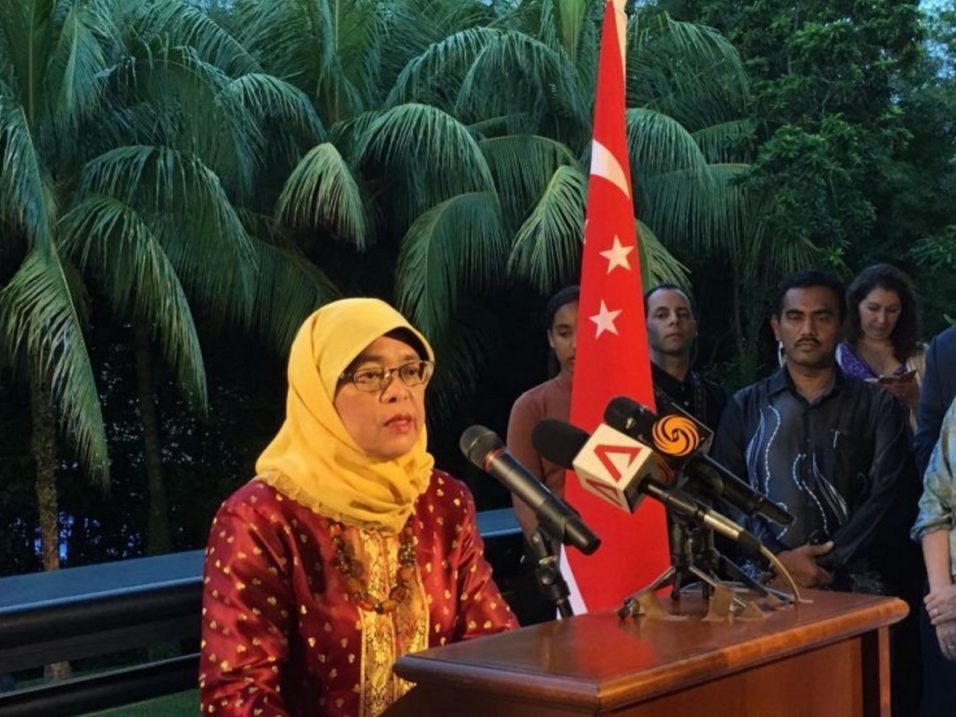
    Speaker of Parliament Halimah Yacob has decided to run in this year’s presidential election (PE), according to a source close to the 62-year-old.

    Halimah, who is also a Member of Parliament for Marsiling-Yew Tee GRC, has communicated her decision to run in the September election to grassroots leaders and People’s Action Party (PAP) activists, the source told Yahoo News Singapore on Thursday (27 July).

    The former union leader said that she is sad to leave her constituency after having served there for the past two years, added the source.

    When Yahoo News Singapore asked Halimah to comment on her bid for the presidency, she replied, “No. I am still considering.”

    Earlier this month, Halimah told reporters that she is thinking about running for the presidency. “The elected presidency is a very heavy responsibility and an important institution in Singapore, so it’s not something that one should take lightly,” Halimah said then.

    Signs of her impending run for the presidency have been growing for months. Another source in the PAP told Yahoo News Singapore that Halimah had indicated to party members as far back as March that she was planning to run for the country’s top office.

    If Halimah were to be elected as president, Singapore’s already strong ties with the Muslim-majority countries in Southeast Asia would be further enhanced, said the second sourceThis year’s PE has been reserved for Malay candidates following amendments made to the Presidential Elections Act earlier this year.

    Trained as a lawyer, Halimah began a long association with the labour movement in 1978 when she joined the National Trades Union Congress as a legal officer. She eventually rose to become Deputy Secretary-General of NTUC.

    The mother of five entered politics in 2001 when she successfully ran as part of the PAP team that contested Jurong GRC. The team was re-elected twice before she crossed over to Marsiling-Yew Tee GRC for the 2015 General Election, following the redrawing of electoral boundaries.

    Along the way, she also served as Minister of State at the Ministry of Community Development, Youth and Sports and the Ministry of Social and Family Development.

    In 2013, Halimah became Singapore’s first female Speaker of Parliament, replacing Michael Palmer after he was forced to step down over an extramarital affair.

    Prior to Halimah’s announcement, two other potential candidates, Farid Khan and Salleh Marican, had also announced their intention to run for the presidency.

    Farid, the chairman of Bourbon Offshore Asia Pacific, made the announcement at a press conference held at the Village Hotel Changi on 11 July.

    Salleh, the Second Chance Properties founder and CEO, spoke to  Yahoo News Singapore in an exclusive interview about his candidacy and Halimah as a potentially strong opponent in the election.

    Halimah has been stepping up her engagements with the unions, senior public servants and other groups in recent weeks, according to the posts on her public Facebook page.

    Halimah has been meeting union leaders and workers from the steel, petroleum, HDB, chemicals and other industries. She met with the French ambassador to Singapore, Marc Abensour, on Monday. At a dialogue organised by the Institute of Policy Studies on 17 July, she had a discussion with 50 corporate associates about improving Singapore and the lives of Singaporeans.

    In a Facebook post on her dialogue session with union leaders on Wednesday, she said, “We’re all fellow Singaporeans and regardless of race, we have stood together in solidarity for a common cause of securing a better life for our workers.

    “During our dialogue, I am reminded that it’s been almost 40 years and we shared many experiences of heartaches and celebrations of our journey together. There will be more to come as we strive to build a stronger Singapore for the next generations.”

    Source: https://sg.news.yahoo.com
  • The Lives They Live: She Fell For Her Man After Marriage

    The Lives They Live: She Fell For Her Man After Marriage

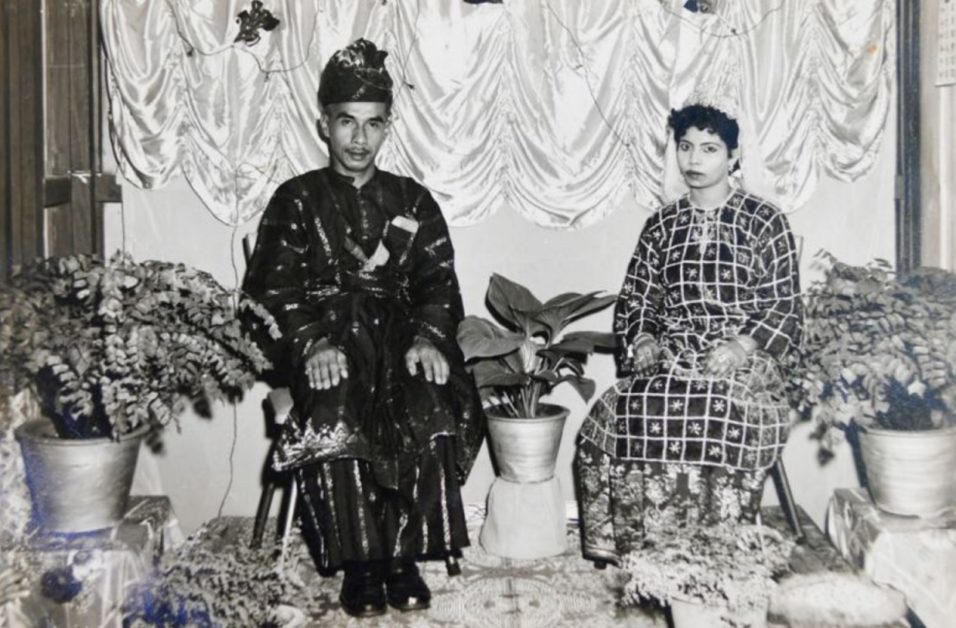
    In 1961, Madam Zulaika Mohamad Osman agreed to marry a man she had never met.

    She was 21.

    He was double her age, at 41 – a widower with one daughter.

    The matchmaker was a Chinese neighbour of hers, who worked with Mr Ismail Awang in the same construction company.

    Madam Zulaika, who has never gone to school, said in Malay: “My neighbour told me my husband was a good man and he would make a good husband and father. I said ‘yes’ immediately as I trusted my neighbour as he was like family to me.”

    Arranged marriages were the norm in those days, the 77-year-old said, and it did not occur to her that she should try to get to know her suitor before saying “I do”.

    So she said “yes” to the big question – without even knowing what her groom looked like or dating to see if they were compatible.

    About a month after she agreed to the match, Mr Ismail, a storeman, went to her home to propose marriage through her elders and the couple met for the first time.

    She was so nervous during that first meeting that she grabbed a relative’s baby to cover her face when he asked to see her.

    And she spent the rest of his visit hiding in the kitchen.

    They did not speak at all.

    “When I saw my husband for the first time, there were no feelings (of love). The feelings came later,” she said. “What struck me was that his hair was white. Even his eyebrows were white.”

    Three months later, they held their wedding ceremony.

    Match-made unions were the norm in Singapore back then, noted sociologist Mathew Mathews. The practice died out as a growing number of women became educated, joined the workforce and sought to make their own choices in life, he said. However, in pre-independence Singapore, educational and employment opportunities for women were limited and being match-made by one’s parents or relatives was the norm. Besides, everyone was expected to get married and start a family, said the senior research fellow at the Institute of Policy Studies.

    “There was also a greater expectation to follow parental wishes and one of the parents’ roles was to help ensure a good marriage match for their children,” he said.

    “Arranged marriages have always been associated with growing in love, rather than falling into love. Today’s notions of marriage differ considerably – people often don’t enter into marriage unless they fall in love.”

    Indeed, Madam Zulaika and Mr Ismail grew into love. Both shared common experiences, having suffered the loss of loved ones.

    She was an orphan. Her mother died of tuberculosis when she was just five. Her father, who did maintenance work in a market, died of a heart attack when she was in her teens. The second of six children, she started earning her own keep by washing clothes for others when she turned eight or nine.

    He was just as bereft, having lost his first wife and two children to various illnesses. He was left with just one daughter.

    After marriage, Mr Ismail became a hands-on husband and father, who helped around the house.

    This was unlike Madam Zulaika’s experience with other men.

    Growing up, all the men she saw left the chores and child-rearing to the women but not her husband. He changed diapers, bathed the children and helped with housework.

    “He also treated my family very well. He was very kind and would always help others. He was also a very gentle person,” she said.

    After a few months of matrimony, she found herself falling for his kindness and gentleness.

    He was ever ready to open his wallet and even his house to those in need. For example, he bought groceries for a relative whose husband abandoned her so that she would not go hungry. Relatives who needed temporary shelter were always welcome at their three-room flat in MacPherson.

    But Mr Ismail died suddenly of a heart attack after 17 years of marriage. He was 58 years old.

    The first few years after his death were the toughest. The couple have six children – two sons and four daughters. Their youngest child was only nine then.

    Madam Zulaika, who had worked throughout her marriage as a cleaner, continued to do so and only stopped in her late 40s when her children were all grown up.

    Today, five of her six children are married – and as a reflection of the times, all married for love. None of them went for arranged unions.

    This is a relief for Madam Zulaika who said she did not have to worry about her children’s marriages as they found spouses on their own.

    The youngest child, Ms Saleemah Ismail, 48, who is single and works in a charity, said of her parents’ marriage: “My parents had a great marriage and we grew up in a loving and nurturing home.”

    Madam Zulaika is now a grandmother to 11 and has three great grandchildren.

    “I miss my late husband and his gentleness. But my children love me the way that he loved me and so I don’t feel any missing holes in my life,” she said. “I feel we were destined to be together. I feel very lucky to have married him.”


    Source: http://www.straitstimes.com

  • Singapore Graduate Marries Malay Man In Secret Against Racist Mum’s Wishes

    Singapore Graduate Marries Malay Man In Secret Against Racist Mum’s Wishes

    I first got together with my Malay Muslim husband when I was 17 and I converted when I was 18. 2 weeks after I turned 21, we got married and have been happily married for the past 4 years. When I got married, I didn’t dare tell my racist mother as I was the only child. We also faced a lot of resistance from his mother because I wasn’t Malay. My mum only knew about my marriage after I graduated from university. I didn’t tell her not because I didn’t have the guts, but it was because I didn’t want her unkind words to poison my new marriage.

    She’s tolerating of my husband now, and she’s unable to make anymore snide remarks on seeing that I’m a thousand times happier living with him than I was with her. I went for the Islamic religious courses, do believe in Allah, but until today my mum has no idea that I converted. I don’t eat pork and I never found the Islamic laws to be much of a restriction to my daily life.

    I think when you’ve found the right guy to stick with you through thick and thin, nothing else matters. But choosing the right guy is really really important. Everything else is just secondary. Choosing my husband when I was 17 was the best decision of my life. I can’t imagine what my life would have turned out to be without him.

    Btw, he’s 12 years older than me, so I had lots of people judging us. People would ask, why you marry a Malay guy. And each time I faced their questions with a strong pride in my voice, “why not?” That usually shut them up. When we go out we overheard other people’s remarks like “got no Chinese guy to find meh?” But I never had to give them any fucks because I’m proud of my choice, and proud of my interracial marriage. Let the haters bitch as much as they want.


    Source: https://www.allsingaporestuff.com

  • Eggs When Splattered Cannot Be Unscrambled; Orchard Road

    Eggs When Splattered Cannot Be Unscrambled; Orchard Road

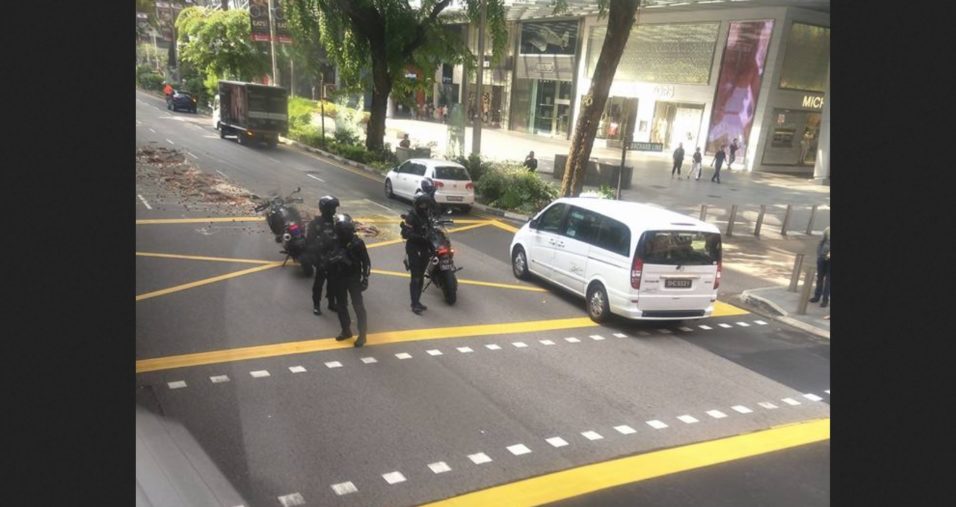
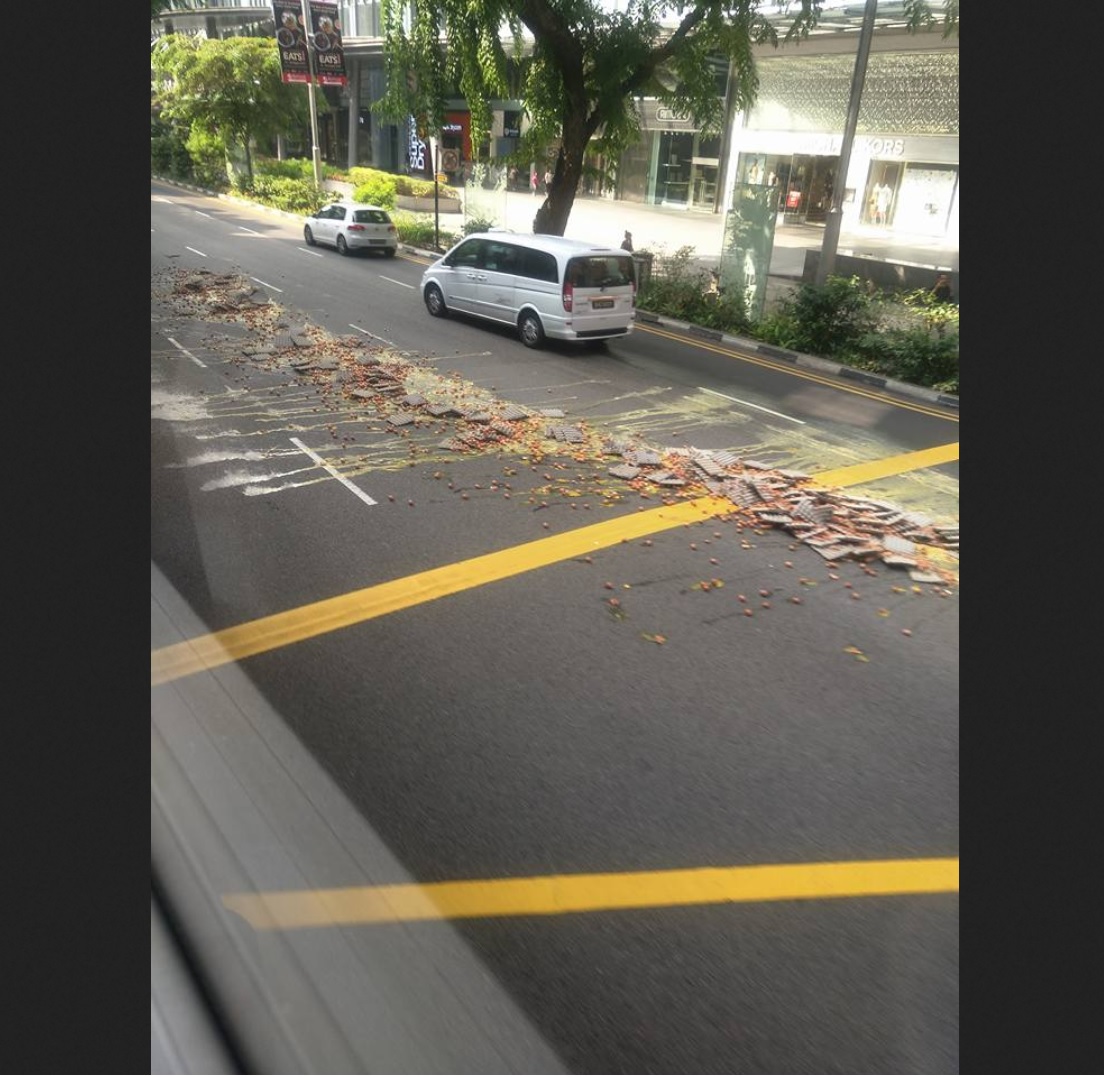
    Early this morning a cartons of eggs, believed to have fallen out of a vehicle, blocked off at least one lane along Orchard Road.

    The spillage of broken eggs, on the second lane outside Mandarin Gallery, stretches for about the lengths of three fire engines. Some might say that it looked like a work of art. An interesting piece too.

    Photos of the scene quickly spread over the internet.

    The driver whose eggs belongs to was not there and is believed to have fled the scene.

    Surprisingly the splattered eggs did not seem to have caused damaged to vehicles in the area either based on the photos.

    Some road users were actually more surprised to see fully armed police in black directing traffic at the incident area. There were four of them standing beside two motorbikes. It is not clear if they happened to be in the area or that they were actually tasked to render assistance.


    Moral of the story: This is why you don’t place all of your eggs in one basket. Lorry driver mana??


    Rilek1Corner


  • Commentary: MPs Running TCs Is A Terrible Idea. Skill Set Of Good TC Manager Entirely Different From That Of MP

    Commentary: MPs Running TCs Is A Terrible Idea. Skill Set Of Good TC Manager Entirely Different From That Of MP

    MPs running town councils is a terrible idea that largely only serves to effectively stifle opposition politics in Singapore by raising near impossible barriers to entry.

    The skill set of a good town council manager is entirely different from that of an MP. The council manager is a real estate manager of a massive public cum private housing estate and infrastructure. This requires specialist skills and experience and is rightfully the work of a well resourced public stat board like the HDB who used to manage all estates before MPs ran town councils or mayoralties.

    Singapore HDB and housing residents deserve the expertise and economies of scale possessed by HDB and public agencies in running their precincts rather than have such management and investment in needed infrastructure improvements be held hostage to shorter term political manoevering or lack of experience or resources over electioneering cycles.

    An MPs job on the other hand is to primarily question policies and legislation in parliament on behalf of the electorate. This requires a total different skill set and the substantial time and resources needed to do this effectively.

    He or she also to see that the needs of his constituents are met efficiently and adequately by relevant agencies not to be bogged down by the Augean task of managing huge hosing estates him or herself. Especially if they have to duplicate management systems that previous incumbents refuse to share.
    Not to mention the duplication of administrative resources by different electoral precincts.

    Finally and equally importantly, the provision of estate management services and allocation infrastructure is a public good and should never be used as a political tool.

    The bulk of most citizens net worth or life savings is in their home. To have its value held hostage to voting in a powerful incumbent government that controls the agencies responsible for such activities is both a breach of citizens rights as well as a recipe for authoritarian rule.

    And to make relatively inexperienced opposition MPs financially liable for any mismanagement in spite of best intentions is to effectively raise the bar for an opposition politician that would otherwise be effective in questioning policies way too high to be of any real benefit to citizens.

    The public is thus short changed both ways in terms of optimal public housing management as well as political representation.

    Please note that all this cuts institutionally both ways. If the PAP ever found itself in minority opposition again , it may never be able to return from the political wilderness beyond the impregnable walls of their own creation.


    Source: Lam Keong Yeoh