Blog

  • Sultan Johor: Such Practices Will Result In Suspicion Among Non-Muslims, Wrongly Portray Muslim Life As Extreme, Intolerant And Unjust

    Sultan Johor: Such Practices Will Result In Suspicion Among Non-Muslims, Wrongly Portray Muslim Life As Extreme, Intolerant And Unjust

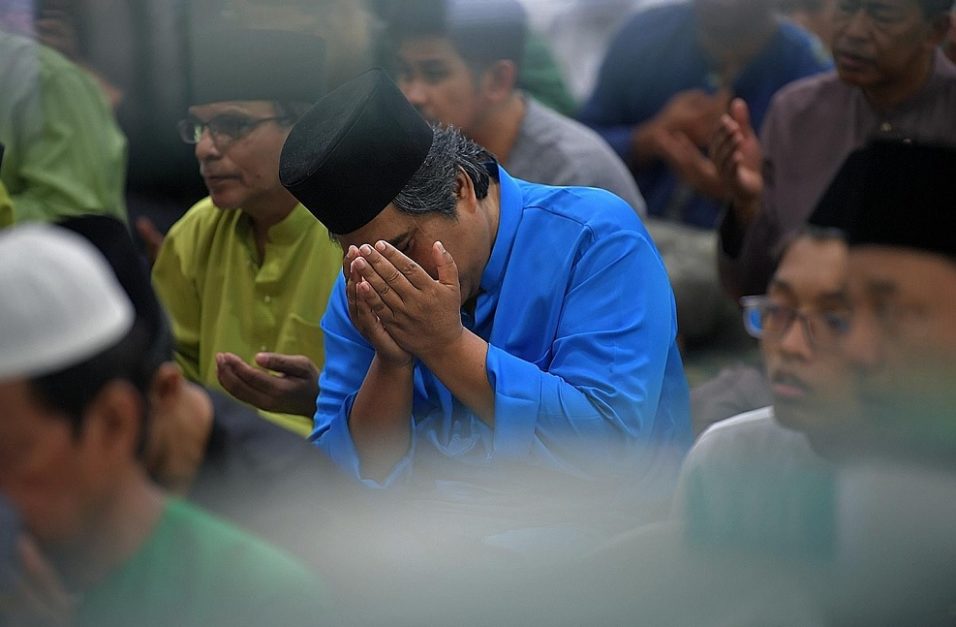
    Discriminating against non-Muslims on the pretext of religion will ultimately be detrimental to all Malaysians, Johor’s Sultan Ibrahim Iskandar explained on Saturday (Oct 14).

    In his speech during the convocation of Universiti Tun Hussein Onn Malaysia on Saturday, he expanded on his decision to order a laundry in Muar to discontinue its Muslim-only policy.

    Sultan Ibrahim said such practices would not only result in suspicion among non-Muslims, these would also wrongly portray Muslim life as extreme, intolerant and unjust.

    Citing currency notes as an example, he said money was handled by all manner of society, including those who would clearly be considered ritually unclean in Islam.

    “The same money may have been touched by pork butchers, bartenders and may even have come into contact with heavy filth.

    “Must the government then come up with Muslim-friendly notes? Think for yourselves, ladies and gentlemen,” he said.

    Sultan Ibrahim previously ordered the laundry in Muar to stop the discriminatory practice, saying Johor was not a Taliban state and that the laundry operator was free to move to Afghanistan if he disagreed.

    Preacher Zamihan Mat Zin later criticised “a sultan” over the matter, resulting in his arrest for sedition.

    Mr Zamihan later denied that he was referring to Sultan Ibrahim, but the Johor ruler called the preacher a “liar” on Saturday for the attempted denial.

    Sultan Ibrahim also directed the Johor Islamic Religious Department to cease all dealings with the Malaysian Islamic Development Department (Jakim) that employs Zamihan.


    Source: http://www.todayonline.com/

  • ST Commentary: Of Minorities, Majorities And Sensitivities Across Race And Religion

    ST Commentary: Of Minorities, Majorities And Sensitivities Across Race And Religion

    Do individual Muslims have a special obligation to speak up when radicalised Muslims are in the news for attacks or arrests – such as by condemning the acts or clarifying that Islam is a religion of peace?

    Some non-Muslims in Singapore think so, and it can cause unease among their Muslim friends.

    This discomfort was given voice in Parliament this month, in speeches by two Muslim MPs, in the debate on a motion to strengthen multiracialism in the fight against terror.

    Ms Rahayu Mahzam (Jurong GRC) cited a conversation with a non-Muslim friend about terrorism. She was made to feel defensive and frustrated when he pressed her to say what “true Muslims” were doing to address the problem.

    “I told him, I do not know these people, I do not understand their psyche and it was unfair to put the burden on Muslims alone to resolve this issue,” she said.

    She found a similar situation playing out on social media, noting: “I saw many Facebook postings of Muslim friends condemning the terrorist attacks but also expressing similar frustrations of having to explain to non-Muslim friends that the terrorists’ actions were not aligned with Islamic teachings.”

    Dr Intan Azura Mokhtar (Ang Mo Kio GRC) also warned against “religious suspicion against the Muslims”, adding that “we cannot allow Muslims to feel apologetic for what these terrorist groups – which proclaim to carry out their heinous acts in the name of Islam – have done”.

    It is not that non-Muslims are not allowed to expect anyone from the Muslim community to come out firmly against terrorism or to detail what is being done about the problem within the community. The point here is that they should not expect each and everyone in the Muslim community to have to explain themselves to the satisfaction of any non-Muslim who happens to have doubts on where they stand.

    The fact is, each time someone in the Singaporean Muslim community is implicated in terrorist activity or detained for being radicalised, prominent representatives of the community do issue statements setting out in no uncertain terms the view of the community as a whole. These representatives may be from the Islamic Religious Council of Singapore or other groups, such as the Federation of Indian Muslims, or they may be political leaders who are Muslim. These statements should suffice.

    Non-Muslims should accept them in good faith as being representative of the views of Singaporean Muslims in general – which they are – and not require each individual Muslim they meet in the course of the day to have to prove his or her sincerity afresh.

    Pressing individual Muslims on the issue in person and on social media or requiring them to speak apologetically or to feel apologetic reflects an underlying distrust. It can feel like a slight. It is incumbent on non-Muslims here to be sensitive in their words and actions.

    The reality on the ground is that the Muslim community in Singapore is far more committed to multiculturalism and far less inclined towards the radical ideology of groups like the Islamic State in Iraq and Syria and Al-Qaeda than Muslims in most countries.

    The radicalised segment of Muslims here is very small by proportion. Furthermore, they receive virtually no support from the wider community. There is thus no basis for the kind of scepticism implied by the encounters Ms Rahayu spoke about. (If the radicals in fact receive a lot of latent warmth from ordinary Muslims, then it would be a different story. But that is not the case.)

    What non-Muslims should do, therefore, is: first, understand there is a majority who are distinct from a very small minority, and second, not let that minority colour the way they interact with the majority. But it is possible that the corollary is also true – that Muslims need to approach the issue in a similar way.

    Muslims can see things this way: There is a small minority of non-Muslims who lack prudence in the way they converse with Muslims on the issues of terrorism and radicalism. The broad majority of non-Muslims are not like that – they understand the subtleties or, if not, they are careful not to broach the topic. If this is true, then Muslims too should not allow the actions and words of a minority among non-Muslims to colour their interactions with the majority of non-Muslims.

    In other words, the majority of Muslims and the majority of non-Muslims – who together are the majority of Singapore – instinctively understand, believe in and show respect for multi-religious norms.

    But the two minorities complicate the picture – a Muslim minority who are radicalised, and a non-Muslim minority who are callous or ignorant in the way they speak or act.

    The worst outcome for Singapore is for the two minorities to be allowed to dominate the narrative, thereby dragging the whole of society into an insalubrious atmosphere of suspicion and counter-suspicion.

    The two majorities need to do two things. Each majority must draw a line of principle between itself and its minority, and it must then stand in solidarity with the other majority, so that society stays united.

    In the aftermath of terror attacks in the West, this majority-minority dynamic is often in play.

    In Britain, London and Manchester have reported sharp spikes in the number of anti-Muslim hate crimes after terrorist attacks in the two cities this year – that is, a minority of Muslims conducting attacks on society, and a minority of non-Muslims carrying out just as malignant reprisals on Muslims.

    But when the two majorities defend one another and show solidarity, they can prevail.

    An example of this was the #illridewithyou campaign, a social media campaign in Australia after the Sydney cafe hostage incident in 2014. Non-Muslim Australians offered to ride on public transport with Muslim Australians, to ensure the latter’s safety.

    When the two majorities stand as one, the two minorities are forced back into their dark corners on the fringe of society.

    In Singapore, no physical attack has happened yet, in one direction or the other. But if the country can guard against verbal unpleasantries, like those highlighted in Parliament this month, then there can be more confidence about preventing physical ones too.


    Source: http://www.straitstimes.com (Elgin Toh, Insight Editor)

  • 8 VS 3, All Myanmar Nationals, Fight Over Cigarettes At Peninsula Plaza, Seven Of Them Got Jailed 12 Months

    8 VS 3, All Myanmar Nationals, Fight Over Cigarettes At Peninsula Plaza, Seven Of Them Got Jailed 12 Months

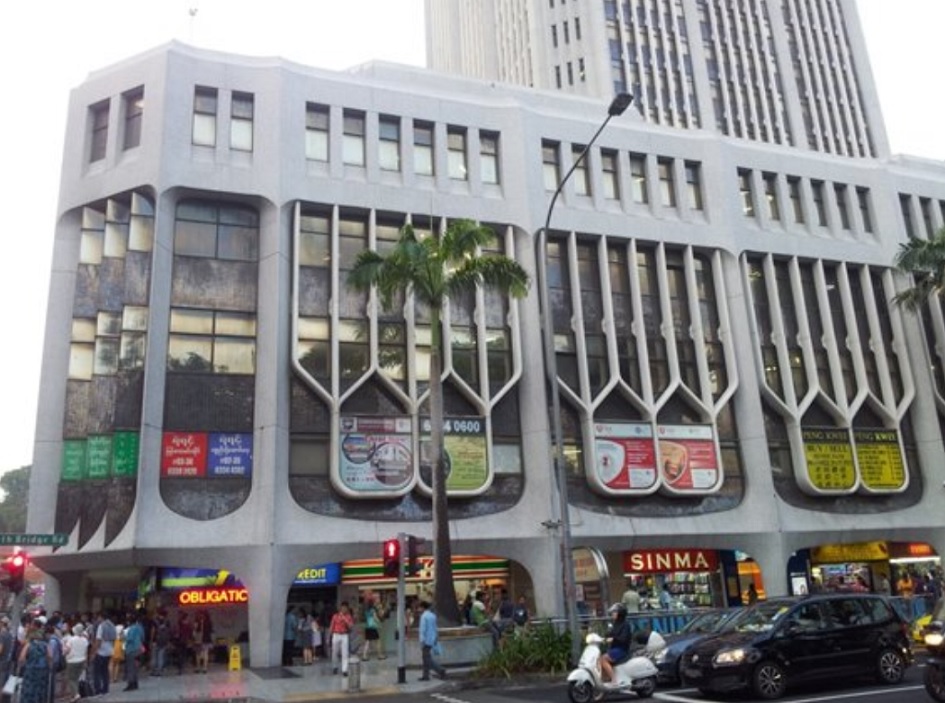
    Seven Myanmar nationals were sentenced to 12 months’ jail for rioting after they got into a fight with three fellow countrymen over cigarettes at Peninsula Plaza.

    The court heard on Friday (13 October) that on 4 June this year, Cung San Eng, 26, Tluang Uk, 39, Ronal, 30, Lal Tha Siama, 25, Thaung Sun, 29, Van Liaw Aung, 30, Aung Maw, 23, and another unknown male had been consuming alcohol since 3pm near Peninsula Plaza. The seven accused, who pleaded guilty to one charge of rioting, are work permit holders working in marine dredging, shipyards and construction.

    At about 10:35pm, a dispute broke out between the group of eight and a group of three other Myanmar nationals over cigarettes and a fight ensued.

    One of the victims, Wunna, 32, fell as a result of the scuffle. Several of the accused rained punches on Wunna as he lay on the ground. Wunna’s friends Pyae Phyo Zaw, 31, and Min Zaw, 40, attempted to stop the fight but were also assaulted by the group.

    The entire incident lasted for about one and a half minutes. Police arrived at 10:45pm and arrested Cung San Eng, Tluang Uk and Ronal. The rest were arrested after follow-up investigations.

    Deputy Public Prosecutor Claire Poh asked for a sentence of at least nine months for each of the accused, whom she said were part of an unlawful assembly. DPP Poh pointed out that the injuries to Wunna were not minor and that he had suffered a partially dislocated right foot and was given a week’s medical leave.

    In mitigation, the seven Myanmar nationals, who were unrepresented, said through an interpreter that they hoped for leniency. They told the court they were supporting their families in Myanmar and did not have income for four months since they were remanded.

    Referring to the December 2013 Little India riot, District Judge Imran Abdul Hamid said that Singapore takes a “very serious view of rioting offences”. As such, he said that the sentencing needed to be a deterrent so that Peninsula Plaza, commonly known as “Little Myanmar”, does not go the way of Little India.

    DJ Imran backdated each person’s sentences to the date when they were first remanded in June.

    Addressing the group, DJ Imran said, “My advice to you when you go back to Myanmar, tell your friends and family desiring to come to Singapore: Don’t mess around with our laws.”

    The group could have faced a maximum jail term of seven years and been liable to caning.

    Source: https://sg.news.yahoo.com

  • Legal Suit Against MOE And SPF For Death Of Benjamin Lim

    Legal Suit Against MOE And SPF For Death Of Benjamin Lim

    We, the immediate family of Benjamin Lim Jun Hui are writing this letter to members of the public to seek financial donation to support legal action against Ministry of Education and the Singapore Police Force.

    Benjamin passed away on 26 January 2016, the same day he was taken to Ang Mo Kio Police Division from North View Secondary School (unaccompanied by any adult from his family or school ) during school hours for questioning in relation to an alleged offence.

    He was brought back home on the same day by his mother and Sister after spending more than three hours in the police station where he underwent interrogation, and jumped from height to his death after a call was made by the School Counselor to his Mother later that afternoon.

    The family has been advised that the case raises many troubling issues regarding the duty of care expected of our schools towards school children and also the care owed by our police force to members of the public. We therefore appeal to concerned citizens to help us in our cause.


    The family of Benjamin wishes to seek justice for him. The family has engaged a lawyer and raised about S$15K to fight the case. However, legal action of this nature is financially very challenging and will cost a lot more than $15K.

    We therefore appeal to concerned members of the public for support to fund the legal challenge, which may run to hundreds of thousands of dollars.

    For anyone who wish to contribute directly via bank account, you may transfer any amount to POSB saving account (bank account hidden). This account was recently set up by the family to gather funds for the purpose above stated.

    We thank you for your support and do feel free to write to us at (email hidden) if you have any questions or if you need further clarification.

    ***

    Editor’s note: Those who would like to contribute, may do so at: https://give.asia/story/legal_suit_against_moe_and_spf_for_death_of_benjamin_lim


    Rilek1Corner

  • Mengapa Kita Tak Boleh Makan Kentang Yang Telah Keluar Tunas & Bahaya? Ini Sebabnya

    Mengapa Kita Tak Boleh Makan Kentang Yang Telah Keluar Tunas & Bahaya? Ini Sebabnya

    Pasti ramai yang pernah makan kentang yang dah keluar tunas dan selalunya kaum ibu yang akan selalu jumpa kerana kerap berada di dapur disebabkan ianya disimpan dalam jangka masa terlalu lama. Selalunya kentang yang dah bertunas tu, ramai yang terus makan saja kerana sayang nak buang sebab disimpan dalam kuantiti yang banyak. Tetapi, sebenarnya tindakan sebegitu adalah sangat memberhaya kepada kita seisi keluarga. Mengapa? Berikutnya adalah sebab-sebab bahaya makan kentang yang sudah bertunas.

    Sebab 1 : Awas! Boleh Sebabkan Sakit Perut
    Kentang yang sudah bertunas warnanya akan berubah menjadi kehijau-hijauan. Rasa kentang pun jadi pahit sedikit. Keadaan inilah memberi bahaya pada sistem pencernaan kita sehingga boleh menyebabkan sakit perut. Kerana kentang tersebut sudah beracun. Ia disebabkan adanya unsur kimia pada batang tunas kentang. Rupanya bukan setakat kentang, lobak merah, bawang bombay dan sebagainya jika sudah mengeluarkan tunas, ia tidak lagi sesuai untuk dimakan.

    Sebab 2 : Sakit Kepala Salah Satu Punca
    Jika anda mengambil dalam jumlah yang sedikit, ia mungkin tak memberi kesan. Tapi jika makan dengan kadar yang banyak, ia berisiko bukan setakat mengganggu sistem pencernaan. Malah boleh menyebabkan mual, perut menjadi kejang, muntah dan sakit kepala.

    Sebab 3 : Kentang Kulit Hijau Beracun
    Kentang yang berkulit hijau ni biasanya kita jumpa pada kentang yang dah tersimpan lama sampai ia mengeluarkan tunas. Kentang jenis ini mengandungi solanin dan ada alkaliod jahat. Dalam tanaman kentang sendiri ada solanin, iaitu bahan kimia yang memberikan rasa pahit. Dan ianya beracun. Solanin ini boleh ditemui pada daun batang dan sesetengahnya di bawah kulit ubi kentang itu sendiri. Sebab itulah anda perlu menanam saja bila kentang di dapur sudah bertunas.

    Sebab 4 : Ia Sudah Kehilangan Nutrisi
    Semasa kentang bertunas, pati yang ada di dalam kentang akan diubah menjadi gula. Penyelidik mendapati sekiranya bahagian utama kentang masih kuat, ia masih mempunyai nutrisi yang baik. Sebaliknya jika keadaan kentang itu mengecut, ia tidak boleh dimakan. Nutrisinya hilang sama sekali.

    Sebab 5 : Mengundang Risiko Kanser
    Dalam kentang terdapat sejenis zat beracun dipanggil akrilamida. Dalam kajian yang dijalankan, akrilamida dalam makanan boleh menyebabkan kanser yang menyerang ginjal, endometrium dan ovari. Sebab itu dilarang menyimpan kentang dalam peti ais. Sebaiknya simpan di kawasan yang gelap yang tidak terkena matahari. Ini untuk mengelakkan kentang daripada bertunas. Kentang yang sudah bertunas sudah tentu mempunyai akrilamida yang banyak.


    ***


    6 Tip Pilih Kentang Terbaik
    1: Permukaan Kentang Biarlah Yang Licin
    Permukaan kulit kentang yang licin dan tak beralun mempunyai rasa yang manis berbanding permukaan kulit kentang yang kasar.

    2: Kalau Berat.. Dah Betullah Tu
    Kentang yang baik, ia perlulah berat. Mak-mak takkan jumpa lubang dekat permukaannya, tak merekah apatah lagi busuk pada sesetengah bahagian. Cari yang kulit tebal dan ada garisan warna coklat pada kulitnya.

    3: Warna Kentang Kena Kuning Muda
    Jangan sesekali ambil kentang yang berwarna hijau. Ia sudah mengandungi racun sebenarnya. Nanti rasanya pahit dan boleh menyebabkan sakit perut.

    4: Jangan Pilih Yang Dah Bertunas
    Dah taukan sebabnya, jadi bila nampak yang dah bertunas elakkan membeli. Melainkan anda mahu menanamnya di rumah untuk dijadikan ubi kentang.

    5: Saiz Kentang
    Kalau anda hendak membuat kerepek, pilihlah kentang yang bersaiz besar. Jika mahu dijadikan kentang bakar, yang kecil sudah memadai. Malah rasanya lebih manis.

    6: Jangan Simpan Dalam Plastik
    Seeloknya segera keluarkan kentang yang anda beli di pasaraya dari dalam plastik. Ini untuk mengelakkan daripada ia cepat busuk. Anda tak perlu mencucinya, sebaiknya simpan dalam bekas yang tidak terdedah dengan matahari.


    Source: Mingguan Wanita

deneme bonusu