Tag: Asatizah Recognition Scheme

  • What Lessons Can Be Learned From Singapore’s Religious Regulatory Framework?

    What Lessons Can Be Learned From Singapore’s Religious Regulatory Framework?

    The city-state has developed an interesting model, but one that cannot be lifted wholesale into other environments, writes HA Hellyer.

    In the last year, several cases of abuse perpetrated by Muslim religious figures have been widely discussed in Western Muslim communities. It is not relevant to comment too deeply on those cases in terms of specifics, that requires investigations that others are carrying out, but these examples brought up an interesting question. What do Muslim communities, particularly in the West, do when religious leaders are accused of carrying out ethical violations, which are not necessarily against the law, but are contrary to their commitments as religious leaders?

    As part of a broader project around the engagement of the Islamic tradition with issues of fundamental rights, I was interested in looking at different models that sought to address how ethical violations were being dealt with in Muslim communities. To that end, a very interesting model – if very particular to its own context – is being developed in Singapore.

    The inspiration for Singapore’s religious regulatory framework came from neighbouring Malaysia, where religious activity for Muslim preachers and teachers has been regulated for much longer. Indeed, the initial regulatory instrument of Singapore for Muslim religious activity – the AMLA – was inspired to a very large degree by a similar law in one of Malaysia’s federal states.

    That regulatory instrument brought the Majlis Ugama Islam Singafora (the Islamic Religious Council of Singapore) into life in 1968. Generally, that body did not really regulate religious leaders: it managed items such as zakat, mosques, the existence of a mufti and other administrative functions. That began to change in the late 1990s, when Pergas, an association for religious teachers, sought the establishment of a religious teachers recognition board. There was no particular appetite at the time, and thus it was left by the way side until the 9/11 attacks in the United States.

    It’s unfortunate indeed that it was the threat of extremism that led to this renewed concern in what is essentially a far wider and less negative concern. But nothing induces political will more than threats and in 2005, the Asatizah Recognition Board was formed to oversee the Asatizah Recognition Scheme. It remained a voluntary association for much of its existence and only became a legally established body last year.

    It’s an interesting model. It engages in the training of imams and religious teachers for different skills; it provides for a recognition of religious qualifications that may not come from widely recognised university establishments; indeed, the religious teachers themselves stand to gain a great deal from the model. But the ARB is also a disciplinary institution. It is a place where religious teachers who have been accused of ethical violations may be questioned. It is made up of religious teachers who are widely respected in the Muslim community.

    In that regard, the scheme operates much like a professional syndicate and officials engaged within it openly admit that they took a lot of inspiration from other professional syndicates in terms of what services the ARB ought to provide its membership. Regular skills training is provided and is a condition of membership. The skills are meant to ensure the religious training of the teachers in question are also contextualised to Singapore’s realities – much like how, for example, the Cambridge Muslim College in the UK, or the Zaytuna College in the US, are aimed at ensuring imams and religious teachers are fully aware of the social realities in which they live.

    But here is the catch – membership of the ARS is mandatory for any religious teacher. Without it, they cannot teach. More than that, the ARB can impose penalties on teachers who have run afoul of ethical prescriptions – penalties that can include fines or even imprisonment. There exists no other such regime for other religious communities in Singapore.

    I spoke to several officials and civil society activists engaged in the wider administration of Muslim religious life on a recent trip to Singapore – who, like me, seemed suspicious of any state power being utilised in the regulation of religious life in this manner. Some confided in me that to begin with they had opposed the compulsory nature of the scheme and weren’t entirely happy about certain aspects of how it was being imposed. And yet, at the same time, for those who were particularly engaged, they admitted there were problems with a few religious teachers, whom they thought required a certain heavy-handed approach. It’s clear there are teething problems, but almost no one I met in Singapore considered the existence of a compulsory syndicate for religious teachers to be a bad idea.

    It’s an interesting model and one that cannot be lifted wholesale to other environments. In the UK, for example, a legally imposed syndicate for religious teachers would raise genuine concerns around religious freedom. But the idea of a religious teachers’ syndicate is not so unusual. The main question is how to ensure it gains social credibility among the community it ministers to, and those who are to be its members, because legal compulsion of any kind may not be the answer in many contexts. How that is all to be done, particularly with such variety among Muslim Western communities, is yet to be seen and at the same time, given the clear problems that exist without regulation at all, it is probably only a matter of time before Muslim Western communities themselves create their own mechanisms. As they seek to do so, they might learn certain lessons from their Singaporean co-religionists.

    Source: thenational


    Rilek1Corner
  • A Singaporean In Iran: Life In A Shi’ite Seminary

    A Singaporean In Iran: Life In A Shi’ite Seminary

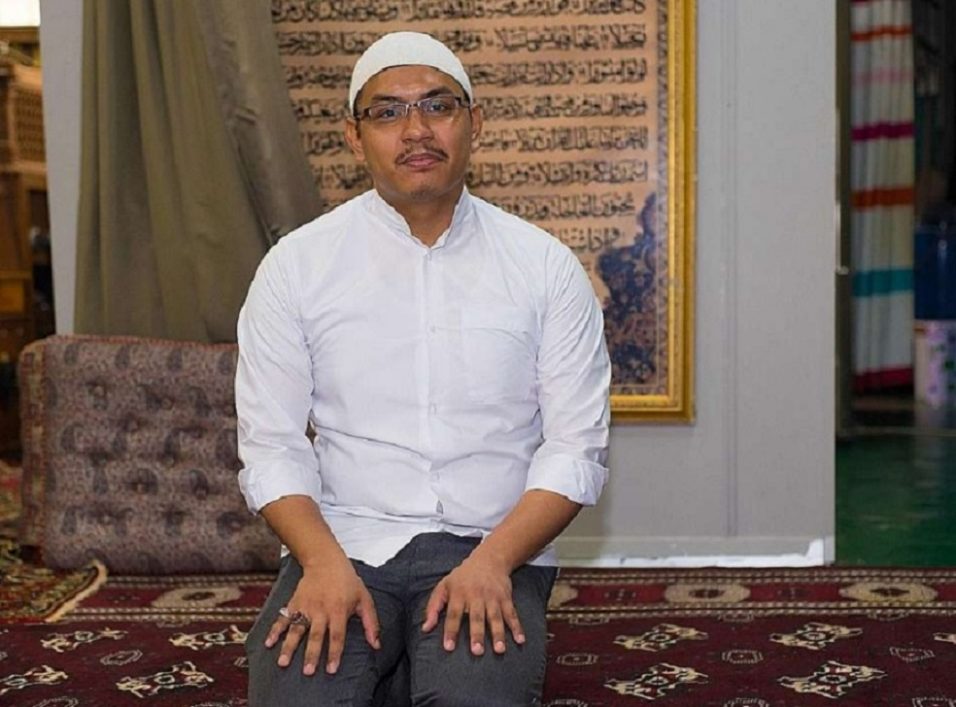
    Mr Ahmad Murtadha Rosli, 26, is not your typical Singaporean university student. He attends classes from 8am to 5pm every Saturday to Thursday and shares a dormitory with nine other students.

    His teachers are all men who wear turbans and long, flowing cloaks and teach using thick, vintage tomes. That is because Mr Ahmad is studying in a hawza that is a renowned Shi’ite Islam seminary in Qom, Iran.

    Shi’ite Islam is the second-largest sect of Islam, after Sunni Islam. Both branches agree on many aspects of the religion, but are divided over Prophet Muhammad’s rightful successor.

    More than 85 per cent of the world’s 1.5 billion Muslims are Sunni. In Singapore, Shi’ites make up less than 1 per cent of its Muslims, the majority of whom are Sunni.

    The hawza in Qom, home to about 70,000 students, teachers and academics, is the largest Shi’ite seminary in the world. Smaller seminaries exist in other parts of Iran and in neighbouring Iraq, and even in Canada and the United Kingdom. Hawza graduates are accomplished in fields like Islamic law and faith. Many go on to become religious teachers, while some end up in politics. Iran’s Supreme Leader, Ayatollah Ali Khamenei, graduated from Qom.

    The seminary attracts students from across the globe. Many come from India and Pakistan; others from countries like China, Austria and Russia. Singaporean students are rarer. Mr Ahmad’s father, Ustaz Mohammad Rosli Hassan, graduated from Qom nearly three decades ago. Now 52, Ustaz Rosli is the leader of the 5,000-strong Shi’ite community in Singapore.

    “My name was placed under ‘Thailand’ when I first joined because ‘Singapore’ wasn’t in its system,” said Mr Ahmad. “There were a few other students from Singapore but, sadly, they (didn’t finish), maybe because the way of living over in Iran is too different.”

    Since there was no other suitable candidate, Mr Ahmad added, he felt a responsibility to eventually replace his dad as leader.

    Ustaz Rosli said: “Not everyone likes that role; it is a very challenging role. The community needs leadership – whether it comes from my family or not, it doesn’t matter. I am happy that Ahmad is willing (to take over from me), but there are tough challenges ahead.”

    BACKACHES AND LONELINESS

    The seeds of Mr Ahmad’s calling were planted when he was a 10-year-old seeing the hawza for the first time during a holiday in Qom. “I always told my dad I wanted to go there,” he said.

    He attended secular schools and went from Yusof Ishak Secondary School to Ngee Ann Polytechnic, from where he graduated with a Diploma in Civil and Environmental Engineering. The decision to make the switch to a religious institution did not come easily.

    “Being a religious teacher, you won’t be earning a lot,” Mr Ahmad said, as he worried about raising a family and not having enough savings to buy an HDB flat. “I thought about all that – it’s a sacrifice I have to make for the community.”

    Two years ago, after completing his national service as a firefighter, Mr Ahmad packed his bags and left. “I thought it was like going to any other boarding school,” he said. “But at the end of the day, it’s a very different lifestyle.”

    Until recently, Mr Ahmad’s classrooms did not have air-conditioning, computers and projectors. When he stepped inside his small dorm, he was shocked to find bunk beds that did not come with mattresses. “I was sleeping on a wooden frame,” he said. “My back was aching very badly.”

    When it comes to classes, Mr Ahmad has the same timetable – comprising subjects like Persian, Quran studies and Islamic history – every day. Revision is done in pairs, where students take turns explaining a topic they learnt in class to each other. The school believes that encourages critical thinking and helps students to clarify misconceptions.

    Mr Ahmad also had to adapt to unfamiliar conditions in Qom, a desert city 125km south-west of the capital, Teheran. “Singapore is very green, but Qom is very brown,” he said. “If you leave your shoes outside for three days, it will be covered with dust.”

    On Fridays, when it is the weekend and there are no classes, Mr Ahmad plays football on a synthetic pitch with his friends from Malaysia. As meals are not provided on Fridays, they would cook dishes from home, like tom yam and chicken curry. “But it’s hard to find red chilli there,” he said. “Whenever someone visits, we would ask them to bring chilli powder or flakes.”

    However, the company of friends did not stop him from missing home. “Sometimes, I would be very lonely,” he said. “I would just sit in my room and look at old pictures on my phone.” Despite that, Mr Ahmad felt encouraged by his desire to please his parents, whom he described as “very religious”. “This is the time I can prove to them that I want to be successful,” he said.

    His moment of glory came when he scored full marks for an Arabic exam, a subject he initially struggled in because he lacked the foundation. “I would spend four hours doing my homework over and over again, just so I could get it right,” he recalled.

    Mr Ahmad plans to study in Qom straight through to a PhD in the fundamentals of Islamic law – a process that will take at least 10 years. He doesn’t intend to return to Singapore until his father “decides to retire one day, or if he’s too old or sick”.

    Right now, Mr Ahmad is taking a break from his studies. He has been back in Singapore since March last year to get married to his girlfriend of six years. The pair met and got together during their polytechnic days, when she was still a Sunni interested in the Shi’ite sect. About a year into their relationship, she switched over.

    “Before, her parents were good to me,” he said. “After finding out that I was a Shi’ite and that she was slowly converting, things changed.” When Mr Ahmad approached her parents about tying the knot, they rejected him. So, the pair went straight to the Registry of Muslim Marriages. According to the Administration of Muslim Law Act, a Muslim marriage can still be solemnised by a religious official, or kadi, even if the bride’s parents object to it. But after questioning Mr Ahmad about his Shi’ite background, the kadi refused to proceed with the marriage.

    “Now, we have to appeal through Muis (the Islamic Religious Council of Singapore); they are helping us a lot in settling the issue,” he said. Ustaz Rosli is confident his son will prevail in this “unwanted episode”. “Like it or not, he will be married officially in Singapore,” he said.

    Mr Ahmad expects to know the outcome of his appeal soon. If things go to plan, his future wife will accompany him back to Qom, where she intends to enrol in the hawza. He just wants his ordeal to be resolved quickly. “I’m very much missing everything in Qom,” he said. “I wish the authorities would do things a lot faster.”

    LIKE FATHER, LIKE SON

    For Ustaz Rosli, life in the hawza could not have been more different. He arrived in Qom in 1986, during the tail end of the Iran-Iraq war that killed nearly half a million people.

    “People were living in a tough situation,” Mr Ahmad recalled his father telling him. “Everything was so expensive back then.” During meal times, he added, students were issued coupons that entitled them to a serving of meat. “They didn’t get to eat meat or chicken on a daily basis, like how it is now.”

    Ustaz Rosli graduated in 1990 before returning to Singapore, where he is now president of the Jaafari Muslim Association, a Shi’ite organisation based in Geylang. “There were people before us who lived through life in the seminaries with difficulties,” he said. “Anyone who wants to succeed me must be spiritually strong.”

    Ustaz Rosli has also been a full-time religious teacher for more than 25 years, a job that has taken him to countries like Indonesia, the Philippines and the United States, where he gives lectures on Islamic studies. Mr Ahmad said his dad wanted to challenge the perception that religious teachers cannot be successful. “Back then, people used to think that there was no future in being an ustaz,” he said.

    When Mr Ahmad comes home, he wants to be a religious teacher too. He thinks he will have no problems registering under the Asatizah Recognition Scheme, which requires Islamic religious teachers in Singapore to have at least a diploma in Islamic studies from a recognised institution.

    The mandatory scheme, which kicks in from this month, aims to recognise qualified teachers and combat extremist ideology. “Although the majority of Muslims in Singapore are Sunni, Islam in Singapore is not monolithic. Sunnis and Shi’ites have lived in harmony in Singapore for many years,” said a spokesman for Muis. The scheme will ensure that asatizah can “serve as a reliable source of reference” for the Muslim community in Singapore, he added. “The Asatizah Recognition Board has begun engaging asatizah as well as centres providing Islamic education.”

    Mr Muhammad Al-Baqir Buang, who is president of the Muslim Youth Assembly, another Shi’ite group with about 200 members, said: “The scheme will help to reduce extremist or radical thoughts from being spread to the masses by unqualified teachers. However, I have doubts about how far it can be implemented, given that there are some asatizah who teach in homes, and other loopholes that can’t be totally monitored.”

    Nevertheless, Mr Ahmad said the scheme helps to deter “extreme” Islamic teachers who might label Shi’ites as heretics. “The authorities are trying to promote harmony between Shi’ites and Sunnis,” he said. “That is something that is good.”


    Source: www.straitstimes.com

  • ARS is not good for Singaporean Muslims

    ARS is not good for Singaporean Muslims

    Three simple reasons:

    1. The aim has been all along about control. The need to control the asatizahs or religious teachers in Singapore and regulate their teachings and numbers. especially now when there are more and more “bad” representation of Muslims around the world. To be fair, shouldn’t this regulation be implemented for the other religions in Singapore too?

    2. For example, there is an asatizah who has years of experience teaching children how to read the Quran on a  daily basis (her livelihood). Problem is that she does not meet the requirement to register for the ARS. And due to health issues and old age, there really is not a chance that she is going to consider getting certified. So will this mean that she will lose her source of income because she is not ARS-certified? True recognition does not come from the government but from us attaining the ijazah and our sincerity to teach.

    3. Like it or not, radical or misguided teaching can still happen in singapore. An asatizah who is qualified and ARS-certified can still teach you the wrong things! So what measures are MUIS putting in place to tackle such “legitimate” asatizahs?


    Kak Sham

    Reader’s contribution

  • Ismail Kassim: MUIS Must Revamp Thinking Of Islam And How It Should Be Practised

    Ismail Kassim: MUIS Must Revamp Thinking Of Islam And How It Should Be Practised

    I agree with you Jon.

    jon-terry

    Getting rid of unqualified and extremist teachers solves only half the problem.

    I think MUIS have to revamp their thinking and understanding of what Islam is and how it should be practised.

    Will the emphasis continues to focus on the rituals and the dos and don’ts?

    Or should it be on the spirit of Islam and its values which are universal in nature.

    For real change to take place in the mindset of Muslims, the pedantic approach with its emphasis on salvation for the next world has to be thrown out


    Source: Ismail Kassim

  • Compulsory Asatizah Recognition Scheme-Accreditation For Asatizahs To Begin From 1 Jan

    Compulsory Asatizah Recognition Scheme-Accreditation For Asatizahs To Begin From 1 Jan

    With the Asatizah Recognition Scheme (ARS) to be made compulsory on Sunday (Jan 1), religious teachers, or asatizah, who are not registered under the scheme would have a three-month grace period to do so, the Islamic Religious Council of Singapore (Muis) said on Thursday (Dec 29).

    Announcing details to ease religious teachers and organisations into the scheme, Muis said that a grace period of up to three years would also be granted to those who do not meet the academic qualification requirement now.

    In the interim, these teachers could be granted provisional recognition under the scheme that allows them to teach basic subjects such as Quranic literacy and basic Islamic rituals.

    Islamic education centres and providers will have to register with Muis and employ only asatizah recognised under the scheme. Those that do not meet the requirements will be given a one-year grace period to make the necessary adjustments, including hiring new asatizah under the scheme, or acquire provisional ARS licences for asatizah not registered with it, or tweaking their curriculum. Islamic education centres and providers refer to those who provide religious instruction to non-family members regularly on their own premises or otherwise. These include running classes at mosques, private Islamic education centres, and residences.

    The move towards mandatory ARS — first announced on the sidelines of this year’s National Day Rally by Minister-in-charge of Muslim Affairs Yaacob Ibrahim — comes at a time when there is “growing religious consciousness” among the Muslim community here, Muis said.

    Mr Abdul Razak Hassan Maricar, chief executive officer of Muis, said that the scheme has particular importance in today’s context. “There is a need to present contextualised teaching and guard against extreme and exclusive teachings, and of course, problematic teachers.”

    “It gives some assurance to the community that they will get reliable and appropriate religious guidance, only from recognised asatizah,” he added.

    The ARS is voluntary for now, with 2,500 asatizah — or the majority of all Islamic teachers in the Islamic education sector.

    The scheme, which started in 2005, is administered by Muis and the Singapore Islamic Scholars and Religious Teachers Association (Pergas). It recognises teachers and scholars who meet the minimum standards of qualification to preach and teach Islamic religious knowledge.

    Under these standards — split into two tiers, one for asatizah and another for Quranic teachers — asatizah will need to undergo at least 30 credit hours of continuous professional education (CPE) modules in three years. These include skills-based courses such as counselling, as well as content-based modules such as sociology of religion. Quranic teachers will need to undergo at least 10 credit hours of CPE over the same period of time.

    The ARS also contains a code of ethics, for registered asatizah to follow. These include what not to teach — advocating political ideas that may encourage extremism, for example — as well as a code of conduct.

    Any asatizah and/or Islamic education centres and providers flouting the rules may have their recognition status suspended or cancelled by Muis. Nevertheless, the council stressed that remedial measures, including counselling, will be the first resort.

    On the matter of enforcing the scheme, particularly on home-based teachers, Mr Abdul Razak said that “residents and neighbours are encouraged to approach their mosques to find out which are the asatizah approved to teach”.

    He added: “We do think that those who are teaching at home are (mostly) under the scheme.”

    ARS will not apply to foreign religious speakers as they are regulated under the Manpower Ministry’s Miscellaneous Work Pass scheme. Singapore sponsors of these speakers have to ensure that the speakers possess formal religious training before applying for the work pass.

    Muis said: “We have to ensure that the standards we apply to local teachers also have to apply to foreign teachers, just by a different mechanism.”

    At the National Day Rally this year, Dr Yaacob told reporters that some 20 per cent of asatizah in Singapore are not under the ARS. Since that announcement, Muis has said that “more than 100” asatizah not under the scheme have registered with it.


    Source: www.todayonline.com