Tag: Islam

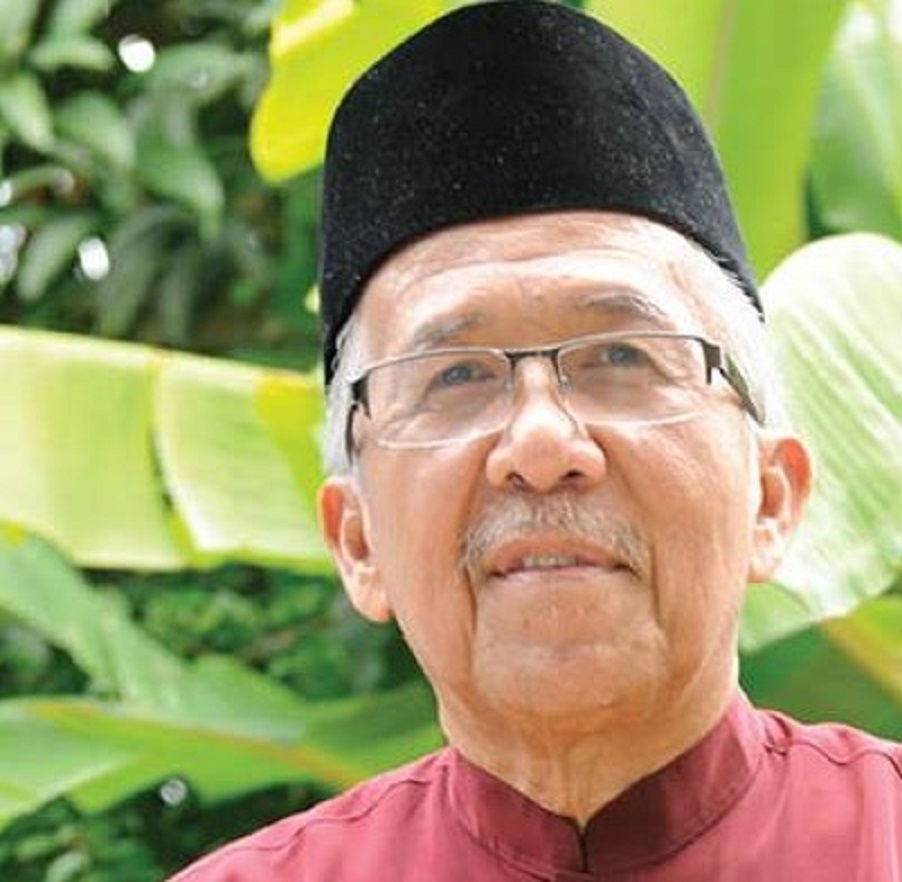
  • What Is Islamic Law? — Jahaberdeen Mohamed Yunoos

    What Is Islamic Law? — Jahaberdeen Mohamed Yunoos

    It may sound ironical to ask the question what is “Islamic law” in the 21st century when it is generally thought that the body of what constitutes Islamic law has already been crystallised and settled.

    If indeed it has crystallised into a recognisable and unchangeable body, then it is logical that there would only be one universal Islamic law. However, an observation of Islamic law between various countries and even between various states in Malaysia would evidence the fact that the laws are not uniform.

    It would seem that what is Islamic law is still developing, in a state of flux and diverse. Shariah, on the other hand is a separate concept altogether.

    Every Muslim would agree that Islam is a simple religion. The pillars of Islam are said to be only five that is, declaration of faith or the syahadah, the daily five times prayer, fasting in the month of Ramadan, payment of the zakat and the performance of the pilgrimage by those who can afford it.

    However, Islam is seen not only as a religion in the typical sense but also as way of life that is complete and encompasses every aspect of our life.

    In other words, Muslims believe and accept that Islam provides the necessary guidance and imposes certain obligatory behaviour in order to achieve the pleasure of God in this life and the next.

    It is this belief that has lead the scholars of Islam to discern principles, precepts and law affecting life from the scriptures and the Sunnah of the Rasul.

    Thus, began the role of the jurists or scholars of law in interpreting and developing various legal, social, economic and religious laws, conducts of behaviour and so on for the Muslim. These active role of the jurists began some many decades after the passing of the prophet.

    I believe they reflected the intellectual response to the needs of a growing civilisation to derive various legal principles and codes of conduct necessary to create an orderly society consistent with the understood commandments of Allah in the Quran and the injunctions of the Sunnah.

    It is from such need and environment that the development of usul al fiqh or Islamic jurisprudence took place.

    In Islamic jurisprudence history, the al madhahib or schools of law that became famous are the Hanafite, the Malikite, the Shafi- ite and the Hanbalite though there were also other schools in the history of Muslim jurisprudence.

    It is important to pause at this stage to reflect and note that prior to the development of these schools of jurisprudence, the primary source then for Muslims was simply the Quran and the Sunnah of the Prophet.

    With the development of the schools of jurisprudence, therefore, the primary sources of Islamic law expanded to become the Quran, Sunnah, Ijma’ (consensus of the jurists) and Qias (judgement upon juristic anology).

    Later, other secondary sources of Islamic jurisprudence were developed. Hence, there clearly was liberalisation of the sources from which Islamic jurisprudence began to expand and develop.

    Any modern lawyer will appreciate this development as law is considered to be a “living creature” that develops as life and its circumstances change and develop.

    However, it is worrisome whether some conservative scholars today are fully aware that no human being’s interpretation of Allah’s will can be absolute because only Allah alone is the Absolute Interpreter.

    If this point is correct and properly understood then “Islamic law” as developed and developing can be relevant to contemporary situations and the very understanding of what embodies “Islamic law” can undergo fresh perspective without departing from its fundamental adherence to the Quran and most authentic Sunnah.

    In the history of Muslim jurisprudence, a study and consideration of what are the objectives of the Shariah also too place. From a modern perspective, this would be an inevitable development.

    The great university professor and scholar of Islam Imam Al Ghazali identified five essentials of the maqasid or the objectives of Syariah namely, preservation of religion, human life, the faculty of reason, progeny and material wealth.

    As to whether or not the objectives or the maqasid should be limited to five is a subject of vigorous debate among the scholars.

    Later scholars have added on to these five for example, the attainment of justice. This debate is understandable and in fact encouraging because life is constantly evolving with new experiences, new sets of circumstances, higher levels of knowledge, information and technology and discovery of new facts.

    Hence, the perception and understanding of life today cannot be limited to the experiences and perception of life by previous scholars alone.

    After all, Muslims believe that the law giver is Allah and any scholar cannot have a claim to monopoly of interpreting Allah’s intent, however knowledgeable he may be acclaimed to be.

    It can, therefore, be seen from the discussion that “Islamic law” is in a state of development as is the case with many other aspects related to Muslim thinking such as political Islam, Islamic economics and so on.

    The field of Islamic law and jurisprudence has become a complex discipline and Muslims must be careful that the legalistic aspect of Islam does not overshadow the spiritual and moral aspect of the religion such that it stifles faith or creativity of the individual Muslim in particular and the society in general.

    In the context of Malaysia, as a Muslim, it is my hope that contemporary Muslim scholars maintain an open mind within the principles of the Quran and the most authentic Sunnah when they discuss and try to apply the Islamic law as developed by classical jurists who, without doubt has made great and laudable efforts.

    There is sufficient evidence in Muslim jurisprudence history that the classical jurists never claimed their interpretations and their views to be beyond criticism or rejection if it is not consistent with the Quran, most authentic Sunnah or not relevant to the times.

    In this regard it may be helpful to realign our Muslim outlook, for example, to evaluate whether some of the legislation that has been passed by our Parliament are in fact consistent with the primary sources of Islamic jurisprudence and hence “Islamic”.

    This may be a better and useful approach than trying to impose classical formulation of laws in contemporary settings which are different.

    If my argument is correct, this may lead to a more holistic understanding of what Shariah is unlike the current trend that what is defined as “shariah laws” are the only ones that are “shariah.” With this approach, probably large segments of what is now classified as “civil laws” may qualify as “shariah.”

    I opine that the government’s effort to introduce the idea of Shariah compliance is a step towards this direction in the long run.


    Source: themalaymailonline

  • Aku Tak Kenal Siapa Shia

    Aku Tak Kenal Siapa Shia

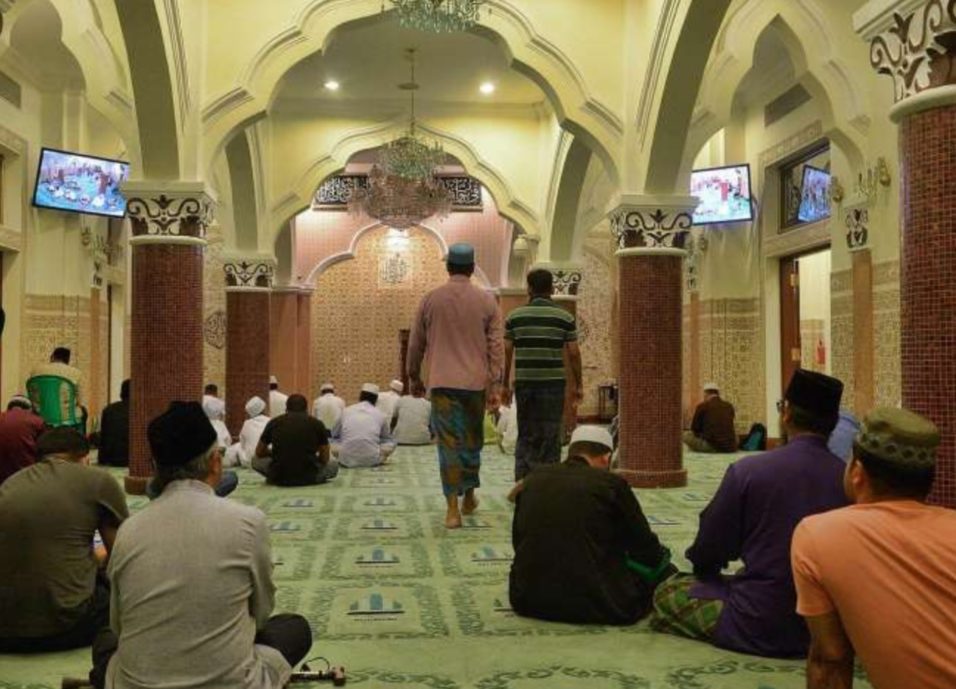
    I never had a friend who is Shia or anything other than Sunni. I was brought up in Singapore as a normal Muslim child. went to school, had a decent education and made several friends of different ethnicity.

    As i grew older, i had to fill up more forms like the G50, insurance papers or even resume and interview details of myself, and i got to know about my sect. that was when i learnt that i am a sunni. embarrassingly, i was a drop out from religious school back then when i was younger due to certain circumstances so this was something new to me. “Ini kau letak je sunni”, that was what i was told to write by a friend without any hesitation. And i still remembered it till today.

    So out of curiosity i asked him what the other side of sunni was (if there is any) and i was told about Shia. A small community of muslims that are of different teachings from us that we should not really speak of or supposed to know of. It was a surprise to me but i did not pursue the issue any further. Perhaps i would never know anything more anyway.

    I don’t know anything about shia or who are these shias in singapore. some people say that they may be among us and we would not know it. the question now comes down to how can we effectively embrace everyone in Islam, if there are like “closeted” muslims living around us though abiding by the same religion Islam? can they come out? Or are they not supposed to come out?


    Teh O

    Reader’s Contribution

  • Call To Embrace Diversity In Islam

    Call To Embrace Diversity In Islam

    There is a growing confidence in the Malay-Muslim community about its place in Singapore, said Minister-in-charge of Muslim Affairs Yaacob Ibrahim.

    But even as it enjoys successes, challenges remain, he said, highlighting the need for the community to embrace diversity in Islam.

    In an interview with Malay newspaper Berita Minggu, Dr Yaacob said the community has made progress in three areas.

    First, Malay students are doing better in education. Besides more of them scoring well in national exams at the primary, secondary and polytechnic levels, there were also more who achieved first-class honours in universities last year, he said.

    There was progress made in the religious life of Malay Muslims too, he added. He cited how donations to mosques have increased, and low-income families are getting help through their programmes, among others.

    A third area of progress, which Dr Yaacob described as “more innate”, is that more Malays are stepping forward to do more not just for the community but also for other Singaporeans. Some have launched start-ups, while others do community work such as serving food and cleaning the homes of poor Singaporeans of other races.

    The community has progressed on many fronts, Dr Yaacob said. “Divorce rates are coming down, our educational achievements are going up, home ownership is stabilising, wealth is increasing in the community, (there are) better jobs and there is a greater diversity of talent.”

    But as the community grows in self-confidence, it also has to embrace diversity in Islam. The Islamic faith is “very diverse” and there is a need to respect differences, he said.

    As a vocal minority online and in the region has sought to sow discord against Shi’ites, Dr Yaacob said there is a need to respect minority Shi’ite Muslims in predominantly Sunni Muslim Singapore, noting that senior Muslim scholars have all along considered Shi’ites as part of the mainstream in Islam.

    “They pay MBMF (Mosque Building and Mendaki Fund). They come to our mosques. They pray together with us. They celebrate the same Hari Raya. So why are we not treating them as fellow Muslims but different?” he said.

    He gave the example of how the chairman of the Moulana Mohamed Ali Mosque at UOB Plaza, Mr Mirza Namazie, is Shi’ite while the majority of its board is Sunni. “That’s a great example of how we deal with diversity, and we have to continue with that,” he added.


    Source: The Straits Times

  • Ustaz Sallim Jasman Sudah Keluar Hospital, Rehat Sebulan Dari Kuliah

    Ustaz Sallim Jasman Sudah Keluar Hospital, Rehat Sebulan Dari Kuliah

    BERITAMediacorp: Pendakwah veteran yang juga seorang kadi terkenal, Ustaz Sallim Jasman, sudah dibenarkan keluar dari hospital, dan kini perlu berehat selama sebulan daripada tugas-tugas seperti menjalankan kuliah.

    Ustaz Sallim, yang mengalami masalah injap (valve) jantung, menjalani pembedahan memasukkan alat perentak jantung ketika dirawat selama lima hari di Hospital Besar Singapura (SGH).

    Demikian dedah anak beliau, iaitu Ustaz Muhammad Ma’az Sallim, semasa dihubungi BERITAMediacorp bagi mendapatkan perkembangan terkini mengenai keadaan Ustaz Sallim, yang keluar hospital kelmarin (4 Jan).

    Ustaz Sallim, yang kini berusia awal 70-an tahun, dimasukkan ke SGH pada Sabtu lalu (31 Dis) setelah beliau mengalami lemah-lemah badan.

    (Gambar: Masjid Al-Iman/ Facebook)

    MASIH RAJIN MENGAJAR, NIKAHKAN ORANG WALAU KURANG SIHAT

    Ustaz Ma’az berkata, keluarganya menasihatkan ayahnya itu untuk menjalani pemeriksaan di hospital, setelah melihat keadaan kesihatannya itu tidak begitu baik.

    “Beliau mengalami masalah jantung yang lemah sebelum ini. Dan akhir-akhir ini, beliau aktif mengajar di kuliah-kuliah dan baru pulang dari umrah. Di samping itu, beliau juga masih menikahkan sehingga lebih 10 orang dalam seminggu,” kongsi Ustaz Ma’az.

    Disebabkan lemah jantung, Ustaz Sallim “harus memasang alat perentak jantung bagi menangani keadaan jantungnya itu,” jelas Ustaz Ma’az lagi yang juga mengikut jejak langkah ayahnya dengan menjadi naib kadi, selain memikul tugas selaku Imam Eksekutif Masjid Al-Taqua.

    (Gambar: Muhammad Salihin Sulaiman Jeem/ Facebook)

    Menyusuli pembedahan tersebut, Ustaz Sallim dinasihatkan oleh pihak hospital supaya banyak berehat, tambah beliau. BERITAMediacorp diberitahu, tiada pasangan yang dijadual bernikah yang terjejas dengan gangguan kesihatan Ustaz Sallim itu.

    KELUARGA MOHON MASYARAKAT DOAKAN KESIHATAN USTAZ SALLIM

    Ustaz Sallim Jasman, pernah menjadi Presiden Kanan Mahkamah Syariah dan bersara pada tahun 2006 setelah sekitar 40 tahun berkhidmat di mahkamah tersebut. Beliau kini terus aktif mengajar, antaranya di Masjid Darul Ghufran, Masjid Al-Iman, dan Masjid Assyafaah.

    Seorang yang peramah dan rajin tersenyum, perkataan ‘bersara’ nampaknya juga tiada dalam kamus Ustaz Sallim, dan merupakan antara golongan asatizah perintis Singapura sejak negara ini mencapai kemerdekaan.

    Beliau lulusan Diploma Pendidikan dari Kolej Islam Malaya. Di tengah-tengah negara berdepan dengan isu pengganasan, Ustaz Sallim juga berkhidmat sebagai salah seorang daripada kaunselor Kumpulan Pemulihan Keagamaan (RRG).

    “Kami mohon doa daripada semua agar beliau diberi kesihatan dan sokongan supaya dapat terus berbakti dan memberikan sumbangan kepada masyarakat Islam,” pinta Ustaz Ma’az menerusi BERITAMediacorp.

    Source: http://berita.mediacorp.sg

  • ‘My Name Is Noordin But I Am Not Muslim’

    ‘My Name Is Noordin But I Am Not Muslim’

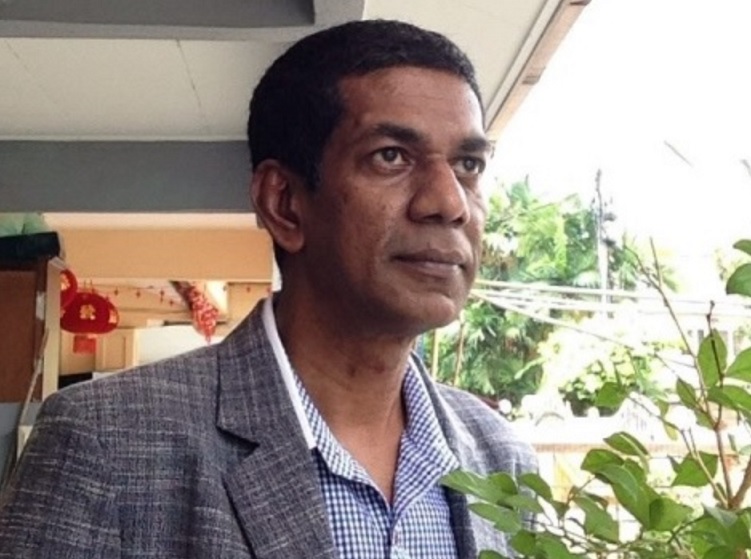
    GEORGE TOWN: No thanks to an old error in his identity card, 34-year-old Johann Lim Noordin has been forced to put off plans to marry his girlfriend and buy property.

    And those are just two of the problems he faces, all because his name sounds Muslim although he is not.

    Lim was born to Buddhist parents in Penang and has never changed his religion. But on his MyKad, he is Johann Lim Noordin bin Billy Noordin and his religion is given as “Islam”.

    The errors were made when he applied for his MyKad at the age of 12 and he has had to live with them since.

    His problem first came under the media spotlight three years ago, but Lim said even that failed to help him resolve his problem.

    “I am not getting any younger,” he said in an interview with FMT. “Why should I have to go through so many obstacles to get my IC fixed? It should have been done easily.

    “No religious department in the country has any record of my being a Muslim. I have signed a statutory declaration proclaiming I am not Muslim. Why am I now told to go to the shariah court when I am not a Muslim?

    “My constitutional rights have been violated. No one dares to do anything to help. All they do is keep telling me to go to the shariah court.”


    Lim said his father was never a Muslim.

    He said an oral complaint was immediately made at the NRD when he received his MyKad in 1994.

    “When I first received my IC when I was 12, the family wanted it changed immediately,” he said. “But the department required both parents to give consent and my father at the time was living and working overseas. So we thought we would get to it when he came back.”

    Lim’s father, Billy Noordin, 64, works with drug enforcement agencies in the United States and Saudi Arabia. He is of Chinese and Indian descent.

    His mother, Lim Jee Yew, 65, is Chinese and a housewife in Penang.

    When he was 21, Lim went to the NRD to upgrade to the new MyKad. He also asked the NRD to remove his Muslim status.

    “The officer told me I could not use the name on my birth certificate. He told me to get a different name. At the time, I thought it ridiculous of the NRD to ask me to change my name; so I decided to ignore it.”


    More recently, he misplaced his wallet and had to get a replacement MyKad. However, the NRD told him he would have to cancel his 2011 application to amend his name in order to get a replacement.

    In desperate need of his MyKad, Lim agreed to the cancellation with a heavy heart. “So here I am, having to start all over again,” he said.


    Source: www.freemalaysiatoday.com

deneme bonusu