Tag: Muslims

  • Islamic Prayer Practice Can Cut Lower Back Pain, Boost Elasticity In Joints

    Islamic Prayer Practice Can Cut Lower Back Pain, Boost Elasticity In Joints

    If done properly, Muslim prayer ritual can reduce lower back pain, say researchers.

    The complex physical movements of the Muslim prayer ritual can reduce lower back pain if performed regularly and properly, claims a recent research.

    The paper was published in the latest issue of the International Journal of Industrial and Systems Engineering.

    Five times a day, roughly 1.6 billion Muslims worldwide, bow, kneel, and place their foreheads to the ground in the direction of the holy city of Mecca, Saudi Arabia, as part of the Islamic prayer ritual, the Salat.

    The ritual is one of the five obligatory elements of the faith set forth by the holy book, the Qur’an.

    “One way to think about the movements is that they are similar to those of yoga or physical therapy intervention exercises used to treat low back pain,” said Professor and Systems Science and Industrial Engineering Department Chair Mohammad Khasawneh, who is one of the authors of “An ergonomic study of body motions during Muslim prayer using digital human modelling.”

    While the research focused specifically on Islamic prayer practices, similar movements are also found in Christian and Jewish prayer rituals along with yoga and physical therapy.

    Working with Khasawneh, an interfaith team of Assistant Professor Faisal Aqlan from the Department of Industrial Engineering at Penn State Behrend, Assistant Professor Abdulaziz Ahmed from the Business Department at the University of Minnesota Crookston, and Performance Improvement Consultant Wen Cao from the Department of Operational Performance Improvement at the Peninsula Regional Medical Center were all co-authors of the paper.

    All three are alumni of the Industrial and Systems Engineering doctoral program at Binghamton University.

    “Physical health is influenced by socio-economic, lifestyle and religious factors. Moreover, studies indicate that there is a strong association between prayer and vigilance about maintaining a physically healthy lifestyle,” said Khasawneh. “Prayer can eliminate physical stress and anxiety, while there is also research that indicates prayer rituals can be considered an effective clinical treatment of neuro-musculoskeletal dysfunction.”

    Researchers analysed statistics based on the movements of computer-generated digital human models of healthy Indian, Asian, and American men and women, and models with lower back pain.

    The group found that the bowing portion is the most stressful on the lower back, but for individuals with low back pain, using proper knee and back angles during the ritual can reduce pain. The angles are based on individual body shapes.

    “The maximum compression forces created during prayer postures is much lower than National Institute for Occupational Safety and Health (NIOSH) safety limits, and the movements can be safely considered a clinical treatment for low back pain, as it requires different movements of the human body on a regular basis,” Khasawneh said. “Based on the pain level, a combination of back and knee angles can be identified.”

    For those with back pain, maintaining exact prayer postures may not be possible. According to Islamic traditions and practices, if individuals cannot stand, they are allowed to pray seated or laying. If they are able to stand, they should maintain correct postures as much as they can.

    “The kneeling posture (sujud) increases the elasticity of joints. It is recommended for these individuals to spend more time in the kneeling posture,” Khasawneh said.

    According to the research team, using incorrect angles and movements can increase pain. The team also suggested that further study is needed for physically handicapped individuals, those with more extreme body types and women — especially pregnant women — to find the best movements for these groups. The group plans to further validate the findings with physical experiments using sensors and cameras to track the stresses on the individual body parts during the prayer ritual.


    Source: HindustanTimes

  • Don’t Be Fooled, Trump’s New Muslim Ban Is Still Illegal

    Don’t Be Fooled, Trump’s New Muslim Ban Is Still Illegal

    The revised order also continues to traffic in bigoted and largely false perceptions: By requiring the government to compile occurrences of “honor killings” by immigrants, it gives official recognition to an inflammatory and misleading trope of Islam that is perpetuated by anti-Muslim hate groups.

    President Trump has not been subtle in his intentions. We need look no further than his own words to figure them out. On the campaign trail, he constantly conflated the vast majority of peaceful Muslims with the small handful of violent Muslims.

    After the Paris attacks in November 2015, Mr. Trump said that “we’re going to have no choice” but to close some mosques in the United States, where “some really bad things are happening.” The next month, after the attack in San Bernardino, Calif., he called for a “complete shutdown of Muslims entering the United States” and released a factually dubious statement that “large segments of the Muslim population” have “great hatred towards Americans” and favor Shariah law. Astonishingly, that statement is still posted on Mr. Trump’s website.

    In December, when a reporter asked whether he had reconsidered his stance on Islam, President-elect Trump replied: “You know my plans. All along, I’ve been proven to be right.” This dark and wholly unsubstantiated worldview about Islam and the American Muslim community is shared by several of the president’s senior aides and advisers.

    Let’s be clear: This revised order is a Muslim ban. All the countries he has excluded are more than 90 percent Muslim. Three of them — Iran, Somalia and Yemen — are more than 99 percent Muslim. Even though Mr. Trump tailored his order to survive legal challenges, as his former adviser Rudolph Giuliani conceded on national television, his objective is clearly to exclude Muslims.

    The Trump administration argues that the ban protects the country. Yet by excluding Iraq from the order, Mr. Trump has cleared travel from one of the two countries from which Islamic State terrorists operates. Moreover, the Department of Homeland Security concluded last month that “country of citizenship is unlikely to be a reliable indicator of potential terrorist activity.” Former national security officials from Democratic and Republican administrations have made clear that the January order does not make our country safer. Instead, the bigotry that Mr. Trump spews at news conferences and on Twitter have been a boon for terrorists’ recruitment efforts.

    The twisted worldview does not match reality. Muslims have been part of America for centuries, since the first slave ships arrived in the 17th century. Today, Muslims represent 1 percent of the United States population: They are our teachers, doctors, neighbors and co-workers.

    American Muslims will suffer a particular harm from this executive order: Those who have ties to the banned countries won’t be able to see their family members and close friends. American Muslims will also be deprived of the instruction from the leading Islamic scholars who are from those countries.

    Thousands of Muslim men and women serve in the armed forces; many have given their lives defending our nation and our ideals. They contribute to the diversity that has always been our nation’s pride and strength. President George W. Bush paid tribute to this in the weeks after the Sept. 11 attacks when he said, “There are thousands of Muslims who proudly call themselves Americans, and they know what I know — that the Muslim faith is based upon peace and love and compassion.”

    President Trump and his top advisers would be wise to listen to President Bush. The Muslim ban and President Trump’s relentless attacks on Islam are not just an assault on thousands of patriotic, innocent Americans — they violate our Constitution and our most fundamental American values and beliefs.

    Source: NYTimes

  • The Singapore Muslim Community And The Imam Issue

    The Singapore Muslim Community And The Imam Issue

    By Kamaludeen Mohamed Nasir, Associate Professor of Sociology, Nanyang Technological University

    It is well-known that Singapore is a multi-religious society. The 2014 report by Pew named our city-state as the most religiously diverse among the 232 countries studied. What is assumed in this discourse is that all religions are the same and subjected to similar state-society relations.

    ranking

    2014 ranking on Religious Diversity Index by Pew Research Center

    The fact is, Islam is the most regulated religion in our tiny island and this has been the case for decades. From the appointment of a Minister-in-Charge of Muslim Affairs, to the creation of a statutory board called the Islamic Religious Council of Singapore (MUIS) where the Mufti is located, and to the Administration of Muslim Law Act that has regulatory powers over local mosques and madrasahs (Islamic schools), there is no doubt that Islam is given a unique attention by the state.

    A stark under-appreciation of this social reality, especially among the non-Muslims, is apparent to me in the decade or so that I have been teaching in our local universities. I have always asked my students, that if all the Churches were made to say the exact same thing for their Sunday service with a text provided by an office of a statutory board, how would the Christian community react? The students could not even begin to imagine this! Will this then breed mistrust among the Christian community? This is but just one issue besieging the Muslim populace in Singapore.

    When I had coffee with a top local social scientist of NUS a couple of weeks back, we agreed that Islam is the most hierarchical and bureaucratized religion in Singapore. Failure to understand how Islam is managed leads to a failure in understanding the reaction of its local adherents.

    This distrust of the Muslim religious elites amidst the disciplining of Islam, from prescribed texts for the weekly Friday prayer sermons, to appointed instructors to “upgrade Islam” through the Asatizah Recognition Scheme that makes it mandatory for every religious teacher to be registered (even those teaching Qur’anic reading in the local neighbourhoods), impact heavily on the religious elites. Many scholars have called this age as one characterised by a crisis of religious authority. The situation can be especially dire in our local Muslim community, given the unique structures bearing upon them.

    Distrust breeds distrust. It is not that Singaporean Muslims are predisposed towards being rude or as the Minister of Law put it, “kurang ajar”, towards the state-endorsed religious authority. It is the structures that have been put in place that create such an environment.

    The recent issue regarding the police report made against an Imam for making alleged “incendiary” supplications against Christians and Jews that are outside the MUIS-endorsed text cannot be disentangled from the issue of the autonomy of the Muslim clerics. I have engaged the local religious elites numerous times over the last few years and have rarely met a group that is more in fear. The culture of fear among the religious class is often talked about and in one of the engagements that I had with a group of religious elites, one of them candidly lamented, “We are directed and scripted.”

    It has often been mentioned that attitude reflects leadership. The angry reaction of the Muslim community in light of the Imam issue should be seen against this backdrop. The absence of the voices of the religious elites in the initial stages of the debacle created a void in the community who then went online to make sense of the matter.

    Last week, Assoc Prof Khairudin Aljunied was singled out in parliament for encouraging the “vilification” of the whistle-blower, Terence Nunis.  The fact is that hundreds of Muslims had begun pitching in their views on various platforms after Nunis’ pronouncements on Facebook. This was substantiated in a belated statement by the Minister-in-Charge of Muslim Affairs, Assoc Prof Yaacob Ibrahim, who mentioned that the video uploaded by Nunis had indeed “sparked a storm” and “generated many emotions both online and offline. Many in our community felt angry, because they believe that the postings could be used to cast aspersions on Islam and the asatizah in our Mosques”.

    It is interesting to note that both Assoc Prof Khairudin and the Mufti appropriated a satirical and poetic style respectively, as means of social critique. However, it has been well-documented that the Singaporean brand of criticism is often manifested through humour, satire and poetics as seen in Talkingcock, Mr Brown, Yawning Bread, Jack Neo’s films and the like. Indirect criticism is characteristic of societies living under soft-authoritarian rule.

    There are no differences in opinion that if the allegations against the Imam are proven to be true, his incitement has no place in our multi-religious society. But if it is not – and many among the Muslim community have come to this conclusion upon the explanations provided by numerous local religious scholars who have later gone public in discussing the meaning and context of the supplication – then sadly, the Muslim community will see this as yet another example of disciplining and an attempt to emasculate the local religious fraternity despite the state’s paradoxical pleas for Singaporean Muslims to give the local religious scholars their ears.

    It remains to be seen in the aftermath of the Imam episode if the state would choose to go down the path of imposing further restrictions to ensure that the MUIS-endorsed texts be read to the letter, curtailing any creative license of preachers and punishing any dissent towards state-appointed authority. The more enlightened way must be to empower the religious scholars in the field and to give them ownership over their areas of expertise to prevent religious discourse from being co-opted, hijacked and subjected to ad hominem attacks.

    The coming forward of a good number of religious elites, including its umbrella body, Singapore Islamic Scholars & Religious Teachers Association (PERGAS), with regard to this Imam issue is a good development that needs to be applauded. The social media provides a ready platform for this. These attempts to speak truth to power should also be captured in the mainstream media. PERGAS’ need to again clarify their position after feeling that they were misrepresented in the Malay mainstream media regarding their statement towards Assoc Prof Khairudin is not a good sign. The perception that the Malay mainstream media is not balanced and selective in their reporting has also led many to turn to the cyber-sphere to air their perspectives.

    In fostering this development of active citizenship, we need to keep an eye on encouraging diversity and not just promoting those with a certain kind of thinking that the state can easily manage. This is in line with what the PM had recently mentioned in his interview on February 24th in Today newspaper under the title, “Leaders must be able to take criticism, acknowledge mistakes”. Only then can we move forward as a nation.


    Source: TOC

  • Taco Dendeng, A New Rising Food Star At Pasar Malams

    Taco Dendeng, A New Rising Food Star At Pasar Malams

    For the longest time, the Ramly burger has been the essential pasar malam (night market) food. But it seems like it is now facing some stiff competition.

    To fully know what is challenging the Ramly burger’s supremacy, you have to know these:

    What is Dendeng?

    Dendeng is an Indonesian delicacy of thinly sliced grilled meat marinated with sugar and spices. It is like bak kwa or jerky, except that the meat used is either chicken or beef.


    Dendeng. Source: <a href=
    Dendeng. Source: Wikipedia 

    What is Taco?

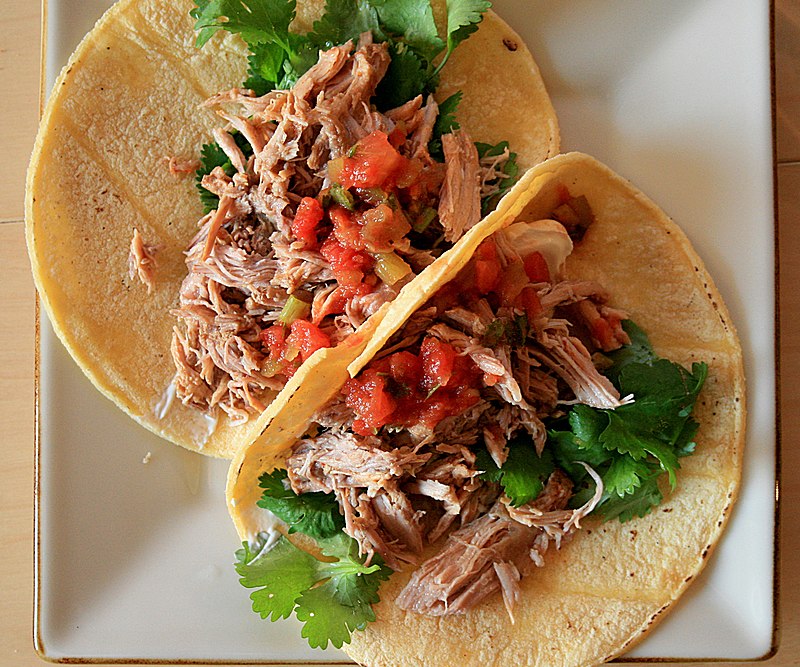
    Taco is a traditional Mexican dish of tortilla and various fillings.


    Tacos. Source: Wikipedia
    Tacos. Source: Wikipedia


    Taco Dendeng

    Together, dendeng and taco make a great idea of a fusion dish – Taco Dendeng. It is a taco shell filled with a piece of dendeng, some cabbage and home-made salsa.

    Created and sold by Dendeng Duo at pasar malams, Taco Dendeng combines the best of taco and dendeng.

    This is what it looks like:

    Photo from Dendeng Duo Facebook
    Photo from Dendeng Duo Facebook

    The brainchild of Nur Azhar Sulaiman, 32, and Qaliff Rahim, 28, the co-founders of Dendeng Duo, Taco Dendeng can also be customised with an eclectic range of sauces, such as nacho cheese, wasabi mayo, spicy garlic aioli, and even salted egg yolk.

    Here’s how the dish is prepared:

    People are loving it.

    It seems that this innovative new addition to pasar malam fare has really spiced up the scene and challenged the old Ramly burger order.

    Just look at these.

    Bagus lah, Dendeng Duo!


    Source: MothershipSG

  • Malay Woman Seeks Fund To Help Save Dog After Hit-And-Run

    Malay Woman Seeks Fund To Help Save Dog After Hit-And-Run

    A Malay woman who caught the attention of netizens for rescuing a badly injured dog in Malacca on Saturday (March 4) is now hoping the public could donate to help fund the mongrel’s surgery.

    The girl known on Facebook as Ziezie Zeyta said on her profile last night that while she has received some donation, the amount was still insufficient to cover the medical cost, which she said was RM1,500 (S$475).

    “[God bless], thank you so much to everyone who donated to help save the dog… I hope Allah will bless you all with good health and prosperity,” Ziezy wrote.

    “But according to the latest information the fund is still insufficient to cover the cost. I plead for your kindness to help donate a little for surgery and the ward.

    “Only Allah can repay your good deeds,” she added.

    Pictures of the mongrel’s X-ray scans, which accompanied the woman’s post, showed the dog’s left leg was severely broken.

    She wrote on her Facebook:

    Bismillah..
    Alhamdulillah..
    Terima kasih pd anda semua yg telah membantu menyumbang kn dana pd Anjing ini..semoga anda semua diberkati Allah dan di Murah kan rezeki.

    Maklumat Terkini Kos Rawatan Masih Lagi Tidak Mencukupi. Mohon Jasa Baik Anda Semua Untuk Memberi Sedikit Sumbangan Kepada Kos Rawatan Anjing ini melakukan Operation dan ward. Hanya Allah sahaja yang mampu membalas jasa baik anda semua.

    Sumbangan boleh di buat di Akaun Tersebut: Kos operation RM1500 termasuk warded 2 minggu dan ubat.
    Acc no. bank cimb-
    ‭8007776310‬ Maju animal clinic. Sila Hantar Pic Resit Untuk Kami Beri Kepada pihak veterinar. Atau anda Boleh Terus Menghubungi Norashikin Ahmad


    Source: Ziezie Zeyta