Tag: terrorists

  • Gunmen Open Fire On Muslims Outside French Mosque, Eight Injured

    Gunmen Open Fire On Muslims Outside French Mosque, Eight Injured

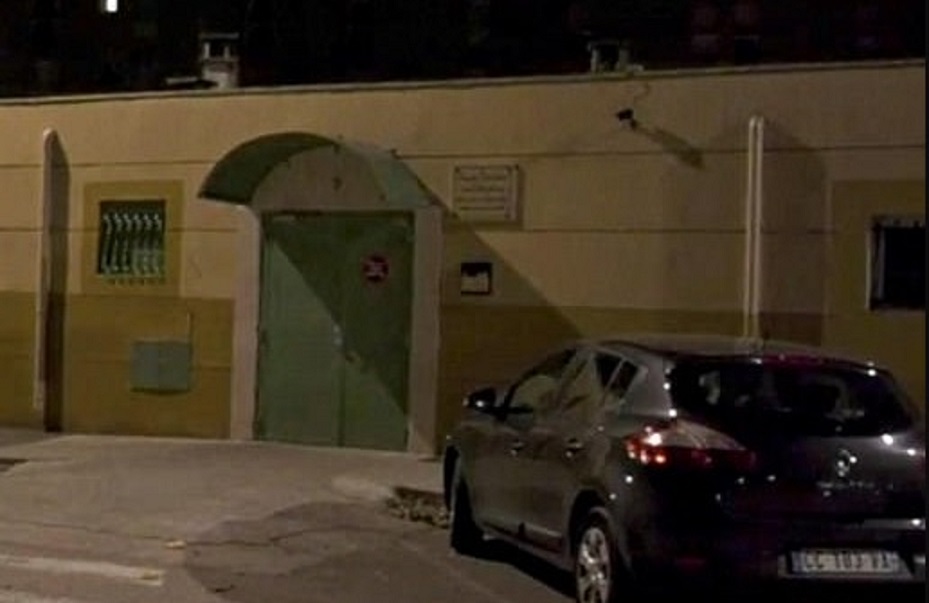
    Two gunmen injured eight people after opening fire on a group of Muslims outside of a French mosque Sunday.

    The group was exiting the house of worship in the southern French city of Avignon at about 10:30 p.m. when the gunmen, who were reportedly wearing masks, opened fire.

    Two of the eight wounded were hospitalized after the incident, according to the source, who also said that worshipers leaving the mosque had not been the intended target.

    Sources told Reuters the gunmen were trying to settle a score with someone else, and a judicial source told the La Provence regional newspaper that officials are “not at all treating it as terrorist related” and instead suspect it stemmed from a dispute between youths.

    Four people were wounded outside the mosque while a family of four in their apartment about 50 yards away took shrapnel, La Provence said.

    Police arrested a man in the Paris suburb of Creteil last week after he tried to drive car into a crowd in front of a mosque.


    Source: https://nypost.com

  • Indonesia Says Seized Islamic State Propaganda Books Likely Used By Children

    Indonesia Says Seized Islamic State Propaganda Books Likely Used By Children

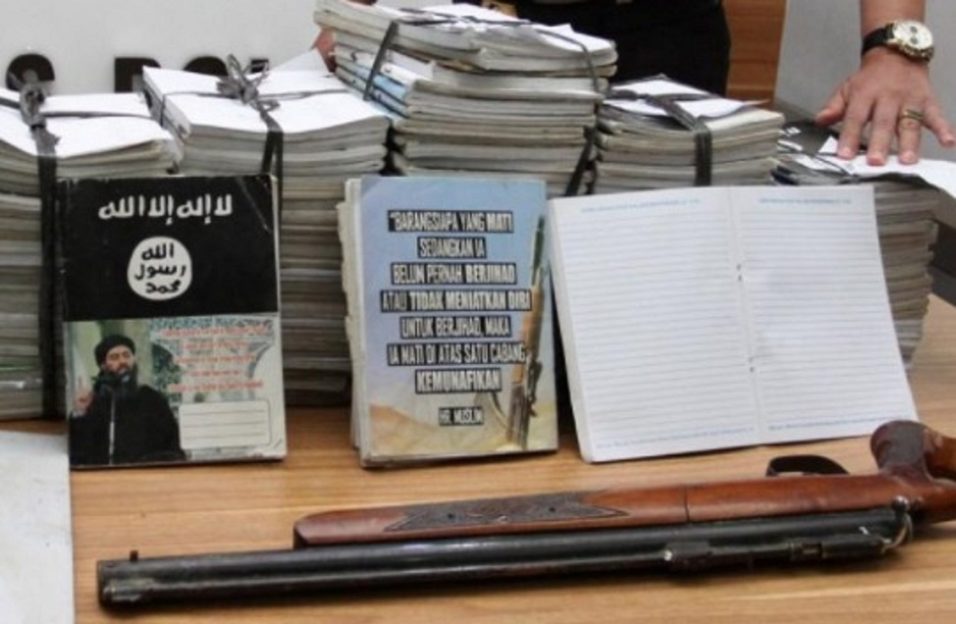
    JAKARTA – Indonesian police displayed on Friday scores of notebooks inscribed with Islamic State propaganda seized during a raid on the home of suspected militant and said some appeared to have been used by children.

    Police found hundreds of notebooks containing Islamic State propaganda in Indonesia during the raid in connection with the stabbing death of a policeman in Medan, the capital of North Sumatra province on June 25.

    At the top of every page of the books read the inscription: “You are all obliged to go to war”.

    Authorities believe Islamic State has thousands of sympathizers in Indonesia and are increasingly worried about the group trying to get a foothold in Southeast Asia as it loses territory in the Middle East.

    “We’re still investigating who funded the printing of these books,” police spokesman Rikwanto told a news conference.

    The material was displayed at the national police headquarters, alongside an air gun and other items.

    The front covers of the notebooks had a picture of Islamic State leader Abu Bakr al-Baghdadi and quotes attributed to him as made at Friday prayer,

    “Tell all the apostates in the Muslim countries, these are their last days. And tell every infidel, we’re not playing anymore,” a quote attributed to Baghdadi read.


    Children’s handwriting was found in some of the books, including notes about the solar system, which police said could mean the books had been used by children to take notes in school.

    Police believe the men were part of Jemaah Ansharut Daulah, an umbrella organization on a U.S. State Department “terrorist” list which supports Islamic State and has hundreds of Indonesian followers.


    Source: www.todayonline.com

  • RRG Counsellors Saved Two Secondary Schoolboys From Further Radicalisation

    RRG Counsellors Saved Two Secondary Schoolboys From Further Radicalisation

    One developed an interest in global affairs involving Muslims and became convinced of the need to migrate to an Islamic caliphate. Another penned pro-Islamic State (IS) slogans in his school books that were discovered by his father.

    In both cases, which involved secondary schoolboys, relatives and friends became concerned enough to alert the Religious Rehabilitation Group (RRG). The boys met with RRG counsellors, who explained religious concepts and the IS’ violent ideology to them.

    A third case was of a wife who noticed her husband becoming more vocal about a much stricter form of Islam, holding the exclusivist view that loyalty could only be given to God and Muslims. She confided in her relative, who approached RRG for advice. The wife spoke a few times over the phone with a counsellor on how she could advise her husband not to hold such extreme religious views.

    Sharing these cases on Friday (June 23) of people who had approached the RRG, the group’s vice-chairman Mohamed Ali urged the public to tap its helpline, mobile app and resource and counselling centre at Khadijah Mosque on Geylang Road, if they suspect their loved ones are close to being radicalised.

    The three cases are the only instances of voluntary reporting that RRG has encountered since 2014 – the year its resource centre opened – and that its counsellors “saved” from going further down the path of radicalisation, said Ustaz Mohamed.

    Because they were detected early, they did not need to be reported to the Ministry of Home Affairs or dealt with under the law, he said. “They are not those who were ready to use violence, but they believed that violence is justified.”

    Ustaz Mohamed declined to reveal when RRG was alerted to each case or the backgrounds of the individuals. The secondary schoolboys felt they benefited from the sessions with RRG counsellors and realised the danger of supporting IS, he said.

    In the third case, counsellors had no contact with the husband. But through speaking with the counsellors, the wife learnt more about how extremists promote their ideologies “under the cloak of religion”, said the RRG.

    Loved ones must be “first agents” and seek information such as what websites their children, relatives or friends have browsed, and for how long, said Ustaz Mohamed.

    Cases are not reported to the MHA unless individuals persist in the belief that violence is legitimate even after counselling. “RRG works with MHA, not for MHA,” he said.


    On whether the three individuals might have ended up detained under the Internal Security Act (ISA), were they not reported early to the RRG, Ustaz Mohamed said the answer was not straightforward.

    This is because there are other channels available, such as local mosques or the Islamic Religious Council of Singapore. “But logically we understand that when someone is radicalised and nothing is being done, that process of radicalisation can go further and it could lead to violence. It could lead to him wanting to use violence,” he said.

    The authorities have stepped up calls for family members and the community to report those who are potentially radicalised. They said the time between radicalisation and committing violence could be very short and that terror attacks would divide communities, playing into the hands of terrorist groups.


    Source: www.todayonline.com

  • Maliki Osman: No Room For Islamophobia In Singapore

    Maliki Osman: No Room For Islamophobia In Singapore

    There is no place for Islamophobia or any similar attitude against other religions here, as this would harm the social cohesion Singapore has built up over the years, said Senior Minister of State for Defence and Foreign Affairs Maliki Osman.

    He related a recent incident yesterday to illustrate how Islamophobia has crept into the community here, in a climate where acts of terrorism and extremism make headlines regularly.

    A few weeks ago, a Malay pest controller checking for mosquitoes outside a home was shooed away by a Chinese resident who suggested he could be a terrorist, he said.

    “He tried to explain that he was just trying to do his job, and she (said) ‘no, no, no, I hear so much things about terrorism and terrorists, you better go’,” said Dr Maliki, adding that the incident shocked and saddened him.

    “The last thing we want is incidents like this where the inter-ethnic cohesion that we have built for so long, is divided by people who have the wrong understanding of the Muslim community,” he said.

    He urged people who know of such incidents to come forward, as such views cannot be allowed to “take root in the minds of Singaporeans”.


    Source: www.tnp.sg

  • Nicholas Fang: Tackling Exclusivism Imperative In Dealing With Terror Threat Here

    Nicholas Fang: Tackling Exclusivism Imperative In Dealing With Terror Threat Here

    The refrain of the possible inevitability of a terror attack here has become almost as ubiquitous as the description of Singapore as a multiracial and multicultural society, where inclusivity and tolerance are key watchwords for social stability and harmony.

    Inclusivity can act as a necessary ballast against divisive ideologies that prey on a particular group or individual’s sense of alienation, marginalisation and oppression.

    Such ideologies aim to lend credence to the idea that they have to be different from others in all aspects of life and that there cannot be common ground with other faiths.

    The measures to address these and other threats like cyberattacks and the vulnerability of the youth especially to digital propaganda and online recruitment by terror groups, have ranged from hard physical measures such as strengthening protective infrastructure and response forces, to online countermeasures and psychological operations.

    These are no doubt important efforts and should continue. But there also needs to be work done to address the root philosophical and psychological causes of the terror phenomena, besides dealing with the physical manifestations and symptoms.

    Much of the rationale and motivation for recent terror attacks stem from interpretations of religious texts and teachings that emphasise exclusivism.

    Exclusivism is the practice of being exclusive by disregarding opinions and ideas other than one’s own, or by organising entities into groups by excluding those which possess certain traits.

    Religious exclusivism asserts that one religion is true and all others are in error. Such values are often, if not always, antagonistic and they denigrate the beliefs held by other faiths while asserting absolute superiority of their worldview.

    Exclusivism based on belief systems is not a new phenomenon, with examples dating back to Ancient Greece. Modern day examples have taken on a more violent streak, with death to non-believers, even those from within the same religion but whose practices are different, becoming a goal or requirement for true believers.

    It should be pointed out that religious leaders across virtually all faiths have highlighted that such violently exclusivist beliefs are not actually part of the teachings of any true religion.

    But thanks to the rise of social media and technology, growing sophistication among extremist groups, and disenchanted and disaffected youth around the world offering fertile recruitment grounds for perpetrators of terror, exclusivist tendencies have been spreading around the world.

    With so-called “lone wolf” attackers being encouraged to commit atrocities on social media or in the dark spaces of the Internet, the potential for more future attacks anywhere in the world, with little or no warning, is immense.

    Tackling exclusivist sentiments would seem like the logical starting point for dealing with the issue. But for a country like Singapore, it is an imperative.

    Singapore is widely recognised as being among the most religiously diverse nations in the world. Our history and societal make-up have seen the embracing of a tolerant and respectful attitude towards religious and cultural diversity, with the government playing a key role in promulgating and encouraging such an approach at all levels of society.

    A cornerstone of this approach has not been to encourage uniformity, but to foster appreciation of the inherently diverse nature of our country, and recognising the benefits therein.

    We should continue to uphold progressive religious values that encourage awareness and respect for cultural diversity and equality, while establishing common ground to forge harmonious relationships.

    It’s not hard to see why a country whose citizens understand, respect and appreciate each others different beliefs and attitudes, will enjoy peace and hence stability.

    But in an increasingly volatile, uncertain, complex and ambiguous world, this stability may become essential to ensuring the survivability and success of any nation in the future. Inclusive values will also ensure solidarity, cohesiveness and resilience for the “day after” scenario, given the inevitability of an attack.

    Singapore’s Minister for Culture, Community and Youth, Ms Grace Fu, said in the wake of the latest announcement of the country’s first female detainee for radicalism, that all Singaporeans should stand united and not allow our society to fracture, as this would mean a victory for terrorists.

    The Islamic Religious Council of Singapore also said it would work with its partners to safeguard against exclusivist and extremist ideas from taking root in the community.

    The concepts of understanding and tolerance should not be required of any single religious group, but should be embraced by all religions and communities throughout society.

    Only then can we truly begin to tackle the terror threat in a comprehensive and systematic fashion which will hopefully produce long-term success.


    ABOUT THE AUTHOR:

    Nicholas Fang is the executive director of the Singapore Institute of International Affairs and oversees the institute’s Global Citizenship Singapore programme, which aims to broaden awareness of key international issues amongst young professionals and the public.


    Source: www.todayonline.com