Tag: marginalised

  • Najib Razak: Although My Father Or Grandfather Isn’t From Kerala, I Am Known As The Father Of Indian Development

    Najib Razak: Although My Father Or Grandfather Isn’t From Kerala, I Am Known As The Father Of Indian Development

    In what may be another attempt to court ethnic minority voters, Malaysian Prime Minister Najib Razak has declared himself a champion of development for the Indian community. He highlighted that he insisted on appointing a senior civil servant to head the Customs Department, despite objections to the candidate’s ethnicity.

    Addressing the Malaysian Indian Congress (MIC) general assembly yesterday, the Prime Minister said: “Although my father or grandfather isn’t from Kerala, I am known as the father of Indian development.”

    It was a sarcastic broadside against his mentor turned critic Dr Mahathir Mohamad, who is now chairman of the opposition Pakatan Harapan coalition. The former premier’s lineage includes ancestors from the southern Indian state.

    Mr Najib told the 2,000 MIC delegates that the opposition is merely trying to confuse people by labelling Malaysia a failed state.

    “The question is, what have they (the opposition) done for the Indians compared with what BN (Barisan Nasional) has done, more so after I took over the leadership of the country from Abdullah Badawi,” he said.

    “With his (Mr Abdullah’s) permission, I initiated (a) Cabinet committee on Indian affairs to further develop the Indian community because I realised that without intervention and political will, Indians would be neglected, marginalised and left behind.” The MIC is a component party of the ruling BN coalition.

    Mr Najib said he also prioritised Indians in the selection of the new director-general of Customs. “I do not mind telling you, even the appointment of the new director-general of Customs was difficult. I received petitions not to pick an Indian for the post,” he recounted.

    “I said no, he (Mr T Subromaniam) deserves the post because he is the most senior. I stood my ground.”

    In March, Mr Subromaniam was appointed to head the department. His appointment came despite grassroots efforts to petition for the post to go to a Malay candidate.

    However, some Indian community leaders were sceptical about Mr Najib’s comments. “When he held many important posts in the government prior to becoming the prime minister, what has he done for the Indians? Basically nothing,” said Mr A Rajaretinam, president of Malaysian Indian group Rapat.

    The Premier is believed to have been wooing the Chinese and Indian minorities, fuelling speculation that the general election could be held later this year.

    In July, Mr Najib said the government will study a request from the Indian-Muslim community to be recognised as Bumiputera. Earlier this month, he said he wanted to see a “stronger Chinese representation in the BN government”.


    Source: http://www.todayonline.com
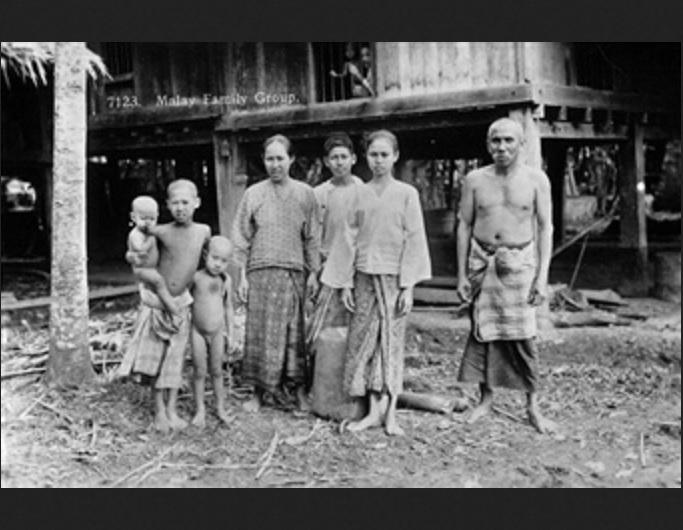
  • Malay Family Used To Prove A Point On Meritocracy, But Singaporean Malays Generally Still Sidelined

    Malay Family Used To Prove A Point On Meritocracy, But Singaporean Malays Generally Still Sidelined

    Talking about meritocracy when the Malay community are still being marginalised? 

    If you are really serious about meritocracy, these are some of the things you can do for the Malay community since a “Malay family” has been specifically chosen for the National Day Rally speech.

    Abolish the SAP school system. It is racist for non Chinese students who are deprived of this opportunity, and all schools are not equal for as long as SAP schools are still around.

    Employ more Malays in the defense sectors as much so as other races are able to apply and secure a job. Equal opportunity and ability-based. Malays are not stupid or incapable.

    Don’t use always use Malay CNB officers to catch drug addicts which usually are Malays. Other races too can do a similar job as their Malay colleagues in apprehending those criminals.

    Mendaki and the government must render help to all Muslims no matter Malays or Indians or Arabs.

    Don’t have the impudence to call it a meritocracy if all these problems still persist.


    Rilek1Corner


  • Najib Warns Uneven Growth Could Fuel Extremism, Instability

    Najib Warns Uneven Growth Could Fuel Extremism, Instability

    Prime Minister Najib Razak on Friday warned that Southeast Asian countries needed to ensure their economic growth was inclusive, or risk marginalised populations turning to violent extremism or even overturning political systems.

    Speaking at an event for entrepreneurs during the Association of South East Asian Nations (Asean) summit in Manila, Najib said the region was posting strong growth that could see Asean become the world’s fourth-largest economy, but that growth needed to be equitable.

    “We do not want our citizens to be marginalised in the age of extremism and radicalisation,” he said.

    “We know that those who see no hope in their own societies are more prone to the siren calls of terrorists who can and will exploit their vulnerability and fill them with their lies.”

    Islamist extremism is expected to be high on the agenda during this week’s meetings, with fears for Indonesia, Malaysia and the Philippines about piracy and the rising threat of Islamic State.

    Of particular concern is the ease in which militants can acquire weapons, seek refuge with existing rebel groups and move between the many islands between the three countries.

    Najib lauded the success of Asean, which is celebrating its 50th anniversary this year, in expanding its collective GDP to about US$2.7 trillion now, from US$87 billion four decades ago.

    Asean has 10 members: Thailand, Myanmar, Laos, Cambodia, Vietnam, Singapore, Brunei, Malaysia, Indonesia and the Philippines.

    He warned that economic disparity was dangerous at a political level too, fuelling anger and populism that was causing problem in Western Europe.

    “The neglected underclass of those who felt left behind by economic growth, prosperity and globalisation can overturn elections and political systems,” he said.

    Economists frequently point out huge income gaps among the 620 million people of Southeast Asia, a region that has one of the world’s largest concentrations of billionaires, according to Forbes Magazine.

    Najib said awareness of Asean needed to be better promoted among its citizens to “make it feel real, relevant and tangible”. Trade integration was lagging, he said, with too many trade tariffs still in existence.

    Their removal, and harmonised customs standards, needed to be “vigorously pursued”, he said.

    Philippines Vice-President Leni Robredo echoed Najib’s call for leaders to pay more attention to their poor.

    “For many years, many thought income inequality was alright. But the voiceless and the powerless are now raring to be heard, and with technology and social media, their frustrations are being felt on a global scale,” she said in a speech.

    “They are rejecting globalisation, democracy, traditional media.”


    Rilek1Corner

    Source: http://www.freemalaysiatoday.com

  • Singapore Is World’s Most Expensive City To Live In

    Singapore Is World’s Most Expensive City To Live In

    Singapore has topped the Economist Intelligence Unit (EIU) list of the world’s most expensive cities to live in, according to the 2014 list released yesterday (this morning, March 4, Singapore time).

    Singapore jumped five places from No 6 last year to top this year’s list after rising in the list in recent years. The city was ranked No 18 a decade ago in the EIU’s Worldwide Cost of Living Survey.

    The Republic’s strong currency, which has appreciated about 40 per cent over the past decade, combined with soaring utility bills and the high cost of car ownership contributed to Singapore’s rise in the list, according to the EIU. Singapore is also the most expensive place in the world to buy clothes.

    Paris, Oslo, Zurich and Sydney also made the top five of the EIU list. Tokyo, the most expensive city to live in for 2013, fell to joint sixth place alongside Caracas, Geneva and Melbourne. At No 10 is Copenhagen.

    “Improving sentiment in structurally expensive European cities combined with the continued rise of Asian hubs means that these two regions continue to supply most of the world’s most expensive cities,” said Mr Jon Copestake, the editor of the EIU report.

    “But Asian cities also continue to make up many of the world’s cheapest, especially in the Indian subcontinent.”

    Predominantly higher costs of groceries has been singled out as a reason for most Asian cities figuring highly in this year’s list, with Tokyo still at the top of the list for everyday food items.

    The EIU’s Worldwide Cost of Living Survey, which is published twice a year, compares more than 400 individual prices across 160 products and services including food, clothing, household supplies, home rentals, transport and utility prices. All cities are compared against New York City as a base.

    According to the EIU statement, the survey is meant to let human resource line managers and expatriate executives compare the cost of living in 140 cities in 93 countries, which would allow hiring companies to calculate a fair remuneration package for relocating employees.


    Source: www.todayonline.com